The Medium: Gear Oil Chemistry and the Growth of Wear
If your search history includes the exact phrase 'differential media results in which of the following growth characteristics', you have likely experienced a collision between microbiology and automotive mechanics. In a laboratory, differential media (like MacConkey agar) is used to observe bacterial growth characteristics. However, here at AutoGearNexus, the medium we are concerned with is hypoid gear oil, and the growth we track is the accumulation of wear particles, clutch pack degradation, and shear breakdown inside your limited slip differential (LSD).
As we navigate the 2026 automotive landscape, where turbocharged four-cylinders and hybrid-electric assist systems are pushing low-end torque figures well past 450 lb-ft to the wheels, the fluid medium inside your axle is under unprecedented shear stress. Understanding how this fluid dictates wear characteristics is the difference between a 150,000-mile drivetrain and a catastrophic ring-and-pinion failure.
Limited Slip Operation: The Mechanics of Clutch Packs
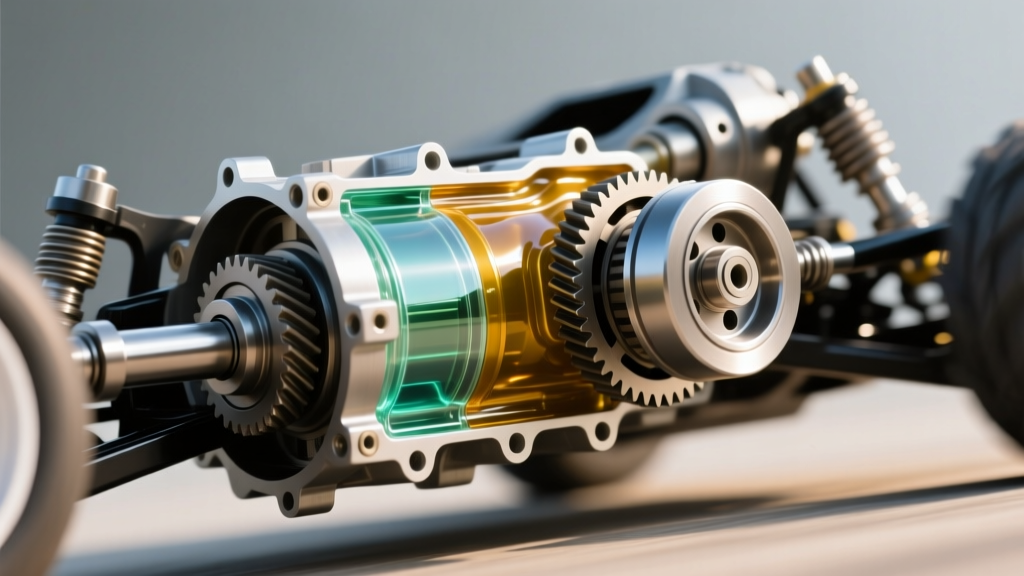
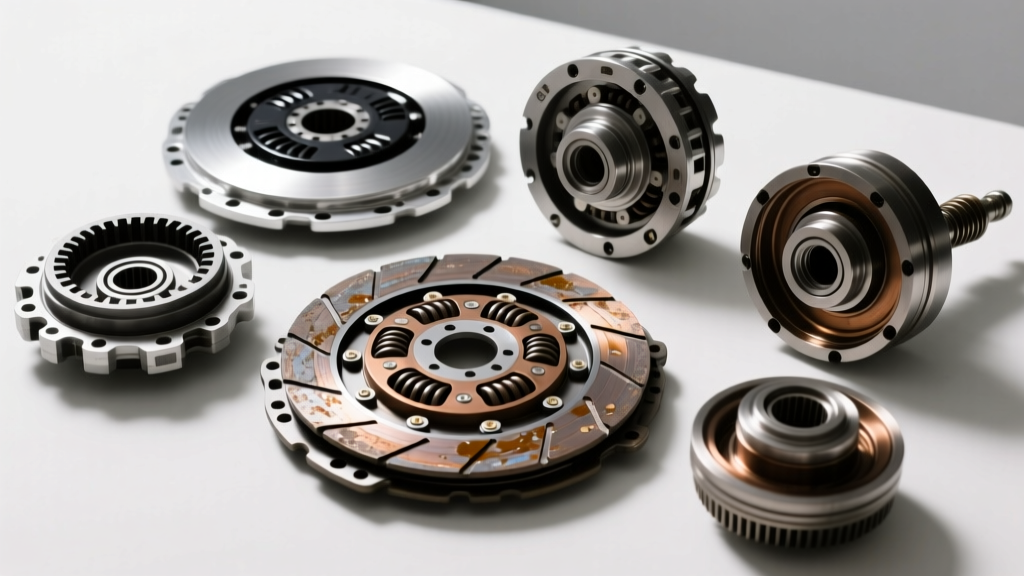
To understand fluid-induced wear, we must first isolate the mechanical environment of a clutch-type LSD (such as the Eaton Posi, Dana Trac-Lok, or Auburn Gear). Unlike an open differential that relies entirely on spider and side gears, a clutch-type LSD utilizes a series of alternating steel plates and friction discs clamped together by preload springs.
When torque is applied, the differential attempts to split power. If one wheel loses traction, the clutch pack resists the speed differential, transferring torque to the wheel with grip. This resistance generates immense localized heat and shear force. The gear oil acts as the primary thermal transfer medium and boundary lubricant. If the fluid's kinematic viscosity drops due to thermal breakdown, the wear characteristic shifts from hydrodynamic lubrication to boundary friction, resulting in rapid glazing of the friction discs and scoring of the steel plates.
The Stick-Slip Phenomenon and Friction Modifiers
The most critical variable in LSD maintenance is the friction modifier. Hypoid gear oils (API GL-5) are loaded with Sulfur-Phosphorus extreme pressure (EP) additives designed to prevent metal-to-metal welding under high sliding forces. However, these EP additives make the fluid too slippery for the microscopic pores of the clutch friction material.
Without a friction modifier, the clutch packs will aggressively grab and release in a micro-second cycle known as the stick-slip phenomenon. This manifests as severe axle chatter during low-speed, tight-radius turns. Over time, this chatter causes harmonic vibrations that can fracture the cross-pin and spider gears. Conversely, adding too much friction modifier eliminates the chatter but reduces the locking coefficient, causing the LSD to act like an open differential under heavy load, leading to thrust-block wear and side-gear galling.
Fluid Viscosity and Wear Characteristic Matrix
Choosing the correct base viscosity and modifier ratio is highly dependent on the specific LSD architecture. Below is a diagnostic matrix detailing how fluid variables dictate wear outcomes across common 2026-era and legacy axle platforms.
| LSD Architecture | Base Fluid Spec | Modifier Requirement | Primary Wear Characteristic if Starved/Incorrect |
|---|---|---|---|
| Clutch-Pack (Eaton/Dana) | 75W-90 / 75W-140 GL-5 | Mandatory (3-5 oz) | Friction Disc Glazing, Chatter, Steel Plate Scoring |
| Helical Gear (Torsen/Quaife) | 75W-90 GL-5 | None Required | Gear Tooth Pitting, Thrust Washer Galling |
| Cone-Type (Auburn/Spicer) | 80W-90 / 75W-140 GL-5 | Mandatory (Specific Cone Additive) | Cone Surface Grooving, Preload Spring Fatigue |
| Electronic Clutch (eLSD) | OEM Specific (e.g., GM AWD Fluid) | Integrated into OEM Formula | Solenoid Screen Clogging, Clutch Burnout |
Precision Maintenance: The LSD Fluid Exchange Protocol
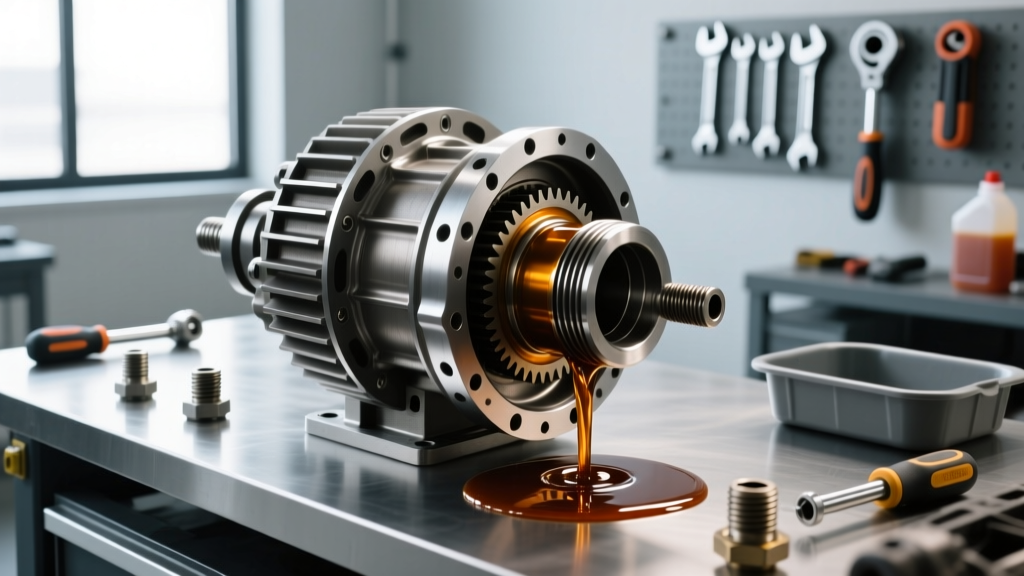
Servicing a limited slip differential is not merely a drain-and-fill operation; it is a precise chemical recalibration. Below is the exact protocol for a standard clutch-type LSD, utilizing the ubiquitous Ford Super 8.8 and Dana 44 axles as benchmarks.
Step 1: Evacuation and Particle Analysis
Remove the differential cover. For a Ford 8.8 (12 bolts, 10mm), torque specification for removal is irrelevant, but reinstallation requires 25-30 lb-ft. For a Dana 44 (10 bolts, 3/8"), retorque to 30-35 lb-ft. As the fluid drains, analyze the 'growth' of wear particles. Fine, glitter-like metallic suspension is normal for a break-in period. However, jagged ferrous shards indicate ring-and-pinion misalignment or bearing cage failure.
Step 2: Chemical Cleaning and RTV Application
Brake cleaner will strip the oil, but it will also strip the friction modifier from the clutch packs. Use a lint-free shop towel and a mild solvent to clean the mating surfaces. When resealing, avoid cheap silicones. Use a sensor-safe, high-torque RTV like Permatex Ultra Black (Part #81160).
Pro-Tip: RTV requires moisture in the air to cure. An axle filled with fluid immediately after sealing will wash the uncured RTV into the gear mesh, leading to clogged oil pickup tubes and immediate starvation. Allow 1 hour for tack-free curing, and ideally 12-24 hours before filling.
Step 3: The Modifier-First Fill Strategy
Never mix the friction modifier in a separate container. The exact dosage must coat the clutch packs directly. For a Dana 44 Trac-Lok (capacity ~2.5 pints) or Ford 8.8 (capacity ~2.8 pints), add 4 ounces of friction modifier directly into the empty axle housing before pumping in the gear oil. We recommend OEM equivalents like Ford XL-3 (C8AZ-19546-A) or GM EOS (88900333). Follow with a high-shear synthetic 75W-140 GL-5, such as AMSOIL Severe Gear or Mobil 1 Synthetic Gear Lube, until the fluid level reaches the bottom of the fill plug threads.
Diagnostic Framework: Noise vs. Wear
When diagnosing axle noise, the acoustic signature directly correlates to the fluid's chemical state and the resulting wear characteristics. Consult Dana Spicer's technical service bulletins for the following auditory diagnostics:
- Low-Speed Chatter (Turns Only): The friction modifier has oxidized or sheared out. The clutch packs are experiencing stick-slip. Fix: Drain, flush with a carrier-bearing safe solvent, and replenish with fresh 75W-140 and 4oz of modifier.
- Highway Whine (Deceleration): Often misdiagnosed as a fluid issue, this is actually gear tooth pitting caused by long-term boundary lubrication failure. The hypoid offset requires a thick elastohydrodynamic film; if the fluid was subjected to extreme towing heat without a 75W-140 upgrade, the pinion bearing preload has likely shifted. Fix: Complete teardown and rebuild kit (e.g., Dana 706008X).
- Clunk on Engagement: Excessive friction modifier has caused the clutch packs to slip entirely, transferring all shock load to the spider gear cross-pin and side-gear thrust washers. Fix: Drain half the fluid, replace with straight GL-5 without modifier, and perform a series of figure-8 turns to bed the clutches back into the friction material.
Conclusion: Mastering the Drivetrain Medium
While biologists rely on agar to cultivate and study organic growth, automotive engineers rely on complex sulfur-phosphorus chemistry and friction modifiers to cultivate traction and suppress mechanical wear. By treating your differential fluid not as a commodity, but as a highly calibrated medium, you ensure that the only thing growing in your axle is the mileage. Always consult your specific axle manufacturer's service manual for exact torque specs and fluid capacities, as variations exist even within the same model year.