The Mechanical Reality of Clutch-Type Limited Slip Differentials
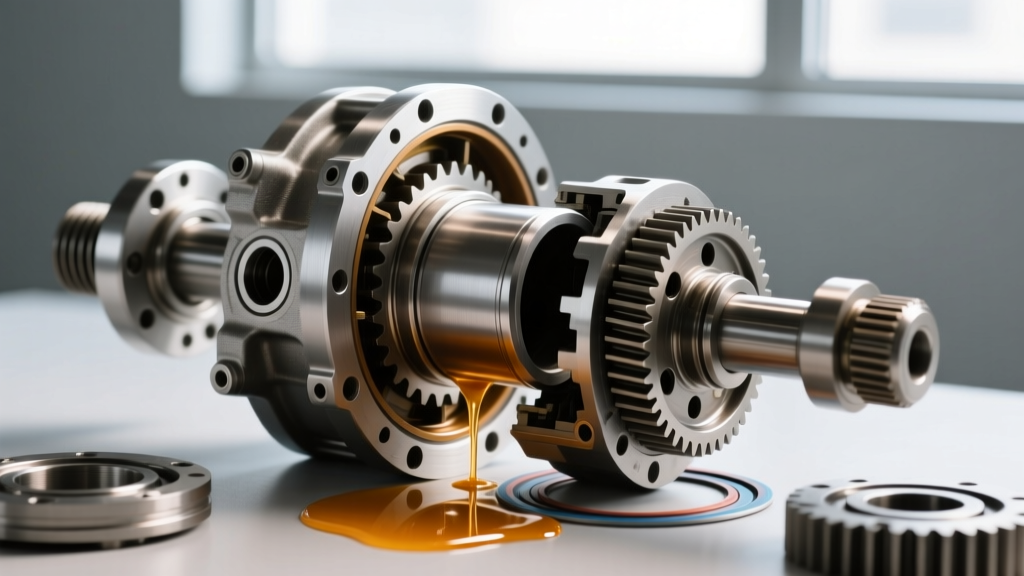
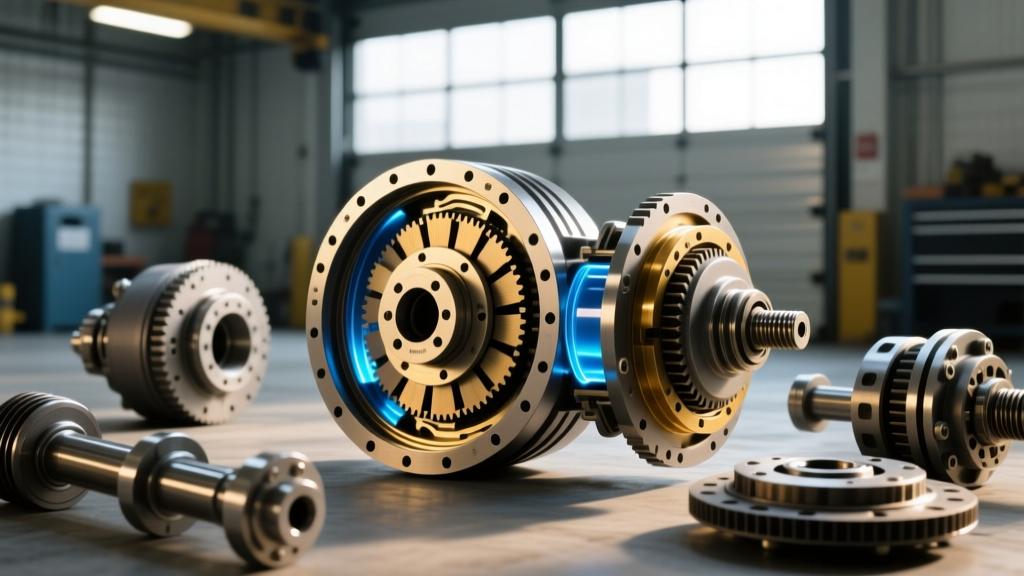
To understand maintenance requirements and fluid costs, we must first examine the internal mechanics of a clutch-type limited slip differential (LSD). Unlike an open differential that routes torque to the path of least resistance, or a helical gear LSD (such as the Eaton Truetrac) that relies on gear binding and friction against the casing, a clutch-type LSD utilizes alternating stacks of friction discs and steel separator plates. These packs are compressed by high-tension Belleville wave springs or heavy coil springs to provide a baseline locking torque, known as preload.
When a vehicle corners, the outside wheel must rotate faster than the inside wheel. In an LSD, this speed differential forces the clutch packs to slip against one another. This slipping action generates immense localized heat and shear forces within the gear oil. If the fluid lacks the necessary tribological properties to manage this boundary lubrication regime, the clutch packs will experience 'stick-slip' vibration—commonly heard as a low-speed groaning or chatter from the rear axle. Over time, this glazes the friction material, permanently destroying the locking capability of the unit.
Tribology and the Critical Role of Friction Modifiers
The secret to smooth LSD operation lies in the friction modifier (FM) additive package. Standard gear oils are designed to maximize the friction coefficient to protect gear teeth under extreme pressure (EP). However, clutch packs require the exact opposite: a controlled reduction in the static friction coefficient relative to the kinetic friction coefficient.
Friction modifiers are typically long-chain organic polymers that bond to the metallic surfaces of the clutch discs. As of 2026, advanced synthetic formulations from brands like Red Line Oil and AMSOIL have integrated highly stable FM packages directly into their synthetic 75W-90 and 75W-140 gear oils. However, many OEM-style fluids and conventional mineral oils still require the manual addition of a dedicated FM supplement, such as Motorcraft XL-3 (Part# C8AZ-19B546-A) or GM EOS (Part# 1052358).
Expert Note: Never use friction modifiers in helical gear LSDs (like the Torsen or Truetrac) or in open differentials. While it will not immediately destroy the gears, it reduces the natural bias torque of helical units and wastes money. FM is strictly for clutch-plate and cone-type limited slips.
Analyzing the Differential Oil Price: DIY vs. Professional Service
When planning your drivetrain maintenance, evaluating the true differential oil price requires looking beyond the sticker price of a single quart of gear oil. The total cost of ownership involves the base fluid, friction modifiers, gasket materials, and potentially shop labor. Many enthusiasts focus solely on the base differential oil price per quart, ignoring the critical cost of supplementary additives and proper sealing compounds.
2026 Fluid and Component Cost Breakdown
| Fluid / Component Type | Brand / Part Number | Estimated Cost (2026) | Application Notes |
|---|---|---|---|
| Full Synthetic 75W-90 | AMSOIL Severe Gear | $22.99 / qt | High shear stability; requires separate FM for clutch LSDs. |
| Full Synthetic 75W-90 | Red Line ShockProof | $28.50 / qt | Contains FM; ideal for clutch-type LSDs and high-shock loads. |
| OEM Friction Modifier | Motorcraft XL-3 | $12.45 / 4oz | Required for Ford 8.8 / Dana clutch-type limited slips. |
| RTV Gasket Maker | Permatex Ultra Black | $9.99 / tube | Sensor-safe, high-torque flange sealing for cover removal. |
| Professional Shop Labor | Independent Drivetrain Shop | $120 - $180 | Includes drain, clean, reseal, and fluid fill. |
For a standard DIY service on a Ford 8.8-inch or Dana 44 axle requiring roughly 2.5 pints of fluid, your total out-of-pocket differential oil price and material cost will range from $45 to $75. If you opt for professional service, expect to pay between $160 and $250, depending on regional labor rates and whether the shop uses bulk conventional oil or premium synthetics.
Viscosity Selection: 75W-90 vs. 75W-140 for LSDs
Selecting the correct viscosity is paramount for clutch pack longevity. The SAE 75W-90 specification remains the gold standard for daily driving, light towing, and track use. It provides adequate hydrodynamic film strength while minimizing parasitic drag and cold-weather stiffness.
Conversely, SAE 75W-140 is frequently marketed as a 'heavy-duty' upgrade. While it offers superior shear stability under extreme continuous loads (such as towing a 10,000 lb trailer up a 6% grade in summer heat), it comes with distinct trade-offs. The higher viscosity increases fluid churning losses, reducing fuel economy, and can lead to inadequate flow to the pinion bearings during cold starts. According to engineering data from Dana Spicer, unless your axle is subjected to continuous high-heat towing or dedicated drag racing, a high-quality synthetic 75W-90 provides the optimal balance of protection and efficiency for clutch-type LSDs.
Precision Service Procedure and OEM Torque Specifications
A proper LSD fluid service goes far beyond simply pulling a plug and pumping in new oil. Because many modern differentials (including the ubiquitous Ford 8.8 and GM 10-bolt) utilize a stamped steel or cast aluminum cover sealed with RTV silicone rather than a simple drain plug, the cleaning process is critical.
Step-by-Step LSD Maintenance Protocol
- Cover Removal and Cleaning: Break the RTV seal using a rubber mallet—never pry with a screwdriver, as scoring the mating surface guarantees future leaks. Clean the cover and axle housing flange with brake cleaner until completely oil-free.
- Magnet Inspection: Most differential covers feature an internal magnet. Fine, gray metallic paste is normal gear wear. However, if you find jagged metal flakes or chunks larger than a grain of rice, the ring and pinion or the LSD clutch journals are experiencing catastrophic failure.
- Friction Modifier Application: If your chosen gear oil does not explicitly state it contains LSD friction modifiers, add the recommended dose of FM (usually 2 to 4 oz) directly into the housing before pumping in the bulk gear oil. This ensures the modifier mixes thoroughly rather than sitting at the top of the fill hole.
- Filling to Capacity: Fill until the fluid level is exactly flush with the bottom of the fill hole (typically 2.0 to 2.5 quarts depending on the axle). Overfilling causes aeration and foaming, which leads to overheating and blown axle seals.
- RTV Curing: If using RTV, apply a continuous 3/16-inch bead, install the cover, and tighten bolts finger-tight. Allow the RTV to skin over for 1 hour before torquing to spec and filling with oil.
Reference Torque Specifications (Cover Bolts)
Over-torquing differential cover bolts is a common novice mistake that warps stamped steel covers and strips cast aluminum threads. Always use a calibrated inch-pound or low-range foot-pound torque wrench.
- Ford 8.8-inch & Super 8.8: 28 - 38 lb-ft (Apply threadlocker to upper bolts if prone to weeping).
- Dana 44 / Spicer 44: 30 - 40 lb-ft.
- GM 8.5/8.6-inch (10-bolt): 22 - 28 lb-ft.
- Chrysler 8.75-inch: 30 - 35 lb-ft.
Diagnosing LSD Failure Modes and Fluid Degradation
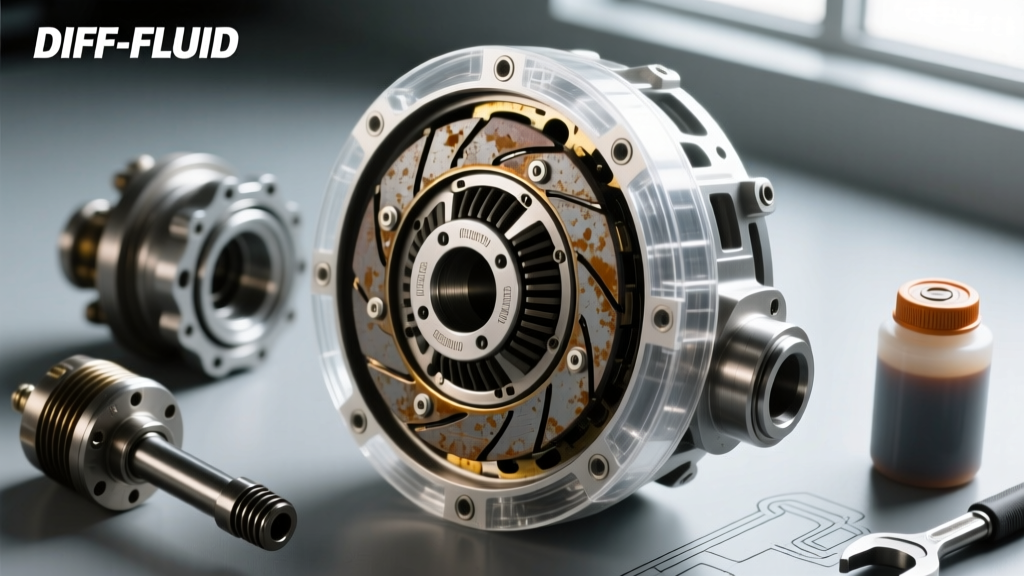
Even with meticulous adherence to the correct differential oil price budget and maintenance intervals, clutch packs eventually wear. The primary failure mode is friction material glazing. When the clutch discs overheat due to aggressive track use or a lack of friction modifier, the paper or carbon composite material melts into a hard, glass-like surface.
Symptoms of a glazed LSD include a complete loss of locking torque (acting like an open differential under hard acceleration) or violent shuddering during tight, low-speed parking maneuvers. While a fluid flush with a high-detergent synthetic and a double-dose of friction modifier can sometimes rescue mildly glazed clutches, severe cases require a complete teardown, carrier removal, and installation of a new clutch pack rebuild kit (typically costing between $80 and $150 for OEM-quality components). Understanding the mechanical limits of your LSD and respecting the tribology of your gear oil is the most cost-effective way to ensure your drivetrain survives the demands of the road.