The Electromechanical Architecture of Commercial PTO Clutches
When diagnosing implement-engagement issues on commercial zero-turn and stand-on mowers, the Power Take-Off (PTO) clutch is the critical nexus between the engine crankshaft and the cutting deck. Unlike the hydraulic or mechanical clutches found in automotive manual transmissions, a mower PTO clutch is an electromagnetically actuated, dry-friction device. Brands like Warner Electric, Ogura, and Xtreme Brakes engineer these components to withstand extreme shock loads, high ambient temperatures, and continuous debris exposure. Understanding the precise wear signs and lifespan indicators of these clutches is essential for accurate diagnostics and avoiding unnecessary deck or engine teardowns.
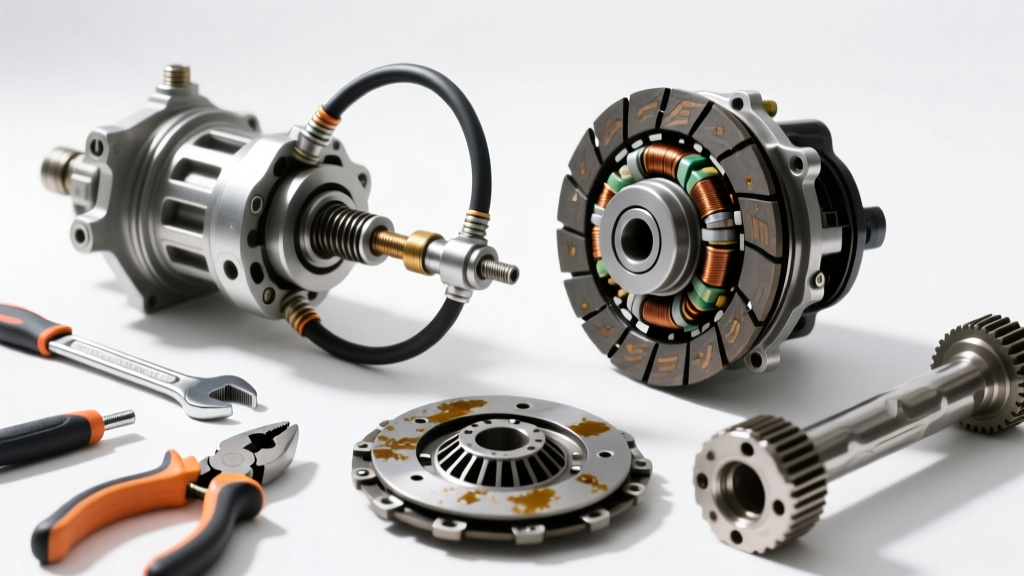
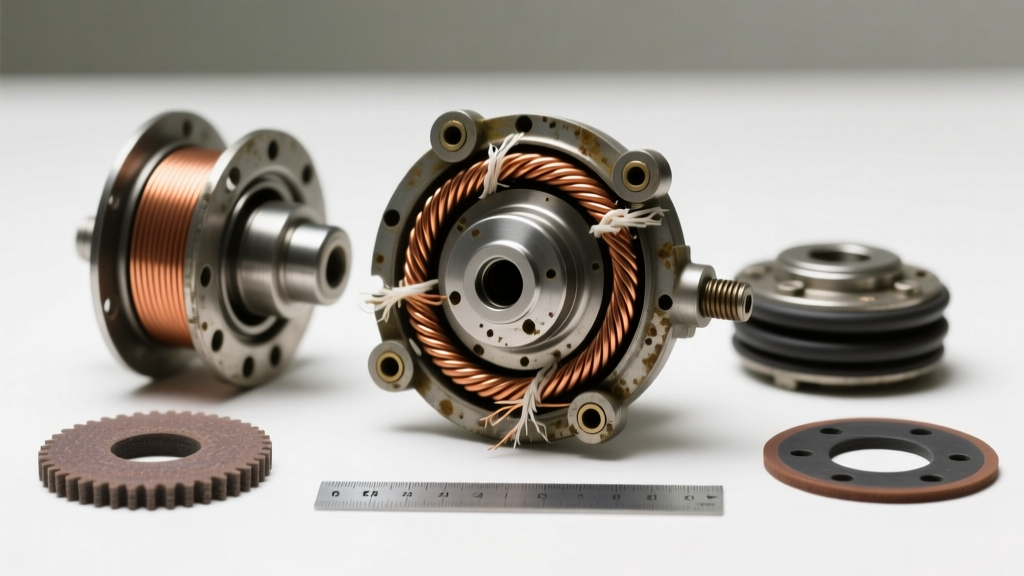
A typical commercial PTO clutch (such as the ubiquitous Warner Electric 5218-44 or the Ogura GT3.5) consists of three primary assemblies: the electromagnetic coil housing (stator), the rotor (bolted directly to the engine crankshaft), and the armature/friction disc assembly (which drives the pulley). When 12V DC power is applied to the coil, a magnetic field pulls the armature against the rotor. The resulting friction locks the assembly together, transferring up to 80 ft-lbs of torque to the mower deck belts. Because there is no organic friction material or replaceable clutch disc in the traditional automotive sense, wear manifests in highly specific, measurable ways.
Quantifiable Electrical Diagnostics: Beyond the Click
The most common misdiagnosis in lawn mower PTO clutch repair is assuming a 'clicking' relay indicates a healthy clutch circuit. The audible click only confirms that the relay coil is energizing; it does not verify that the PTO clutch coil is receiving adequate amperage to generate sufficient magnetic clamping force. To properly diagnose electrical wear, you must measure resistance and voltage drop under thermal load.
Baseline Coil Resistance Testing
Using a high-quality digital multimeter, measure the resistance across the clutch pigtail terminals. A healthy 12V commercial PTO clutch typically exhibits a resistance between 2.2 and 3.8 Ohms at room temperature (70°F / 21°C). If your reading is below 2.0 Ohms, the coil has internal shorted windings and will draw excessive amperage, rapidly destroying the PTO relay and wiring harness. If the reading is infinite (open circuit), the internal thermal fuse or copper windings have failed, necessitating a complete clutch replacement.
The Thermal Runaway Phenomenon
Advanced diagnostics require understanding copper's thermal properties. Copper wire resistance increases by approximately 0.4% for every 1°C rise in temperature. When a mower operates in 95°F ambient heat with heavy deck loads, the PTO clutch coil can easily exceed 200°F. At this temperature, coil resistance increases significantly, which drops the amperage (Ohm's Law: I = V/R). Lower amperage reduces the magnetic clamping force. If the clamping force drops below the torque requirement of the cutting deck, micro-slippage occurs between the rotor and armature. This slippage generates intense friction heat, which further transfers to the coil, increases resistance, and exacerbates the slippage in a destructive thermal runaway loop. Recognizing this cycle is a hallmark of expert drivetrain diagnostics.
Mechanical Wear Signs: Air Gap and Friction Surfaces
If the electrical circuit is delivering a verified 13.2V to 13.8V directly at the clutch pigtail under load, but the mower deck still bogs down or slips, the issue is mechanical wear. The friction surfaces of a PTO clutch are typically machined sintered iron or hardened steel. Over hundreds of engagement cycles, these surfaces wear down, increasing the distance the armature must travel to meet the rotor.
Critical Air Gap Specifications
The 'air gap' is the distance between the rotor and the armature when the clutch is disengaged. For most 5/8-inch bore commercial clutches, the factory specification is between 0.012" and 0.018". As the friction surfaces wear, this gap widens. Once the air gap exceeds 0.030", the electromagnetic coil lacks the magnetic pull to fully seat the armature, resulting in violent chatter, severe slippage, and immediate thermal degradation.
- Measurement Protocol: Insert a feeler gauge through the inspection slots machined into the armature plate. Measure at three equidistant points to check for uneven wear or a warped rotor.
- Adjustment Mechanism: Many Ogura and Warner models feature adjustment nuts or shims around the mounting bolts. Tightening these nuts reduces the air gap back to the 0.015" sweet spot.
- End-of-Life Indicator: If the adjustment nuts are fully seated and the air gap remains larger than 0.025", the friction surfaces have worn beyond the service limit. The clutch must be rebuilt or replaced.
Lifespan Indicators and Application Failure Modes
The lifespan of a PTO clutch is not dictated by mileage, but by engagement cycles, thermal stress, and operator abuse (such as engaging the blades at full engine RPM rather than at idle). Below is a diagnostic matrix correlating application class with expected lifespans and primary failure modes.
| Application Class | Typical PTO Model | Expected Lifespan (Hours) | Primary Failure Mode |
|---|---|---|---|
| Residential Zero-Turn | Warner 5218-44 | 800 - 1,200 | Bearing seizure, coil burnout from moisture |
| Commercial Stand-On | Ogura GT3.5 | 2,500 - 3,500 | Friction surface glazing, thermal decay |
| Heavy-Duty Out-Front | Xtreme Brakes XB | 4,000+ | Armature scoring, crankshaft bore wallow |
According to engineering data from Warner Electric (Altra Motion), premature failure in residential applications is most often linked to bearing failure rather than friction wear. The clutch relies on dual sealed deep-groove ball bearings (typically 6203-2RS or 6204-2RS). When the protective seals fail due to high-pressure washing or abrasive dust ingress, the bearings seize, tearing the internal wiring harness or snapping the rotor hub.
Differentiating Slippage from Glazing
When a clutch slips, the sintered iron surfaces can overheat and develop a glass-like, mirror finish known as glazing. Glazed surfaces have a drastically reduced coefficient of friction. You can differentiate between normal wear and severe glazing by inspecting the rotor face through the inspection slots. If the metal appears dark, bluish-black (indicating extreme heat), and reflects light like a mirror, the clutch is glazed. While some technicians attempt to scuff the surfaces with 80-grit sandpaper, this is a temporary fix. The microscopic pores of the sintered iron are filled with burnt material, and proper lawn mower PTO clutch repair dictates replacing the armature and rotor kit.
Installation Protocol and Torque Specifications
When replacing a worn PTO clutch, proper installation is just as critical as the diagnosis. The clutch rotor is mounted directly to the engine crankshaft (commonly a 5/8" shaft on Kawasaki FX and Kohler Command Pro V-twins). Improper torque leads to catastrophic drivetrain failure.
- Shaft Preparation: Clean the crankshaft threads and mating surfaces with brake cleaner. Ensure the Woodruff key (if equipped) is perfectly seated and undamaged. A sheared key will cause the clutch to spin independently of the crank, destroying the keyway.
- Fastener Torque: The 5/8" crankshaft mounting bolt must be torqued to 74-80 ft-lbs. Always use a new grade-8 flange bolt.
- Threadlocker Application: Apply a medium-strength threadlocker (such as Loctite 243) to the bolt threads to prevent backing out under the harmonic vibration of a single-cylinder or V-twin engine.
- Belt Tension Verification: An over-tensioned deck belt places excessive radial load on the PTO clutch bearings, accelerating bearing failure. Refer to the mower manufacturer's deflection specs (usually 1/2" deflection at 10 lbs of force on the longest belt span).
For comprehensive OEM replacement schematics and torque sequences, technicians frequently cross-reference Ogura Clutch Corporation technical bulletins with the specific engine manufacturer's service manual. By adhering to these precise electrical, mechanical, and installation metrics, you can accurately diagnose PTO clutch wear, maximize component lifespan, and eliminate repeat drivetrain failures in the field.