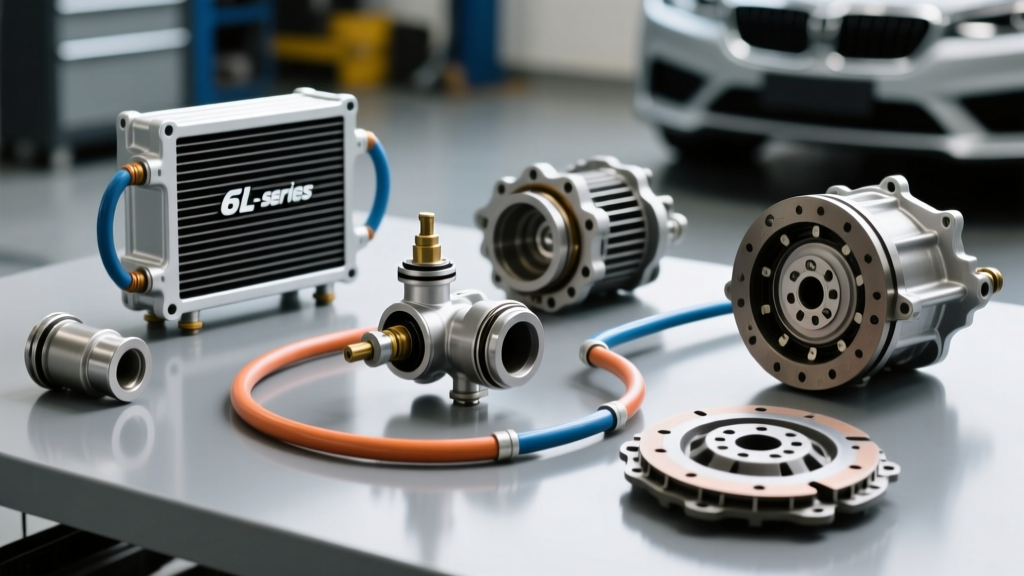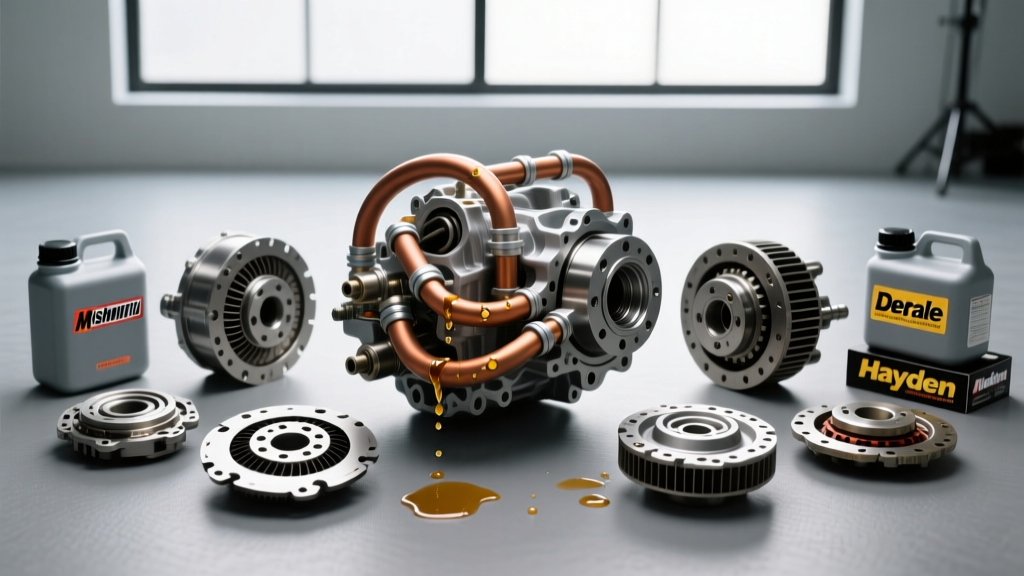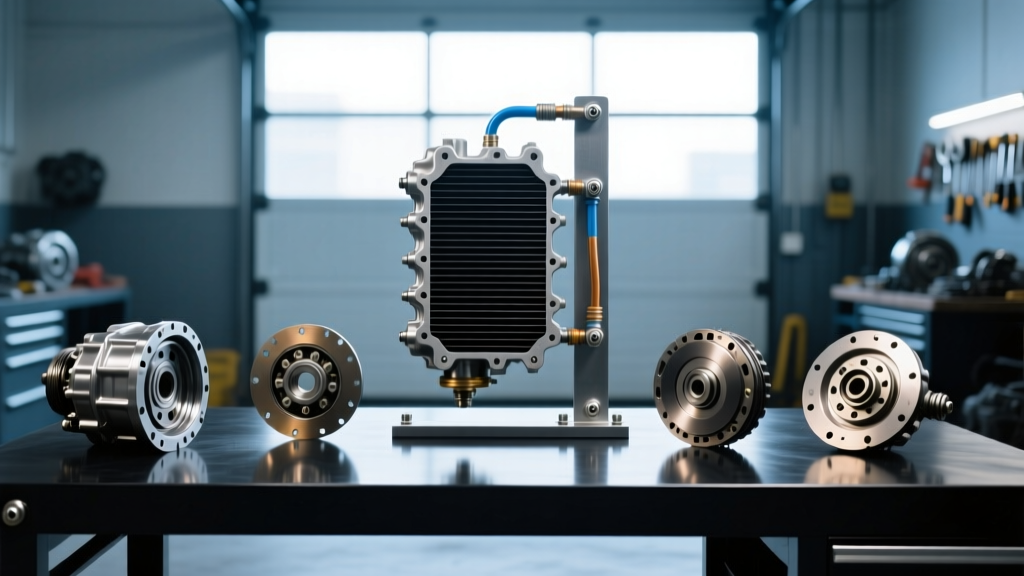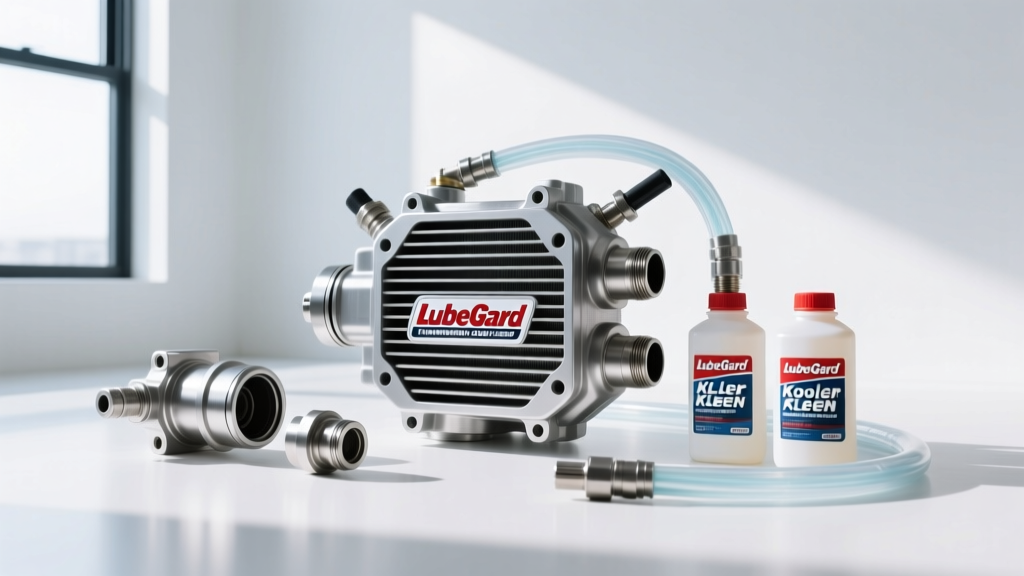
As of 2026, the GM 6L80/6L90 and Ford 6R80 remain some of the most prevalent six-speed automatic transmissions on the road, heavily utilized in light-duty trucks, SUVs, and performance sedans. While mechanically robust, both platforms share a critical vulnerability: thermal management and factory cooler degradation. When torque converter clutch (TCC) material sheds or internal wear generates metallic particulate, the factory radiator-integrated transmission coolers quickly become restricted. Performing a proper LubeGard Kooler Kleen transmission cooler flush is not just a maintenance suggestion; it is a mandatory protocol to prevent catastrophic repeat failures after a rebuild or severe slip event.
The Thermal Bottleneck: Why Factory Coolers Fail on the 6L80 and 6R80
The factory cooling setups on the GM 6L80 and Ford 6R80 rely on a heat exchanger integrated into the engine's main radiator. While adequate for stock, unladen highway driving, these units are highly susceptible to clogging. In the GM 6L80, the infamous 'shudder' issue—caused by degraded Dexron ULV fluid and TCC slip—deposits a thick, varnish-like friction material directly into the narrow tubes of the radiator cooler. Similarly, the Ford 6R80 suffers from thermal bypass valve failures, where the valve sticks in the closed position, forcing fluid through a restricted secondary circuit and rapidly spiking transmission temperatures past 230°F (110°C).
When replacing a failed transmission or upgrading the cooling system, simply swapping the unit without clearing the cooler lines guarantees that trapped debris will be pushed directly into the new transmission's valve body and solenoids. This is where a specialized aerosol flush becomes critical.
Why LubeGard Kooler Kleen is the Industry Standard
Many DIY mechanics and even some general repair shops make the fatal error of using brake cleaner, carburetor cleaner, or generic compressed air to clear transmission cooler lines. These harsh solvents leave behind chemical residues that destroy the friction modifiers in modern synthetic fluids like Mercon LV and Dexron ULV, leading to immediate clutch slip.
Expert Note: The LubeGard Kooler Kleen (Part #96201) is specifically formulated with a proprietary solvent blend that evaporates completely without leaving residue. It is engineered to dissolve organic friction materials, varnish, and metallic paste while remaining 100% safe for clutch friction surfaces and rubber seals upon initial startup.
Step-by-Step Flushing Protocol for GM 6L80/6L90 Applications
The GM 6L80 utilizes quick-disconnect fittings at the radiator, typically 3/8-inch for the return line and 1/2-inch for the pressure line. To perform the LubeGard Kooler Kleen transmission cooler flush correctly, follow this exact sequence:
- Line Disconnection: Use a specialized quick-disconnect tool set (such as the Lisle 39400 set) to detach both the pressure and return lines at the radiator. Do not use pliers, as the plastic retaining clips will shatter.
- Initial Air Purge: Use low-pressure compressed air (under 40 PSI) to blow out the bulk of the degraded fluid from the lines. High pressure can rupture the internal brazed joints of the factory radiator cooler.
- Aerosol Application: Attach the included extension tube to the Kooler Kleen can. Insert the tube into the return line (the line flowing back to the transmission) and spray in 3-second bursts. The solvent will aggressively break down the TCC varnish.
- Reverse Flush: Repeat the process on the pressure line. Continue alternating until the fluid exiting the opposite end runs completely clear and free of black particulate.
- Evaporation Period: Allow the lines and cooler to sit for 15 minutes to ensure complete solvent evaporation before reconnecting.
Torque Specification Reminder: When dropping the 6L80 pan to replace the filter and fluid, the M6x1.0 pan bolts must be torqued to exactly 10 Nm (89 in-lbs) in a crisscross pattern to prevent warping the aluminum pan or stripping the case threads.
Step-by-Step Flushing Protocol for Ford 6R80 Applications
The Ford 6R80 presents a unique challenge due to its thermal bypass valve, located either in the transmission case or inline on the cooler hose, depending on the model year. This valve restricts flow to the cooler until the fluid reaches approximately 185°F (85°C) to aid in rapid warm-up. However, it frequently becomes clogged with debris, rendering the cooler useless.
Bypass Valve Deletion and Flushing
Before executing the LubeGard Kooler Kleen transmission cooler flush on a 6R80, it is highly recommended to bypass or delete the thermal valve. Aftermarket bypass delete kits (available from manufacturers like Sonnax or Transtar) replace the restrictive valve with a solid, free-flowing aluminum block.
- Disconnect: Remove the cooler lines at the transmission case. The 6R80 uses standard flare nuts or quick-disconnects depending on the chassis (F-150 vs. Mustang).
- Flush the Radiator Cooler: Spray the Kooler Kleen directly into the radiator's lower transmission port. The 6R80's factory cooler has a high internal volume; you will likely need two cans of Part #96201 to achieve a completely clear output.
- Flush the Auxiliary Lines: If the truck is equipped with the factory tow package auxiliary cooler, flush this unit separately. The stacked-plate design of the factory Ford aux cooler traps heavy metallic debris in the lower fins.
- Reassembly: Reinstall the bypass delete block. Torque the 6R80 transmission pan bolts to 11 Nm (97 in-lbs). The 6R80 requires approximately 13.1 quarts of Mercon LV for a dry fill, but a standard pan drop and cooler flush will require roughly 7 to 8 quarts.
Auxiliary Cooler Sizing and Selection for Specific Platforms
Once the LubeGard Kooler Kleen transmission cooler flush is complete and the factory lines are verified clear, upgrading to a dedicated auxiliary cooler is the next logical step for vehicles subjected to towing, off-roading, or modified power levels. Relying solely on the radiator cooler for a modified 6L80 or a loaded 6R80 is a recipe for fluid degradation.
| Vehicle Platform | Transmission | Recommended Cooler Type | Part Number Example | GVWR / Tow Rating |
|---|---|---|---|---|
| GM Silverado/Sierra 1500 | 6L80 / 6L90 | Stacked-Plate (Auxiliary) | Derale 10009 (Series 9000) | Up to 10,000 lbs |
| Ford F-150 (5.0L / 3.5L EcoBoost) | 6R80 | Plate-and-Fin (In-Series) | Hayden 678 (Rapid-Cool) | Up to 12,000 lbs |
| GM Camaro / Corvette | 6L80 / 8L90 | Tube-and-Fin (High-Flow) | Mishimoto MMTC-CAM | Track / High-RPM Use |
Installation Architecture Note: For maximum efficiency in heavy-duty truck applications, the auxiliary cooler should be plumbed after the factory radiator cooler. The radiator cooler acts as a pre-cooler and temperature stabilizer, while the front-mounted auxiliary stacked-plate cooler (like the Derale 10009) provides the maximum BTU rejection. Stacked-plate designs offer a 30% higher heat transfer coefficient compared to traditional tube-and-fin designs due to the increased surface area and turbulent fluid flow path.
Post-Flush Thermal Management and Verification
Completing the physical flush is only half the battle. Verification of flow and thermal stability is required before returning the vehicle to service. After reconnecting all lines and filling the system with the correct OEM-spec fluid (Dexron ULV for GM, Mercon LV for Ford), perform a dynamic flow test.
Disconnect the return line at the transmission, place it into a calibrated catch basin, and have an assistant start the engine. You should see a minimum of 1 quart of fluid displaced within 15 to 20 seconds at idle. If the flow is sluggish, the LubeGard Kooler Kleen transmission cooler flush may need to be repeated, or the factory radiator heat exchanger is permanently restricted and must be replaced or bypassed entirely.
Finally, use a bi-directional scan tool to monitor the Transmission Fluid Temperature (TFT) PID during a 20-mile test drive. Under normal ambient conditions (75°F), the 6L80 and 6R80 should stabilize between 175°F and 195°F. If temperatures consistently climb past 210°F on the highway, verify that the auxiliary cooler is not blocked by debris and that the thermal bypass valve is fully open or deleted. Proper execution of this flush protocol ensures the longevity of the clutch packs and the precise hydraulic operation of the valve body for hundreds of thousands of miles.