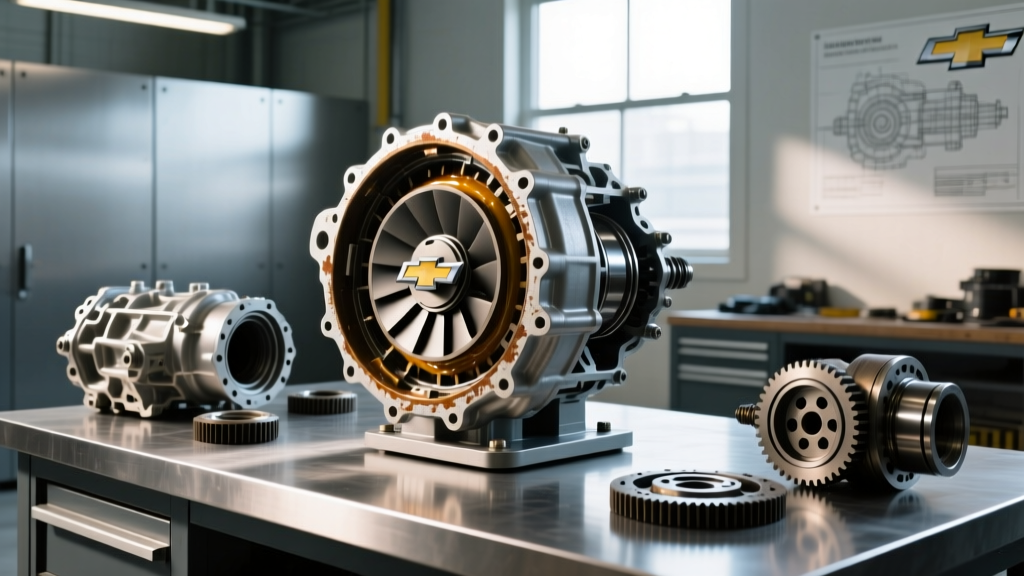
The Performance Reality: When Your JMBX Torque Converter Fails
When building a high-horsepower platform in 2026, whether it is a 1,000-wheel-horsepower 6L80E swap or a nitrous-fed 4L80E drag car, the torque converter remains the critical link between engine output and rear-wheel thrust. The JMBX torque converter series has solidified its reputation in the performance community for handling extreme torque loads while maintaining streetable stall characteristics. However, pushing these billet-cover units to their limits means that identifying bad torque converter symptoms early is the difference between a quick weekend swap and a destroyed transmission pump.
Unlike stock OEM converters designed for fuel economy and mild torque multiplication, a performance JMBX torque converter operates under immense hydraulic and thermal stress. When internal components like the stator sprag, turbine fins, or the Torque Converter Clutch (TCC) friction material begin to fail, the symptoms often mimic poor tuning or valve body wear. As transmission specialists, we must separate calibration errors from catastrophic mechanical degradation before the entire drivetrain is compromised.
Differentiating Tuning Errors from Mechanical JMBX Failures
One of the most common pitfalls in the modern tuning community is misdiagnosing a flawed TCC apply strategy as a failing JMBX torque converter. High-stall converters (ranging from 3,200 to 4,500 RPM) require precise Pulse Width Modulation (PWM) ramp rates to lock the clutch without inducing harmonic shudder. If your line pressure is not scaled correctly to match the converter's clutch apply area, you will experience slip that feels exactly like a worn friction disc.
Below is a diagnostic matrix to help you determine if your JMBX unit requires a trip to the tuning shop or a complete teardown on the bench.
| Observed Symptom | Common Tuning Error | Mechanical Failure Mode |
|---|---|---|
| TCC Shudder (40-55 MPH) | PWM ramp rate too aggressive / Low line pressure | Friction disc glazing or delamination |
| High Slip at WOT | TCC not commanded / Solenoid max duty cycle capped | Turbine hub spline wear / Clutch piston seal blowout |
| Stall Speed Drop (Off-Line) | N/A (Tuning cannot alter physical stall) | Stator sprag failure / Internal fin deflection |
| Transmission Overheating | TCC slip RPM target set too high in cruising gears | Stator one-way clutch slipping / Fluid cavitation |
1. TCC Shudder and Friction Material Delamination
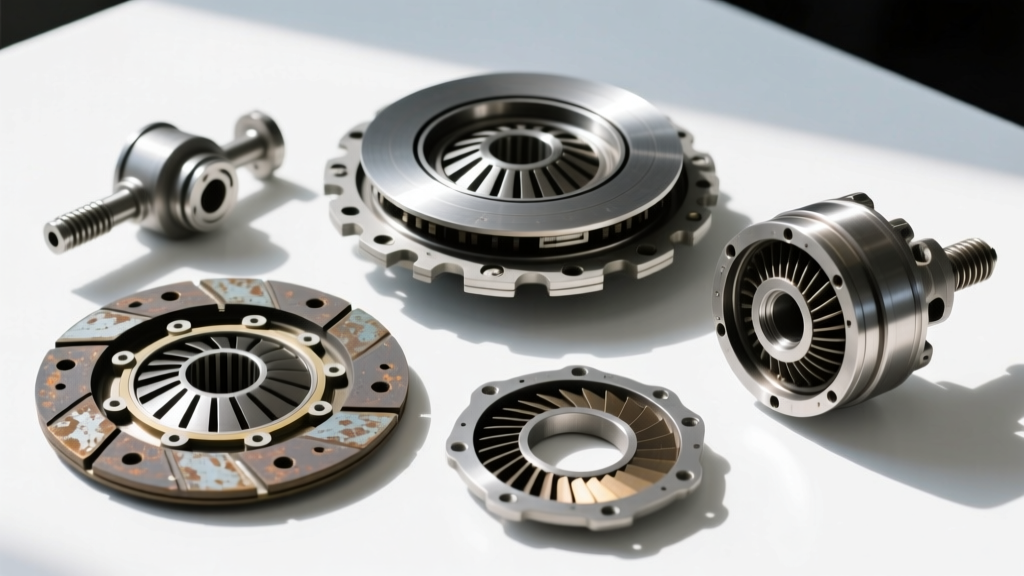
The JMBX torque converter utilizes specialized friction materials—often carbon-fiber or sintered bronze compounds—designed to withstand the aggressive lockup pressures of modified 6L80E and 4L80E transmissions. When this material begins to delaminate or glaze over due to contaminated fluid or excessive slip, you will feel a rhythmic, low-frequency shudder between 40 and 55 MPH under light throttle application.
Unlike a stock converter where shudder might be cured by a simple fluid exchange and a valve body booster kit (such as those outlined in Sonnax technical bulletins), a shuddering performance JMBX unit usually indicates that the friction disc has physically separated from the steel backing plate. This debris will rapidly circulate through the transmission cooler and lodge in the valve body's TCC regulator valve, causing secondary hydraulic failures.
2. Stall Speed Degradation and Stator Sprag Failure
Perhaps the most devastating symptom of a failing JMBX torque converter is a sudden drop in flash stall speed. If your 4,000 RPM stall converter suddenly behaves like a stock 1,800 RPM unit off the starting line, the internal stator sprag (one-way clutch) has likely shattered or rolled over. The stator's job is to redirect fluid flow back into the impeller to multiply torque. When the sprag fails, the stator freewheels in both directions, completely eliminating torque multiplication.
You will notice this not only as sluggish acceleration but also as a massive spike in Exhaust Gas Temperatures (EGTs) and transmission fluid temperatures, often exceeding 240°F during normal street driving. The freewheeling stator creates immense fluid shear and cavitation, effectively turning your transmission fluid into a frothy, aerated mess that starves the pump and burns up clutch packs.
3. Hub Fretting and Transmission Pump Wear
In high-horsepower applications, the turbine hub of the JMBX torque converter interfaces directly with the transmission's input shaft and pump drive gear. Under extreme torque spikes—such as those generated by nitrous oxide or aggressive trans-brake releases—the hub can experience fretting wear. This manifests as a high-pitched whining noise that correlates directly with engine RPM, rather than vehicle speed.
If left unchecked, the worn hub will begin to wallow out the transmission pump bushing. Once the pump bushing fails, you will lose internal line pressure, resulting in delayed engagements, slipping in 3rd and 4th gears, and eventually, total transmission seizure. According to the Torque Converter Remanufacturers Association (TCRA), hub wear is one of the top three reasons performance converters are rejected during core inspections.
Data-Logging JMBX Torque Converter Health via CAN-Bus
In 2026, relying on seat-of-the-pants diagnostics is unacceptable. Modern CAN-bus data logging allows you to monitor the exact health of your JMBX torque converter in real-time. Using advanced scanning tools like the latest HP Tuners VCM Scanner, you must log the following specific PIDs to confirm mechanical failure:
- Trans.TCC Slip RPM: This is the delta between engine speed and transmission input shaft speed. If the TCC is commanded to 100% lockup, slip should be 0-5 RPM. Consistent slip >35 RPM indicates clutch wear.
- Trans.TCC Solenoid Duty Cycle: Verifies that the PCM is actually commanding the lockup. If duty cycle is maxed but slip remains high, the issue is hydraulic or mechanical, not electrical.
- Trans.Line Pressure (Desired vs. Actual): If actual line pressure drops significantly below desired pressure during TCC apply, the pump is cavitating or the pressure regulator valve is worn.
- TFT (Transmission Fluid Temp): A failing stator sprag will cause TFT to climb at a rate of >10°F per minute during steady-state cruising.
Expert Tuner Note: Never rely on acoustic cues alone to diagnose TCC slip in a high-stall JMBX torque converter. Modern data logging provides exact slip RPMs; if commanded lockup is 100% but actual slip exceeds 35 RPM consistently, the clutch pack is physically compromised and requires immediate teardown.
Upgrade Paths: Rebuilding and Replacing the JMBX Unit
When your diagnostic data confirms that the JMBX torque converter has suffered mechanical failure, you have two paths: upgrade to a fresh billet unit or send your core to a specialist for a high-performance rebuild. For platforms pushing beyond 800 lb-ft of torque, a rebuild must include a billet front cover to prevent ballooning, which can push the converter nose into the transmission pump and crack the housing.
During reinstallation of a rebuilt or new JMBX torque converter, strict adherence to torque specifications and clearances is mandatory. The flexplate-to-converter bolts (typically 3/8-16 UNF or M10x1.25 depending on your application) must be torqued to exactly 45-50 lb-ft using a medium-strength threadlocker (such as Loctite 243). Furthermore, you must measure the converter pull-out distance (the gap between the flexplate and the converter pad) before tightening. This gap should ideally be between 1/8-inch and 3/16-inch to ensure the converter is fully seated into the transmission pump gears without pre-loading the thrust bearings.
Finally, a performance JMBX converter requires a dedicated break-in procedure. After filling the transmission with the correct fluid volume (e.g., 11.5 quarts for a standard 6L80E pan-drop system), the converter must be cycled through all gears while stationary to purge air from the TCC apply circuit. Failure to properly bleed the TCC clutch on initial startup will result in instant glazing of the new friction material, bringing you right back to square one with severe shudder symptoms.