The Drivetrain Divide: Automotive vs. Motorcycle Clutches
When enthusiasts transition between wrenching on four-wheel off-roaders and two-wheel street machines, the starkest mechanical contrast is often found in the clutch system. Whether you are researching the jeep wrangler jk clutch replacement cost for your daily-driven trail rig or preparing to rebuild the wet multi-plate clutch on your sportbike, understanding the fundamental engineering differences is critical. In 2026, labor rates and parts availability continue to shift, making DIY maintenance more appealing than ever. This guide bridges the gap between heavy-duty automotive dry clutches and high-revving motorcycle wet clutches, providing exact specifications, pricing, and procedural insights for beginners and seasoned gearheads alike.
Breaking Down the Jeep Wrangler JK Clutch Replacement Cost
The 2007-2018 Jeep Wrangler JK equipped with the NSG370 6-speed manual transmission is notorious for clutch wear, especially when owners upgrade to larger, heavier off-road tires without re-gearing the axles. The NSG370 utilizes a hydraulic throw-out bearing and a dual-mass flywheel (DMF) from the factory, which complicates the replacement process and drives up the price.
Parts and Pricing Breakdown
- Clutch Kit: A premium LuK RepSet (Part# 624307400) or Sachs equivalent typically costs between $280 and $350. Sourcing from reputable suppliers like RockAuto can save you dealership markups.
- Flywheel Conversion: The OEM dual-mass flywheel is prone to cracking under heavy off-road shock loads. Most off-roaders opt for a Single Mass Flywheel (SMF) conversion kit (e.g., LuK LUK05-065), which costs around $450 to $600 but offers vastly superior durability for rock crawling.
- Hydraulic Components: Replacing the master and slave cylinders (which are often integrated or linked) adds $120 to $180 in parts.
Labor and Total Cost
To access the NSG370 clutch, a mechanic must disconnect the driveshafts, drop the transfer case (NV241 or NV231), support the transmission, and remove the bellhousing. This is a 6.5 to 8.5-hour job. At an average 2026 shop rate of $140 per hour, labor alone will range from $910 to $1,190. Therefore, the total Jeep Wrangler JK clutch replacement cost at a professional shop typically lands between $1,400 and $2,100, depending on flywheel choices and regional labor rates.
Motorcycle Wet Clutch Systems: A Beginner's Anatomy
Unlike the Jeep's dry, single-plate setup, the vast majority of manual motorcycles utilize a wet multi-plate clutch bathed in engine oil. This design allows for a compact physical footprint while handling immense torque loads through the combined friction of multiple surfaces.
Core Components
- Clutch Basket (Outer Hub): Gear-driven aluminum basket that holds the friction plates.
- Inner Hub: Splined to the transmission input shaft, holding the steel drive plates.
- Friction Plates: Typically 7 to 9 plates lined with cork, Kevlar, or carbon fiber.
- Steel Drive Plates: Hardened steel plates that sandwich the friction plates.
- Clutch Springs: 4 to 6 heavy-duty springs that clamp the pack together.
Because the entire assembly shares lubrication with the engine and transmission, the choice of oil is paramount. You must exclusively use oils rated JASO MA or MA2. Standard automotive oils contain friction modifiers that will cause a motorcycle clutch to slip immediately upon reassembly.
Step-by-Step: Replacing a Motorcycle Wet Clutch Pack
Replacing a motorcycle clutch is a highly accessible DIY project that requires basic hand tools, a torque wrench, and a set of digital calipers. Below is a universal procedure applicable to most Japanese inline-fours and parallel-twins (e.g., Yamaha MT-07, Honda CBR650R).
Step 1: Drain and Prep
Drain the engine oil while the bike is warm. Lay the motorcycle on its left side (or use a rear paddock stand and lean it left) to prevent residual oil from spilling when the right-side clutch cover is removed. Clean the perimeter of the crankcase cover to prevent debris from entering the engine.
Step 2: Access the Clutch Basket
Remove the right-side crankcase cover bolts. These are typically M6 bolts with a 10mm or 8mm head. Note that bolt lengths often vary; use a magnetic tray or a cardboard diagram to track their exact locations. Gently tap the cover with a rubber mallet to break the gasket seal. Do not pry with a screwdriver, as you will gouge the aluminum mating surface.
Step 3: Disassemble the Clutch Pack
Remove the clutch spring bolts (usually 5 or 6 M6 bolts, torqued to roughly 8-10 Nm). Lift off the pressure plate. Extract the friction and steel plates, keeping them in a stacked pile. If you are replacing the clutch basket or inner hub, you will need a universal clutch holding tool to brace the basket while you break the center locknut loose (typically 14mm or 17mm, torqued to 65-85 Nm).
Step 4: Measure and Inspect
Before installing new components, you must verify the health of the existing hardware. According to EBC Brakes' technical guidelines, you must measure the following:
- Friction Plate Thickness: Measure at three points. The service limit is usually 2.8mm to 3.0mm. If any plate is below this, the entire pack must be replaced.
- Steel Plate Warpage: Place the steel plate on a perfectly flat piece of glass and attempt to slide a 0.1mm feeler gauge underneath. If it passes, the plate is warped and must be discarded.
- Clutch Spring Free Length: Measure the springs. If they have sagged more than 1-2mm below the factory specification, they will not provide adequate clamping force.
Step 5: Reassembly and Torque
Soak the new friction plates in fresh JASO MA2 oil (like Motul 7100 10W-40) for at least two hours before installation. Alternate friction and steel plates, ensuring the last plate installed is a friction plate. Reinstall the pressure plate and torque the spring bolts in a crisscross pattern to 10 Nm. Install a new crankcase gasket and torque the cover bolts to 12 Nm.
Cost & Complexity Comparison Chart
| Vehicle / System | Clutch Type | Parts Cost (Avg) | DIY Time | Shop Labor Cost |
|---|---|---|---|---|
| Jeep Wrangler JK (NSG370) | Dry Single-Plate / DMF | $400 - $900 | 10 - 14 Hours | $900 - $1,200 |
| Sportbike (e.g., CBR600RR) | Wet Multi-Plate | $120 - $180 | 2 - 3 Hours | $250 - $350 |
| Cruiser (e.g., Harley Sportster) | Wet Multi-Plate (Dry Primary) | $150 - $250 | 3 - 4 Hours | $300 - $450 |
Critical Failure Modes: Basket Notching & Spring Sag
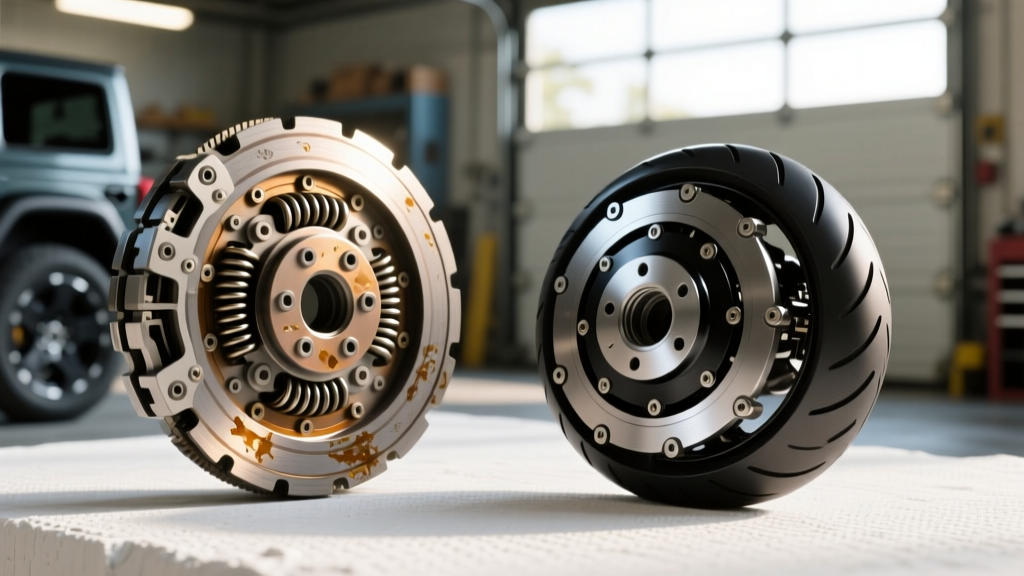
While automotive clutches typically fail due to friction material wear or hydraulic leaks, motorcycle clutches suffer from unique mechanical failure modes. The most common is clutch basket notching. Over thousands of miles, the tangs of the friction plates hammer against the aluminum fingers of the outer basket, creating deep grooves. When this happens, the plates hang up on the notches, causing the clutch to drag when pulled in, making it nearly impossible to find neutral or shift smoothly at a stop. If notching is present, the basket must be replaced or machined, and heavy-duty springs should be installed to reduce future impact wear.
Another frequent issue is spring sag caused by excessive heat from aggressive riding or prolonged slipping in stop-and-go traffic. Heat anneals the spring steel, reducing its clamping force. This results in high-RPM slip, which rapidly glazes the friction material and contaminates the engine oil with cork or Kevlar particulates. For deeper insights into motorcycle drivetrain maintenance and symptom diagnosis, the RevZilla Common Tread maintenance archives offer excellent visual breakdowns of basket wear patterns.
Final Verdict: DIY or Hit the Shop?
When comparing the jeep wrangler jk clutch replacement cost to a motorcycle clutch service, the difference in accessibility is night and day. The Jeep requires a transmission jack, heavy lifting, and dealing with stubborn, rusted drivetrain bolts. It is a weekend-long ordeal best left to professionals unless you have a fully equipped home garage and a two-post lift. Conversely, a motorcycle wet clutch replacement is a rite of passage for beginner mechanics. With a $150 parts budget, a factory service manual, and a Saturday afternoon, you can completely refresh your bike's drivetrain, saving hundreds in labor while gaining an intimate understanding of your machine's internal architecture.