The Benchmark: 2010 Jeep Wrangler Clutch Replacement
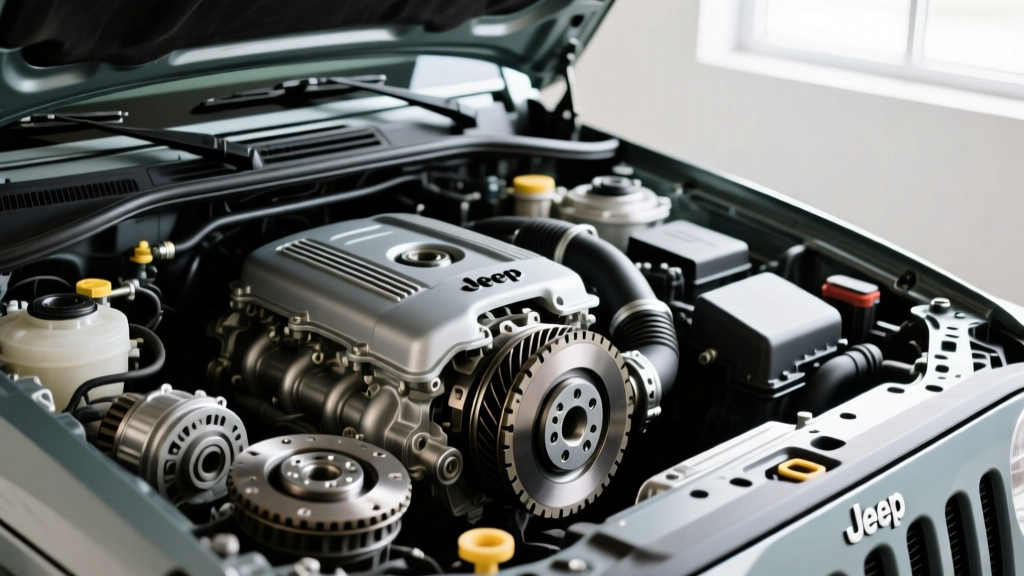
When evaluating manual transmission service, the 2010 Jeep Wrangler clutch replacement serves as a perfect benchmark for understanding 4x4 labor intensity. The 2010 JK-generation Wrangler, equipped with the 3.8L EGH V6 and the Aisin NSG376 6-speed manual transmission, represents a unique midpoint in drivetrain complexity. Unlike older models with the NV3550, the NSG376 utilizes an external hydraulic slave cylinder mounted directly to the bellhousing. This design choice saves hours of labor by eliminating the need to split the transmission case to replace the slave, a notorious failure point on earlier Jeeps.
However, accessing the NSG376 bellhousing requires navigating a labyrinth of off-road hardware. Technicians must safely support the drivetrain, drop the transfer case skid plate (which is heavily prone to rust-seized 18mm bolts), disconnect the front and rear driveshafts, and unbolt the NV241 or NV241OR transfer case. According to 2026 labor guides, this process books out at 6.8 to 8.2 hours depending on rust severity and whether the vehicle is equipped with aftermarket exhaust or skid plates.
2010 Wrangler Parts & Torque Specifications
For the 3.8L V6, a premium clutch kit like the LuK RepSet or Sachs equivalent typically ranges from $280 to $420 on platforms like RockAuto. When performing the installation, adhering to factory torque specifications is non-negotiable to prevent bellhousing misalignment and premature input shaft wear:
- Flywheel to Crankshaft: 70 ft-lbs (95 Nm)
- Pressure Plate to Flywheel: 17 ft-lbs (23 Nm) in a star pattern
- Bellhousing to Engine Block: 28 ft-lbs (38 Nm)
- Transfer Case Skid Plate: 74 ft-lbs (100 Nm)
Expert Warning: The NSG376 is highly sensitive to lubricant chemistry. Never fill this transmission with standard GL-5 gear oil or generic ATF, as the sulfur additives will corrode the yellow metal synchronizers. Use only Mopar Manual Transmission Lubricant (P/N 04897351AC) or a verified equivalent meeting MS-9224 specifications.
Clutch Replacement Cost by Vehicle Type (2026 Data)
While the 2010 Wrangler provides a solid baseline for 4x4 service, clutch replacement costs fluctuate wildly across different vehicle architectures. The primary cost drivers in 2026 are drivetrain layout (FWD vs. RWD vs. 4WD), transmission weight, and the presence of Dual-Mass Flywheels (DMF). Below is a comprehensive cost breakdown based on current national averages for independent transmission specialists.
| Vehicle Type | Example Model | Avg. Parts Cost | Avg. Labor Hours | Estimated Total (2026) |
|---|---|---|---|---|
| FWD Compact | Honda Civic / Mazda3 | $150 - $300 | 4.5 - 6.0 | $850 - $1,200 |
| RWD Sports Coupe | Ford Mustang / Dodge Challenger | $250 - $500 | 5.0 - 7.0 | $1,000 - $1,600 |
| 4x4 Off-Roader | 2010 Jeep Wrangler / Toyota Tacoma | $300 - $600 | 6.5 - 9.0 | $1,300 - $2,100 |
| Heavy-Duty Diesel | Ram 2500 (Cummins G56) | $600 - $1,200 | 11.0 - 15.0 | $2,800 - $4,500 |
Front-Wheel Drive (FWD) Nuances
FWD clutch replacements are often mistakenly assumed to be the cheapest due to the lack of a transfer case or long driveshaft. However, transverse-mounted engines require technicians to remove the front axles, detach the lower ball joints, and often unbolt the engine mounts to tilt the powertrain for transmission removal. On Subarus and certain Honda platforms, the engine and transmission are pulled out as a single unit from the top or bottom, requiring an engine hoist and significantly increasing shop time.
Rear-Wheel Drive (RWD) Efficiency
RWD vehicles like the Ford Mustang or Chevrolet Camaro offer the most straightforward clutch service. The layout allows for simple removal of the driveshaft, exhaust cross-pipes, and transmission crossmember. The primary cost variable here is the flywheel. Modern performance cars frequently use Dual-Mass Flywheels (DMF) to dampen torsional vibrations. A DMF cannot be resurfaced; it must be replaced, adding $400 to $800 to the parts bill. Many enthusiasts opt for Single-Mass Flywheel (SMF) conversion kits from manufacturers like McLeod or Fidanza to reduce future maintenance costs, though this may introduce slight gear rattle at idle.
Heavy-Duty Diesel Complexities
Replacing the clutch on a heavy-duty diesel, such as a Ram equipped with the 6.7L Cummins and the massive G56 manual transmission, is a major structural undertaking. The G56 transmission, manufactured by Mercedes-Benz/ZF, weighs over 180 lbs dry and requires a specialized high-capacity transmission jack. Furthermore, the sheer torque output of diesel engines necessitates heavy-duty clutches (like the South Bend Con-O or BorgWarner multi-disc setups) and heavy-duty hydraulic upgrades. Labor times easily exceed 12 hours due to the need to disconnect the transfer case, massive exhaust downpipes, and complex wiring harnesses routed along the bellhousing.
Expert Best Practices for Drivetrain Service
Whether you are tackling a 2010 Jeep Wrangler clutch replacement in your home garage or managing a fleet of commercial manuals, adhering to expert best practices ensures longevity and prevents immediate comebacks.
1. The "While You're In There" Rule
Labor is the most expensive component of any clutch job. Once the bellhousing is exposed, the marginal cost of replacing surrounding wear items is negligible. Always replace the rear main engine seal, the transmission input shaft seal, and the pivot ball/stud for the throwout bearing fork. On the 2010 Wrangler, inspecting the engine-to-transmission dowel pins is critical; if these are corroded or missing, the NSG376 will sit at a slight angle, causing rapid input shaft bearing failure and clutch chatter.
2. Pilot Bearing Extraction
A seized pilot bearing can ruin a crankshaft if extracted improperly. Avoid using aggressive pry bars. Instead, pack the pilot bearing cavity tightly with heavy grease, insert a blunt punch or old input shaft, and strike it firmly with a hammer. The hydraulic pressure created by the incompressible grease will safely push the bearing out of the crankshaft bore without damaging the surrounding metal.
3. Hydraulic System Bleeding
Modern manual transmissions rely on hydraulic clutch actuation. Air trapped in the slave cylinder line results in incomplete disengagement and gear grinding. For vehicles with external slaves (like the NSG376), a standard vacuum bleeder works well. For internal slaves or complex routing, a reverse-bleeding system that pushes fluid from the slave cylinder up to the master cylinder reservoir is the most reliable method to eliminate micro-bubbles.
Sourcing and Longevity
The longevity of a clutch assembly is heavily dependent on part sourcing and break-in procedures. According to engineering data from Aisin, proper bedding of the friction material requires 300 to 500 miles of moderate city driving. Avoid heavy towing, aggressive launches, or high-RPM shifts during this period to allow the friction disc to mate perfectly with the flywheel surface. By understanding the architectural differences between vehicle types and respecting the precise torque and fluid requirements of transmissions like the NSG376, you can ensure a clutch replacement that lasts well past the 100,000-mile mark.