The Overlooked Hero: Why Jeep Front Differential Fluid Matters
When maintaining a 4x4, the jeep front differential is often overshadowed by the rear axle or the transfer case. Yet, in modern JL Wranglers, JT Gladiators, and older JK platforms, the front axle (whether a Dana 30, Dana 44, or the robust M220/M186 variants) endures extreme mechanical stress. It must simultaneously manage steering articulation, drivetrain torque multiplication, and the brutal shock loads of off-road crawling. As we navigate the 2026 off-road season, preventive maintenance has shifted from simple mileage-based intervals to condition-based diagnostics. Analyzing your differential fluid's color, viscosity, and particulate content is the single most effective way to predict catastrophic ring and pinion failure before it strands you on the trail.
Unlike engine oil, which is filtered and cycled through a cooler, gear oil in a solid front axle sits in a static bath. It relies entirely on splash lubrication and its initial chemical package to fight extreme pressure (EP), shear forces, and thermal breakdown. Understanding what your drained fluid looks like is the equivalent of reading a metallurgical map of your axle's internal health.
The Baseline: Healthy Fluid Specifications
Before you can diagnose a problem, you must establish the baseline. A healthy, newly filled jeep front differential utilizes an API GL-5 certified gear oil. For standard JK and JL applications, the factory fill is typically a synthetic 75W-85 or 75W-140 API GL-5 lubricant. Mopar's official Gear & Axle Lubricant (Part # 68218655AC for 75W-85) is engineered with specific sulfur-phosphorus additive packages designed to protect the hypoid gear geometry of the ring and pinion.
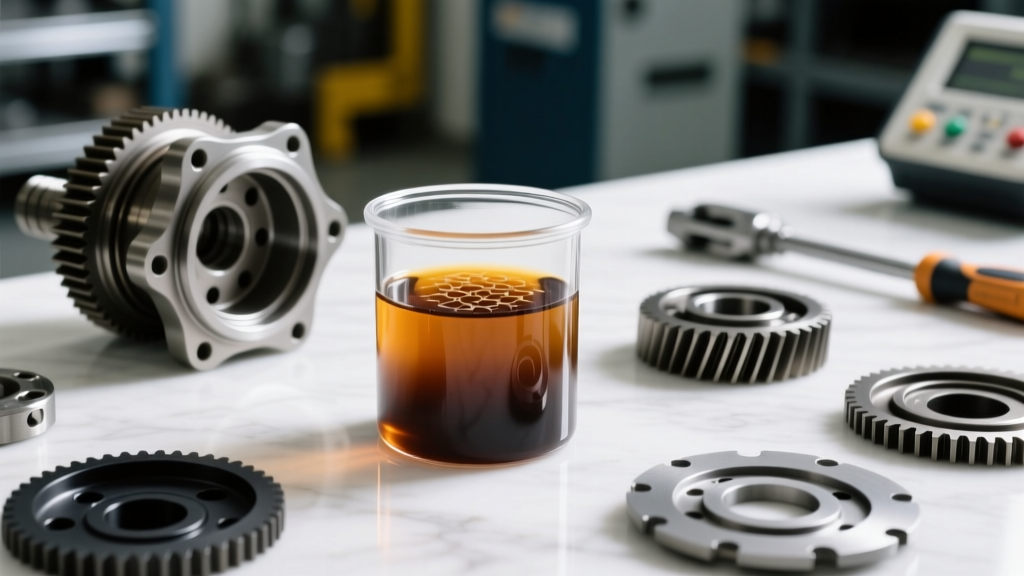
In its pristine state, GL-5 gear oil is translucent, ranging from a light honey-amber to a pale golden hue. It has a distinct, sharp, sulfuric odor—often described as smelling like rotten eggs or strong garlic. This smell is entirely normal and is a direct result of the extreme-pressure additives required to prevent the sliding contact of hypoid gears from tearing the metal surfaces.
Diagnostic Matrix: Fluid Color, Smell, and Consistency
When you pull the drain plug or remove the differential cover, the fluid's physical state will immediately tell you the story of the axle's recent operational history. Use the following diagnostic matrix to interpret your findings.
| Fluid Appearance | Consistency & Odor | Diagnostic Conclusion | Required Action |
|---|---|---|---|
| Translucent Amber / Gold | Smooth, strong sulfur smell | Optimal Health. Additive package is intact. | Standard service interval maintenance. |
| Opaque Milky / Chocolate Milk | Emulsified, frothy, lacks sulfur smell | Severe Water Intrusion. Emulsion destroys lubricity. | Immediate flush, seal inspection, breather mod. |
| Opaque Black / Dark Brown | Thick, sludgy, sharp burnt-toast odor | Thermal Breakdown. Fluid has exceeded thermal limits. | Flush, inspect pinion bearing preload, upgrade to 75W-140. |
| Dark with Fine Metallic Paste | Greasy, slight metallic scent | Normal Break-in Wear. Magnetic plug is functioning. | Clean magnetic plug, refill, re-check in 3,000 miles. |
| Dark with Brass/Gold Flakes | Visible shimmering flakes in light | Thrust Washer / Spider Gear Wear. Yellow metal failure. | Drop cover, inspect differential carrier and side gears. |
| Fluid with Steel Shards / Chips | Gritty, visible metal splinters | Catastrophic Ring & Pinion Spalling or Bearing Disintegration. | Complete axle teardown and rebuild required. |
Deep Dive: The 'Chocolate Milk' Phenomenon and Water Ingress
The most common abnormality found in a jeep front differential is the dreaded 'chocolate milk' emulsion. This occurs when water breaches the axle housing and mixes with the gear oil under the churning agitation of the ring gear. Water ingress drastically lowers the fluid's flash point and destroys the EP additive boundary layer, leading to rapid scoring of the pinion and ring gear teeth.
Failure Points for Water Intrusion
- The Axle Breather Tube: From the factory, Jeep routes the front axle breather tube to a location near the frame rail or shock tower. If the breather check-valve fails, or if the vehicle is submerged past the axle tubes while the housing is hot, the rapid cooling creates a vacuum that sucks water directly past the inner axle shaft seals and the pinion seal.
- Pinion Seal Degradation: The front pinion seal (located where the driveshaft yoke mates to the differential) is constantly exposed to road grime, mud, and water spray. A worn seal lip will weep gear oil out, and conversely, draw water in during deep water fording.
Pro-Tip for 2026 Trail Runners: If you frequently ford water deeper than 18 inches, extending your front axle breather tube up into the engine bay using a 1/4-inch polyurethane hose and a high-flow breather cap is a mandatory $20 preventive modification. Secure it above the coolant reservoir to ensure the axle never ingests water, even when submerged.
Metallurgical Analysis: Decoding the Particulates
Finding metal in your differential fluid is not always a death sentence for the axle, but you must know how to read the debris. The drain plug on most Dana 30 and Dana 44 axles features a strong neodymium magnet. Its job is to capture ferrous micro-particulates generated during the initial break-in period and normal operation.
Normal Wear: A smooth, dark gray, greasy paste coating the magnetic plug is completely normal. This is the result of microscopic gear tooth polishing and clutch pack wear (if equipped with a limited-slip carrier). Simply wipe it clean with a lint-free shop towel and brake cleaner during your fluid change.
Abnormal Wear (Brass/Bronze): If you see gold-colored flakes suspended in the fluid, you have a serious issue. The internal differential carrier utilizes bronze or brass thrust washers behind the spider and side gears to manage lateral loads during tight turns. Brass flakes indicate these washers have disintegrated, meaning the spider gears are likely gouging the carrier case itself. Quadratec's drivetrain catalog offers complete carrier rebuild kits that include updated thrust washers to resolve this before the case is permanently ruined.
Catastrophic Wear (Steel Shards): If the fluid feels gritty between your fingers, or if you find distinct, jagged steel chips (some as large as a fingernail), the hypoid gear set is experiencing spalling. This is often caused by improper pinion bearing preload, incorrect gear backlash setup, or extreme shock-loading on 37-inch tires without proper re-gearing. At this stage, a simple fluid change will not save the axle; a full setup with a new ring and pinion is required.
Preventive Service Protocol: Specs and Torque Values
Executing a fluid change on a jeep front differential requires precision. Over-torquing drain plugs can crack the cast aluminum or stamped steel differential housing, while under-torquing leads to weeping and eventual fluid starvation. Below are the exact specifications for the most common Jeep front axles.
JL Wrangler / JT Gladiator (M186 / Dana 30 Front Axle)
- Fluid Capacity: 1.4 Liters (1.48 Quarts)
- Recommended Fluid: Mopar 75W-85 API GL-5 (P/N 68218655AC) or equivalent synthetic.
- Fill/Drain Plug Torque: 25 - 32 lb-ft (Use a 3/8-inch drive torque wrench; do not use an impact gun).
- Friction Modifier: NOT required. The JL front axle is an open differential or features an electronic locking mechanism (Rubicon), neither of which utilizes clutch packs that require limited-slip friction modifiers.
JK Wrangler (Dana 30 / Dana 44 Front Axle)
- Fluid Capacity (Dana 30): 1.4 Liters (1.5 Quarts)
- Fluid Capacity (Dana 44): 1.7 Liters (1.8 Quarts)
- Recommended Fluid: 75W-140 Synthetic API GL-5 for heavily modified JKs running 35+ inch tires and heavy trail use.
- Cover Bolt Torque (if removing cover): 15 - 20 lb-ft in a crisscross star pattern. Use a thin bead of RTV silicone (Permatex Ultra Black) if the axle lacks a factory drain plug, ensuring you let the RTV cure for 2 hours before filling.
The Cost of Neglect vs. Preventive Maintenance
In the current automotive landscape, a dealership will typically charge between $150 and $250 to service the front differential, often using bulk, non-synthetic conventional gear oil to maximize margins. By contrast, a DIY preventive service using top-tier synthetic fluid like Red Line 75W-140 or Royal Purple Max Gear costs approximately $45 in materials and takes less than 45 minutes in a home garage.
More importantly, performing the service yourself allows you to conduct the visual and olfactory diagnostics outlined above. Catching a failing pinion seal or a disintegrating thrust washer by analyzing the fluid color and particulates can save you from a $2,500 complete axle replacement. For comprehensive factory service manuals and OEM part numbers, always consult the official Jeep Owner Resources portal or the Mopar parts database. Treat your fluid analysis as a routine health screening, and your Jeep's front axle will reliably deliver power to the trail for hundreds of thousands of miles.