The First Line of Defense: Reading Your Jeep Differential Fluid
For Jeep owners, the drivetrain is subjected to extreme environmental and mechanical stresses. Whether you are navigating deep water crossings in a Wrangler Rubicon, towing a heavy trailer with a Gladiator, or simply commuting in a Grand Cherokee, your axle assemblies are constantly working. The lifeblood of these components is the gear oil, and performing a preventive condition check is one of the most critical, yet frequently overlooked, maintenance tasks. Understanding your jeep differential fluid color, consistency, and odor can mean the difference between a routine $60 fluid swap and a catastrophic $2,500 axle rebuild.
Unlike engine oil, which is monitored via a dipstick and changed every 5,000 to 10,000 miles, differential fluid operates in a sealed, high-pressure environment. It relies on Extreme Pressure (EP) additives to protect the hypoid ring and pinion gears from shearing forces. However, thermal degradation, water intrusion, and metallic wear will inevitably alter the fluid's chemical and physical properties. This guide provides a comprehensive diagnostic framework for evaluating your gear oil condition before a minor issue becomes a terminal failure.
The Visual Diagnostic Matrix: Decoding Gear Oil Colors
Pulling a sample from the fill plug hole is the most direct way to assess the health of your ring, pinion, and carrier bearings. Use a clean, white paper towel or shop rag to wipe the fluid from your extraction tool. Compare your sample against the diagnostic matrix below.
| Fluid Color & Consistency | Diagnosis & Root Cause | Required Action |
|---|---|---|
| Clear Amber / Golden Honey | Optimal condition. Fresh synthetic or conventional gear oil with intact EP additives. | No action required. Reinstall fill plug and torque to spec. |
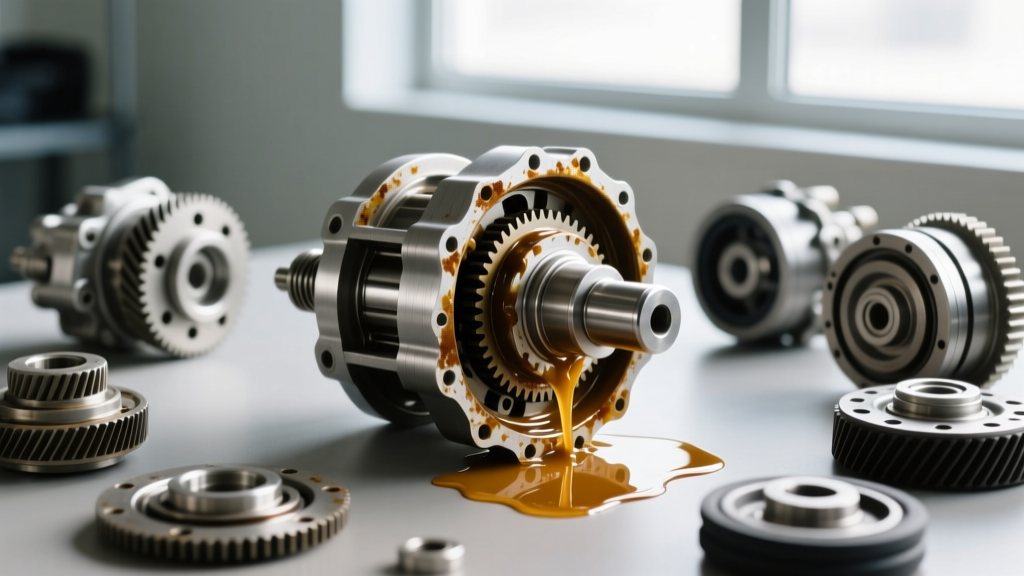
| Dark Brown / Opaque Black | Severe oxidation and thermal breakdown. Common in Jeeps used for heavy towing or low-speed rock crawling without adequate cooling. | Immediate fluid flush. Inspect for dragging parking brakes or undersized gear ratios causing excess heat. |
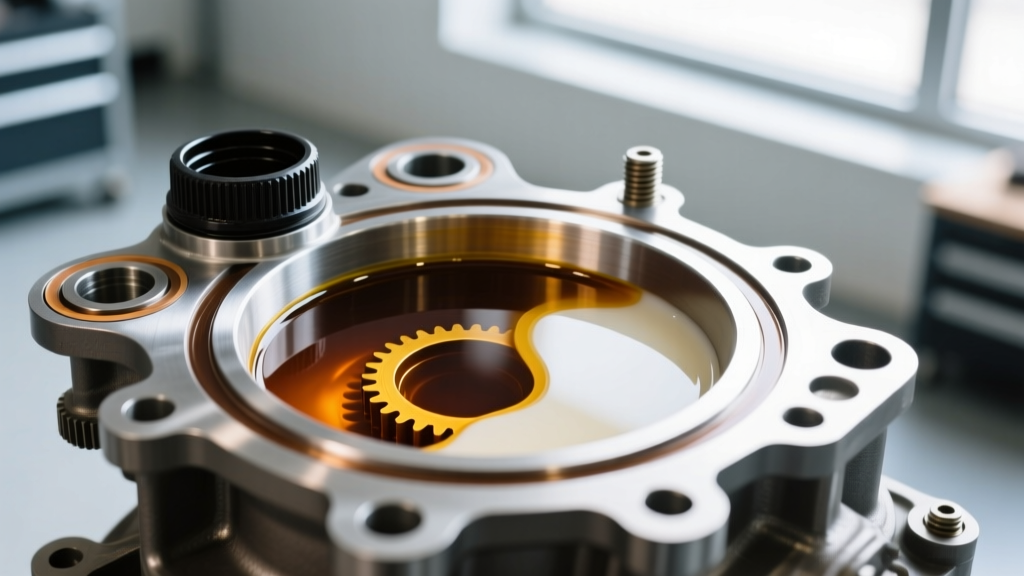
| Milky / Chocolate Milk Emulsion | Water intrusion. The fluid has emulsified due to water bypassing the axle seals or being sucked in through the breather tube during water fording. | URGENT: Drain, flush with cheap 80W-90, refill with premium synthetic. Inspect wheel bearings and axle shaft seals for rust. |
| Grey / Metallic Glitter | Normal break-in wear (if under 5,000 miles) OR severe bearing/gear degradation (if high mileage). Fine metallic paste on the drain plug magnet is common; chunky flakes are not. | If chunky flakes are present, drop the differential cover. Inspect carrier bearings and ring/pinion gear teeth for pitting or spalling. |
| Sludgy / Tar-like | Extreme neglect. The fluid has cooked into a semi-solid state, starving the pinion bearing of lubrication. | Professional teardown required. High likelihood of pinion bearing failure and seal leaks. |
Olfactory Diagnostics: What Your Gear Oil Smells Like
While color provides visual data, the odor of your differential fluid offers vital chemical insights. Gear oil is notorious for its pungent aroma, but you must learn to distinguish between normal chemical compounds and the scent of mechanical distress.
- Rotten Eggs / Sulfur: This is normal. API GL-5 gear oils rely on sulfur-phosphorus Extreme Pressure (EP) additives to create a sacrificial boundary layer on the hypoid gear teeth. If it smells like sulfur, the additive package is present.
- Burnt Toast / Acrid Smoke: Indicates severe overheating. The base oil has exceeded its thermal stability threshold (often above 300°F / 150°C), causing the EP additives to deplete and the oil to carbonize. This is common in modified Jeeps running large, heavy tires (e.g., 37-inch or 40-inch mud terrains) on stock 3.73 or 4.10 gear ratios, which forces the engine and drivetrain to operate at higher RPMs and loads.
- Musty / Swampy Odor: If the fluid smells like a stagnant pond, anaerobic bacteria have colonized the water-contaminated fluid. This confirms long-term water intrusion and guarantees that internal corrosion is actively eating away at your bearing races.
Jeep Axle Configurations and Fluid Capacities
To properly evaluate and service your drivetrain, you must know exactly which axles are under your Jeep. Capacities vary slightly by model year and specific housing design, but these are the standard benchmarks for preventive maintenance planning:
- Dana 30 (Front Axle - JK/JL Non-Rubicon): ~1.3 Liters (1.4 Quarts). Uses standard 75W-90 or 80W-90 API GL-5.
- Dana 44 (Front/Rear Axle - JK Rubicon / JL / JT): ~1.9 Liters (2.0 Quarts). The JL and Gladiator generations often specify Mopar 75W-85 Synthetic (P/N 68218655AA) to meet modern CAFE fuel economy standards, though 75W-90 remains the preferred heavy-duty aftermarket choice for off-road rigs.
- Mopar 8.25 / Chrysler 8.25 (Rear Axle - XJ/TJ/JK Sport): ~1.7 Liters (1.8 Quarts). Known for its robust 29-spline axle shafts, but highly susceptible to pinion seal leaks if fluid levels drop.
Preventive Maintenance: Extracting a Sample and Upgrading Breathers
You do not need to remove the differential cover to check the fluid condition. In fact, removing the cover unnecessarily introduces the risk of improper sealing and RTV silicone contamination. Instead, utilize the fill plug for a non-invasive biopsy.
The Syringe Extraction Method
- Locate the fill plug on the front or rear differential housing. It is typically a 3/8-inch square drive or a 13mm/15mm hex bolt, positioned roughly halfway up the differential cover or on the side of the center section (common on Mopar 8.25 axles).
- Clean the area around the plug with brake cleaner to prevent trail dust from falling into the housing.
- Remove the plug using a 3/8-inch ratchet or appropriate socket.
- Insert a clean, flexible plastic tube attached to a large veterinary syringe or a manual fluid evacuator pump down into the oil bath.
- Draw out 2-3 ounces of fluid onto a white paper towel for visual and olfactory inspection.
- Inject the clean sample back into the axle (if in good condition) or top off with fresh fluid if the level is below the bottom edge of the fill hole threads.
The Breather Tube Vulnerability
If you find milky fluid, the culprit is almost always the factory axle breather tube. When you submerge a hot axle in cold water, the rapid temperature drop creates a vacuum inside the housing. If the factory breather tube is routed low on the chassis, it will suck water directly past the axle shaft seals and into the gear oil. Preventive Action: Extend your differential breather tubes using 5/16-inch fuel line hose, routing them high into the engine bay or under the hood near the firewall. This simple $15 modification is mandatory for any Jeep that sees water deeper than the wheel hubs.
Fluid Specifications, Additives, and Torque Requirements
When your diagnostic check reveals that a fluid change is necessary, precision in fluid selection and hardware torque is paramount. According to API gear oil classifications, your Jeep requires an API GL-5 rated lubricant to protect the sliding friction of the hypoid ring and pinion gears. Never use GL-4, as it lacks the necessary EP additives and will lead to rapid gear wear.
Limited-Slip vs. Locking Differentials
The type of differential inside your axle dictates your additive requirements:
- Open Differentials & Electronic Lockers (e.g., JL Rubicon Tru-Lok): Standard 75W-90 GL-5 synthetic is all you need. No friction modifiers are required because there are no clutch packs to manage.
- Trac-Lok / Clutch-Type Limited Slip Differentials (LSD): You must add a Friction Modifier (Mopar P/N 4318060AD or equivalent). Without it, the clutch packs will chatter, bind, and prematurely destroy themselves during tight, low-speed turns. Add 2 to 4 ounces of modifier before filling the rest of the axle with gear oil.
Hardware and Torque Specifications
Improper torque on differential hardware is a leading cause of fluid leaks and housing warping. Refer to these baseline specifications for common Jeep axles (always verify with your specific factory service manual):
- Dana 44 Cover Bolts (1/2-inch hex or 13mm): Torque to 30-35 lb-ft (41-47 Nm) in a crisscross pattern. Use a high-quality reusable gasket (like LubeLocker P/N LLD-44) or Permatex Ultra Black RTV. Allow RTV to cure for 12 hours before filling with oil.
- Dana 30 Cover Bolts (5/16-inch hex or 8mm): Torque to 20-25 lb-ft (27-34 Nm). These smaller bolts strip easily if over-torqued.
- Fill Plugs: Typically 25-30 lb-ft. Wrap the threads with 2-3 layers of PTFE (Teflon) tape to prevent seepage and make future removal easier.
Summary: The Cost of Prevention vs. Repair
Ignoring the condition of your jeep differential fluid is a gamble with high stakes. A routine preventive fluid check and swap costs between $40 and $80 in DIY synthetic gear oil. Conversely, replacing a water-destroyed Dana 44 carrier bearing and ring/pinion set at a professional 4x4 shop will easily cost between $1,200 and $2,500 in parts and labor. By integrating fluid color and condition analysis into your post-trail or bi-annual maintenance routine, you ensure that your Jeep's axles remain quiet, cool, and capable of conquering whatever terrain lies ahead. For more in-depth axle rebuilding procedures and gear ratio selection, consult authoritative resources like Dana Spicer's official engineering guides.