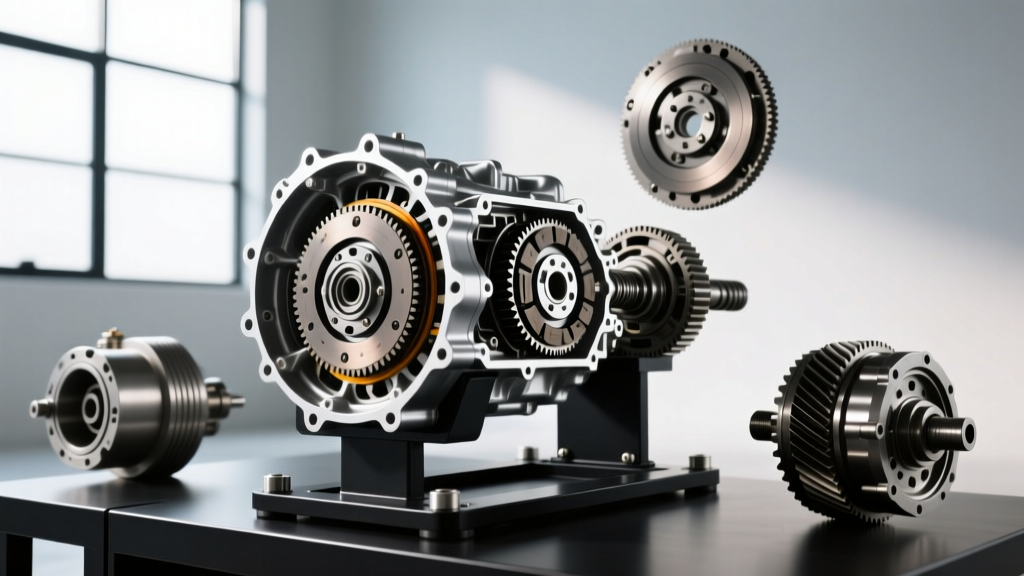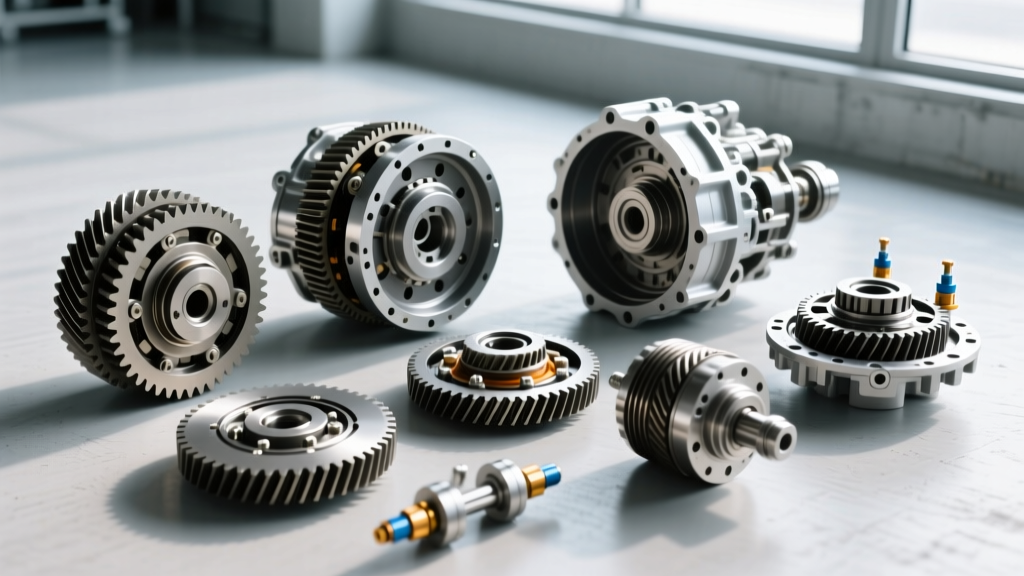
The Semantic vs. Mechanical Divide
When automotive enthusiasts, consumers, and regulators ask, is dct transmission automatic, the answer depends entirely on the lens through which you view the powertrain. From a functional and legal standpoint—such as how the EPA classifies fuel economy testing or how state DMVs issue driver's licenses—a Dual Clutch Transmission (DCT) is grouped with automatic transmissions. The driver does not operate a clutch pedal, and the vehicle shifts gears autonomously.
However, from a strict mechanical and engineering perspective, a DCT is not a traditional automatic transmission. It is an Automated Manual Transmission (AMT). To understand why this distinction matters for reliability, maintenance, and driving dynamics, we must dissect the internal architecture of the DCT and compare it to the hydrodynamic torque converter automatics that dominated the 20th and early 21st centuries.
'While a conventional automatic relies on fluid coupling and planetary gearsets, a DCT is fundamentally two manual transmissions sharing a single housing, governed by an electrohydraulic brain.' — Powertrain Engineering Fundamentals, SAE International
Architecture: Friction Clutches vs. Hydrodynamic Coupling
To answer the question of whether a DCT is an automatic, we must look at how engine torque reaches the transmission input shaft. In a traditional automatic, such as the ubiquitous ZF 8HP or GM 10L90, the engine connects to the transmission via a torque converter. This fluid coupling multiplies torque and absorbs torsional vibrations, allowing the vehicle to creep forward at a stop without stalling the engine.
A DCT eliminates the torque converter entirely. Instead, it utilizes two friction clutches (K1 and K2) mounted on concentric input shafts. According to ZF's official transmission engineering documentation, these clutches operate much like the single-plate dry clutch in a manual car, but they are actuated by a computer rather than a driver's left foot.
The Concentric Shaft Layout
- Clutch K1 (Outer): Controls the odd gears (1, 3, 5, 7) and routes power through a hollow outer shaft.
- Clutch K2 (Inner): Controls the even gears (2, 4, 6, 8) and Reverse, routing power through a solid inner shaft nested inside the outer shaft.
Because there is no fluid coupling to absorb slip, DCTs require sophisticated micro-slipping algorithms in their Transmission Control Modules (TCM) to simulate the 'creep' function of a traditional automatic at stoplights. This is where the engineering complexity—and potential failure points—begin to emerge.
Inside the Mechatronic Unit: The Brain of the DCT
The component that transforms a manual gearset into an 'automatic' experience is the mechatronic unit. This integrated module houses the TCM (the computer), solenoid valves, pressure sensors, and hydraulic pumps. As detailed in Bosch's mobility solutions overview on automated transmissions, the mechatronic unit must manage hydraulic pressures exceeding 60 bar (870 psi) to actuate the clutch packs and shift forks in milliseconds.
Electrohydraulic vs. Electromechanical Actuation
Not all DCTs achieve their 'automatic' behavior the same way. The industry splits into two distinct actuation methodologies:
- Electrohydraulic (Wet Clutches): Used in high-torque applications like the VW DQ500 (rated for 600+ Nm) or the Porsche PDK (ZF 7DT). Hydraulic fluid is used both to physically push the clutch pistons and to cool the multi-plate friction materials submerged in oil.
- Electromechanical (Dry Clutches): Used in low-torque, efficiency-focused applications like the VW DQ200 or the notorious Ford DPS6 (PowerShift). Electric stepper motors and levers physically clamp the dry friction plates. These systems lack the thermal mass of oil cooling, making them highly susceptible to overheating in stop-and-go traffic.
Comparative Analysis: DCT vs. Torque Converter Automatic
To definitively separate the DCT from the traditional automatic, let us compare two industry benchmarks: the ZF 8HP70 (8-speed torque converter) and the ZF 7DT-75 (7-speed DCT, famously known as the Porsche PDK).
| Specification | ZF 8HP70 (Traditional Auto) | ZF 7DT-75 (Porsche PDK DCT) |
|---|---|---|
| Input Coupling | Hydrodynamic Torque Converter | Wet Multi-Plate Friction Clutches |
| Gear Architecture | Lepelletier Planetary Gearsets | Parallel Shaft Spur/Helical Gears |
| Shift Latency | ~200 - 400 milliseconds | ~8 - 50 milliseconds |
| Torque Multiplication | Yes (via fluid stator) | No (Fixed mechanical ratio) |
| Max Torque Capacity | 700 Nm (Standard) / 1000+ Nm (Tuned) | 750 Nm (Standard PDK configuration) |
| Efficiency (Cruising) | High (Lock-up clutch engaged) | Very High (Direct mechanical link) |
Gear Pre-Selection: The Illusion of Continuous Power
The primary reason consumers perceive a DCT as a high-performance automatic is its shift speed. In a traditional automatic, the transmission must release one clutch pack/band and apply another within a planetary gearset, often requiring a brief torque interruption or 'flare' to manage shift shock.
A DCT utilizes gear pre-selection. While you are accelerating in 3rd gear (K1 clutch engaged), the mechatronic unit has already used a shift fork to slide the synchronizer collar for 4th gear into place. The 4th gear is physically meshed, but the K2 clutch remains open. When the shift command is given, the TCM simply ramps down hydraulic pressure to K1 while simultaneously ramping up pressure to K2. This overlapping 'cross-fade' occurs in under 50 milliseconds, resulting in zero interruption of torque delivery to the wheels.
Maintenance Realities: Where the 'Automated Manual' Bites Back
Because a DCT is mechanically a manual transmission, it requires maintenance that traditional automatics often avoid, and it suffers from wear items that torque converters do not possess. If you are buying a used vehicle with a DCT, treating it like a 'sealed for life' traditional automatic will result in catastrophic financial consequences.
Fluid and Filter Intervals
Wet DCTs rely on specialized, low-viscosity fluids that must maintain exact friction coefficients for the clutch packs while protecting the synchronizer rings. Using standard ATF (like Dexron VI or Mercon LV) in a DCT will cause immediate clutch shudder and mechatronic failure.
- VW/Audi DQ250 (6-Speed Wet): Requires G 052 182 A2 fluid. Service interval is strictly every 40,000 miles. The external spin-on filter (Part #
02E305051) must be replaced. Total fluid capacity is roughly 5.5 liters for a drain-and-fill. - Porsche PDK (ZF 7DT): Requires Pentosin FFL-3. The system holds nearly 9 liters, and a proper flush requires a specialized diagnostic tool to cycle the mechatronic valves and coolers to purge trapped air and degraded fluid.
The Cost of Mechatronic and Clutch Failures
Unlike a torque converter which can often last 200,000 miles without intervention, DCT clutch packs are wear items. In high-torque or track environments, the friction material degrades. Furthermore, the mechatronic unit is subjected to intense heat and metallic debris from the synchronizers.
- Clutch Pack Replacement: For a VW 02E DSG, a genuine clutch pack kit (Part #
02E141903) costs between $700 and $1,100. However, the labor requires dropping the transmission and using specialized alignment tools (like the VW T10374), pushing the total shop bill to $2,000 - $2,800. - Mechatronic Unit Failure: Internal accumulator cracks or solenoid burnouts are common edge cases. A replacement mechatronic unit requires coding to the vehicle's immobilizer and CAN-bus network. Expect to pay $2,500 to $4,500 for the part and programming alone.
Verdict: How the Industry Classifies DCTs in 2026
So, is a DCT transmission automatic? In the showroom and in the eyes of the law, yes. It provides a two-pedal, self-shifting driving experience that fulfills the consumer definition of an automatic. However, under the bell housing, it is a highly sophisticated, computer-controlled manual transmission. Understanding this mechanical truth is the key to mastering a DCT's driving dynamics, respecting its thermal limits in stop-and-go traffic, and adhering to the strict maintenance schedules required to keep its electrohydraulic brain functioning flawlessly.