The Phantom Slip: When Friction Clutches Aren't the Problem
Diagnosing intermittent transmission slip is one of the most frustrating challenges in modern drivetrain repair. When a vehicle exhibits shift flares, delayed engagements, or erratic engine braking, technicians instinctively suspect worn friction clutches, leaking piston seals, or failing shift solenoids. However, a frequently overlooked culprit behind these phantom symptoms is the degradation of one way clutch bearings. Unlike hydraulically applied friction packs, one-way clutches—commonly known as sprags, rollers, or overrunning clutches—rely entirely on mechanical interference and geometric locking to hold torque. When these components begin to fail, they rarely lock up completely or freewheel entirely right away. Instead, they present with maddeningly intermittent slip that defies standard hydraulic diagnostics.
In 2026, with the proliferation of 8-speed and 10-speed automatic transmissions utilizing complex compound planetary gearsets, the reliance on precision one-way clutches has only increased. Understanding how to isolate, test, and measure these mechanical diodes is critical for any transmission specialist looking to eliminate comebacks and misdiagnoses.
Anatomy of Intermittent One Way Clutch Bearing Failures
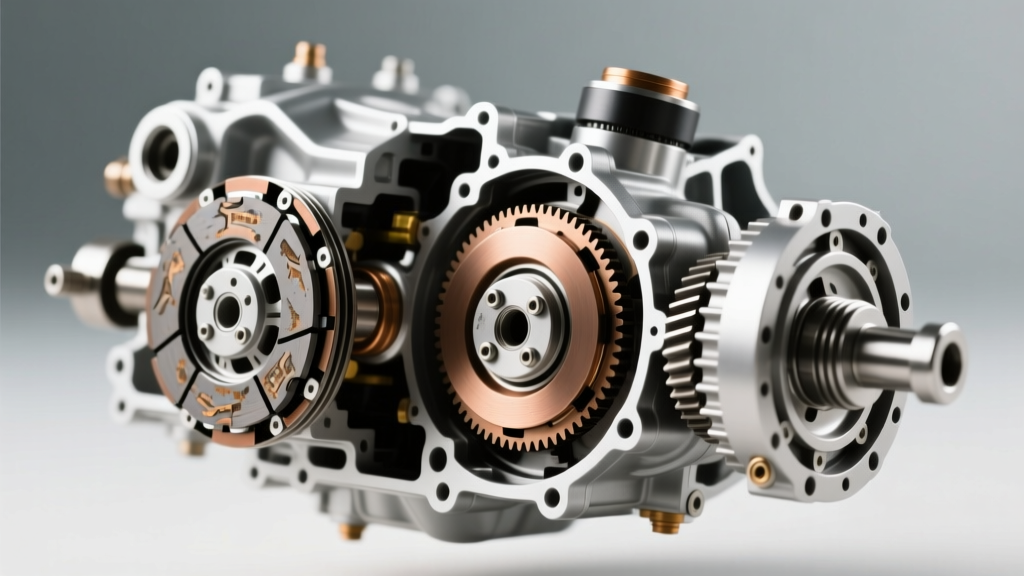
To diagnose the problem, you must understand the mechanics of the failure. One way clutch bearings generally fall into two categories: sprag-type (figure-8 shaped elements) and roller-type (cylindrical elements on ramped races). Both are designed to lock instantly in one rotational direction and freewheel in the other. Intermittent failures occur due to specific physical anomalies:
1. Race Micro-Pitting and Skating
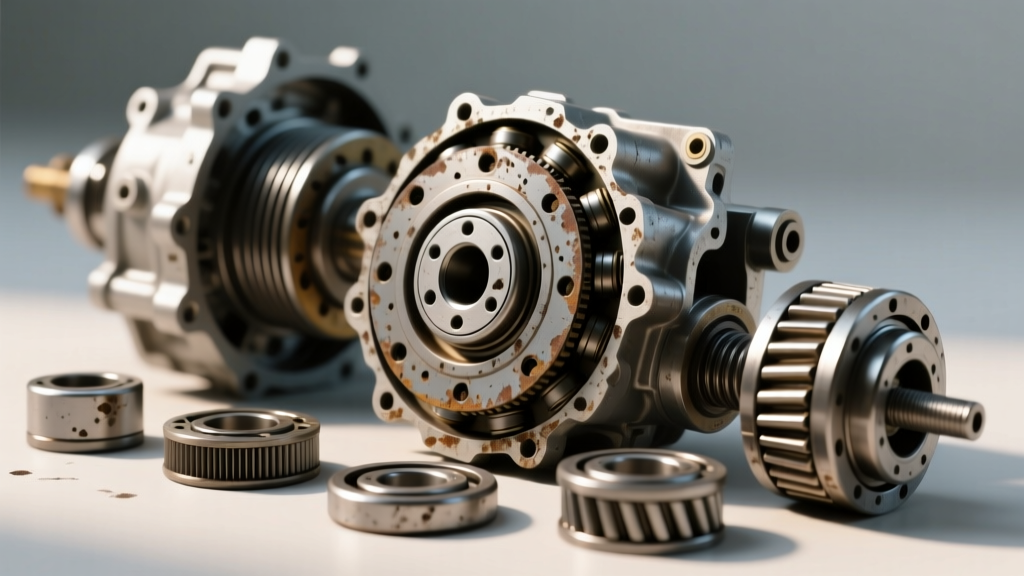
The inner and outer races of a one-way clutch must possess a mirror-like surface finish. Over time, high-torque loading causes micro-pitting or brinelling on the race surface. When the transmission is under light throttle, the sprag may lock successfully on a smooth section of the race. However, under heavy load or wide-open throttle (WOT), the sprag rotates slightly into a pitted groove, loses its geometric bite, and 'skates' across the surface. This results in an intermittent flare that only appears under specific torque thresholds.
2. Debris Ingestion and Fluid Dynamics
One-way clutches are highly sensitive to fluid contamination. Microscopic friction material from an adjacent failing clutch pack can circulate through the lubrication circuit and become wedged between the sprag elements and the retaining cage. This debris prevents the sprag from fully tilting into the lock position. As fluid flow rates change with RPM and line pressure, the debris may temporarily flush out, restoring lockup, only to jam the sprag again minutes later.
3. Thermal Expansion and Clearance Shifts
Aluminum transmission housings and steel clutch races expand at different rates. In units where the outer race is pressed directly into an aluminum case or pump housing, extreme heat can alter the interference fit. A sprag that locks perfectly at operating temperatures of 180°F (82°C) may begin to slip when fluid temperatures spike to 220°F (104°C) during towing or aggressive driving, as the aluminum housing expands and relieves the radial tension required for the sprag to bite.
Step-by-Step Diagnostic Protocol
Isolating a failing one-way clutch requires moving beyond generic OBD2 codes and utilizing advanced bi-directional scan tool data and physical testing.
- Input vs. Output Speed Sensor Analysis: Connect a high-end diagnostic tablet and graph the Turbine Shaft Speed (TSS) against the Output Shaft Speed (OSS). Command the transmission into the specific gear range where the one-way clutch is supposed to hold (e.g., Manual 1st gear). If you see the TSS spike erratically while the OSS remains steady under load, the mechanical lock is failing. Crucially, if the slip only occurs when the TCM commands high line pressure, you are likely dealing with a mechanical skate condition rather than a hydraulic leak.
- The D1 vs. D2 Stall Test: In many traditional automatics, the Low/Reverse one-way clutch holds the reaction member in Drive-1, while the Low/Reverse friction clutch applies in Manual-1. Perform a stall test in D1. If the engine RPM flares higher than specification, but a stall test in Manual-1 holds perfectly within the 1,800–2,200 RPM range, you have definitively isolated a failing one-way clutch bearing. The hydraulic circuit is fine; the mechanical diode is broken.
- Fluid Forensics: Drop the pan and inspect the debris. Friction clutch wear produces a fine, dark, burnt-smelling silt. A failing one-way clutch, however, sheds metallic 'glitter' or tiny, shiny slivers of the sprag cage. If you find small, curved metal shards in the pan, a sprag cage is fatiguing and breaking apart, causing intermittent jamming.
Application Guide: High-Failure Transmissions
Certain transmission platforms are notorious for one-way clutch bearing issues. Recognizing these patterns will save hours of diagnostic time.
- GM 4L60E / 4L65E: The Low/Reverse Sprag is a legendary failure point. When it fails intermittently, the driver will report a harsh 'bang' on the 1-2 shift (as the sprag suddenly catches after slipping) or a complete loss of engine braking in D1. Always replace the inner and outer races when replacing the sprag (Raybestos Part # 71600 or equivalent).
- GM 6L80 / 6L90: These units utilize a roller-type Low/Reverse one-way clutch. Intermittent binding or slipping in Manual 1 is common. The roller ramps on the inner race wear down, causing the rollers to 'climb' out of the lock position under high torque.
- ZF 8HP (8HP45 / 8HP75 / 8HP90): Widely used in BMW, Chrysler, and Ford applications, the ZF 8-speed relies heavily on sprag clutches for seamless shift overlaps. Intermittent flares on the 1-2 or 3-4 shifts, often misdiagnosed as failing mechatronic solenoids, can be traced back to worn sprag cages in the A-E clutch assemblies.
One-Way Clutch Types & Intermittent Failure Signatures
| Clutch Type | Common Application | Intermittent Symptom | Primary Failure Mode |
|---|---|---|---|
| Sprag (Figure-8) | GM 4L60E (L/R) | Harsh 1-2 bang or D1 flare | Sprag flipping / Race brinelling |
| Roller (Ramp) | GM 6L80 (L/R) | Slip in Manual 1, binds in Park | Roller skating / Ramp wear |
| Sprag (Dual-Cage) | ZF 8HP Series | Delayed reverse or 1st gear flare | Cage fatigue / Debris ingestion |
Teardown Forensics and Measurement Specs
Once the transmission is on the bench, visual inspection is not enough. You must measure the one-way clutch bearing races to determine the root cause of the intermittent slip.
Measuring Race Wear
Use a digital micrometer and a dial indicator to check the inner and outer race diameters. More importantly, perform the 'fingernail test.' Run your fingernail across the surface of the race where the sprag makes contact. If your nail catches in a groove, or if a wear track exceeds 0.002 inches (0.05mm) in depth, the race is scrap metal. Installing a new $85 sprag assembly into a worn race guarantees the new sprag will skate and fail within 5,000 miles.
Retainer Springs and Cages
Inspect the garter springs or stamped steel retaining clips that keep the sprag elements aligned. A fatigued spring will allow the sprags to tilt at inconsistent angles, causing some elements to lock while others skate. This uneven load distribution leads to catastrophic, sudden failure following a period of intermittent slip.
Reassembly Torque Specifications
The outer race of many one-way clutches is retained by the transmission pump housing or a dedicated stator support. Incorrect torque during reassembly can distort the aluminum housing, turning a perfectly round race into an oval one. This distortion causes the sprag to lock in one rotational position and slip in another—the very definition of an intermittent fault.
- GM 4L60E Pump Housing Bolts (M8): Torque to 18 lb-ft (24 Nm) in a crisscross pattern to prevent outer race distortion.
- GM 6L80 Oil Pump Bolts: Torque to 106 lb-in (12 Nm). Over-torquing these will crush the pump cover and bind the L/R roller clutch outer race.
Expert Insight: Never reuse a one-way clutch bearing race if the transmission experienced severe overheating. Temperatures exceeding 250°F (121°C) can anneal the hardened steel surface of the race, reducing its Rockwell hardness. The sprag will literally chew through the softened steel under load. For deep-dive engineering bulletins on sprag metallurgy and shift overlap timing, consult the Sonnax Technical Resources library or the Automatic Transmission Rebuilders Association (ATRA) archives.
Diagnosing intermittent slip requires a shift in mindset. When hydraulic pressure tests pass and solenoid commands are verified, the mechanical diodes of the transmission must be scrutinized. By understanding the unique failure modes of one way clutch bearings, technicians can confidently pinpoint the root cause of phantom shift flares, ensuring a durable, long-lasting repair.