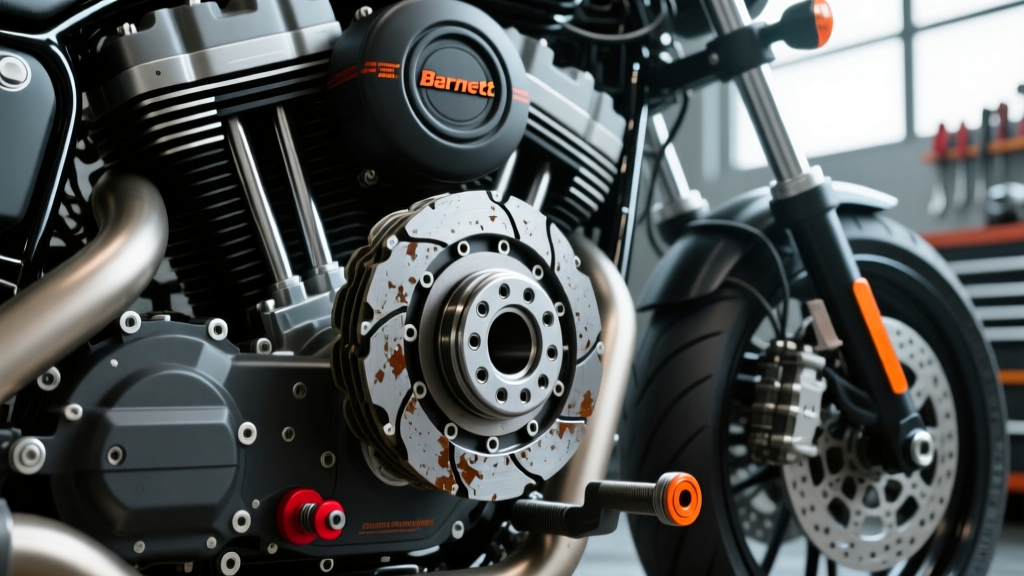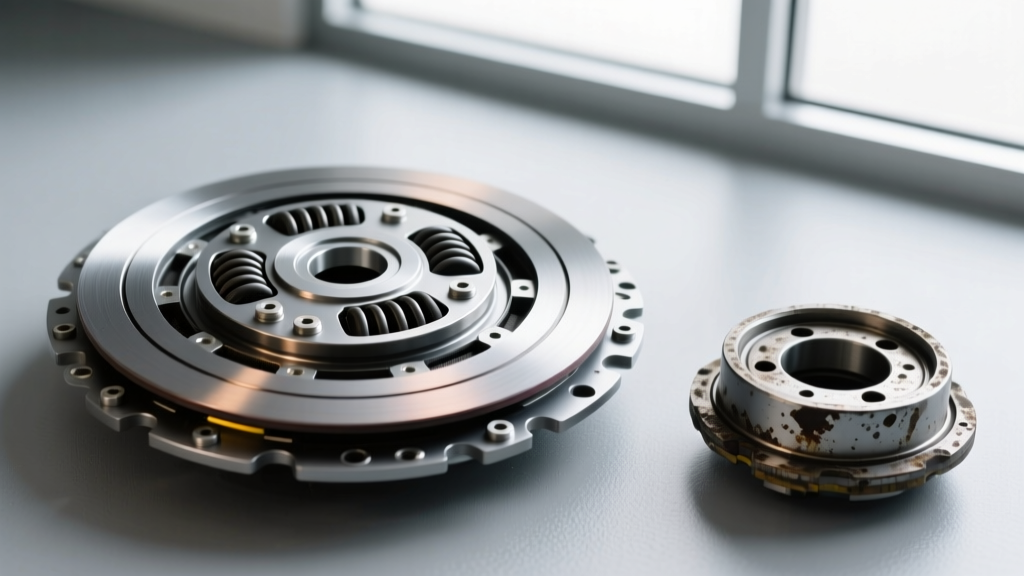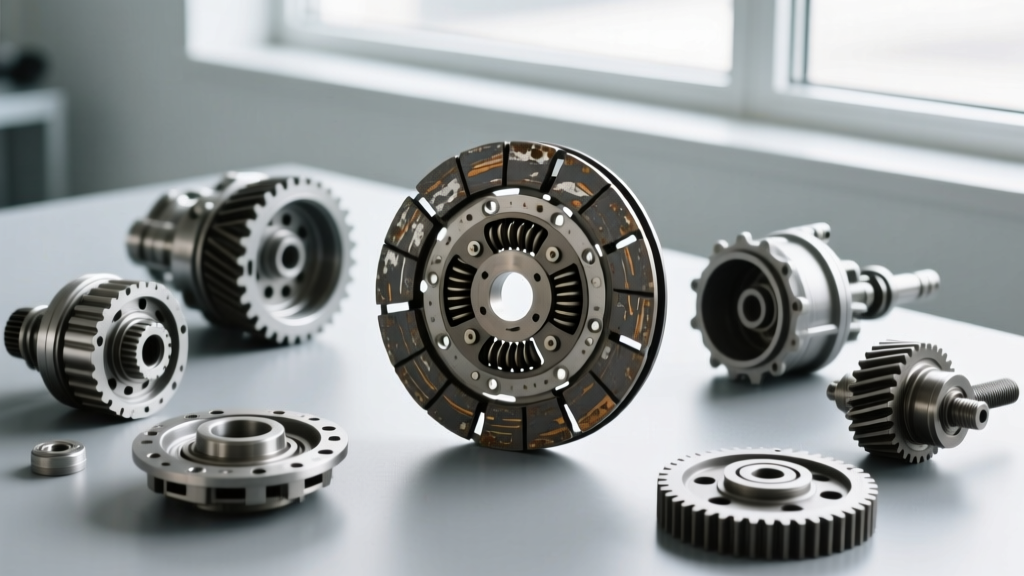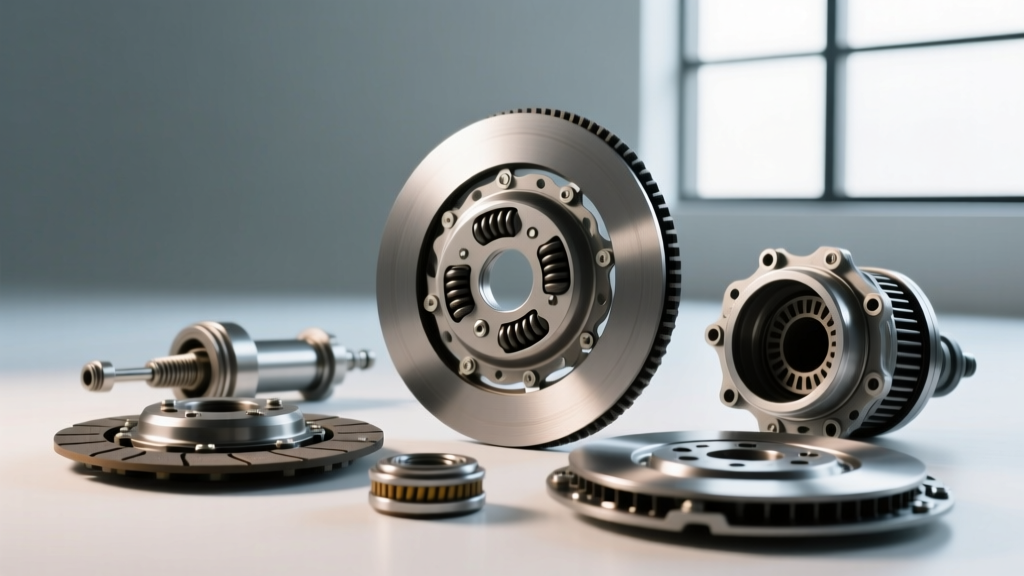
Beyond the Basics: When Intermittent Clutch Faults Defy Simple Definitions
While a basic internet search to define clutch car mechanics will tell you that the clutch is a friction coupling device connecting the engine flywheel to the transmission input shaft, real-world diagnostics require a vastly deeper understanding. Novice mechanics and DIYers often assume that clutch failure is a binary event: it either works, or it is completely worn out. However, as automotive transmission specialists know, the most frustrating and dangerous drivetrain issues are intermittent clutch problems. These faults manifest unpredictably, often tied to specific thermal conditions, RPM ranges, or hydraulic pressure thresholds, making them notoriously difficult to replicate in a service bay.
In 2026, with the widespread integration of advanced Concentric Slave Cylinders (CSC), complex Dual-Mass Flywheels (DMF), and high-torque capacity pressure plates in everything from daily commuter hatchbacks to track-focused sports cars, intermittent disengagement, chatter, and slipping require a methodical, data-driven diagnostic approach. This guide bypasses the elementary definitions and dives straight into the advanced troubleshooting of intermittent manual transmission engagement failures.
Hydraulic Heat Soak and Concentric Slave Cylinder Bypassing
One of the most common causes of intermittent clutch disengagement failure is hydraulic fluid aeration and internal seal bypassing within the clutch master cylinder or the Concentric Slave Cylinder (CSC). Unlike traditional external fork-and-lever setups, modern vehicles (such as those utilizing ZF Sachs or LuK CSC modules) route hydraulic pressure directly to the release bearing sleeve.
The Failure Mode: In heavy stop-and-go traffic or during track use, the CSC is subjected to extreme radiant heat from the exhaust and bellhousing. This heat soak causes the DOT 4 or DOT 5.1 hydraulic fluid to expand and, in severe cases, micro-boil, introducing air into the closed system. Furthermore, the internal EPDM rubber seals inside the master cylinder can temporarily lose their interference fit against the bore wall when overheated. The result? The clutch pedal drops to the floor with zero resistance, and the car cannot be shifted into gear. After the vehicle sits for 20 minutes and the fluid cools, the pedal feel returns to normal, leading many misinformed technicians to claim 'no problem found.'
Diagnostic Verification: To catch this intermittent failure, you must perform a thermal load test. Use an infrared pyrometer to measure the bellhousing temperature after a 15-minute simulated city drive. If the CSC housing exceeds 210°F (99°C) and pedal travel increases by more than 15%, the hydraulic seals are bypassing under thermal expansion. The fix requires upgrading to a high-temperature DOT 5.1 fluid (which has a higher dry boiling point of 518°F/270°C) and replacing the master/slave assembly with an updated OEM part, such as the Aisin or FTE thermal-resistant lines.
Diagnostic Matrix: Intermittent Symptoms vs. Root Causes
Because intermittent symptoms rarely present themselves when the vehicle is on the lift, technicians must rely on driver-reported variables. The following matrix correlates specific trigger conditions with their most likely mechanical or hydraulic culprits.
| Intermittent Symptom | Condition Trigger | Probable Culprit | Verification Test |
|---|---|---|---|
| Pedal drops to floor | Stop-and-go traffic / High heat | Master cylinder internal seal bypass / Fluid aeration | Thermal load test & IR pyrometer scan of CSC |
| Severe chassis chatter | 1,800 - 2,200 RPM only | Dual-Mass Flywheel (DMF) internal arc spring fatigue | DMF rotational free-play measurement (spec < 15mm) |
| Slipping under load | 3rd/4th gear WOT, cold engine | Pressure plate diaphragm spring loss of temper | Clutch line pressure test & flywheel runout check |
| Hard to engage 1st/Rev | Engine fully warmed up only | Pilot bearing thermal expansion & seizure | Engine-off vs. Engine-on shift feel comparison |
Dual-Mass Flywheel (DMF) Internal Resonance and Intermittent Chatter
When attempting to define clutch car NVH (Noise, Vibration, and Harshness) issues, the Dual-Mass Flywheel is often the primary suspect. A DMF utilizes internal arc springs and grease dampers to isolate low-frequency torsional vibrations from the drivetrain. However, when the internal grease degrades or the arc springs fracture, the DMF will cause intermittent clutch chatter.
Unlike a warped flywheel that causes chatter on every single launch, a failing DMF often only causes violent chassis shudder within a very specific RPM resonance window (typically between 1,800 and 2,200 RPM). If the driver slips the clutch quickly through this range, the car launches smoothly. If they linger in the engagement zone at exactly 2,000 RPM, the car shakes violently. According to engineering bulletins from LuK Clutch Systems, diagnosing this requires checking the rotational free-play of the secondary flywheel mass. If the secondary mass can be rotated more than 15-20mm (or roughly 3-4 gear teeth) against the primary mass before hitting the internal spring stop, the DMF is internally compromised and must be replaced. Attempting to resurface a DMF is strictly prohibited and will lead to catastrophic drivetrain failure.
Pilot Bearing Thermal Expansion: The Hidden Drag
The pilot bearing (or bushing) supports the tip of the transmission input shaft, ensuring it remains perfectly concentric with the crankshaft. When a pilot bearing lacks proper high-temperature grease or begins to fail, it may spin freely when the engine is cold. However, as the engine reaches operating temperature, the bearing's internal tolerances tighten due to thermal expansion, causing it to seize or drag.
The Symptom: The driver reports that the car shifts into first gear and reverse with a severe 'grind' or refusal to engage, but only after the car has been driven for 30 minutes. Furthermore, with the engine off, the shifter glides into gear effortlessly. This intermittent drag keeps the input shaft spinning even when the clutch pedal is fully depressed, preventing synchronizer engagement. Extracting the pilot bearing requires a specialized blind-hole puller or the traditional hydraulic bread/woody method, followed by installing a sealed, high-temp SKF or Timken bearing. Never use an unsealed sintered bronze bushing in high-RPM applications, as it will quickly gall and seize the input shaft.
Pressure Plate Diaphragm Spring Fatigue and High-Torque Slip
Intermittent slipping is frequently misdiagnosed as a worn friction disc. However, if the friction material still has 4mm of thickness, the culprit is often the pressure plate's diaphragm spring. Over time, repeated exposure to extreme friction heat causes the spring steel to lose its temper (annealing). The spring doesn't break; instead, it loses its clamping force under high-torque scenarios.
The clutch will hold perfectly fine during normal city driving (low torque demand), but the moment the driver applies Wide Open Throttle (WOT) in 3rd or 4th gear, the engine torque overcomes the weakened spring, and the clutch slips. Diagnosing this requires removing the transmission and performing a clamp-load test on a hydraulic press, or simply measuring the height of the diaphragm fingers. If the fingers are warped or show severe blueing (indicating temperatures exceeding 600°F), the entire pressure plate assembly is scrap. For high-performance applications, upgrading to a multi-puck ceramic disc with a heavy-duty sprung hub is recommended, but this will inherently increase pedal effort and drivetrain NVH.
Real-World Torque Specifications and 2026 Repair Costs
Proper reassembly is critical to preventing recurrent intermittent issues. A flywheel that is not torqued to the manufacturer's exact yield specification can warp under heat, causing intermittent chatter. Below are critical torque specifications and estimated 2026 market costs for common manual transmission platforms.
- GM LS-Series (e.g., Tremec T-56 Magnum):
- Flywheel to Crankshaft (M10x1.5 bolts): 74 lb-ft + 90 degrees turn.
- Pressure Plate to Flywheel (M8 bolts): 22 lb-ft in a star pattern.
- Bellhousing to Engine Block: 35 lb-ft.
- Estimated Parts Cost: LuK RepSet Pro (approx. $350 - $450).
- Porsche 911 (G50 Transmission):
- Dual-Mass Flywheel to Crankshaft (M10 bolts): 70 lb-ft + 90 degrees.
- Clutch Fork Pivot Ball to Bellhousing: 18 lb-ft with high-temp threadlocker.
- Estimated Parts Cost: Sachs DMF and Clutch Kit (approx. $900 - $1,300).
For comprehensive teardown procedures and bellhousing alignment checks, technicians frequently reference Tremec's official service documentation and AA1Car's clutch diagnostic library. Remember, when diagnosing manual drivetrains, the issue is rarely the friction disc itself; it is the hydraulic, mechanical, or thermal environment surrounding it that dictates reliable engagement.