The Hidden Cost of Ignoring Hydraulic Clutch Degradation
When managing a heavy-duty pickup or commercial medium-duty rig, the hydraulic actuation system is often the most neglected component of the drivetrain. As we navigate the 2026 landscape of high-torque diesel engines and automated manual transmissions, the manual hydraulic clutch for truck applications remains a critical, high-stress wear item. Modern heavy-duty clutches feature diaphragm springs with clamp loads exceeding 3,200 to 4,500 lbs to handle the torque output of engines like the 6.7L PowerStroke or 6.7L Cummins. The hydraulic system—comprising the master cylinder, hard lines, flex hose, and Concentric Slave Cylinder (CSC)—must multiply pedal force flawlessly. Failure to perform preventive diagnosis inevitably leads to catastrophic seal blowouts, leaving you stranded with a rig in gear and a pedal pinned to the floor mat.
Anatomy of the Modern Truck Hydraulic Actuation System
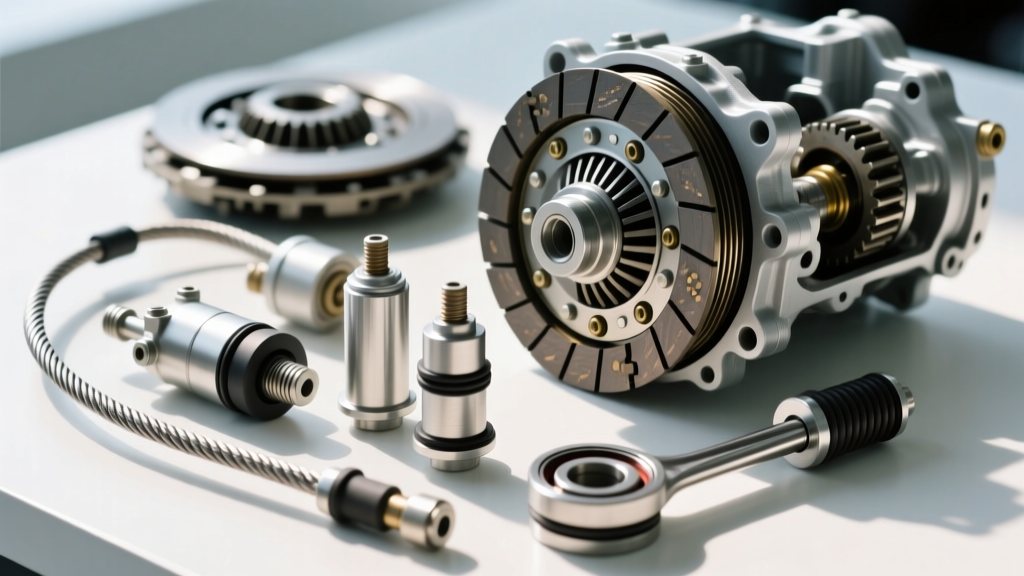
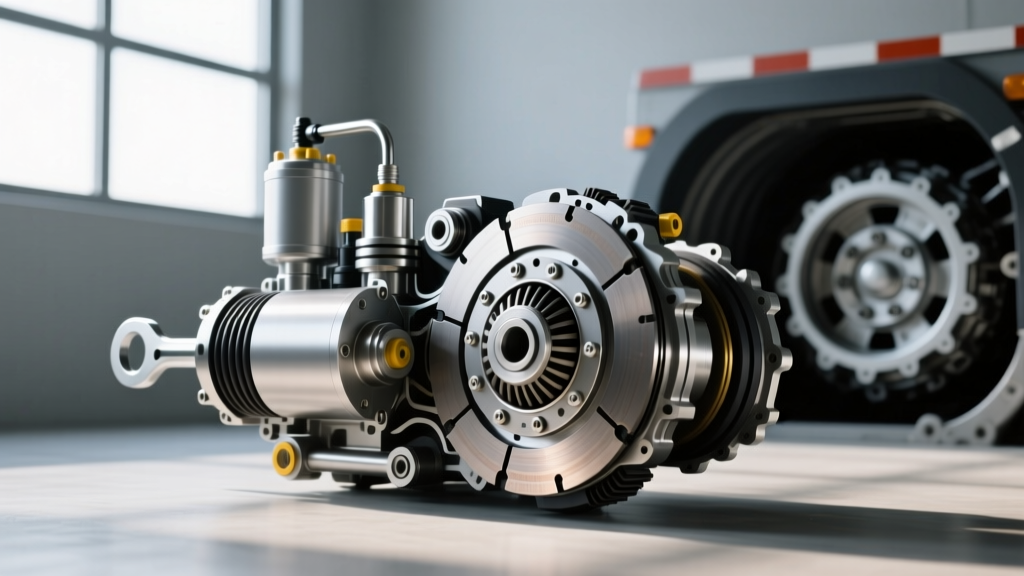
Unlike older cable-driven or mechanical linkage systems, modern light and medium-duty trucks rely on a closed-loop hydraulic circuit. The system utilizes a firewall-mounted master cylinder connected via a combination of steel hard lines and a reinforced rubber flex hose to a slave cylinder. In transmissions like the ZF S6-750 (Ford Super Duty) or the Aisin/G56 setups, the slave cylinder is typically a Concentric Slave Cylinder (CSC) that wraps around the transmission input shaft, integrating the release bearing into a single hydraulic piston.
Common Misconceptions: G56 vs. ZF S6-750 Fluids
One of the most frequent and damaging errors made by novice diesel owners is confusing transmission lubricant with hydraulic clutch fluid. The Ram G56 transmission famously requires ATF+4 for internal gear lubrication, which leads some owners to mistakenly top off the clutch master cylinder reservoir with it. This destroys the EPDM rubber seals in the hydraulic circuit.
Expert Warning: The hydraulic clutch circuit in almost all modern heavy-duty trucks requires DOT 3, DOT 4, or DOT 4 LV (Low Viscosity) brake fluid. Never use petroleum-based fluids (ATF, motor oil, or power steering fluid) in the clutch master cylinder reservoir. Petroleum products will cause immediate, irreversible swelling and failure of the internal hydraulic seals.
Preventive Fluid & Line Maintenance Protocols
Brake fluid is highly hygroscopic, meaning it absorbs moisture from the atmosphere through the reservoir cap vent and microscopic rubber hose pores. As moisture content increases, the fluid's boiling point drops drastically. Under heavy towing conditions—such as hauling a 15,000 lb 5th wheel up a 6% grade—the friction heat from the clutch disc can transfer through the release fork and CSC, boiling moisture-contaminated fluid and causing sudden hydraulic vapor lock.
| Truck / Transmission | OEM Fluid Specification | System Capacity | Preventive Flush Interval |
|---|---|---|---|
| Ford F-250/F-350 (ZF S6-750) | DOT 4 LV (Low Viscosity) | ~0.35 Liters | 24 Months / 30,000 Miles |
| Ram 2500/3500 (G56 Manual) | DOT 3 or DOT 4 | ~0.30 Liters | 24 Months / 30,000 Miles |
| Chevy Silverado HD (TR-4050) | DOT 3 | ~0.28 Liters | 24 Months / 30,000 Miles |
Step-by-Step Hydraulic Diagnosis
Effective preventive maintenance requires more than just swapping fluid; it demands a systematic evaluation of the hydraulic circuit's mechanical integrity. Here is the diagnostic protocol used by top-tier diesel drivetrain specialists.
1. Master Cylinder Pushrod & Bore Evaluation
Begin at the firewall. Inspect the master cylinder pushrod for lateral play. Excessive side-loading wears the bore unevenly, allowing fluid to bypass the primary cup seal. Check the weep hole located on the underside of the master cylinder near the pushrod boot. If you see crusty white or yellow residue, the internal seal has failed, and fluid is migrating into the cabin or down the firewall. For Ford Super Duty applications, the OEM Motorcraft master cylinder (Part # BC3Z-7A543-B or updated supersessions) typically retails between $130 and $175. Do not attempt to rebuild the bore; replacement is the only reliable preventive measure.
2. Concentric Slave Cylinder (CSC) Weep & Travel Testing
Because the CSC is buried inside the bellhousing, visual inspection requires a borescope inserted through the clutch inspection cover or the slave cylinder access plug. Look for a fine mist of brake fluid or a heavy accumulation of black, wet sludge (a mix of clutch dust and leaking fluid). To test hydraulic integrity without dropping the transmission, perform a Flex Line Isolation Test:
- Have an assistant press the clutch pedal halfway and hold it.
- Use a specialized line clamp to gently pinch the rubber flex hose near the bellhousing.
- If the pedal slowly drops to the floor while clamped, the master cylinder is bypassing internally.
- If the pedal remains rock solid, the master cylinder and hard lines are sealed, pointing to a failing CSC or a leak at the quick-connect fitting.
3. Pressure Bleeding vs. Vacuum Bleeding
Truck hydraulic systems are notorious for trapping air in the high loops of the hard lines. Standard pedal-pumping bleeding is insufficient and often introduces micro-bubbles. Preventive maintenance mandates the use of a pneumatic pressure bleeder (such as a Motive Products bleeder) set to exactly 15 to 18 PSI. Pushing fluid from the master cylinder down to the slave cylinder forces air out of the CSC bleeder screw, ensuring a rock-solid pedal feel and full clutch disengagement, which protects the transmission synchros from grinding during 1st and Reverse gear engagement.
Cost Analysis: Preventive Flush vs. Catastrophic CSC Failure
Ignoring the hydraulic circuit until the pedal hits the floor is a financial mistake. When a CSC blows out under load, it often scores the transmission input shaft bearing retainer collar and contaminates the clutch friction disc with glycol-based brake fluid, necessitating a full clutch replacement.
- Preventive Fluid Flush: $85 - $120 (Shop labor) or $12 (DIY with Prestone DOT 4).
- CSC Replacement (Parts Only): LuK or Sachs CSC assemblies range from $160 to $280 depending on the application.
- Catastrophic Failure Repair: Dropping a ZF S6-750 or G56 transmission requires 5.5 to 7.5 hours of shop labor. At 2026 average heavy-duty diesel labor rates ($165-$195/hr), labor alone will cost $900 to $1,460. Add a $600 HD clutch kit, and a preventable $12 fluid flush turns into a $2,000+ repair bill.
Critical Torque Specifications for Reassembly
If your diagnosis reveals a failed CSC or master cylinder requiring line disconnection, adhering to exact torque specifications during reassembly is vital to prevent drivetrain harmonic vibrations and fluid leaks. Always reference the latest ZF Services technical bulletins or Schaeffler (LuK) installation guides for your specific model year.
- CSC to Bellhousing Mounting Bolts: 15 - 18 lb-ft (Do not over-torque; the CSC housing is cast aluminum and cracks easily).
- Hydraulic Line Quick-Connect Fittings: Hand-tighten until the secondary retaining clip clicks, then verify with a 30 lb pull-test.
- ZF S6-750 Bellhousing to Engine Block: 55 lb-ft (M12 bolts).
- Transmission Crossmember to Frame: 70 - 85 lb-ft (Ensure the driveline angle is maintained to prevent output shaft seal leaks).
By integrating these hydraulic diagnostic protocols into your bi-annual maintenance schedule, you guarantee that your clutch for truck applications operates with the precise hydraulic pressure required to manage modern diesel torque outputs. Preventive diagnosis is not just about avoiding breakdowns; it is about preserving the mechanical sympathy between your engine, clutch assembly, and manual transmission.