The High Cost of Hydraulic Neglect
When automotive enthusiasts hear the word clutch, they immediately think of friction discs, pressure plates, and flywheels. However, in the high-end fashion world, an oscar de la renta clutch represents a luxury handbag that can easily command $2,000 to $3,500. Surprisingly, neglecting the hydraulic actuation system on a modern manual transmission vehicle can result in dealership repair bills that rival the price of that designer accessory. Replacing a failed Concentric Slave Cylinder (CSC) inside a sealed bell housing requires pulling the entire transmission, racking up 6 to 9 hours of labor. This preventive maintenance guide will teach you how to diagnose, maintain, and preserve your hydraulic clutch system so your repair budget stays in the garage, not the boutique.
Anatomy of the Modern Hydraulic Clutch System
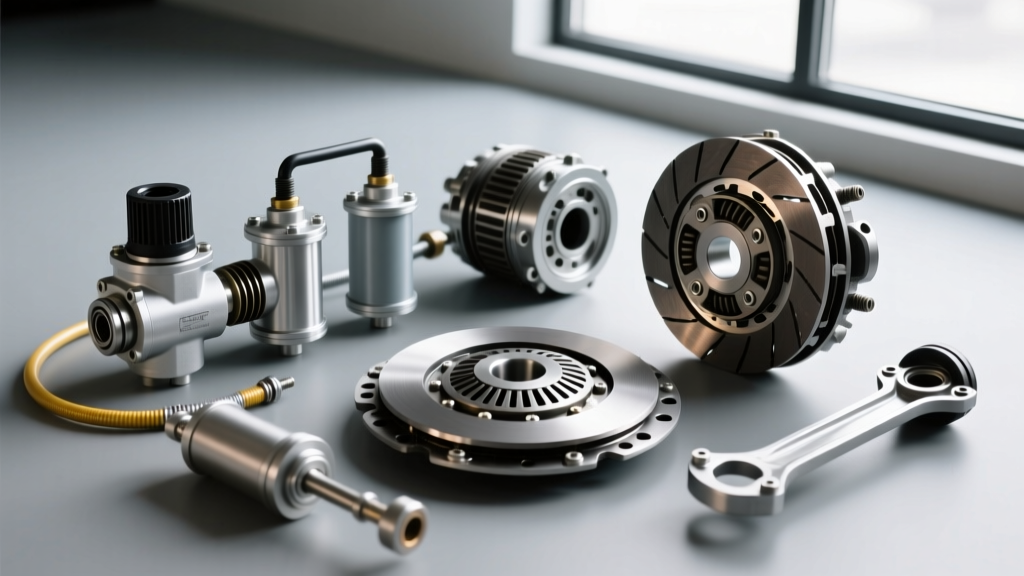
Unlike older cable-actuated setups, modern manual vehicles—from the Porsche 911 (ZF S6-53) to the Ford Mustang (Tremec MT-82)—utilize a closed-loop hydraulic system. This system translates pedal force into hydraulic pressure, multiplying the input to disengage the clutch.
- Master Cylinder: Mounted to the firewall, it generates hydraulic pressure. Common bore sizes range from 5/8-inch to 3/4-inch.
- Hard Lines and Flexible Hoses: Typically steel-braided or OEM rubber lines rated for DOT 4 or DOT 5.1 fluid.
- Concentric Slave Cylinder (CSC) / Hydraulic Release Bearing: Located inside the bell housing, it presses directly against the diaphragm spring fingers.
- External Slave Cylinder: Found on older or heavy-duty applications (e.g., GM Tremec TR-6060 in some Commodores), mounted externally to actuate a traditional release fork.
Diagnostic Flowchart: Isolating Hydraulic Faults
Before dropping a transmission, you must isolate whether the issue is mechanical (friction disc wear) or hydraulic (fluid bypass, air ingress, or seal failure). Use this diagnostic matrix to pinpoint the fault.
| Symptom | Probable Hydraulic Cause | Diagnostic Test |
|---|---|---|
| Spongy Pedal / Low Engagement | Air in lines or worn master cylinder seals | Check for bubbles during gravity bleed; inspect master pushrod for play. |
| Pedal Sinks to Floor Under Load | Internal master cylinder bypass | Hold pedal depressed at 50 lbs for 60 seconds. If it drops, replace master. |
| Fluid Loss with No External Leaks | Failing CSC internal seal | Inspect bell housing inspection cover for DOT fluid weeping. |
| Hard Pedal / Notchy Shifting | Collapsed flexible hose or blocked hard line | Crack bleeder valve. If fluid flows freely but pedal remains hard, replace hose. |
Step-by-Step Preventive Diagnosis
1. Pedal Free-Play and Over-Travel Measurement
Hydraulic systems require a specific amount of free-play to allow the master cylinder piston to fully retract, uncovering the compensation port. If the pushrod is misadjusted or the pedal stop is worn, fluid cannot return to the reservoir, leading to pressure buildup and premature clutch slip.
Specification: Most OEMs (including GM and Ford) specify 10mm to 15mm (0.4 to 0.6 inches) of free-play measured at the pedal pad. Use a steel ruler and a feeler gauge at the firewall pushrod to verify clearance.
2. Fluid Analysis and Moisture Testing
Brake and clutch fluid are hygroscopic. Standard DOT 4 fluid absorbs approximately 2% to 3% of its volume in moisture annually. This drastically lowers the boiling point and promotes internal corrosion in the CSC.
According to SAE International standards (FMVSS 116), DOT 4 fluid must maintain a minimum wet boiling point of 311°F (155°C). However, performance fluids like Motul RBF 600 or Castrol SRF offer vastly superior vapor lock resistance and anti-corrosion additives for high-temperature bell housing environments.
Use a digital brake fluid moisture tester annually. If the moisture content exceeds 2.5%, a complete flush is mandatory.
The Hidden Culprit: Clutch Delay Valves (CDV)
Many modern manual vehicles, particularly those from BMW, Ford, and Subaru, are equipped with a Clutch Delay Valve (CDV) located in the hard line between the master and slave cylinder. The CDV restricts fluid flow to slow down clutch engagement, preventing drivetrain shock and reducing warranty claims for broken engine mounts or snapped axles.
Diagnostic Impact: The CDV creates a bottleneck that traps air bubbles during standard bleeding procedures. If your clutch pedal feels spongy despite multiple bleeds, the CDV is likely the culprit. Furthermore, the restricted flow can cause incomplete disengagement during rapid 1-2 upshifts, leading to gear grind.
Preventive Action: Many enthusiasts choose to delete the CDV, replacing it with a standard AN3 or AN4 braided stainless steel line. If you retain the CDV, you must use a pressure bleeder set to at least 25 PSI to force fluid past the restriction and purge trapped air. Always verify local emissions and compliance regulations before modifying hydraulic circuits.
Common Failure Modes by Transmission Model
Ford MT-82 and the CSC Plague
The Tremec MT-82, found in 2011-2023 Mustang GTs, is notorious for premature Concentric Slave Cylinder failure. The OEM plastic CSC often cracks or develops weep holes due to the extreme heat radiating from the exhaust headers and the bell housing. When the CSC fails, fluid leaks directly onto the clutch disc, causing catastrophic slip.
Preventive Fix: Upgrade to the Ford Performance Heavy-Duty Hydraulic Release Bearing (Part No. M-7560-M8A) or a high-quality aftermarket billet-aluminum CSC like the McLeod Hydraulic Release Bearing. Always replace the hard plastic OEM quick-connect fittings with braided stainless steel lines.
GM Tremec TR-6060 External Slave Wear
Vehicles equipped with the TR-6060 (Camaro ZL1, Cadillac CTS-V) often use an external slave cylinder. While easier to service, the external slave pushrod and release fork pivot ball are prone to wear. Inspect the pivot ball for a 1mm wear groove. If present, the slave cylinder cannot achieve full stroke, resulting in incomplete disengagement and gear grind. Torque the slave cylinder mounting bolts to 25 Nm (18 lb-ft) using a thread-locking compound to prevent vibration-induced loosening.
Advanced Fluid Chemistry: DOT 3 vs. DOT 4 vs. DOT 5.1
Understanding fluid chemistry is critical for preventive maintenance. Never use DOT 5 (silicone-based) fluid in a system designed for glycol-based fluids, as it will destroy the internal EPDM rubber seals of the CSC and master cylinder.
- DOT 3: Minimum dry boiling point 401°F (205°C). Highly hygroscopic. Avoid in high-performance applications.
- DOT 4: Minimum dry boiling point 446°F (230°C). Contains borate esters to buffer acidity. The OEM standard for 90% of manual vehicles.
- DOT 4 Racing (e.g., Castrol SRF): Silicone ester-based, highly hydrophobic. Repels moisture rather than absorbing it, making it ideal for track cars where bell housing temperatures exceed 250°F.
- DOT 5.1: Glycol-based but with a higher boiling point (500°F / 260°C dry). Compatible with DOT 3/4 systems but requires more frequent flushing due to its aggressive moisture absorption rate.
2026 Preventive Maintenance Schedule & Cost Matrix
Adhering to a strict maintenance schedule is the only way to avoid the designer handbag repair bill. Below is the recommended service interval matrix for daily-driven and track-used manual vehicles.
| Maintenance Task | Interval (Street) | Interval (Track) | Est. Cost (DIY) | Est. Cost (Shop) |
|---|---|---|---|---|
| Fluid Moisture Test | 12 Months | Every Event | $25 (Tester) | $45 |
| DOT 4/5.1 Fluid Flush | 24 Months / 30k Miles | Annually | $30 (Fluid) | $120 - $180 |
| Master Cylinder Inspection | 60k Miles | End of Season | $0 (Visual) | $95 (1 hr labor) |
| Braided Line Upgrade | As Needed / Preventive | Mandatory | $80 - $150 | $250 - $350 |
| CSC Replacement (Dropped Trans) | Failure Only | 100k Miles / Rebuild | $250 - $450 (Part) | $1,500 - $2,800 |
Expert Bleeding Protocols and Torque Specs
Air trapped in the hydraulic line is the enemy of crisp shifts. Because the clutch slave cylinder is often the lowest point in the system, air bubbles naturally migrate upward, getting trapped in the master cylinder or hard lines.
The Reverse-Bleed Technique
Standard gravity bleeding or pedal pumping often fails to purge air from complex routing (like the Corvette C7 remote reservoir setup). Use a reverse bleeder (e.g., Motive Products 0107) to inject fluid from the slave cylinder bleeder valve upward into the master cylinder reservoir. This forces air bubbles up and out, following their natural buoyancy.
Critical Torque Specifications
- Slave Cylinder Bleeder Valve: 8 to 10 Nm (70 to 88 lb-in). Over-torquing will snap the brittle brass bleeder screw.
- Master Cylinder Firewall Nuts: 15 to 20 Nm (11 to 15 lb-ft).
- Hard Line Flare Nuts: 14 to 18 Nm (10 to 13 lb-ft). Always use a 6-point flare nut wrench to prevent rounding the soft steel fittings.
Conclusion: Protect Your Investment
Diagnosing and maintaining a hydraulic clutch system requires attention to detail, precise measurements, and high-quality fluids. By monitoring pedal free-play, testing fluid moisture content, and upgrading known weak points like the MT-82 CSC, you ensure crisp, reliable gear changes for hundreds of thousands of miles. Keep your maintenance proactive, and your repair bills will never rival the price of an oscar de la renta clutch. For more in-depth drivetrain diagnostics, consult the official Tremec service documentation or your vehicle-specific factory service manual.