The Great Misnomer: 20 Series Torque Converter vs. Hybrid Transaxles
When modern hybrid vehicle owners experience low-speed drivetrain shudder, clunky engagements, or regenerative braking whines, internet forums often provide wildly inaccurate advice. A frequent point of confusion in 2026 is the search for a 20 series torque converter rebuild kit or replacement. In the automotive world, a '20 series torque converter' (such as the Comet 218352A) actually refers to a continuously variable transmission (CVT) used in powersports, go-karts, and mini-bikes with 3/4-inch to 1-inch crankshafts. It has absolutely zero application in modern automotive hybrid drivetrains.
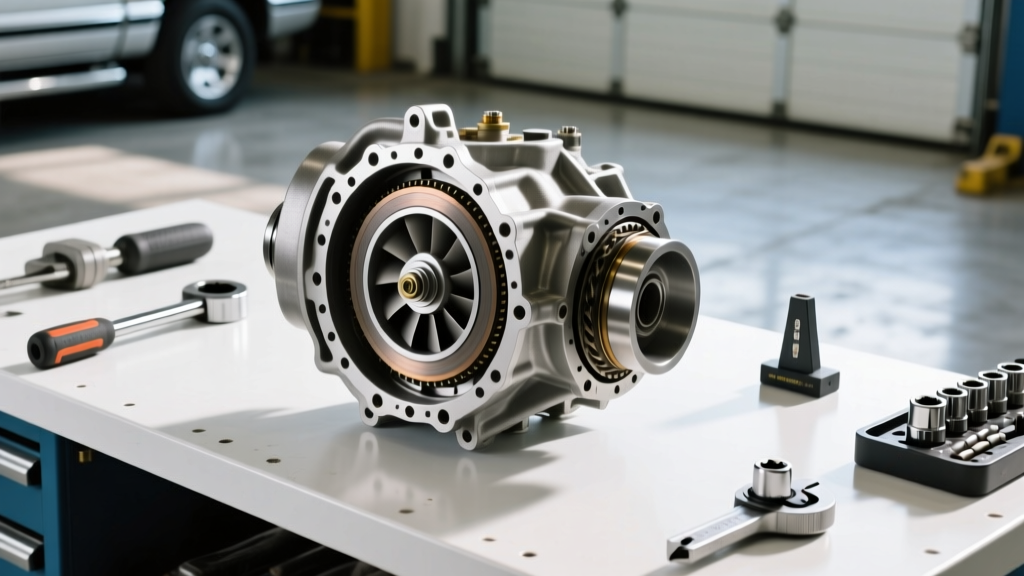
Hybrid vehicles do not use traditional standalone torque converters or powersports CVTs. Instead, they utilize highly integrated motor-generator dampers, multi-plate lockup clutches, and complex torsional damper assemblies housed within dedicated hybrid transaxles (such as the Ford HF35 or Toyota P610/P710). Diagnosing shudder in these systems requires an entirely different approach, focusing on ultra-low viscosity fluids, TCC (Torque Converter Clutch) slip profiles, and MG1/MG2 coupling dynamics. This guide will bridge the gap between internet myths and actual hybrid drivetrain diagnostics.
Top 4 Hybrid Torque Transfer Symptoms & Root Causes
Because hybrid transaxles manage the blending of internal combustion engine (ICE) torque and electric motor torque, the 'torque converter' equivalent is subjected to unique harmonic vibrations. Here are the most common symptoms and their true mechanical culprits.
1. Low-Speed 'Washboard' Shudder (20-35 MPH)
Often reported in Ford Fusion Hybrids and Escape Hybrids equipped with the HF35 transaxle, this shudder feels like driving over rumble strips. It occurs when the TCC attempts to lock up at low speeds to maximize fuel economy. The root cause is typically degraded friction material on the TCC clutch pack or sheared Mercon ULV fluid. Unlike older transmissions that used high-viscosity fluids, the HF35 requires Motorcraft Mercon ULV (WSS-M2C949-A), which is highly sensitive to thermal breakdown and clutch particulate contamination.
2. Cold-Start Torsional Damper Rattle
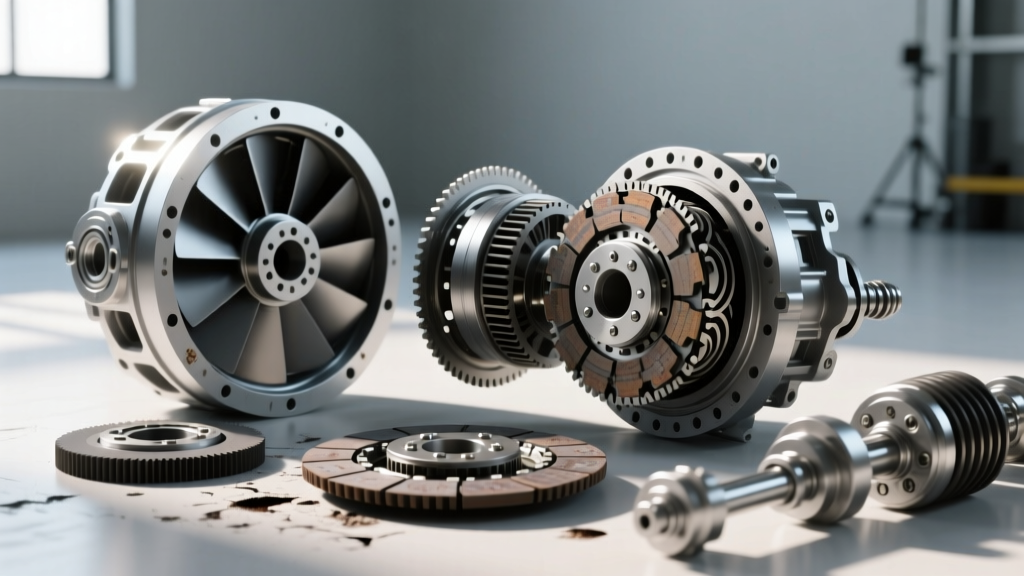
In Toyota hybrids (Prius, RAV4, Camry) using the P610 or P710 transaxles, a metallic rattle upon cold ICE startup is a hallmark of torsional damper fatigue. The 'torque converter' in these models is essentially a dry/wet clutch and spring damper assembly that buffers the violent torque spikes of the Atkinson-cycle engine firing from a dead stop. When the internal damper springs lose their tension or the friction plates wear, the harmonic vibration transfers directly to the transaxle case.
3. Delayed Engagement During EV-to-ICE Handoff
When accelerating from a pure EV mode and the ICE kicks in, a delayed, clunky engagement indicates wear in the hybrid clutch pack or a failing hydraulic control valve body. The transaxle's oil pump (driven by MG1) must instantly build line pressure to lock the engine to the drivetrain. A lag of more than 0.4 seconds usually points to a leaking clutch piston seal rather than a mechanical torque converter failure.
4. High-Frequency Whine During Regenerative Braking
A whining noise under deceleration is often misdiagnosed as a failing stator. In reality, hybrid transaxles do not use traditional torque converter stators. This noise is typically caused by fluid cavitation in the MG2 cooling circuit or a failing reduction gear bearing, exacerbated by low fluid levels or the use of incorrect, non-OEM synthetic fluids.
Diagnostic Data Table: Hybrid Transaxle vs. Traditional TC
| Feature | Traditional Automatic TC (e.g., 6L80) | Ford HF35 Hybrid Transaxle | Toyota P710 Hybrid Transaxle |
|---|---|---|---|
| Torque Transfer Mechanism | Fluid Coupling + Stator + TCC | Integrated TC + Torsional Damper | Multi-plate Clutch + Spring Damper |
| Fluid Specification | Dexron ULV / Mercon LV | Mercon ULV (WSS-M2C949-A) | Toyota Genuine ATF WS |
| Fluid Capacity (Transaxle) | 11.0 - 13.0 Quarts | 5.5 Quarts | 3.5 Quarts |
| Common Shudder Cause | TCC apply valve wear / bad fluid | TCC friction degradation / software | Torsional damper spring fatigue |
| Avg. Component Cost (2026) | $350 - $600 (TC Only) | $850 - $1,200 (TC/Damper Assy) | $600 - $950 (Damper Assy) |
Step-by-Step Troubleshooting Protocol
Before ordering parts or attempting a transaxle removal, follow this diagnostic sequence to isolate the shudder. For deeper architectural insights, refer to powertrain NVH (Noise, Vibration, and Harshness) guidelines published by SAE International.
- Verify Fluid Integrity and Level: Hybrid transaxles are incredibly sensitive to fluid levels. Check the fluid at the exact temperature specified by the OEM (usually between 104°F and 113°F). For the Ford HF35, ensure you are using Mercon ULV; using standard Mercon LV will cause immediate TCC shudder due to incorrect friction modifiers.
- PID Analysis via OBD2 Scan Tool: Access the Transmission Control Module (TCM). Monitor the
TCC_SLIP_RPMPID while driving at a steady 30 MPH in 3rd gear (or the equivalent hybrid drive ratio). Command a TCC lockup. If the slip RPM fluctuates wildly between +50 and -50 RPM, you have a mechanical friction issue or a failing apply valve. If the slip is a steady 0-10 RPM but the car shudders, the issue is likely engine misfire or motor-generator mounting, not the transaxle. - Software Calibration Check: Many hybrid shudders are resolved via a TCM flash. Ford and Toyota frequently release updated TCC slip profiles that alter the micro-slip duty cycle, preventing the clutch from grabbing too aggressively at low speeds. Always check for TSBs (Technical Service Bulletins) before tearing down the drivetrain.
- Inspect the Torsional Damper (Toyota Specific): If dealing with a P610/P710, the damper assembly is bolted directly to the engine flexplate. According to Toyota TechInfo repair manuals, the damper-to-flexplate bolts require a precise torque sequence: 55 Nm followed by a 90-degree angle turn. If these bolts have backed out or the damper springs are visibly collapsed through the inspection cover, replacement is mandatory.
2026 Replacement Costs & Part Numbers
When a hybrid torque transfer component fails, it is rarely serviceable as a standalone 'drop-in' unit like a traditional torque converter. The transaxle must be removed, and in many cases, the entire unit is replaced or sent to a specialized hybrid remanufacturer.
- Ford HF35 Torque Converter/Damper Assembly: Part numbers vary by application (e.g., DA8Z-7000-A for complete remanufactured transaxles, or specific damper kits). A standalone OEM damper/TC assembly costs between $850 and $1,200. Labor to pull the transaxle on a FWD Escape Hybrid is roughly 6.5 hours, bringing the total shop bill to $1,800 - $2,400.
- Toyota P710 Torsional Damper Assembly: Part number G9210-47060 (or application-specific equivalent). The part itself is relatively affordable at $600 - $950. However, accessing it requires separating the transaxle from the ICE block. Total replacement cost including ATF WS fluid and labor averages $1,500 - $2,100.
- Fluid Exchange Costs: If caught early, a shudder caused by degraded friction modifiers can sometimes be mitigated with a specialized 3x drain-and-fill using OEM fluid. Expect to pay $250 - $400 for this service at a specialized hybrid shop.
The Bottom Line
Stop searching for a 20 series torque converter when your hybrid starts shuddering. Modern hybrid transaxles are marvels of electromechanical integration, relying on precise fluid chemistry, micro-slip software mapping, and specialized torsional dampers. Accurate diagnosis requires a bi-directional scan tool, strict adherence to OEM fluid specifications, and an understanding of how MG1 and MG2 interact with the mechanical clutch packs. Treat the drivetrain as a unified high-voltage system, and you will accurately pinpoint the root cause of the shudder every time.