The Bridge Between Engine and Transmission: A Beginner's Guide
If you are reading this, you are likely dealing with a frustrating transmission issue, a mysterious shudder at highway speeds, or a mechanic who just handed you an intimidating repair estimate. When a shop diagnoses a failing Torque Converter Clutch (TCC), it is completely normal to wonder what this component actually does and why fixing it is so expensive. In this comprehensive guide, we will break down exactly how torque converters work, explain the critical role of the lockup clutch, and provide a realistic 2026 breakdown of the torque converter clutch replacement cost for some of the most common vehicles on the road.
How Torque Converters Work: The Fluid Coupling Magic
To understand the cost and complexity of a repair, you first need to understand the engineering marvel sitting between your engine's flexplate and your transmission's input shaft. Unlike a manual transmission that uses a mechanical friction disc (the clutch pedal) to connect and disconnect the engine from the gearbox, an automatic transmission relies on a fluid coupling called a torque converter.
The Three Main Internal Components
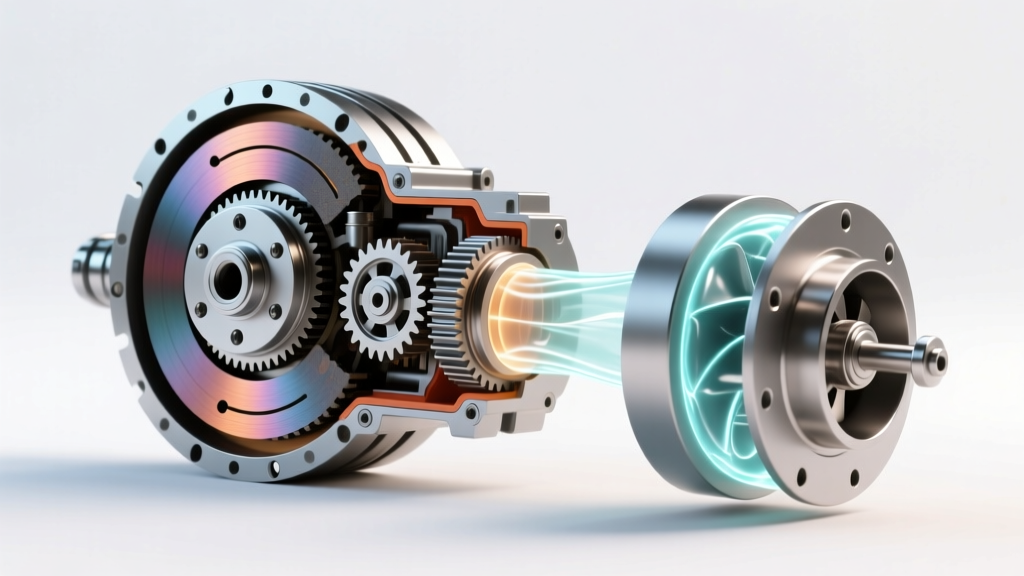
Imagine two electric fans facing each other. If you turn one on, the air it blows will cause the blades of the second, unplugged fan to spin. A torque converter works on this exact principle, but instead of air, it uses pressurized automatic transmission fluid (ATF).
- The Impeller (Pump): Bolted directly to the engine's flexplate, the impeller spins at engine RPM. Its curved blades fling transmission fluid outward using centrifugal force.
- The Turbine: Connected to the transmission input shaft, the turbine sits directly across from the impeller. The fluid thrown by the impeller strikes the turbine's blades, forcing it to spin and ultimately moving your vehicle.
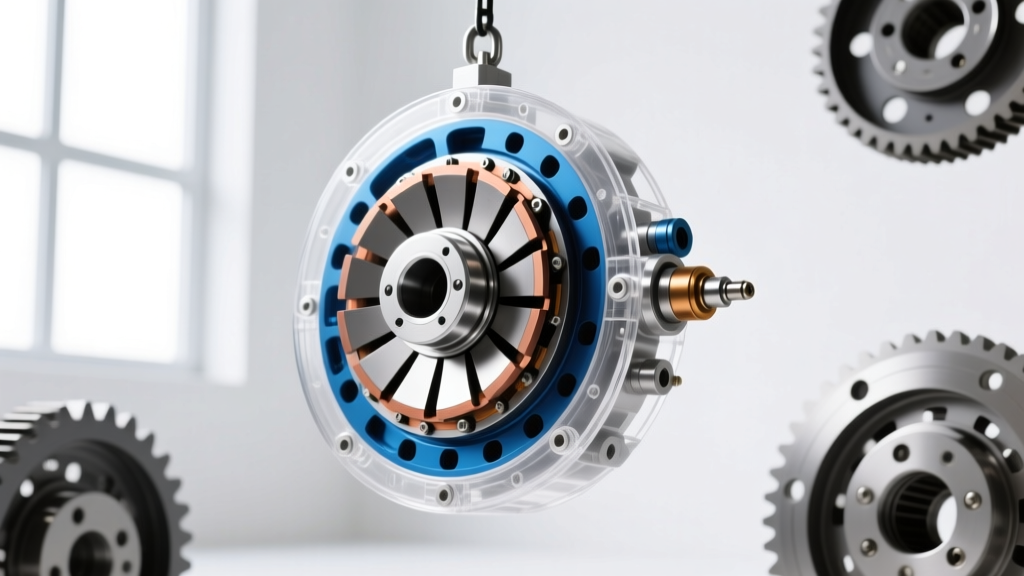
- The Stator: Sitting in the center between the impeller and turbine is the stator, mounted on a one-way clutch. Its job is to redirect the fluid returning from the turbine back into the impeller, preventing fluid interference and dramatically multiplying torque during initial acceleration.
Torque Multiplication vs. 1:1 Efficiency
When you are stopped at a red light with your foot on the brake, the engine is spinning the impeller, but the turbine (and your wheels) are held stationary. The fluid is churning, creating heat, but allowing the engine to idle without stalling. As you accelerate, the stator redirects fluid to give you a mechanical advantage, effectively multiplying engine torque by up to 2.5 times. This is why automatic vehicles can launch heavy loads from a dead stop so smoothly.
However, fluid coupling is inherently inefficient. At highway speeds, the turbine will always spin slightly slower than the impeller—a phenomenon known as 'slip.' This slip generates massive amounts of heat and robs your vehicle of fuel economy. Enter the Torque Converter Clutch.
The Torque Converter Clutch (TCC): Locking It Up
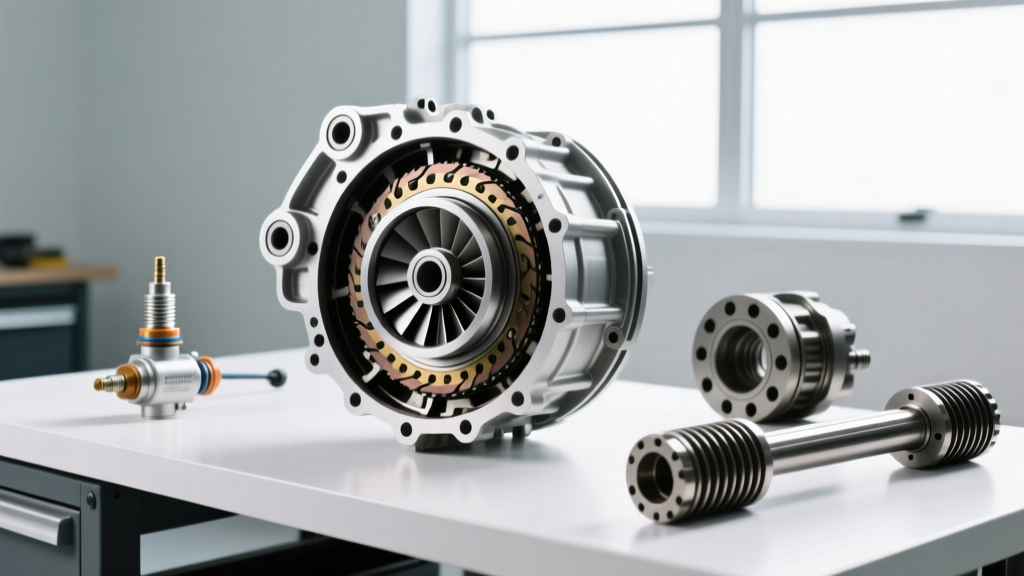
To eliminate slip at cruising speeds, engineers added a friction clutch to the back of the turbine assembly. When the vehicle reaches a specific speed (usually between 35 and 50 mph) and the engine is under a light load, the transmission's computer (TCM) commands a solenoid to apply hydraulic pressure to this clutch.
This pressure squeezes a friction-lined disc against the front cover of the torque converter, physically locking the turbine to the impeller. The engine and transmission are now mechanically linked in a 1:1 ratio, just like a manual transmission with the clutch pedal fully released. This eliminates slip, drops transmission temperatures by 20 to 40 degrees, and improves fuel economy by 5% to 10%.
Why Torque Converter Clutches Fail
Despite their brilliance, TCC systems are subjected to extreme thermal and mechanical stress. According to technical data from Sonnax Technical Resources, the most common failure points include:
- Friction Material Degradation: The paper or carbon-based friction lining on the TCC piston wears away over time, leading to slip and diagnostic trouble codes like P0741 (TCC System Stuck Off).
- Hydraulic Leaks: In modern transmissions like the ZF 8HP (found in BMW, Audi, and Ram trucks), the mechatronic sealing sleeve degrades. This causes internal pressure leaks, meaning there is not enough hydraulic force to fully apply the TCC, resulting in shudder.
- Solenoid Failure: The TCC PWM (Pulse Width Modulation) solenoid can become clogged with clutch debris or fail electrically, preventing the computer from modulating lockup smoothly.
- Fluid Breakdown: Using the wrong fluid or neglecting fluid changes destroys the fluid's friction modifiers. This is notoriously problematic in the GM 6L80 and 8L90 transmissions, leading to the infamous '45 mph shudder.'
Diagnosing TCC Issues Before Spending a Dime
Before authorizing a massive repair, verify the symptoms. A failing TCC typically presents in one of three ways:
- The Highway Shudder: Feels like driving over rumble strips at 40-55 mph. This is the TCC attempting to apply but slipping rapidly due to degraded fluid or worn friction material.
- Flashing RPMs: While cruising on a flat road, your tachometer bounces up and down by 100-200 RPM without you touching the throttle.
- Stalling at Stops: If the TCC solenoid sticks in the 'applied' position, the engine remains mechanically locked to the stopped wheels, causing the engine to stall when you come to a halt, much like forgetting to press the clutch in a manual car.
Pro Tip: Use an OBD2 scanner capable of reading live transmission data. Monitor the 'TCC Slip Speed' parameter. When the TCC is commanded 'ON', slip speed should drop to near 0 RPM. If you see slip speeds consistently above 50-100 RPM under steady throttle, your clutch is physically worn or you have a severe hydraulic leak.
The Reality of Torque Converter Clutch Replacement Cost
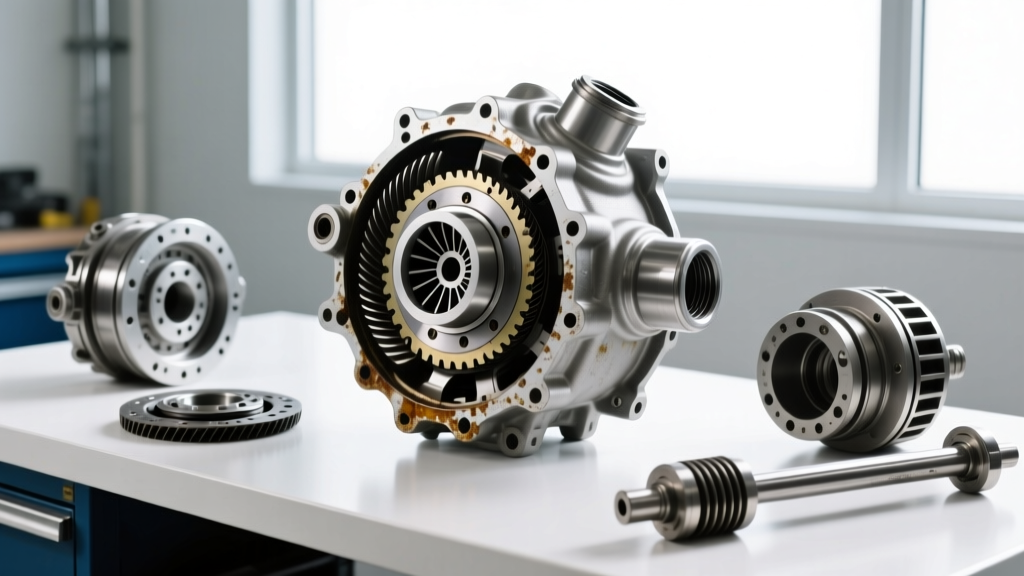
Here is the hard truth that surprises many vehicle owners: you cannot simply replace the clutch inside the torque converter. The torque converter is a sealed, welded steel housing. To access the internal friction disc, the converter must be cut open on a lathe, the worn components replaced, and the housing welded back together and precision-balanced. This is a job for specialized remanufacturing facilities, not your local corner mechanic.
Therefore, the 'torque converter clutch replacement cost' is actually the cost of replacing or remanufacturing the entire torque converter assembly, plus the labor to remove the transmission to access it. Furthermore, the Automatic Transmission Rebuilders Association (ATRA) strongly recommends flushing the cooler lines and replacing the transmission fluid, as a failing TCC dumps microscopic friction debris into the entire hydraulic system.
2026 Cost Breakdown by Popular Vehicle Platform
Below is a realistic estimate of what you can expect to pay at an independent transmission specialist in 2026. Dealership prices will typically be 30% to 50% higher due to OEM part markups and higher hourly labor rates.
| Vehicle / Transmission | Remanufactured TC Cost | Labor (R&R Trans) | Fluid & Misc. Parts | Estimated Total |
|---|---|---|---|---|
| Chevy Silverado 1500 (GM 6L80 / 8L90) | $450 - $650 | $850 - $1,100 (6-8 hrs) | $150 (Dexron ULV / VI) | $1,450 - $1,900 |
| Ford F-150 (Ford 6R80 / 10R80) | $400 - $600 | $900 - $1,200 (7-9 hrs) | $140 (Mercon ULV / LV) | $1,440 - $1,940 |
| BMW 3-Series / Ram 1500 (ZF 8HP45/70) | $650 - $950 | $1,100 - $1,500 (8-10 hrs) | $220 (ZF Lifeguard 8 + Sleeve) | $1,970 - $2,670 |
| Honda Accord (Honda 10-Speed / ZF 9HP) | $550 - $800 | $1,000 - $1,300 (7-9 hrs) | $160 (Honda ATF 3.1 / ZF) | $1,710 - $2,260 |
Hidden Costs to Watch Out For
When budgeting for this repair, be aware of potential ancillary costs that can inflate your final bill:
- Transmission Cooler Flush ($150 - $250): If your TCC was slipping heavily, metallic and friction debris is trapped in your radiator's transmission cooler. If not flushed with a specialized machine, this debris will destroy your new torque converter within 5,000 miles.
- Rear Main Seal ($50 part, 0 extra labor): Since the transmission is already out of the vehicle, always pay the $50 for a new engine rear main seal. The labor is already covered.
- Flexplate Inspection: A shuddering TCC can warp or crack the engine's flexplate. If the mechanic finds stress cracks, a new flexplate will add $150 to $300 to the parts bill.
Can You Fix TCC Shudder Without Replacing the Converter?
In some specific scenarios, yes. If the shudder is caught very early and is caused purely by depleted friction modifiers in the fluid, a specialized additive like Dr. Tranny Instant Shudder Fixx or a complete fluid exchange using high-quality synthetic ATF (such as Valvoline MaxLife or Amsoil Signature Series) can temporarily resolve the issue.
Additionally, for GM 6L80 and 8L90 transmissions, installing a ZF or Sonnax ZIP (Zero Interference Pressure) valve body kit can correct hydraulic cross-leaks that cause TCC shudder, saving you the cost of dropping the transmission. However, if your OBD2 scanner shows high TCC slip RPMs, or if the fluid on the dipstick smells burnt and is dark brown, the friction material is physically gone. No additive in the world can regrow worn carbon lining; a full torque converter replacement is your only permanent option.
Final Thoughts on Drivetrain Maintenance
Understanding how torque converters work highlights the importance of transmission fluid maintenance. The TCC relies entirely on clean, chemically stable fluid to apply smoothly and dissipate heat. While many modern vehicles claim to have 'lifetime' fluid, industry experts universally agree that draining and filling your transmission fluid every 60,000 miles is the single most effective way to prevent a premature torque converter clutch replacement cost. Treat your fluid right, and your torque converter will seamlessly bridge the gap between your engine and the road for hundreds of thousands of miles.