The Basics: How an Automatic Transmission Torque Converter Works
If you are diving into the world of automatic transmission performance, you have likely heard enthusiasts and mechanics throw around terms like 'flash stall,' 'fluid coupling,' and 'torque multiplication.' At the heart of every traditional automatic transmission—whether it is a classic TH350, a workhorse 4L60E, or a robust 4L80E—sits the torque converter. For beginners, understanding how this component operates is the first step toward making informed drivetrain upgrades. In this guide, we will break down the fluid dynamics of the torque converter and use the highly popular 3200 stall torque converter as our primary case study to explain how stall speed manipulates your vehicle's power delivery.
The Big Three: Impeller, Turbine, and Stator
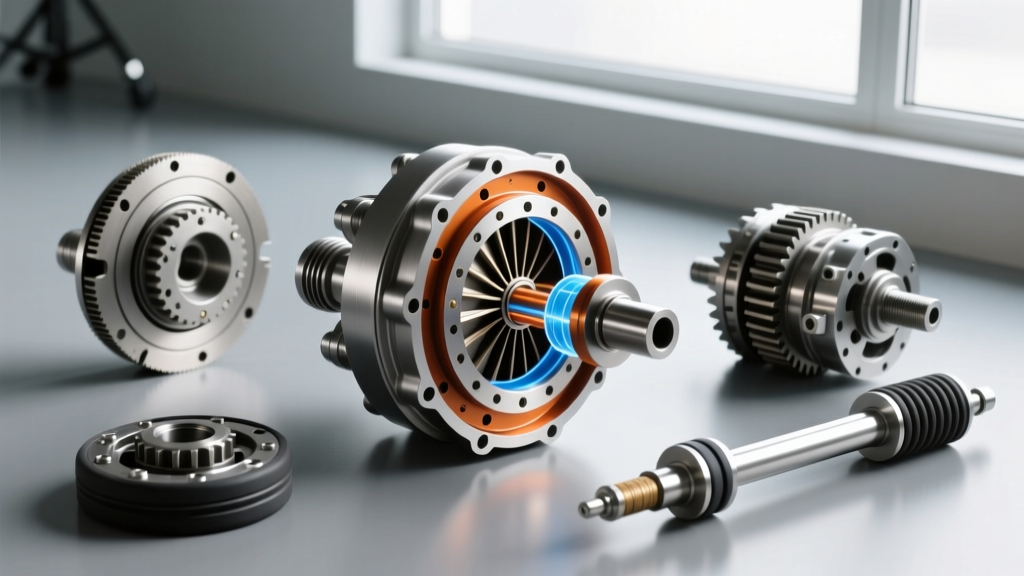
A torque converter is essentially a fluid coupling device that transfers rotating mechanical power from the engine to the transmission input shaft. Unlike a manual transmission clutch, which relies on physical friction to lock the engine to the gearbox, a torque converter uses hydraulic fluid (transmission fluid) to bridge the gap. Inside the welded steel housing, there are three primary components:
- The Impeller (Pump): Bolted directly to the converter housing and the engine's flexplate, the impeller spins at engine RPM. Its curved vanes draw transmission fluid inward and fling it outward via centrifugal force.
- The Turbine: Connected to the transmission input shaft, the turbine sits opposite the impeller. The fluid thrown by the impeller strikes the turbine's vanes, causing it to spin and ultimately move the vehicle.
- The Stator: Positioned between the impeller and turbine, the stator is mounted on a one-way clutch. Its job is to redirect the returning fluid back into the impeller, which creates 'torque multiplication'—giving you that extra low-end push off the line.
Demystifying 'Stall Speed' for Beginners
The most misunderstood concept in automatic transmissions is 'stall speed.' A common beginner myth is that a car equipped with a 3200 stall torque converter will not move forward until the engine reaches 3200 RPM. This is entirely false. Your car will still idle in gear and creep forward at traffic lights just like a stock vehicle.
Stall speed is actually defined as the maximum RPM the engine can reach when the transmission output shaft is completely locked (the wheels are stopped) and the throttle is pinned to the floor. In simpler terms, it is the RPM at which the torque converter 'slips' the most before the tires either break traction or the brakes fail to hold the vehicle. According to the technical guides at Bowler Transmissions, stall speed is not a fixed number; it is highly dependent on the engine's torque output. A converter rated for a 3200 RPM stall behind a mild 300-horsepower V8 might only flash at 2600 RPM, but behind a 600-horsepower supercharged engine, that exact same converter could flash at 3800 RPM.
Case Study: The 3200 Stall Torque Converter Explained
Why is the 3200 RPM range so heavily discussed in the performance community? The answer lies in camshaft selection and engine powerbands. Modern aftermarket cylinder heads and performance camshafts (such as a 224/228 duration cam in an LS-series V8) often sacrifice low-end idle vacuum and low-RPM torque to achieve massive top-end horsepower. If you pair a highly modified, cammed engine with a stock 1800 RPM torque converter, the engine will bog down off the line because it is forced to operate below its optimal powerband.
Why 3200 RPM? The Camshaft Connection
A 3200 stall torque converter allows the engine to instantly bypass the sluggish, low-torque RPM range and 'flash' directly into the meat of the camshaft's powerband. When you launch the car, the impeller spins freely, allowing the engine to rev to roughly 3200 RPM where it is producing peak torque. Only then does the hydraulic coupling tighten up and violently transfer that multiplied torque to the turbine and the rear wheels. This results in significantly harder launches, improved 60-foot times in drag racing, and a much more responsive feel during aggressive street driving.
Stock vs. 3200 Stall: Performance Data & Costs
When shopping for a converter, you will notice variations in torque multiplication ratios and physical diameters. Smaller diameter converters (like 8-inch or 9-inch units) typically yield higher stall speeds and less rotational mass, while larger 10-inch or 11-inch units offer better street manners and highway efficiency. Below is a comparison chart to help you understand where the 3200 stall fits into the broader ecosystem.
| Converter Type | Target Stall Speed | Torque Multiplication | Typical Cost (2026) | Ideal Application |
|---|---|---|---|---|
| OEM Replacement | 1600 - 1800 RPM | 1.8:1 to 2.0:1 | $150 - $250 | Stock daily drivers, towing, fuel economy |
| Mild Performance | 2200 - 2600 RPM | 2.1:1 to 2.3:1 | $300 - $450 | Bolt-on mods, mild cams, weekend cruising |
| 3200 Stall Street/Strip | 3000 - 3400 RPM | 2.4:1 to 2.6:1 | $500 - $850 | Aggressive camshafts, drag racing, pro-touring |
| Trans-Brake Race | 4500 - 6000+ RPM | 2.8:1+ | $900 - $1,500+ | Dedicated drag cars, turbo spooling, nitrous |
Installation Specs and Required Supporting Modifications
Upgrading to a 3200 stall torque converter is not a simple 'plug-and-play' affair. The increased slip generates significantly more hydraulic friction, which translates directly into heat. If you install a high-stall converter without addressing cooling, you will destroy your transmission fluid and burn up the clutch packs inside your 4L60E or TH400 in a matter of miles.
- Transmission Cooler: An auxiliary, high-capacity transmission cooler is mandatory. You must keep transmission fluid temperatures below 200°F (93°C) during normal driving. For track use, a cooler with a built-in fan is recommended.
- Flexplate Bolts: Always use new, high-grade flexplate-to-converter bolts (typically Grade 8 or ARP). The standard torque spec for most GM LS flexplate bolts is 35 lb-ft, but always verify with your specific manufacturer and apply a medium-strength threadlocker like Loctite 243.
- Transmission Fluid: High-stall converters shear fluid aggressively. Use a high-quality synthetic fluid designed for high-shear environments, and consider dropping the pan and changing the filter every 15,000 miles if the car sees track duty.
- TCC Lockup Wiring: If you are running a 4L60E, 4L80E, or modern ZF 8HP, ensuring the Torque Converter Clutch (TCC) locks up at highway speeds is critical. A locked TCC creates a 1:1 mechanical connection, eliminating slip and saving your fuel economy. Modern standalone controllers like the Holley Terminator X or TCI EZ-TCU make programming TCC lockup based on MPH and TPS (Throttle Position Sensor) voltage incredibly precise.
Symptoms of a Mismatched Torque Converter
Because this guide falls under our transmission diagnostics and symptoms category, it is vital to recognize what happens when a torque converter is poorly matched to the engine. Installing a 3200 stall torque converter on a completely stock, unmodified 5.3L LM7 engine will result in several negative symptoms:
- Sluggish Takeoff: The engine lacks the torque to 'flash' the converter. The car will feel incredibly lazy off the line, as if it is slipping excessively, because the impeller cannot generate enough hydraulic pressure to drive the turbine efficiently at low RPMs.
- Chronic Overheating: Because the converter is constantly slipping in an attempt to reach a stall speed the engine cannot achieve, fluid temperatures will rapidly exceed 230°F, leading to varnished fluid and burnt friction materials.
- Highway Drone and Poor MPG: If the converter is not properly tuned for TCC lockup, the persistent 500-800 RPM slip at 70 MPH will destroy your fuel economy and generate excessive cabin noise.
- TCC Shudder: If you attempt to force the TCC to lock up at too low of an RPM to compensate for the high stall, the engine will lug, causing a violent vibration known as TCC shudder, which can eventually fracture the transmission input shaft or the converter hub.
Final Thoughts for Beginners
Understanding how a 3200 stall torque converter works bridges the gap between basic automotive theory and advanced performance tuning. By manipulating fluid dynamics and stall speed, you can perfectly match your automatic transmission to your engine's unique powerband. Before making a purchase, consult with reputable builders and utilize resources like Summit Racing's tech library to ensure your camshaft, rear gear ratio, and cooling system are all aligned to support your new hydraulic powerhouse.