Introduction: Powersports Clutch Diagnostics in 2026
When riders and off-road enthusiasts experience power loss, shuddering, or erratic engagement, the culprit is almost always the clutch system. Unlike the hydraulic or cable-actuated single-plate dry clutches found in manual cars, motorcycles and ATVs utilize entirely different architectures. From oil-bathed wet multi-plate systems on dirt bikes to continuously variable transmissions (CVTs) on side-by-sides, diagnosing these components requires a specialized approach.
If you have ever worked on heavy-duty commercial trucks, you are likely familiar with using a Horton fan clutch cross-reference chart to match thermal engagement specifications and bimetallic spring rates. While you will never install a heavy-duty truck fan clutch onto a dirt bike, the diagnostic philosophy behind a Horton fan clutch cross-reference is exactly what powersports mechanics use to solve clutch problems specific to motorcycles and ATVs. By cross-referencing engagement RPMs, thermal tolerances, and mechanical spring rates, we can isolate failures with surgical precision. This beginner-friendly explainer will break down the most common ATV and motorcycle clutch symptoms, the exact tools required for diagnosis, and the OEM specifications you need to fix them.
The Cross-Reference Philosophy: Matching Engagement Points
In heavy-duty diesel applications, a technician uses a Horton fan clutch cross-reference guide to ensure the thermal lockup point matches the engine’s cooling requirements. In the powersports world, we apply this exact same cross-referencing logic to engagement RPMs and friction coefficients.
- Motorcycles: We cross-reference the friction coefficient of the clutch plates with the viscosity and additive package of the engine oil.
- ATVs (CVT): We cross-reference the primary clutch roller weight grams with the secondary clutch spring rate to dial in the engagement RPM.
- Youth ATVs (Centrifugal): We cross-reference the centrifugal shoe spring tension with the engine’s idle RPM to prevent creeping or stalling.
Pro Tip: Never guess your engagement RPMs. Just as a truck mechanic verifies fan lockup with a thermal gun, a powersports mechanic must verify clutch engagement with a digital tachometer. A discrepancy of just 300 RPM can indicate severe internal wear.
Motorcycle Wet Clutch Diagnostics: Slipping and Chatter
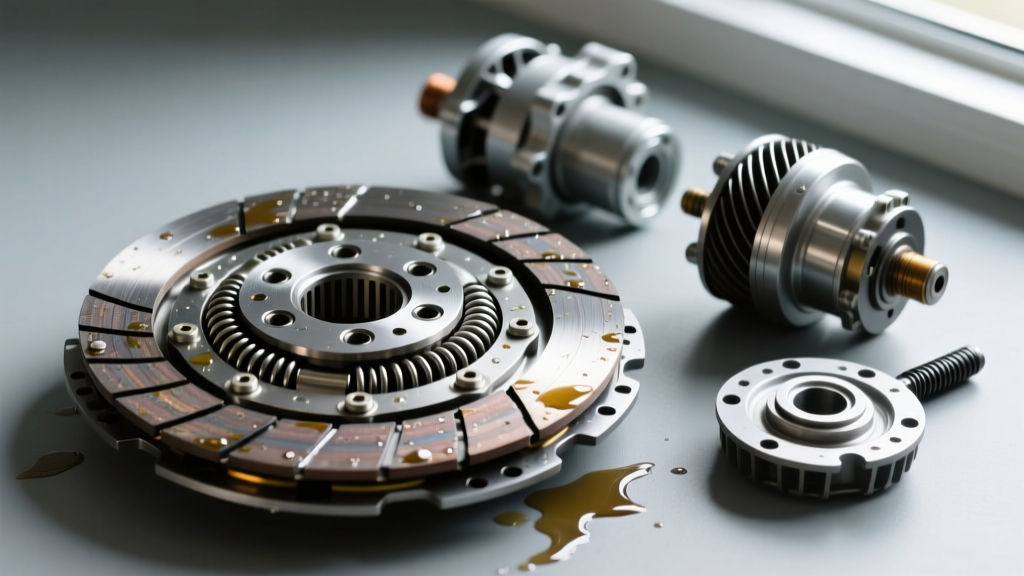
Most manual motorcycles and ATVs (like the Honda TRX420 Rancher) use a wet multi-plate clutch. This system stacks alternating friction and steel plates inside the engine casing, bathed in engine oil for cooling and lubrication.
Symptom 1: Slipping Under Load
If your engine RPMs climb but your speed does not increase when climbing a hill or accelerating hard, your clutch is slipping. The number one cause of wet clutch slip is the use of incorrect oil. Modern automotive oils contain friction modifiers (designed to improve fuel economy) that coat the clutch fibers and destroy their grip. You must only use oil certified to the JASO MA or MA2 Friction Standards. JASO MA2 oils explicitly ban the friction modifiers that cause wet clutch slip.
If the oil is correct, the friction plates are likely worn past their service limit. For example, a Honda CRF450R friction plate should measure at least 3.0mm thick. If they measure below 2.7mm, replacement is mandatory.
Symptom 2: Chatter and Shudder
Chatter occurs when the clutch grabs and releases rapidly during engagement. This is almost always caused by warped steel plates or broken clutch basket damper springs. When steel plates overheat, they develop a blue tint and warp. You can check this by placing the steel plates on a perfectly flat piece of glass and using a feeler gauge. If a 0.2mm feeler gauge slides under the plate, the steel plate is warped and must be replaced. A complete EBC DRC or ProX clutch kit typically costs between $150 and $250 in 2026.
Crucial Torque Specifications
When replacing a motorcycle clutch, the clutch center locknut must be torqued to exact OEM specifications to prevent the inner hub from walking off the transmission mainshaft. Always use a dedicated clutch holding tool to prevent damaging the basket teeth.
- Yamaha YZ450F: Clutch boss nut requires 58 lb-ft (79 Nm).
- Honda CRF450R: Clutch center locknut requires 59 lb-ft (80 Nm).
- Kawasaki KX450: Clutch hub nut requires 58 lb-ft (78 Nm) with a new staked washer.
ATV CVT Systems: When the "Clutch" is a Belt and Pulley
Modern utility and sport ATVs (like the Polaris Sportsman and Can-Am Maverick) do not use friction plates. They use a CVT consisting of a primary clutch (drive clutch), a secondary clutch (driven clutch), and a drive belt. Diagnosing CVT clutch problems requires understanding centrifugal force and mechanical geometry.
Symptom 1: Delayed or Erratic Engagement
If you press the throttle and the engine revs high before the machine finally "grabs" and moves, your primary clutch is failing to engage at the correct RPM. Inside the primary clutch (such as the ubiquitous Polaris P85 or P90), centrifugal roller weights push the sheave faces together to pinch the belt. Over time, these rollers develop flat spots. When they flat-spot, they bind inside the spider towers, causing erratic engagement. Inspect the rollers for flat spots and replace them with OEM or Dalton Industries precision-cut weights.
Symptom 2: Belt Slip and the "Burning Rubber" Smell
Belt slip generates massive amounts of heat, which can melt the belt cord and destroy the sheave faces. Belt slip is usually caused by improper belt deflection or worn sheave bushings. According to the Rocky Mountain ATV/MC Technical Library, proper belt deflection on most Polaris and Can-Am models should be between 1.25 and 1.5 inches (32mm to 38mm) when applying moderate downward pressure on the top span of the belt. If the deflection is greater than 1.5 inches, the secondary clutch spring may be fatigued, or the one-way bearing in the primary clutch may be failing to hold the sheave closed at idle.
Diagnostic Data Table: Powersports Clutch Cross-Reference
Use the table below to cross-reference your symptoms with the likely failure points and required diagnostic tools.
| Clutch Architecture | Common Symptom | Primary Failure Point | Diagnostic Tool Required | 2026 Avg. Repair Cost |
|---|---|---|---|---|
| Motorcycle Wet Multi-Plate | Slipping under heavy load | Worn friction fibers / Wrong oil | Digital Caliper / JASO MA2 Oil | $150 - $280 |
| Motorcycle Wet Multi-Plate | Chatter at low-speed engagement | Warped steel plates / Notched basket | Feeler Gauge & Glass Plate | $200 - $450 |
| ATV CVT (Primary/Secondary) | High RPM before engagement | Flat-spotted roller weights / Weak spring | Digital Tachometer / Clutch Puller | $90 - $250 |
| ATV CVT (Primary/Secondary) | Belt slip / Burning smell | Glazed sheave faces / Stretched belt | Belt Deflection Gauge | $130 - $300 (Belt) |
| Youth ATV Centrifugal | Creeping at idle / Stalling | Glazed clutch shoes / Broken springs | Tachometer / Sandpaper | $60 - $120 |
Step-by-Step Beginner Diagnostic Routine
If you are new to powersports maintenance, follow this structured diagnostic routine before ordering parts from Partzilla OEM Service Manuals or aftermarket suppliers.
- The Fluid Check (Wet Clutches Only): Drain a small amount of oil. Does it smell burnt? Are there metallic flakes or cork material in the oil? If yes, internal clutch failure has occurred, and a full teardown is required.
- The RPM Engagement Test (CVTs): Safely elevate the ATV on a stand. Start the engine and slowly apply the throttle while watching a digital tachometer. Note the exact RPM the rear wheels begin to turn. Cross-reference this with the OEM service manual (typically 1,800 - 2,200 RPM for utility ATVs). If engagement is late, inspect the primary clutch weights and secondary spring.
- The Lever Feel Test (Manual Motorcycles): Pull the clutch lever. It should have a distinct "friction zone" and smooth resistance. If the lever feels notchy, the issue is likely in the clutch basket fingers (notched from the steel plates) or the clutch cable/hydraulic fluid, not necessarily the plates themselves.
- The Visual Belt Inspection (CVTs): Remove the CVT cover. Inspect the belt for missing cogs, frayed Kevlar cords, or a burnt, glazed sidewall. A glazed belt will never grip properly, even if the clutch sheaves are in perfect condition.
Conclusion
Diagnosing clutch problems specific to motorcycles and ATVs does not require guesswork. By adopting the meticulous cross-referencing methodology used in heavy-duty applications—matching engagement RPMs, verifying friction coefficients, and measuring physical tolerances—you can accurately pinpoint the root cause of slipping, chatter, and erratic engagement. Whether you are torquing a Yamaha clutch boss nut to 58 lb-ft or measuring Polaris CVT belt deflection to 1.25 inches, precision and adherence to OEM specifications are the keys to a reliable, long-lasting powersports drivetrain.