Where Is the Clutch Fluid Located in Commercial and Heavy-Duty Trucks?
When fleet mechanics and owner-operators ask, where is the clutch fluid located on a commercial rig, the answer varies drastically depending on the Gross Vehicle Weight Rating (GVWR) and the transmission architecture. Unlike light-duty passenger vehicles, heavy-duty and commercial trucks (Class 4 through Class 8) utilize complex actuation systems designed to handle immense clamping forces and continuous Power Take-Off (PTO) cycles.
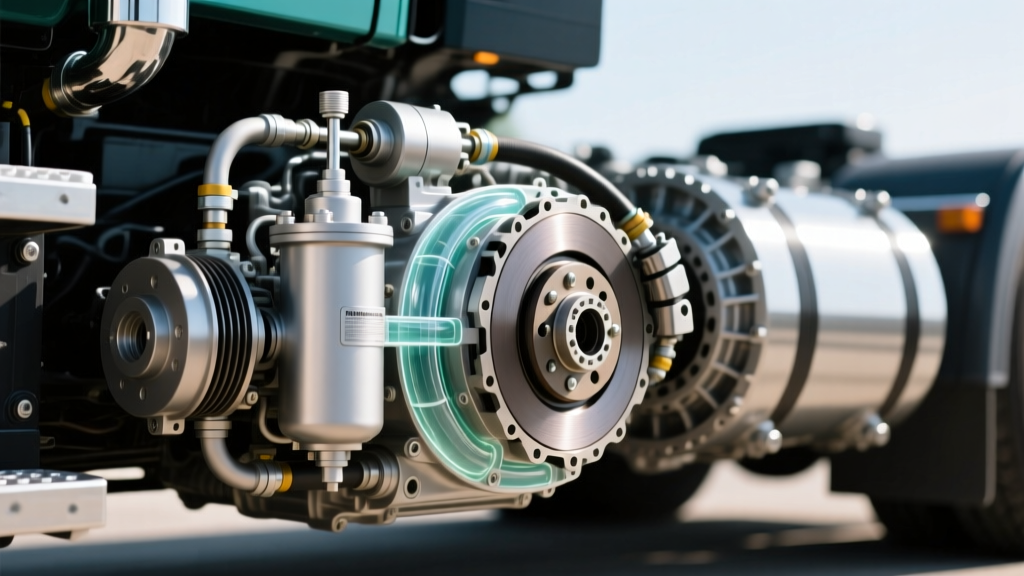
In most medium-duty commercial trucks (such as the Ford F-650 or Freightliner M2), the clutch fluid reservoir is a standalone translucent plastic tank mounted on the driver-side firewall or bulkhead. However, in many modern Class 8 heavy-duty trucks, the hydraulic clutch system draws fluid directly from the primary brake master cylinder reservoir via a shared nipple, or utilizes a specialized air-over-hydraulic booster reservoir located behind the front bumper or on the chassis frame rail.
Medium-Duty vs. Heavy-Duty Reservoir Setups
Understanding your specific truck's layout is critical for accurate diagnostics and performance upgrades. Here is how the fluid locations break down across commercial classes:
| Vehicle Class | Typical Transmission | Reservoir Location | Fluid Type | Actuation Type |
|---|---|---|---|---|
| Class 4-5 (e.g., Ford F-550) | ZF S6-650 / Tremec TR-4050 | Driver-side Firewall | DOT 4 | Pure Hydraulic |
| Class 6-7 (e.g., Freightliner M2) | Allison 2100 / Eaton EH | Bulkhead / Shared Brake | DOT 4 / ATF | Hydraulic / Air-Assist |
| Class 8 (e.g., Peterbilt 389) | Eaton Fuller FRO-16210C | Standalone Firewall or Frame | DOT 3 / HD Mineral | Air-Over-Hydraulic |
The Air-Over-Hydraulic Factor: When Fluid Meets Pneumatics
In Class 8 trucks equipped with manual transmissions like the iconic Eaton Fuller Road Ranger series, pure hydraulic pressure is insufficient to overcome the massive spring pressure of a 15.5-inch ceramic commercial clutch disc. Instead, these trucks use an air-over-hydraulic clutch booster.
In this setup, the clutch fluid (hydraulic release fluid) is pressurized by the master cylinder, which then opens a pneumatic valve allowing 120 PSI of system air to assist the slave cylinder. If the clutch fluid is low, contaminated, or boiling, the air assist will push the slave cylinder erratically. This results in violent clutch chatter, premature wear on the release bearing, and difficulty splitting gears on the highway.
Diagnostic Symptoms: Fluid Boiling and Spongy Pedals Under Load
Commercial vehicles face unique thermal challenges. When operating a PTO for extended periods (such as in dump trucks or tow wreckers) or hauling 80,000 lbs up a 6% grade, the hydraulic lines routed near the exhaust downpipe can absorb massive amounts of heat.
Identifying Fluid Degradation in Fleet Vehicles
- Spongy Pedal at High EGTs: Standard DOT 3 fluid has a dry boiling point of 401°F (205°C). Under heavy commercial load, fluid in the slave cylinder can exceed this, vaporizing and causing a spongy pedal that fails to fully disengage the transmission.
- Grinding on Non-Synchronized Gears: Heavy-duty manuals often feature non-synchronized lower gears (e.g., 1st and Reverse). If the hydraulic fluid is aerated or moisture-contaminated, the clutch will drag, causing severe gear clash and shift fork damage.
- Delayed Pedal Return: A swollen master cylinder cup, caused by using the wrong fluid (such as putting petroleum-based fluid into a DOT-spec system), will restrict the return port, keeping the release bearing engaged and burning out the clutch.
Performance Upgrades for Commercial Clutch Hydraulics
For fleets and heavy-haul owner-operators looking to upgrade their drivetrain for extreme torque applications (e.g., upgrading to a South Bend Clutch SDD3250-6 Dual-Disc setup rated for 3,250 lb-ft), the stock hydraulic system must be fortified.
1. High-Temperature Fluid Swaps
Upgrading to a high-performance DOT 5.1 fluid, such as Motul RBF 660 or Castrol SRF, increases the dry boiling point to over 620°F (325°C). This is mandatory for severe-duty PTO applications where the truck idles for hours with the clutch engaged and disengaged repeatedly. Note: Always verify master cylinder seal compatibility before switching fluid chemistries.
2. Heavy-Duty Slave Cylinder Upgrades
Stock plastic slave cylinders are notorious for cracking under the increased line pressure required to actuate high-clamp-load performance pressure plates. Upgrading to a reinforced aluminum slave cylinder, such as the LuK LSC commercial series or Sachs heavy-duty units (e.g., Sachs 3182 600 103), ensures consistent throw-out bearing travel.
Expert Torque Specs: When installing an upgraded heavy-duty slave cylinder to a cast-iron or aluminum bellhousing, torque the mounting bolts to 18-22 lb-ft (25-30 Nm). Over-torquing can warp the aluminum housing and bind the internal piston. Always torque the bellhousing to the Cummins ISX or Detroit Diesel DD15 engine block to the manufacturer's specification, typically 35-45 lb-ft depending on the bolt grade and size.
Heavy-Duty Bleeding Procedures: Pushing Past the Air Pockets
Because commercial trucks have wheelbases exceeding 250 inches, the hydraulic clutch line runs the entire length of the chassis frame rail. This creates multiple high-point loops where air bubbles become trapped, rendering standard gravity bleeding useless. If you are replacing the master cylinder or upgrading the fluid, you must use a reverse pressure bleeding technique.
- Prepare the System: Fill the firewall or brake-shared reservoir with fresh DOT 4 or DOT 5.1 fluid. Ensure the reservoir cap is loosely vented.
- Connect Reverse Bleeder: Attach a pneumatic reverse bleeder to the slave cylinder bleed screw (located on the bellhousing or the air-over-hydraulic booster).
- Push Fluid Upward: Apply 15-20 PSI of fluid pressure from the slave cylinder upward toward the master cylinder. This forces trapped air bubbles out through the shortest path—up into the reservoir.
- Monitor the Reservoir: Watch for a steady stream of fluid without bubbles entering the reservoir. Keep the reservoir from overflowing by extracting excess fluid with a turkey baster or fluid extractor.
- Verify Pedal Free-Play: Heavy-duty trucks require 1.5 to 2 inches of pedal free-play before the master cylinder begins to push fluid. Adjust the pushrod at the pedal box accordingly to prevent the release bearing from riding on the diaphragm springs.
Final Fleet Maintenance Takeaway
Knowing exactly where the clutch fluid is located and how it interacts with pneumatic assist systems is the difference between a truck that shifts smoothly under an 80,000-lb load and one that destroys a $4,000 transmission on the side of the highway. By upgrading to high-temp fluids, utilizing reinforced slave cylinders, and implementing reverse-bleeding protocols, you can drastically extend the life of your commercial clutch system.