The Mechanical Link Between Basket Wear and Clutch Slip
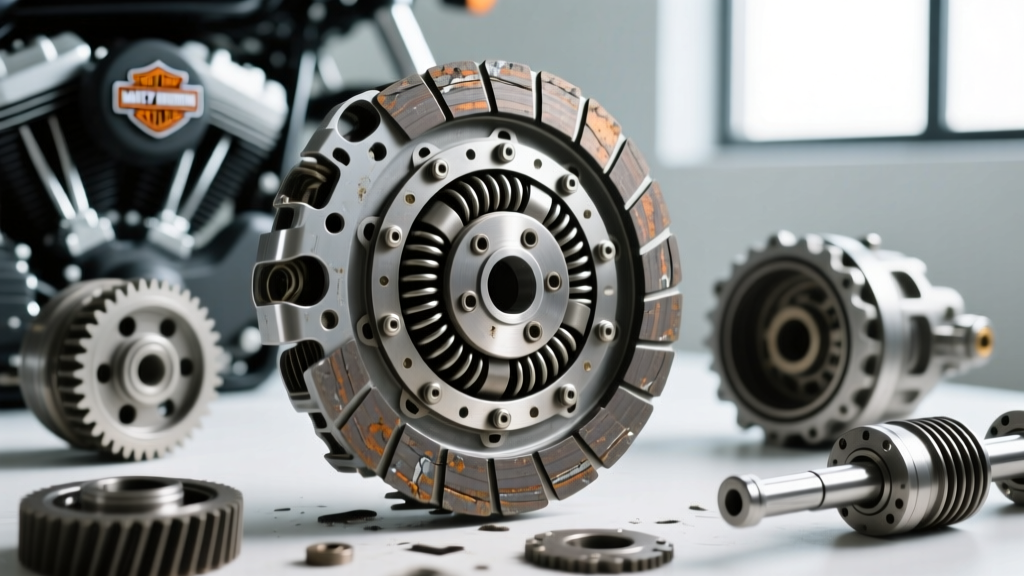
When riders experience a slipping clutch on a Harley-Davidson Big Twin, the immediate instinct is often to blame the friction plates or the diaphragm spring. However, as we move through the 2026 riding season, experienced drivetrain technicians know that the root cause frequently lies in the outer clutch hub—commonly known as the harley clutch basket. The basket is the critical interface between the primary chain drive and the clutch pack. When the aluminum tangs of the basket become notched or galled from years of shock loading, the steel separator plates cannot move freely. This binding prevents the clutch pack from compressing evenly under the diaphragm spring, resulting in micro-slipping, friction plate glazing, and eventual catastrophic slip under heavy throttle.
This preventive maintenance guide will walk you through the exact symptoms of a failing clutch basket, how to accurately diagnose the issue using precision measurements, and the maintenance protocols required to extend the life of your primary drivetrain.
4 Definitive Symptoms of a Compromised Harley Clutch Basket
Clutch slip doesn't always manifest as a sudden loss of drive. In the early stages of basket degradation, the symptoms are subtle and often misdiagnosed as cable adjustment issues or worn primary fluid. Look for these specific indicators:
- RPM Flare Under Load: The most classic symptom. When rolling on the throttle in 4th, 5th, or 6th gear (especially on highway inclines), the engine RPMs will surge without a proportional increase in road speed. This occurs because the bound plates in the notched basket cannot maintain uniform clamping pressure.
- Clunky Neutral Finding & False Neutrals: If the steel plates hang up in deep basket notches, the clutch fails to fully disengage even when the lever is pulled to the grip. This drag makes finding neutral at a stoplight difficult and causes the motorcycle to "creep" forward with the clutch lever engaged.
- Erratic Lever Feel: A healthy Harley diaphragm spring offers a smooth, progressive resistance. If you feel a "gritty" or notchy sensation in the clutch lever as you pull and release it, the plates are physically catching and releasing against the galled aluminum tabs of the basket.
- Primary Chain Rattle & Shock Noises: While technically a symptom of the compensator or primary chain, a severely notched basket allows the clutch pack to rattle independently of the engine's rotational mass at idle, creating a distinct metallic clatter from the primary cover.
Diagnostic Protocol: Measuring Wear and Pack Thickness
To confirm that your harley clutch basket is the culprit behind the slipping, you must perform a wet teardown of the primary chaincase. Drain the primary fluid into a clean pan and inspect it. If you find fine aluminum glitter suspended in the oil, the basket tangs are actively degrading. Once the primary cover is removed and the clutch assembly is exposed, follow this diagnostic sequence:
Step 1: The Fingernail Test and Feeler Gauge Measurement
Run your fingernail across the drive tabs on the inside of the aluminum basket where the steel plates seat. If your fingernail catches in a groove, the notch is deep enough to cause plate hang-up. For precise diagnosis, use a feeler gauge. According to HD Forums technical archives and factory service manuals, if the notch depth exceeds 0.015 inches (0.38mm), the basket must be replaced or machined. Attempting to file these notches out by hand is a temporary fix that alters the stack width and ruins clutch pack geometry.
Step 2: Clutch Pack Stack Height Verification
Slipping is often a combination of basket wear and overall pack compression. Remove the diaphragm spring and pressure plate. Using a set of calipers, measure the total thickness of the friction and steel plate stack. For most Milwaukee-Eight and late-model Twin Cam Big Twins, the service limit for total clutch pack thickness is approximately 1.040 inches. If your stack measures below this threshold, the diaphragm spring is over-extended and cannot provide adequate clamping force, exacerbating the slip caused by the notched basket.
Step 3: Inner Hub and Bearing Inspection
Do not ignore the inner hub. While the basket handles the primary chain input, the inner hub rides on the mainshaft. Check the inner hub bearing for axial play. Excessive play allows the clutch pack to wobble, accelerating uneven wear on the basket tangs. If the bearing has more than 0.005 inches of play, press in a new Timken or SKF equivalent bearing before installing a new basket.
Essential Torque & Clearance Specifications (2026 Reference Table)
Proper reassembly is just as critical as diagnosis. Over-torquing the clutch hub nut can warp the inner hub, while under-torquing the compensator leads to shock loads that destroy the new basket. Keep this reference chart in your shop manual:
| Component | Specification / Torque | Notes & Thread Prep |
|---|---|---|
| Clutch Hub Nut (Mainshaft) | 70 - 80 ft-lbs (95 - 108 Nm) | Apply Red Loctite 271. Use a proper clutch holding tool; never use an impact gun. |
| Compensator Sprocket Bolt | 150 - 165 ft-lbs (203 - 224 Nm) | Apply Red Loctite 271. Requires heated socket or high-torque breaker bar. |
| Primary Chain Deflection (Cold) | 3/8" - 1/2" (9.5 - 12.7 mm) | Measure at the tightest spot of the bottom run with the engine off. |
| Clutch Lever Freeplay | 1/16" - 1/8" (1.6 - 3.2 mm) | Measured at the lever perch. Crucial to prevent slip from a tight cable. |
| Primary Fluid Capacity (Typical Touring) | 32 - 38 oz (946 - 1124 ml) | Fill to the bottom of the diaphragm spring outer edge. |
Preventive Maintenance: Stopping Notch Wear Before It Starts
Replacing a harley clutch basket is a labor-intensive job. Preventive maintenance is the most cost-effective way to ensure your clutch system survives past the 100,000-mile mark. The primary enemy of the aluminum basket is shock loading and improper lubrication.
1. Eliminate Automotive Friction Modifiers
The single biggest mistake owners make is filling the primary chaincase with standard automotive motor oil. Automotive oils labeled "Energy Conserving" or "Resource Conserving" contain molybdenum-based friction modifiers. These modifiers are designed to reduce friction in car engines, but in a Harley wet clutch, they coat the friction plates and guarantee slip. Always use a dedicated V-Twin primary fluid or a high-quality 20W-50 motorcycle oil that explicitly meets JASO MA/MA2 standards. AMSOIL V-Twin Synthetic Primary Fluid is engineered specifically to provide the high-film strength needed to cushion the steel plates against the aluminum basket tabs during aggressive downshifts.
2. Maintain Compensator Health
The engine compensator sprocket is designed to absorb the violent torsional spikes inherent in a large-displacement V-Twin engine. If the compensator spring pack weakens or fails, every combustion pulse is sent directly through the primary chain and into the clutch basket. This hammering effect is what literally carves notches into the aluminum tangs. Inspect your compensator for excessive rotational play every 20,000 miles. Upgrading to a high-performance aftermarket compensator (such as the Screamin' Eagle or Baker Drivetrain units) can drastically reduce the shock loads transferred to the basket.
3. Perfect Your Clutch Cable Adjustment
A clutch cable that is too tight prevents the pressure plate from fully engaging, causing a perpetual, imperceptible slip that generates immense heat. This heat transfers into the primary fluid, breaking down its viscosity and leaving the basket tangs unprotected from impact wear. Verify your 1/16" to 1/8" freeplay at the lever perch every time you perform an oil change, as cables stretch and clutch packs wear over time.
Replacement Economics: OEM vs. Billet Aftermarket
When diagnosis confirms that your basket is beyond the 0.015-inch service limit, you have a critical purchasing decision to make. Standard OEM replacement baskets are cast or forged aluminum. While they are perfectly adequate for stock, daily-ridden motorcycles, they are still susceptible to eventual notching if the bike is ridden aggressively or features high-torque engine modifications.
For riders pushing high horsepower or those who simply never want to open the primary chaincase for this issue again, the aftermarket offers superior solutions. Manufacturers like Barnett Tools & Engineering produce billet steel and hard-anodized billet aluminum clutch baskets. A billet steel basket is virtually immune to notching. While an OEM aluminum basket might cost between $160 and $220, a premium billet steel basket will range from $300 to $380. When factoring in the $150 cost of a complete clutch pack replacement and the 3 to 4 hours of shop labor ($450-$600), spending an extra $150 on a lifetime billet basket is the most economically sound decision for long-term ownership.
Technician's Insight: "Never reuse old steel plates when installing a new clutch basket. The old plates have microscopic wear patterns and slight warping that will immediately begin cutting into the fresh tangs of your new basket, cutting its lifespan in half."
Conclusion
Diagnosing a slipping clutch requires looking beyond the friction material and examining the structural foundation of the clutch pack: the outer hub. By understanding how a notched harley clutch basket compromises clamping force, you can accurately pinpoint the root cause of RPM flare and poor disengagement. Adhering to strict torque specifications, utilizing JASO MA-compliant primary fluids, and mitigating engine shock loads through compensator maintenance will ensure your drivetrain delivers power to the rear tire smoothly and reliably for years to come.