Understanding the Toyota GT86 Drivetrain Architecture
The toyota gt86 drivetrain is a masterclass in lightweight, rear-wheel-drive packaging. Developed in a joint venture with Subaru, the GT86 (alongside the Scion FR-S and Subaru BRZ) utilizes a front-engine, rear-wheel-drive (FR) layout powered by the naturally aspirated FA20 boxer engine. As we navigate through 2026, the earliest 2012-2014 models are now well past the 120,000-mile threshold, making drivetrain component wear, fluid degradation, and mounting fatigue primary concerns for enthusiasts and daily drivers alike.
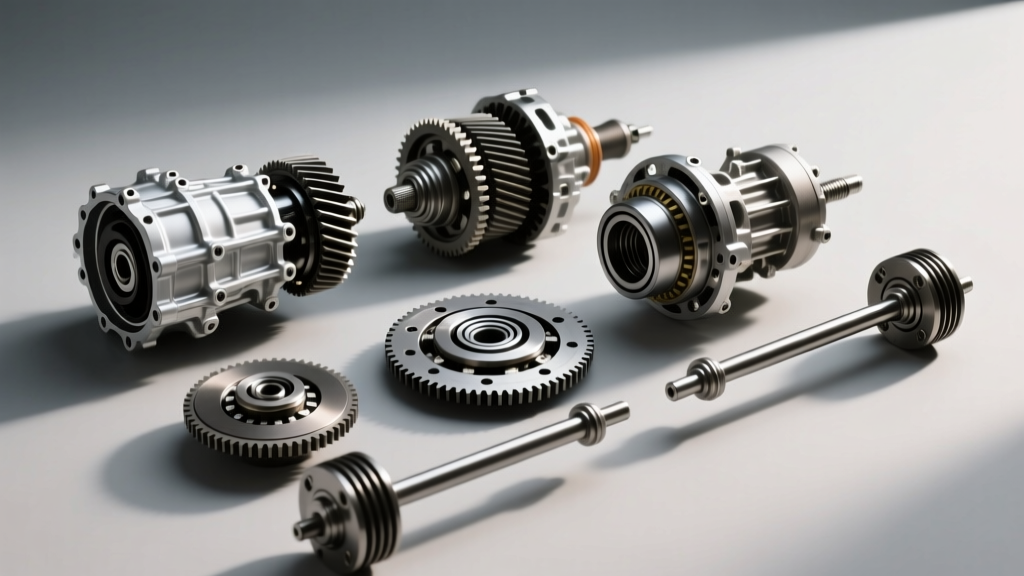
To effectively troubleshoot this platform, you must first understand the specific hardware bolted to the back of the FA20 block. Manual transmission models utilize the Toyota TL70 (a variant of the BA6 family) 6-speed manual, paired with a Torsen Type 1b limited-slip differential. Automatic models use the A960E 6-speed automatic with a viscous-coupling rear differential. Both configurations rely on a two-piece driveshaft with a center support bearing and flexible couplings to manage NVH (Noise, Vibration, and Harshness) and driveline angles.
Symptom-to-Component Diagnostic Matrix
Before putting the car on a lift, a road test is mandatory. Drivetrain complaints are often misdiagnosed as engine or suspension issues. Use the matrix below to isolate the failing component based on driver feedback and road-test data.
| Primary Symptom | Trigger Condition | Probable Component | Common Failure Mode |
|---|---|---|---|
| Harmonic Vibration | 45-55 mph, steady throttle | Driveshaft Center Bearing | Rubber isolator tearing, bearing seizure |
| Metallic Clunk | 1-2 shift, or throttle lift-off | Rear Differential / U-Joints | Excessive ring-and-pinion backlash, worn trunnions |
| High-Pitch Whine | Deceleration (off-throttle) | Differential Pinion Bearing | Bearing race wear, improper gear oil viscosity |
| Rhythmic Clicking | Full-lock steering at low speed | Outer CV Joints (Rear Axles) | Cage wear, loss of lubrication from torn boots |
| Shudder on Takeoff | 1st gear engagement, manual | Clutch / Flywheel / Flex Disc | Hot spots on flywheel, degraded rubber flex disc |
Deep Dive: Driveshaft and Center Support Bearing Isolation
The GT86 utilizes a two-piece driveshaft to accommodate the distance between the transmission output shaft and the rear differential while maintaining acceptable driveline angles. The critical failure point on high-mileage examples is the center support bearing (Toyota/Subaru Part # 37230-CA010).
Diagnosing Center Bearing Failure
A failing center bearing typically presents as a low-frequency hum or harmonic vibration that peaks between 45 and 55 mph. Unlike tire cupping—which changes pitch with vehicle speed and is sensitive to lane changes—driveshaft vibrations remain constant regardless of steering input. To isolate this, perform a coast-down test: when the vibration peaks, depress the clutch (or shift to neutral). If the vibration persists identically, the issue is rotational mass (driveshaft, wheels, or tires). If it changes, it may be load-dependent (CV joints or differential).
Expert Tip: Before condemning the center bearing, inspect the rubber flex disc (guibo) located at the transmission output flange. Cracks in the flex disc will cause a severe clunk on takeoff and mimic U-joint failure.
Torque Specifications and Replacement
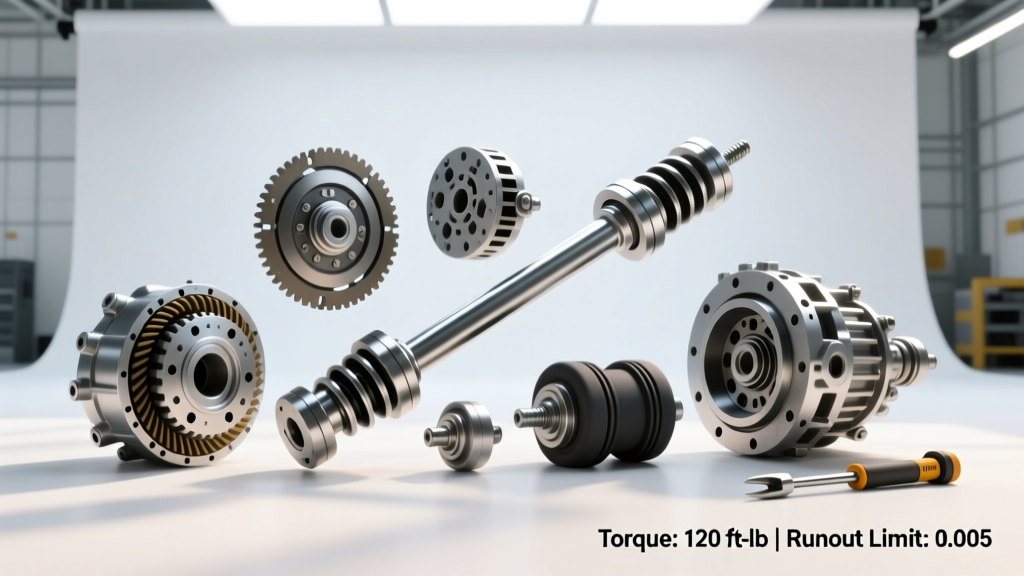
When replacing the driveshaft or center bearing, adhering to factory torque specs is non-negotiable to prevent driveline binding. The driveshaft flange bolts securing the shaft to the differential companion flange must be torqued to 54 Nm (40 lb-ft). The center bearing bracket nuts should be tightened to 49 Nm (36 lb-ft) while the vehicle is at normal ride height (loaded suspension) to prevent pre-loading the rubber isolator.
Deep Dive: Rear Differential and Torsen LSD Troubleshooting
The rear differential in the manual Toyota GT86 houses a Torsen (Torque Sensing) Type 1b limited-slip differential. This is a purely mechanical, gear-driven LSD that relies on cross-axis torque to lock. It is highly robust but requires specific maintenance to prevent catastrophic wear.
Fluid Degradation and Whining
The differential requires exactly 1.3 Liters (1.37 US qts)
- Whine on Acceleration: Typically indicates wear on the drive side of the hypoid gear teeth or a failing pinion depth shim.
- Whine on Deceleration: Almost always points to a worn pinion bearing or excessive ring gear backlash.
- Chatter during tight turns: Indicates the Torsen LSD is starving for friction modifier or the internal helical gears are experiencing edge-wear due to contaminated fluid.
The differential drain and fill plugs utilize a 10mm hex (Allen) bit. Both plugs must be torqued to 37 Nm (27 lb-ft). Always remove the fill plug first to ensure you can refill the unit before draining it.
Deep Dive: Rear Axle and CV Joint Failure Modes
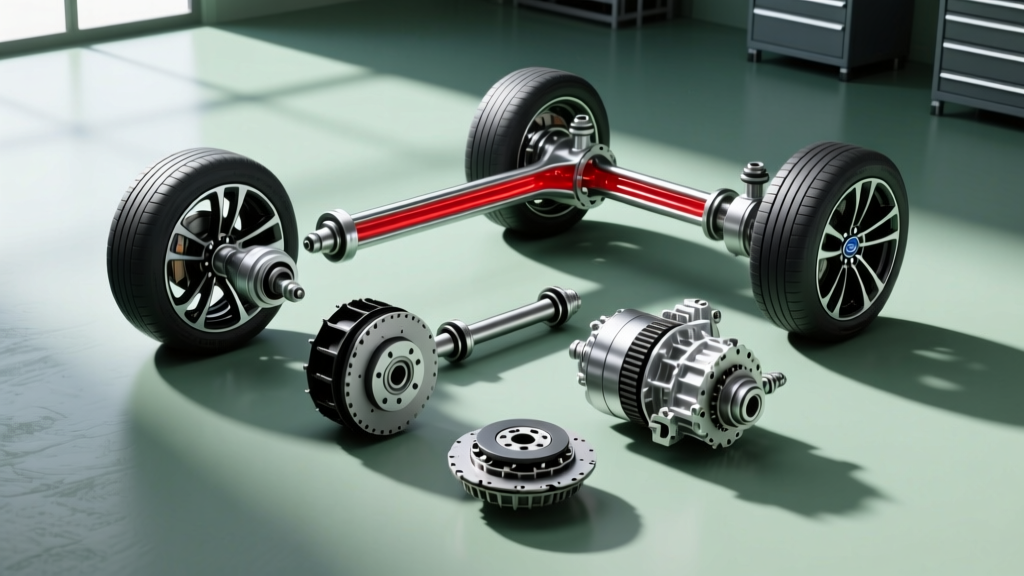
Power is transferred from the differential to the rear wheels via two half-shafts (axles), each featuring an inner and outer Constant Velocity (CV) joint. Because the GT86 is a low-slung sports car, the CV boots are highly susceptible to road debris and tearing.
Identifying CV Joint Wear
Outer CV joints fail most frequently due to torn accordion boots, which expel grease and ingest water and grit. The hallmark symptom of a failing outer CV joint is a rhythmic clicking or popping noise when accelerating through a tight, full-lock turn. Inner CV joints, which utilize a tripod design, typically fail by developing excessive plunge play. This manifests as a shudder or vibration specifically under heavy acceleration, which disappears when you lift off the throttle.
When inspecting the axles on a lift, use a pry bar to gently check for radial and axial play in the tripod housing. Any noticeable clunk or binding indicates the needle bearings inside the tripod cross have brinnelled the housing, requiring a complete axle replacement. OEM replacement axles are preferred over aftermarket remanufactured units, as aftermarket CV joints often suffer from improper heat treatment, leading to premature cage failure.
Step-by-Step Isolation Workflow for the FA20 Platform
When a customer or enthusiast presents a GT86 with an ambiguous drivetrain noise, follow this systematic isolation workflow to avoid throwing parts at the car:
- The Chalk Test: Draw a line across the tread of all four tires. Drive the car for 5 miles. Inspect the chalk lines to rule out tire cupping or shifted belts, which are the most common false-positives for drivetrain vibration.
- Stethoscope Inspection: With the vehicle on a lift and the rear wheels suspended, run the car in gear (safely secured). Use a mechanic's stethoscope on the differential housing and the center support bearing bracket. A failing pinion bearing will emit a distinct, high-frequency growl through the stethoscope probe.
- Driveline Angle Verification: If the vehicle has been lowered on aftermarket coilovers, the pinion angle may have shifted outside the acceptable 1-to-3-degree operating window. Use a digital angle gauge on the transmission output flange and the differential input flange. Incorrect angles will cause accelerated U-joint wear and severe vibrations under load.
- U-Joint Deflection Test: Mark the driveshaft and differential flange alignment. Apply rotational force to the driveshaft by hand while holding the rear wheels stationary. Any rotational free-play exceeding 2 degrees indicates worn U-joint trunnions, necessitating a driveshaft rebuild or replacement.
Proper diagnosis of the toyota gt86 drivetrain requires patience, a methodical approach, and an understanding of the FA20 platform's unique NVH characteristics. For factory service manuals and updated technical service bulletins (TSBs), always consult the Toyota Technical Information System (TIS). Additionally, community-driven teardowns and long-term reliability data can be found on platforms like Grassroots Motorsports, which frequently document the real-world aging process of these modern classics.