Automotive vs. Powersports CVT: Clarifying the Terminology
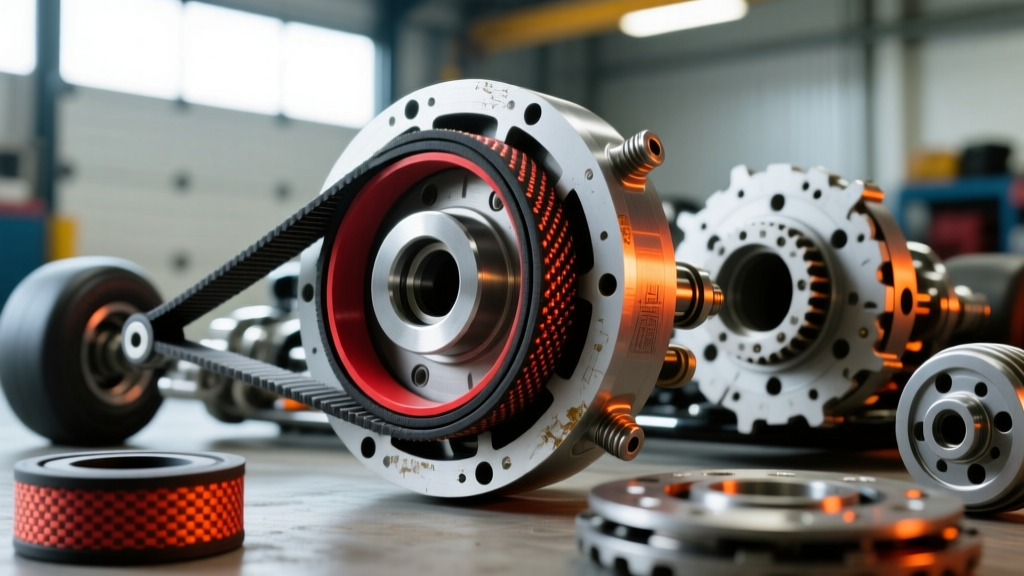
As automotive transmission specialists, we spend most of our time diagnosing fluid coupling failures in systems like the ZF 8HP or the GM 6L80. However, when enthusiasts and fabricators refer to a 'torque converter' in the context of off-road vehicles, mini bikes, and racing karts, they are actually describing a mechanical Continuously Variable Transmission (CVT). Unlike a hydraulic automotive torque converter that relies on transmission fluid and a stator to multiply torque, a go kart CVT relies on a centrifugal drive clutch, a spring-loaded driven pulley, and a specialized drive belt.
Because there is no fluid to absorb and dissipate thermal energy, torque converter overheating problems in these powersports applications manifest entirely as frictional heat. When the belt slips against the aluminum or cast-iron sheaves, temperatures can spike well past 300°F (149°C) in seconds. Selecting the correct go kart torque converter belt is not just a matter of fitting a rubber loop onto the pulleys; it is a critical thermal management decision that dictates the survival of your entire drivetrain.
Root Causes of Go Kart Torque Converter Overheating Problems
Before investing in high-end replacement parts, it is vital to understand why your current setup is generating excessive heat. Overheating in a Series 20, Comet TAV2, or Torq-A-Verter system almost always traces back to one of three mechanical failures:
- Improper Belt Sizing: Using a belt that is even 1/8th of an inch too long prevents the driven pulley from applying adequate lateral clamping force. This allows the belt to ride low in the driver clutch at high RPMs, causing violent sidewall slip and immediate glazing.
- Automotive V-Belt Substitution: A common and destructive mistake is replacing a damaged CVT belt with a standard hardware store 4L-series automotive V-belt. Automotive belts are designed for constant-ratio pulleys and lack the specialized aramid cord placement required to flex laterally through the extreme ratio changes of a CVT. They will overheat, delaminate, and snap within hours.
- Pulley Misalignment: If the crankshaft driver clutch and the jackshaft driven pulley are not perfectly parallel, the belt will track aggressively against one side of the sheave. This creates localized friction hotspots that melt the belt's rubber matrix and transfer destructive heat into the driven pulley's internal cam rollers, causing them to seize.
Diagnosing Thermal Failure: Symptom Checklist
How do you know if your CVT is suffering from chronic overheating before catastrophic failure occurs? Look for these definitive symptoms:
- Acrid Burning Smell: The most obvious indicator. Overheated CVT belts emit a distinct, sharp burning rubber odor that lingers around the belt guard.
- Black Glazing on Sidewalls: Inspect the belt's contact surfaces. A healthy belt has a matte, slightly textured finish. An overheated belt will have shiny, glass-like black streaks where the rubber has melted and re-hardened.
- Excessive Belt Dust: While some dust is normal during break-in, thick accumulations of black, stringy debris inside the belt guard indicate the belt cords are separating due to thermal degradation.
- RPM Hang and Sluggish Back-Shifting: As heat transfers from the belt into the driven pulley, the internal plastic or nylon cam shoes can warp. This causes the pulley to stick in the 'overdrive' (high-speed) position, resulting in a severe lack of torque when accelerating from a stop.
Material Comparison: Selecting the Right Go Kart Torque Converter Belt
To combat torque converter overheating problems, upgrading your belt material is the most effective intervention. Below is a comparison of the three primary belt compositions available on the market in 2026.
| Material Type | Heat Resistance | Flexibility | Avg. Price Range | Best Application |
|---|---|---|---|---|
| Standard Rubber (Polyester Cord) | Low (Up to 180°F) | High | $25 - $35 | Light-duty trail karts, low HP (under 8HP) |
| Aramid / Kevlar Reinforced | High (Up to 350°F+) | Medium | $55 - $85 | Racing, heavy loads, high HP (13HP+), dune buggies |
| Cogged / Notched Raw-Edge | Medium-High | Very High | $45 - $65 | Extreme tight-ratio setups, reducing bending resistance heat |
For any kart running a modified engine (such as a Predator 212 with a billet flywheel and header) or operating in muddy, high-resistance environments, an Aramid-reinforced belt is mandatory. According to engineering data from Gates Corporation, aramid fibers exhibit virtually zero thermal stretch, maintaining the precise clamping pressure required to prevent the slip that causes overheating.
2026 Buyer’s Guide: Top Replacement Belts for TAV2 & Series 20
When shopping for a replacement, you must match the exact top-width and circumference. The most common systems (Comet TAV2 and Series 20) require a 3/4-inch top width. Here are the top-performing part numbers to consider:
1. OEM Comet 218353A (Standard Replacement)
This is the baseline 27-inch 3/4-inch belt designed for standard 3/4-inch bore driver clutches. It features a durable rubber compound that provides excellent initial grip. However, under sustained high-RPM climbing or racing conditions, it is prone to the overheating problems mentioned above. Cost: ~$32.
2. Comet 219456 / Aftermarket Kevlar Equivalent
Often sold as the 'heavy-duty' upgrade, this belt utilizes aramid tensile cords. The sidewalls are typically wrapped in a specialized friction fabric that resists glazing even when the driven pulley is slow to backshift. If you are running a 10HP to 15HP engine and frequently experience belt burn, this is the definitive fix. Cost: ~$68.
3. TAV2 Specific 218352A (26-7/8 Inch)
Note that the TAV2 system (often found on Manco, Yerf-Dog, and Trailmaster karts) requires a slightly shorter belt than the standard Series 20. Installing a 27-inch belt on a TAV2 will cause immediate slack, resulting in catastrophic slip and overheating within the first five minutes of operation. Always verify your specific driven pulley model before ordering. Cost: ~$38.
For verified fitment and OEM specifications, fabricators frequently consult the Comet Industries technical library or cross-reference part numbers via specialized suppliers like NR Racing to ensure they are not receiving counterfeit belts from overseas marketplaces.
Precision Installation: Torque Specs and Alignment
Even the most expensive Kevlar go kart torque converter belt will succumb to overheating problems if the mechanical setup is flawed. Follow these precise installation parameters to ensure optimal thermal dissipation and belt longevity:
- Driver Clutch Torque: The drive clutch must be securely fastened to the crankshaft. For standard 5/8"-18 UNF crank bolts, torque to 45-55 ft-lbs using blue Loctite. A loose clutch will wobble, creating lateral belt whip and immense friction heat.
- Alignment Check: Use a straight edge across the face of the driver clutch and the driven pulley. The offset must not exceed 1/16th of an inch. If your jackshaft is adjustable, slide it laterally until perfect alignment is achieved.
- Sheave Preparation: If your previous belt overheated and glazed, the aluminum sheaves are likely contaminated with melted rubber. Do not install a new belt on dirty sheaves. Disassemble the driven pulley and scuff the inner faces with a Scotch-Brite pad and brake cleaner to restore the necessary micro-texture for grip.
- Driven Pulley Lubrication: Overheating belts transfer heat into the driven pulley's internal cam. Disassemble the driven pulley annually and apply a high-temperature molybdenum disulfide (moly) grease to the cam ramps and roller bearings. Standard lithium grease will melt and wash out under CVT thermal loads.
By understanding the thermal dynamics of your CVT system and investing in the correct aramid-reinforced go kart torque converter belt, you can eliminate overheating problems, restore your kart's acceleration, and ensure your drivetrain survives the most punishing environments.