The Anatomy of GM 6L80 Torque Converter Noise
For owners of 2006-2019 GM trucks, SUVs, and performance vehicles equipped with the 6L80 and 6L90 transmissions, a developing torque converter noise is often the first warning sign of a catastrophic internal failure. Unlike simple gear whine, torque converter noise in the 6L80-E typically manifests as a low-frequency shudder under light throttle that eventually degrades into a metallic clunk or high-pitched whine at idle. Understanding the mechanical progression of this noise is critical for accurate diagnosis and determining the true replacement cost in 2026.
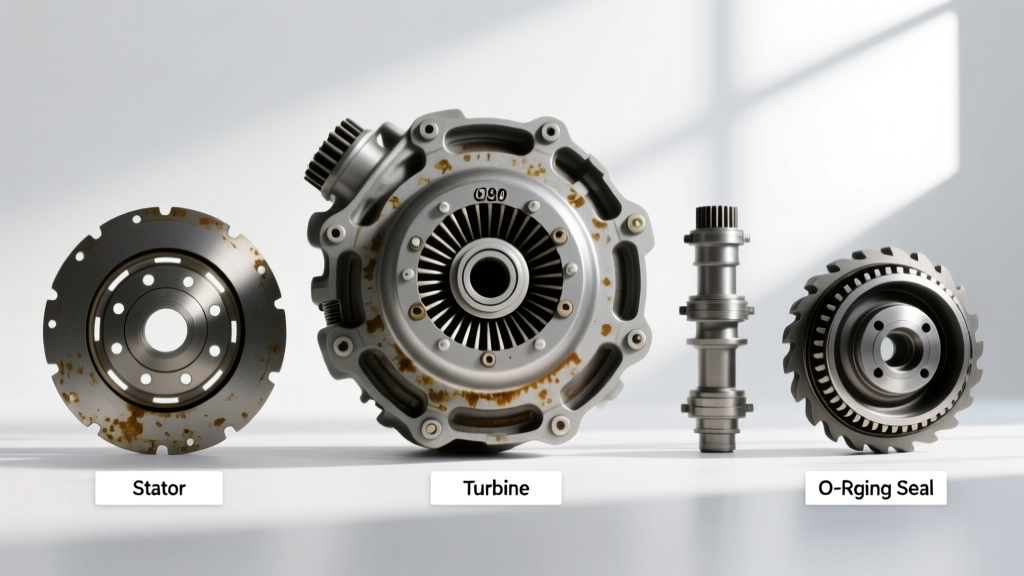
The 6L80 utilizes a complex lockup torque converter with a multi-plate Torque Converter Clutch (TCC). When the TCC apply valve in the valve body wears—a well-documented issue covered extensively by Sonnax—the converter slips during apply. This slip generates excessive heat, glazing the clutch lining. Once the friction material delaminates, it circulates through the transmission fluid, contaminating the stator one-way clutch and the transmission oil pump. The resulting debris causes the stator to freewheel or bind, creating the distinct grinding or clunking torque converter noise heard in park and drive.
Diagnostic Isolation: Pump Whine vs. Stator Clunk
Before committing to a full teardown, technicians must isolate the noise. A high-pitched whine that changes pitch with engine RPM is often the transmission oil pump starving or suffering gear wear due to torque converter hub runout. Conversely, a rhythmic clunk or metallic scraping that occurs specifically when shifting from Park to Drive or Reverse usually indicates a failed stator one-way clutch or damaged turbine fins. According to diagnostic bulletins from the Automatic Transmission Rebuilders Association (ATRA), dropping the transmission pan to inspect for heavy metallic clutch debris is a mandatory step. If the fluid smells burnt and contains copper-colored particulate, the torque converter is unsalvageable and must be replaced alongside a complete transmission flush.
2026 Cost Breakdown: 6L80 Torque Converter Replacement
Replacing a torque converter on a longitudinal GM application (such as a Silverado 1500 or Tahoe) requires transmission removal, making labor the most significant variable in your repair bill. Below is the 2026 national average cost matrix for a 6L80 torque converter replacement, factoring in current parts pricing and regional labor rates.
| Cost Category | Dealership (OEM) | Independent Specialist | DIY (Parts & Fluid Only) |
|---|---|---|---|
| Torque Converter Assembly | $850 - $1,100 | $450 - $700 (Reman) | $400 - $650 |
| Valve Body Zip Kit (TCC Fix) | $350 (Often skipped) | $180 - $250 | $140 - $180 |
| Transmission Fluid (Dexron ULV) | $180 | $120 | $85 |
| Labor (R&R & Prime) | $1,400 - $1,800 | $900 - $1,200 | $0 |
| Total Estimated Cost | $2,780 - $3,430 | $1,650 - $2,270 | $625 - $915 |
Note: If the contaminated torque converter has scored the transmission oil pump housing or damaged the input shaft, expect the independent shop total to rise by $400-$600 for pump replacement and machining.
Part Selection: OEM, Remanufactured, and Performance
When addressing torque converter noise, simply swapping the unit without addressing the root cause will result in a repeat failure within 15,000 miles. The 6L80's TCC apply circuit requires remediation.
Critical Part Numbers and Kits
- OEM Replacement: ACDelco Part #24276249 (Standard 6L80) or #24279232 (6L90 HD applications). OEM units are laser-welded and balanced to GM specifications but carry a premium price tag.
- Valve Body Remediation: Sonnax Zip Kit #6L80-ZIP. This kit replaces the worn TCC apply valve and sleeve with an anodized aluminum upgrade, restoring proper hydraulic pressure and preventing future clutch slip.
- Performance/Heavy Duty: For vehicles used in towing or tuned applications, aftermarket billet torque converters from manufacturers like Circle D or Yank feature forged steel covers and upgraded stator clutches that physically eliminate the flex that contributes to premature wear and noise.
Installation Protocol: Torque Specs and Priming
Improper installation is a leading cause of post-repair torque converter noise. If the converter is not fully seated into the transmission oil pump before mating to the engine block, the pump gears will shatter upon the first engine start. The 6L80 requires three distinct 'clicks' or seating depths when sliding the torque converter onto the input shaft and stator support.
Essential Torque Specifications
Adhering to GM's exact torque sequence is non-negotiable to prevent flexplate warping, which induces harmonic vibrations often misdiagnosed as internal transmission noise.
- Torque Converter to Flexplate (Flywheel): 46 Nm (34 lb-ft). Use new grade 10.9 bolts and apply a medium-strength threadlocker. Ensure the converter is pulled flush to the flexplate without using the bolts to draw it in, which will preload the transmission pump and cause immediate failure.
- Flexplate to Crankshaft Flange: 25 Nm (18 lb-ft) plus an additional 50-degree angle turn. Follow the star pattern sequence.
- Transmission to Engine Block: 50 Nm (37 lb-ft) for the upper bellhousing bolts; 25 Nm (18 lb-ft) for the lower dust cover and crossmember mounts.
Fluid Selection and Post-Repair Adaptations
The 6L80 and 6L90 transmissions are highly sensitive to fluid friction modifiers. Using the incorrect fluid will cause immediate TCC shudder and noise upon reassembly. While early 6L80 models called for Dexron VI, GM has transitioned many of these applications to Dexron ULV (Ultra Low Viscosity) for improved fuel economy and faster TCC lockup. Always verify the fluid specification on the transmission dipstick or factory service manual before filling.
A dry-fill 6L80 requires approximately 11.5 to 12 quarts of fluid. Because the new torque converter and transmission cooler lines are empty, the system must be pre-charged. Fill the transmission with 8 quarts before the initial start. Start the engine, cycle the shifter through all gears (pausing for 3 seconds in each), and then check the fluid level via the transmission pan leveling plug with the fluid temperature between 30°C and 50°C (86°F - 122°F) as monitored via an OBD2 bi-directional scan tool.
Finally, use a high-end diagnostic tool to perform a 'Fast Adapt' or 'TCC Relearn' procedure. This resets the transmission control module's (TCM) adaptive pressure tables, allowing the new torque converter clutch to apply smoothly without the aggressive line pressures that were programmed to compensate for the slipping, noisy unit you just removed.