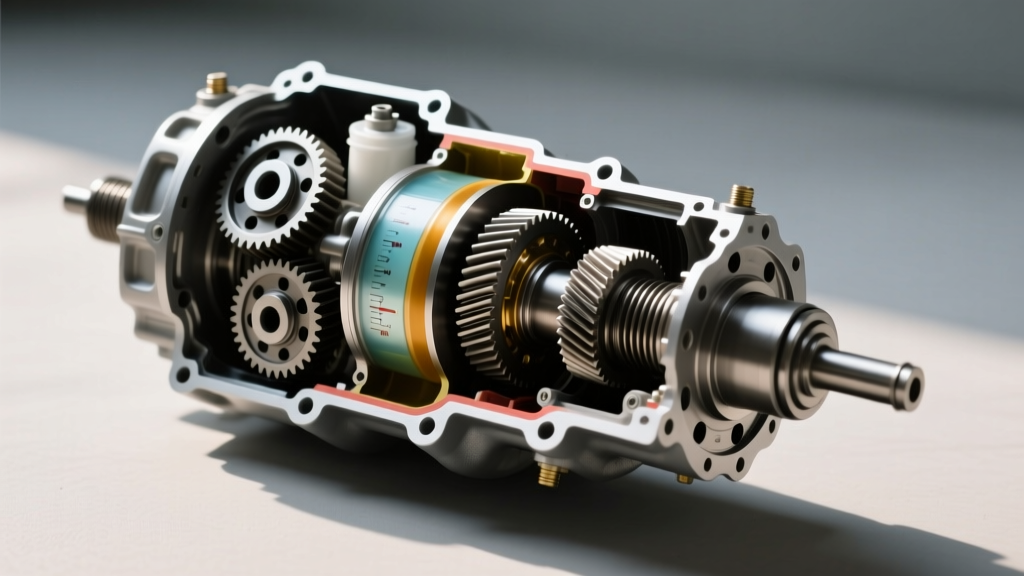
When maintaining the drivetrain of a rear-wheel-drive truck, all-wheel-drive SUV, or performance car, enthusiasts and technicians often obsess over ring and pinion gear ratios, locker installations, or axle shaft upgrades. Yet, the longevity of a $2,500 axle assembly frequently hinges on two remarkably inexpensive components: the precise differential gear oil specifications and the physical integrity of a humble differential drain plug. In 2026, with extended service intervals and high-temperature synthetic lubricants dominating the OEM landscape, misunderstanding the chemistry of hypoid gear oils or the torque requirements of modern aluminum differential housings can lead to catastrophic financial losses. This comprehensive guide breaks down the exact fluid specifications required for modern differentials, explores the hidden costs of drain plug failures, and provides a real-world price analysis for your next axle service.
Decoding Differential Gear Oil Specifications
Differential gear oil is not simply 'thick motor oil.' The extreme sliding friction generated by hypoid ring and pinion gears requires a highly specialized chemical package. According to the American Petroleum Institute (API), modern differentials primarily rely on GL-5 rated lubricants. GL-5 gear oils contain 3% to 5% sulfur-phosphorus extreme pressure (EP) additives. These additives are designed to remain inert at normal operating temperatures but chemically react with the metal surface when localized contact temperatures exceed 150°C (302°F), creating a sacrificial iron sulfide/iron phosphate film that prevents micro-welding and gear spalling.
However, this chemistry comes with a caveat: active sulfur can corrode yellow metals (brass, bronze, and copper). While this is irrelevant for standard solid axles, it is a critical consideration for transaxles or integrated drive modules that share fluid with synchronizers. For dedicated differentials, GL-5 is mandatory. For deeper insights into EP additive activation thresholds, the Lubrizol Driveline Chemistry Database provides extensive data on how modern shear-stable viscosity index improvers maintain film strength under heavy towing loads.
Viscosity Grades & Application Matrix
Choosing between 75W-90, 80W-90, and 75W-140 depends on ambient climate, towing capacity, and OEM clearances. Thicker oils (75W-140) are often prescribed for heavy-duty towing (e.g., Ford Super Duty Dana 80 or Ram AAM 11.5 axles) to prevent film collapse, but they increase parasitic drag and reduce fuel economy in daily drivers.
| SAE Viscosity | API Rating | Best Application | Estimated Cost (Per Qt) |
|---|---|---|---|
| 75W-90 Synthetic | GL-5 | Light trucks, daily-driven SUVs, cold climates | $18 - $25 |
| 80W-90 Conventional | GL-5 | Fleet vehicles, older solid axles, budget services | $9 - $14 |
| 75W-140 Synthetic | GL-5 | Heavy towing, off-road rock crawling, high-HP builds | $22 - $32 |
The Friction Modifier Variable
If your vehicle is equipped with a clutch-type Limited Slip Differential (LSD)—such as the Ford 8.8 Trac-Lok or the Dana Trac-Lok—the base gear oil is only half the equation. Clutch packs require a specialized friction modifier to prevent chatter during low-speed cornering. OEM fluids like GM EOS (Part # 1052358) or Ford XL-3 (Part # E9FZ-19B546-A) typically cost between $8 and $12 per bottle. Skipping this $10 additive to save money will result in clutch pack glazing and shuddering, ultimately leading to a $400+ clutch pack replacement and rebuild labor.
The Hidden Cost Factor: Differential Drain Plug Failures
The differential drain plug is the single most vulnerable point of failure during a fluid service. While older cast-iron housings (like the classic GM 10-bolt 8.5") featured robust, deep steel threads, modern vehicles increasingly utilize lightweight aluminum or magnesium alloy differential carriers to reduce unsprung mass and improve fuel economy. Examples include the GM 9.5" Independent Rear Suspension (IRS) modules and ZF rear drive units found in modern European SUVs.
Galvanic Corrosion and Stripped Threads
When a steel differential drain plug is threaded into an aluminum housing, exposure to road salt, water, and dissimilar metals creates galvanic corrosion. Over a 3-to-5-year service interval, the plug effectively welds itself to the housing. When a technician or DIYer applies excessive force to break it loose, the weaker aluminum threads strip out entirely. The cost to fix this mistake drastically alters your service budget:
- DIY Helicoil/Timesert Repair: $35 - $55 for the insert kit, plus 2 hours of frustrating labor.
- Professional Machine Shop/Dealer Repair: $150 - $350 in labor to remove the axle assembly, drill, tap, and insert a permanent steel thread sleeve.
- Worst-Case Scenario: If metal shavings from a stripped thread enter the gear oil and are not caught by a magnetic plug, they will embed into the soft babbitt material of the pinion and carrier bearings. This guarantees a catastrophic bearing failure, resulting in a complete axle rebuild costing $1,200 to $2,500.
The Magnetic Plug Upgrade
Upgrading to a high-quality magnetic differential drain plug (such as Dorman Part # 65432 or G2 Axle & Gear magnetic plugs, costing $12 to $25) is the highest ROI modification you can make. The neodymium magnet captures microscopic ferrous wear particles from the ring and pinion break-in process, keeping them out of the bearing journals. Furthermore, using an OEM-style crush washer (usually $1.50) rather than relying on the tapered seat of the plug ensures a leak-free seal without requiring excessive torque that risks stripping aluminum threads.
2026 Cost Analysis: Fluid & Drain Plug Service Breakdown
To provide a realistic financial perspective, we have modeled the cost of a standard rear differential service (drain, plug inspection/replacement, and refill with full synthetic 75W-90 GL-5) for a typical half-ton truck or mid-size SUV requiring 2.5 to 3 quarts of fluid.
| Service Component | DIY Cost (At-Home) | Independent Shop Cost | Dealership Cost |
|---|---|---|---|
| Synthetic 75W-90 GL-5 (3 Qts) | $60.00 | $90.00 | $120.00 |
| OEM Crush Washers (2) | $3.00 | $8.00 | $12.00 |
| Magnetic Drain Plug Upgrade | $18.00 | $35.00 | $45.00 |
| LSD Friction Modifier (If Equipped) | $10.00 | $18.00 | $25.00 |
| Labor (0.5 - 1.0 Hour) | $0.00 | $110.00 | $180.00 |
| Total Estimated Cost | $91.00 | $261.00 | $382.00 |
Note: Pricing reflects national averages for 2026. Dealership OEM-branded synthetic fluids carry a significant markup compared to high-quality aftermarket equivalents like Red Line, Amsoil, or Mobil 1, which meet or exceed OEM specifications.
Torque Specifications & Best Practices
Over-torquing a differential drain plug is the leading cause of stripped housings. The plug only needs to be tight enough to compress the crush washer and resist vibration. According to Dana Spicer Service Resources and various OEM workshop manuals, a 3/8-inch drive torque wrench is usually sufficient and prevents the over-application of force common with larger 1/2-inch drive breaker bars.
| Axle / Differential Model | Housing Material | Plug Thread Size | Target Torque Spec |
|---|---|---|---|
| Ford 8.8" (Solid & IRS) | Aluminum / Cast Iron | 1/2"-14 NPT or Metric | 33 lb-ft (45 Nm) |
| Dana 44 / Dana 60 | Cast Iron / Nodular Iron | 3/4"-16 SAE | 25 - 30 lb-ft (34 - 41 Nm) |
| GM 8.6" (10-Bolt) | Cast Iron / Aluminum | M18 x 1.5 | 22 lb-ft (30 Nm) |
| Toyota 8" (Solid Rear) | Cast Iron | 24mm Hex | 36 lb-ft (49 Nm) |
| ZF Rear Drive Module (BMW/Audi) | Cast Aluminum | M14 x 1.5 | 22 lb-ft (30 Nm) |
Execution Protocol for Aluminum Housings
- Warm the Fluid: Drive the vehicle for 15 minutes to warm the gear oil. Warm fluid flows faster and suspends particulate matter, ensuring a more complete drain.
- Break Loosen Before Draining: Always break the differential drain plug loose before removing the fill plug. If the fill plug is seized and you drain the fluid first, you are left with an immobile vehicle and an empty axle.
- Clean the Threads: Use a lint-free rag and brake cleaner to wipe the male threads of the plug and the female threads of the housing. Inspect for aluminum flakes, which indicate cross-threading or galvanic seizure.
- Hand-Thread First: Start the plug by hand for at least three full turns. If it binds immediately, stop. You are cross-threading. Forcing it with a wrench will destroy the housing threads.
- Torque to Spec: Use a calibrated torque wrench to achieve the exact specification listed above. Do not guess.
Conclusion: Protecting Your Drivetrain Investment
The intersection of differential gear oil specifications and proper drain plug maintenance is where long-term drivetrain reliability is won or lost. Spending an extra $15 on a true full-synthetic GL-5 fluid with the correct friction modifiers, combined with a $20 magnetic drain plug and strict adherence to torque specifications, effectively insulates you from thousands of dollars in premature bearing and gear failures. Whether you are wrenching in your driveway or auditing a dealership service invoice, understanding the chemistry, mechanics, and true costs of these components ensures your axle assembly survives the harshest conditions of the modern road.