Evaluating Drivetrain Types for Different Off-Road Vehicles
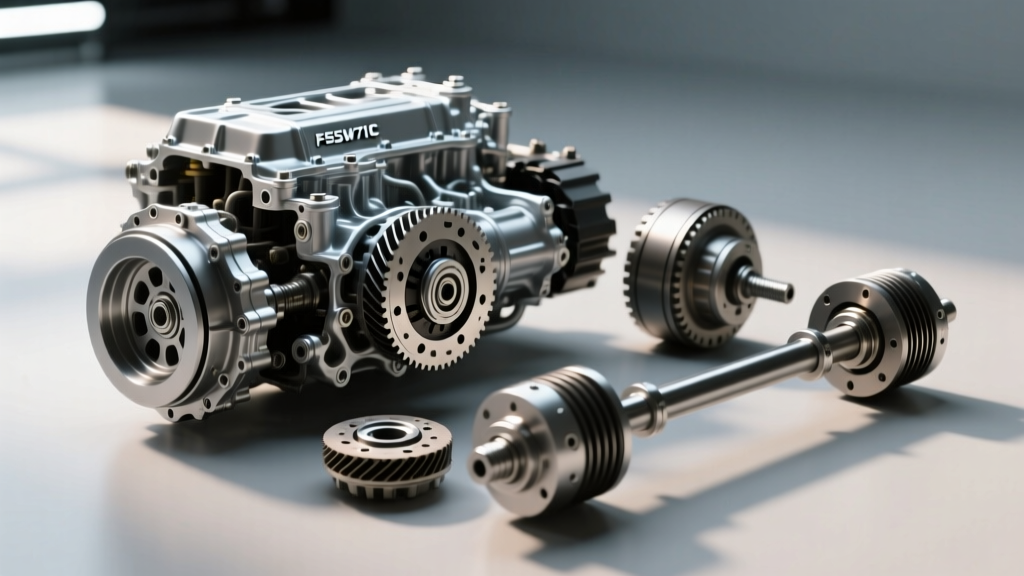
The transition from internal combustion to electric power in off-road platforms has accelerated dramatically. However, dropping a stock passenger EV motor into a trail rig without modification is a recipe for catastrophic failure on the rocks. When analyzing drivetrain types for different vehicles, the architecture of the donor chassis dictates the electric drivetrain layout and the mandatory reinforcement required. Off-road EV conversions generally fall into three categories based on vehicle suspension and duty cycle: solid axle crawlers, independent front suspension (IFS) overlanders, and heavy-duty commercial platforms.
For solid axle vehicles like the Jeep Wrangler or Toyota Land Cruiser 80 Series, articulation is king. Independent EV drive units (like the Tesla Small Drive Unit) require extreme CV joint angles that exceed factory tolerances, making central motor layouts mated to traditional transfer cases the superior choice. Conversely, IFS platforms like the Ford Bronco or Toyota Tacoma can utilize independent EV drive units in the front subframe, provided the axle shafts and cooling systems are heavily upgraded. Understanding these distinct drivetrain types for different vehicles is the first step before executing the necessary upgrades for off-road electric drivetrains.
Model-Specific Repair & Upgrade Guides
Jeep Wrangler (JK/JL) Solid Axle Builds: Central Motor & Atlas Transfer Case
The most reliable drivetrain layout for a solid-axle Jeep Wrangler EV swap utilizes a central motor—often a salvaged Tesla Large Drive Unit (LDU) or a NetGain Hyper9—mated to an Advance Adapters Atlas II transfer case. This preserves the factory Dana 44 or Rubicon Dana 60 axles while providing the low-range gearing essential for crawling.
Common Failure Point: The adapter plate coupling the electric motor to the transfer case input shaft experiences severe harmonic vibration at low-speed, high-torque crawling, leading to spline galling and eventual input shaft shearing.
Necessary Upgrades:
- Input Shaft Upgrade: Replace the stock 32-spline transfer case input shaft with a 300M alloy 32-spline heavy-duty shaft (Part #7161-32HD).
- Coupling Alignment: Use a laser-aligned, zero-backlash lovejoy coupling with a urethane spider insert rated for 850 lb-ft of torque.
- Torque Specs: The motor-to-adapter plate bolts (M10x1.5) must be torqued to 65 Nm (48 lb-ft) using medium-strength threadlocker (Loctite 243) to prevent backing out under high-frequency vibration.
Toyota Land Cruiser (80/100 Series): Dual Motor & Locked Differentials
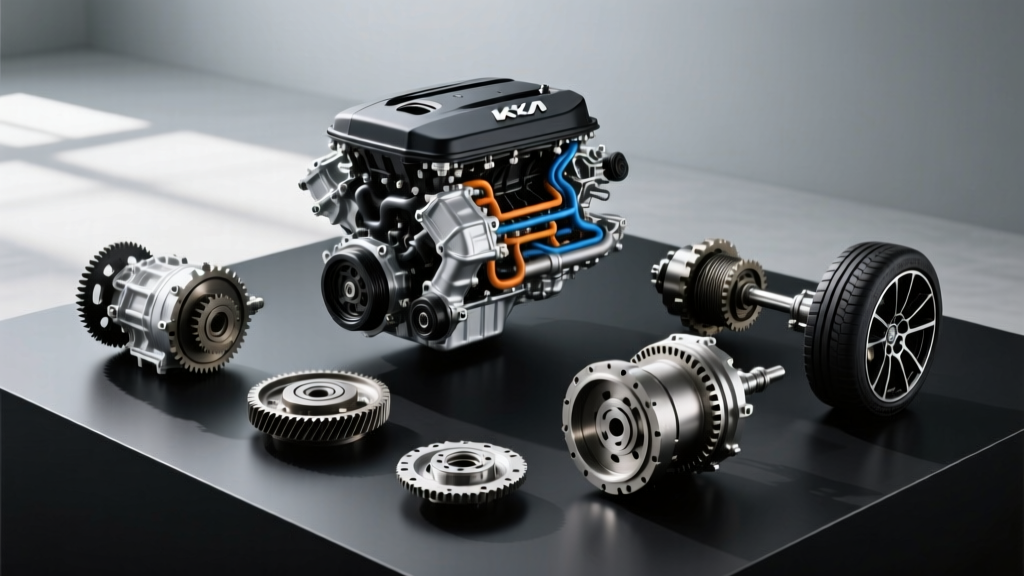
Heavy, coil-sprung Toyota builds often utilize a dual-motor setup: a front Nissan Leaf EM57 motor for the IFS/front solid axle hybrid setups, and a rear Tesla SDU. The rear SDU is favored for its compact size and integrated inverter, but it was designed for highway cruising, not 4-Low rock crawling.
Common Failure Point: The Tesla SDU relies on an internal mechanical oil pump driven by the motor rotor. At crawling speeds (under 5 MPH), the pump fails to generate adequate fluid pressure, leading to rapid overheating and destruction of the reduction gear bearings.
Necessary Upgrades:
- Forced Lubrication Kit: Install an external 12V forced-lubrication oil pump system. This requires tapping the SDU case, installing -6 AN fittings, and routing coolant-grade hoses to an external air-to-oil cooler mounted behind the grille.
- Ring and Pinion: The stock SDU reduction gear is too fragile for 37-inch mud-terrain tires. Upgrade to a reinforced 4.56:1 aftermarket ring and pinion set designed for EV torque spikes.
- Resolver Connector Repair: Water crossings frequently flood the SDU resolver connector, throwing a 'Speed Sensor Fault'. Repair requires repacking the connector (Part #1014939-00-C) with Dow Corning Molykote 4 dielectric grease and reseating to 4 Nm.
Ford Bronco (IFS Front): Nissan Leaf Gen 2 Inverter Integration
For IFS applications, the Nissan Leaf Gen 2 motor and inverter package is a popular, cost-effective choice. However, the factory Leaf inverter is programmed to protect itself via overcurrent shutdowns when faced with the sustained high-amp draw of steep off-road inclines.
Common Failure Point: Inverter Desaturation (Desat) faults. When crawling in 4-Low, the IGBTs overheat and the factory logic cuts power to prevent thermal runaway, leaving the driver stranded on an obstacle.
Necessary Upgrades:
- Open Source VCU Flash: Bypass the factory Leaf logic by integrating an OpenInverter compatible Vehicle Control Unit (VCU). This allows you to map custom torque curves and disable the overly aggressive factory desaturation thresholds.
- Busbar Upgrades: Replace the internal inverter DC busbars with custom 800A copper busbars to handle the sustained 400A+ draws of off-road crawling without melting the internal insulation.
- Cold Plate Adapter: Machine a secondary liquid-cooled cold plate for the inverter base, integrating it into the vehicle's primary glycol cooling loop.
Critical Component Upgrade Matrix
| Vehicle Platform | EV Drivetrain Donor | Primary Weak Point | Necessary Upgrade | Est. Cost (2026) |
|---|---|---|---|---|
| Jeep Wrangler JK | Tesla LDU + Atlas T-Case | T-Case Input Spline Galling | 300M 32-Spline HD Shaft | $450 - $600 |
| Toyota 80 Series | Tesla SDU (Rear) | Low-Speed Oil Starvation | External 12V Forced Lube Pump | $850 - $1,200 |
| Ford Bronco IFS | Nissan Leaf Gen 2 | Inverter Desaturation Faults | OpenInverter VCU & 800A Busbars | $1,100 - $1,500 |
| Heavy Duty (F-250) | Dana Spicer e-Axle | Stator Thermal Throttling | Active Glycol Jacket Integration | $2,500+ |
Heavy-Duty Applications: Dana Spicer e-Axles
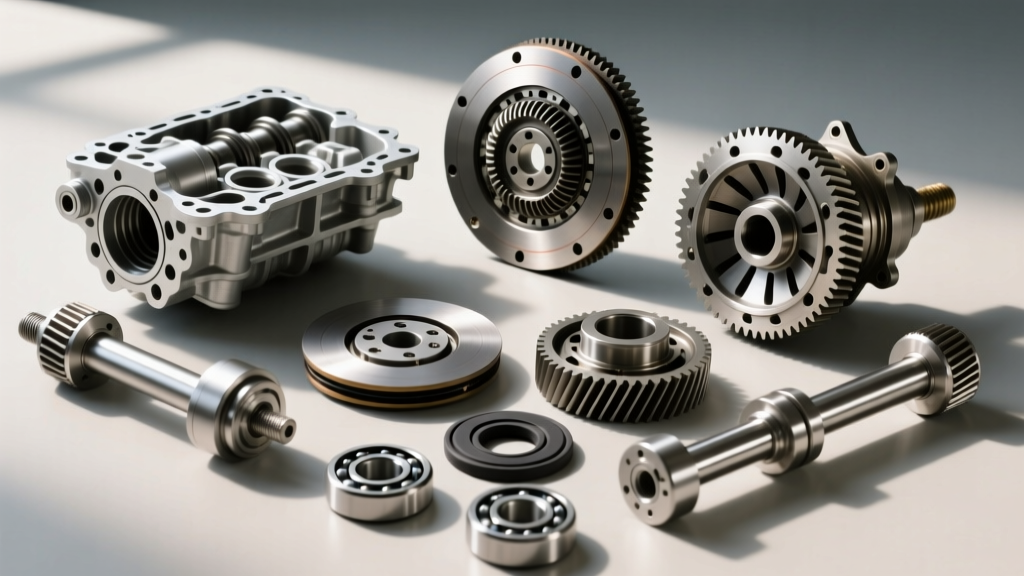
When dealing with 3/4-ton and 1-ton trucks, passenger EV drivetrains are entirely insufficient. The necessary upgrades for off-road electric drivetrains in this segment involve moving away from salvaged parts and utilizing purpose-built crate axles, such as the Dana Spicer e-Axle series. These units feature integrated motors, multi-speed reductions, and electronic locking differentials.
Repair & Maintenance Insight: The Dana e-Axles utilize high-voltage coolant jackets directly integrated into the stator housing. A common repair issue in off-road environments is rock damage to the external coolant lines. Always upgrade the factory plastic quick-connect fittings to CNC-machined aluminum AN-fittings and sleeve the exterior hoses in ballistic nylon abrasion guards. Torque the coolant line banjo bolts to 22 Nm to prevent glycol leaks into the high-voltage junction box.
Thermal Management & Fluid Upgrades for Trail Abuse
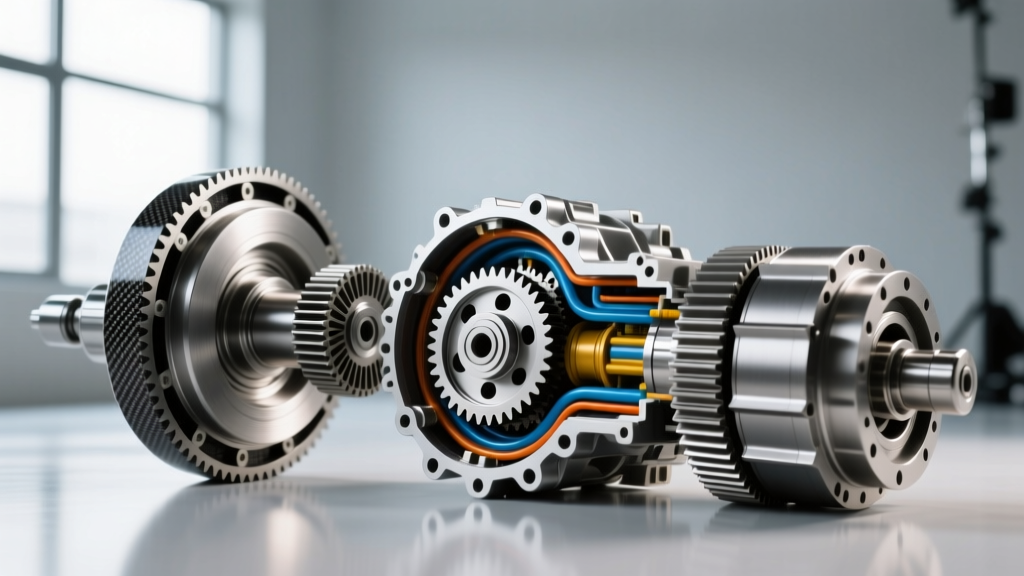
Electric motors generate immense heat at zero RPM (stall torque), which is exactly how off-road vehicles operate during technical rock crawling. Unlike highway driving, there is no passive airflow to cool the motor casing or the reduction gearbox.
- Gearbox Fluids: Drain the factory EV ATF. For off-road reduction boxes, fill with Red Line ShockProof Heavy gear oil. Its unique polyurethane thixotropic formula clings to gears under extreme shock loads, preventing the micro-welding that destroys standard synthetic EV fluids.
- Motor Jackets: If using an air-cooled motor (like the NetGain HyPer9), you must fabricate a water-to-air intercooler system, routing a dedicated 12V water pump (e.g., Rule 800 GPH) through a front-mounted heat exchanger.
- Thermal Paste: When rebuilding inverters, never use generic thermal compound. Use Thermal Grizzly Kryonaut or equivalent high-dielectric thermal interface material (TIM) between the IGBTs and the cold plate, applied at exactly 0.5mm thickness to ensure optimal heat transfer without risking high-voltage arcing.
Sourcing and Diagnostics
Sourcing reliable components is critical. Platforms like EV West provide pre-engineered adapter plates and high-voltage cabling essential for safe off-road conversions. When diagnosing drivetrain faults post-trail, always isolate the high-voltage system using a CAT III multimeter before inspecting mechanical linkages. If an EV drive unit emits a high-pitched whine that worsens under load, it is rarely the motor itself; it is almost always bearing pre-load failure in the reduction gear, requiring a complete teardown and shimming to a precise 0.05mm backlash specification.
Ultimately, executing the necessary upgrades for off-road electric drivetrains requires treating the electric motor not as a magic bullet, but as a high-torque component that must be mechanically and thermally integrated into the harsh realities of the trail. By matching the drivetrain type to the vehicle architecture and reinforcing the known weak points, you can build an EV off-roader that out-crawls and outlasts its combustion counterparts.