The Architecture of Failure: How Layout Dictates Repair
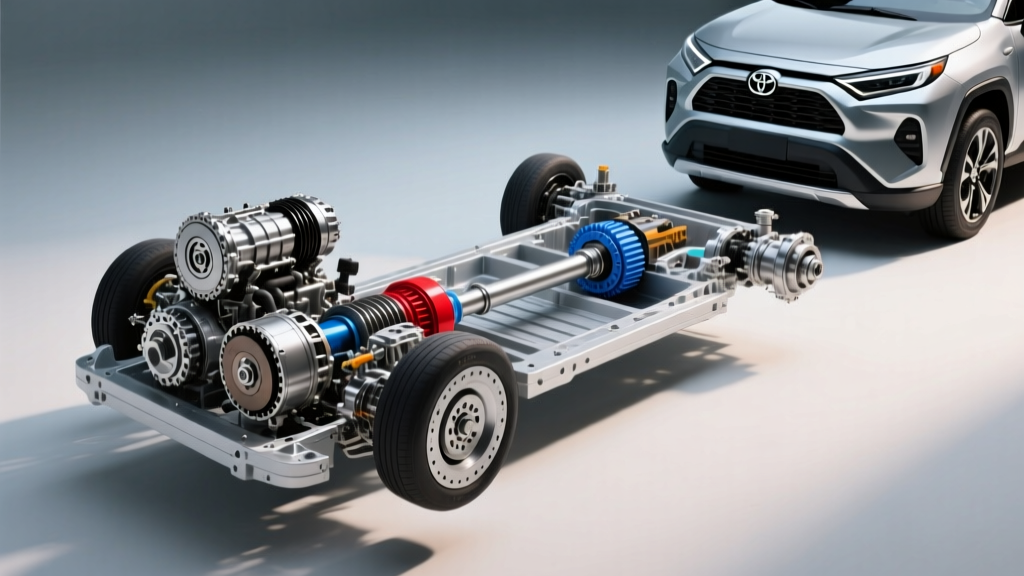
As we navigate the 2026 aftermarket landscape, the shift toward high-torque 10-speed automatics, electrified torque-vectoring axles, and complex transfer cases has fundamentally changed how independent shops and DIY enthusiasts approach driveline service. When sourcing vehicle transmission & drivetrain parts, a one-size-fits-all approach leads to misdiagnosis, premature failure, and wasted labor. A front-wheel-drive compact car shares almost zero failure modes with a body-on-frame 4WD truck, yet both rely on the precise transfer of rotational mass.
This model-specific repair guide breaks down the most common drivetrain configurations across popular platforms, providing exact diagnostic procedures, OEM part numbers, torque specifications, and fluid capacities required to execute lasting repairs.
Front-Wheel Drive (FWD): Honda Civic & Intermediate Shaft Wear
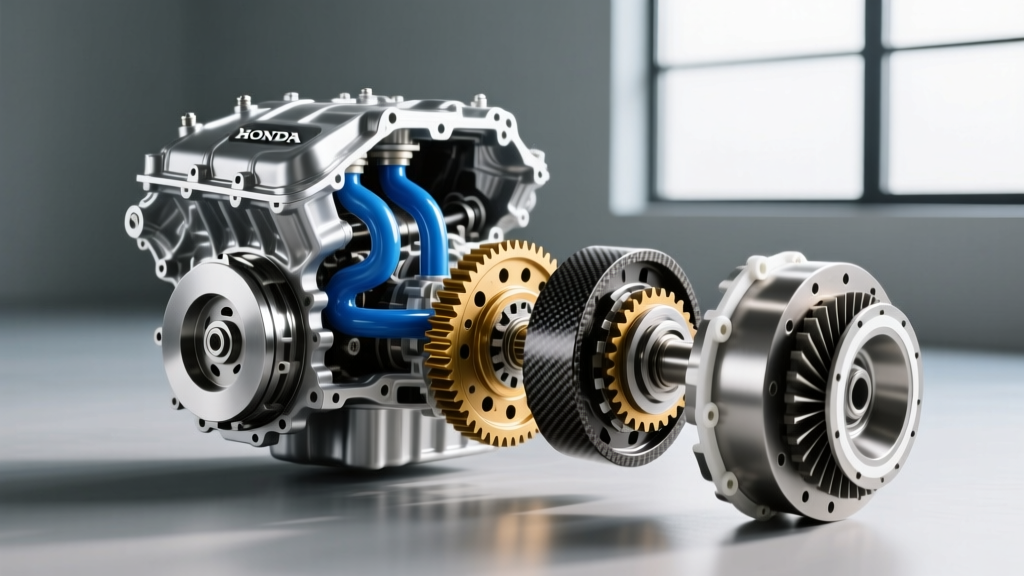
The FWD layout consolidates the transmission, differential, and final drive into a single transaxle housing. While packaging-efficient, this forces the half-shafts to handle both steering geometry and suspension articulation. On the 2016–2024 Honda Civic 1.5T equipped with the CVT, the most prevalent driveline complaint is a high-frequency vibration under hard acceleration, often misdiagnosed as a failing engine mount or torque converter.
The actual culprit is frequently the intermediate shaft bearing located on the passenger side. Because the passenger-side axle is longer, Honda uses an intermediate shaft to equalize half-shaft lengths and reduce torque steer. When the support bearing degrades, it introduces lateral runout into the CV joint.
- Diagnostic Test: Raise the vehicle on a lift. With the transmission in Drive and wheels spinning, use a mechanical stethoscope on the intermediate shaft support bracket. A grinding or roaring noise confirms bearing failure.
- OEM Part: Honda Intermediate Shaft Assembly (Part #40100-TBA-A01).
- Torque Spec: Intermediate shaft to engine block bolts: 47 lb-ft (64 Nm). Axle spindle nut: 134 lb-ft (181 Nm). Always use a new, one-time-use spindle nut.
- Fluid Note: The CVT does not need to be drained for this repair, but inspect the right-side output shaft seal for weeping HCF-2 fluid.
Rear-Wheel Drive (RWD): GM 10L80 & Driveshaft Harmonics
Rear-wheel-drive configurations rely on a longitudinal transmission and a driveshaft to bridge the gap to the rear differential. In GM trucks and SUVs (Silverado, Tahoe, Yukon) equipped with the 6L80, 8L90, and 10L80 transmissions, driveline shudder and clunking are epidemic. While the infamous 'GM Shudder' is often a torque converter issue requiring a fluid flush with Mobil 1 Synthetic LV ATF HP, physical driveline clunks usually trace back to the two-piece driveshaft's center support bearing and slip yoke.
The slip yoke, which connects the transmission output shaft to the front driveshaft section, can develop spline wear, causing a distinct 'clunk' when shifting from Reverse to Drive. Furthermore, the rubber isolator in the center support bearing degrades, altering the driveline operating angle and inducing harmonic vibrations at 55–65 mph.
- Diagnostic Test: Use a dial indicator on the driveshaft tubes. Maximum allowable runout is 0.020 inches. If runout is within spec but vibration persists, check the center support bearing for vertical play exceeding 0.010 inches.
- OEM Part: GM Propeller Shaft Assembly (Part #23484674 for specific 1500 Crew Cab applications; verify via VIN on GM Parts Direct).
- Torque Spec: Center support bearing bolts: 37 lb-ft (50 Nm). Rear differential pinion flange bolts: 184 lb-ft (250 Nm) for 9.5-inch axles.
Drivetrain Component Matrix: Torque Specs & Part Data
Reference this matrix when ordering vehicle transmission & drivetrain parts to ensure you have the correct hardware and specifications before beginning teardown.
| Vehicle / Layout | Critical Component | OEM Part Number | Torque Specification | Avg. Dealer MSRP |
|---|---|---|---|---|
| Honda Civic (FWD) | Axle Spindle Nut | 90305-S3V-A11 | 134 lb-ft (181 Nm) | $8.50 |
| GM Silverado (RWD/4WD) | U-Joint Strap Bolts (1330 Series) | 11519899 | 25 lb-ft (34 Nm) | $4.20 (ea) |
| Subaru Outback (AWD) | Rear Diff Companion Flange Nut | 902350004 | 140 lb-ft (190 Nm) | $12.00 |
| Ford F-150 (4WD) | Front Axle Drain/Fill Plug | W719888-S400 | 33 lb-ft (45 Nm) | $6.50 |
All-Wheel Drive (AWD): Subaru Symmetrical & Transfer Case Bind
Subaru’s Symmetrical AWD system is legendary for traction, but its continuous-duty AWD clutch pack (located in the transmission extension housing) is highly sensitive to fluid degradation and tire circumference mismatches. On the 2015–2024 Outback and Legacy equipped with the Lineartronic CVT, owners frequently report 'torque bind'—a jerking sensation during tight, low-speed turns.
This bind occurs when the AWD transfer clutch pack fails to disengage the rear driveline fully, causing the front and rear axles to fight each other on high-traction surfaces. While uneven tire wear is the primary cause, degraded CVT fluid and a failing AWD solenoid are common mechanical culprits.
- Diagnostic Test: Perform the 'Figure-8 Test' on dry pavement. Drive the vehicle in tight, continuous figure-8 circles at idle speed. If the vehicle hops or binds, disconnect the FWD fuse (if equipped on older models) or use a bi-directional scan tool to command the AWD clutch duty cycle to 0%. If the bind disappears, the issue is electrical/hydraulic (solenoid or fluid). If it persists, the clutch pack is mechanically fused.
- OEM Fluid: Subaru CVTF-III (Part #SOA868V9270). The reduction gear/transfer case housing shares this fluid, requiring a total system capacity of approximately 12.5 Liters for a dry fill, or 9.5 Liters for a drain-and-fill.
- Torque Spec: Transmission crossmember mount bolts: 63 lb-ft (85 Nm).
Four-Wheel Drive (4WD): Ford F-150 10R80 & IWE Solenoids
Part-time 4WD systems, like those found in the Ford F-150, utilize a transfer case and front axle disconnects to engage the front driveline. The 2018–2024 F-150s equipped with the 10R80 transmission and the Integrated Wheel End (IWE) system suffer from a highly specific failure: the IWE vacuum solenoid allows water ingress, leading to internal corrosion and a failure to disengage the front hubs.
This results in a horrific grinding noise from the front wheels, as the IWE actuator partially engages the hub while the vehicle is in 2WD, or fails to engage it fully when 4WD is selected.
- Diagnostic Test: Disconnect the vacuum line at the IWE solenoid (located on the passenger side firewall). Connect a handheld vacuum pump and apply 20 inHg. The hub should lock and hold vacuum. If the solenoid vents vacuum when the electrical connector is unplugged, it has failed internally. Check for Technical Service Bulletin (TSB) 21-22-03 regarding the updated splash shield and solenoid bracket.
- OEM Part: Ford IWE Solenoid (Part #ML3Z-3A379A). Available via Ford Parts.
- Torque Spec: IWE actuator to steering knuckle bolts: 85 lb-ft (115 Nm).
Sourcing Strategy: OEM vs. Aftermarket in 2026
When procuring vehicle transmission & drivetrain parts, the line between OEM and aftermarket has blurred, but critical distinctions remain. For high-stress rotational components like driveshafts, transfer case chain assemblies, and CVT clutch packs, OEM or OEM-equivalent suppliers (like Spicer for U-joints or BorgWarner for transfer case internals) are mandatory. The metallurgical tolerances in a 10-speed automatic's output shaft or an AWD center differential leave zero margin for aftermarket cost-cutting.
Pro-Tip: Never reuse staked axle nuts or crush-style pinion flange nuts. The microscopic deformation that locks these fasteners in place is compromised upon removal. Always order new hardware when ordering your primary driveline components.
For static components, such as transmission crossmembers, differential covers, and skid plates, the aftermarket offers superior, often upgraded alternatives. Utilizing comprehensive catalogs like RockAuto allows technicians to cross-reference OEM part numbers with premium aftermarket manufacturers like GSP or Dorman, often yielding a 30-40% cost savings on non-rotational hardware without sacrificing driveline integrity. Ultimately, understanding the specific architecture of your vehicle's drivetrain is the only way to ensure the parts you install will survive the torque demands of the modern road.