The Physics of Torque Transfer: Automotive FWD vs. Mechanical Benchmarks
When diagnosing complex NVH (Noise, Vibration, and Harshness) in front-wheel drive system operation, automotive engineers and advanced technicians sometimes look outside the traditional garage for macro-scale analogies. Surprisingly, the mechanical principles governing lateral friction, articulation binding, and torque deflection in a high-end mountain bike setup—specifically the sram gx eagle drivetrain—serve as a brilliant comparative model for understanding FWD CV axle geometry, chainline equivalents, and transaxle efficiency loss. While one transfers 300 lb-ft of torque from a transverse V6 to the tarmac, and the other transfers human wattage through a 12-speed cassette, the underlying physics of mechanical binding, angular deflection, and harmonic resonance remain universally constant.
In this comprehensive diagnostic guide, we will break down front-wheel drive system operation, explore the most common failure modes of modern transaxles and constant velocity (CV) axles, and utilize the engineering parallels of the SRAM GX Eagle 12-speed system to illustrate how lateral misalignment and extreme articulation lead to catastrophic drivetrain loss and vibration.
Front-Wheel Drive System Operation: Core Architecture
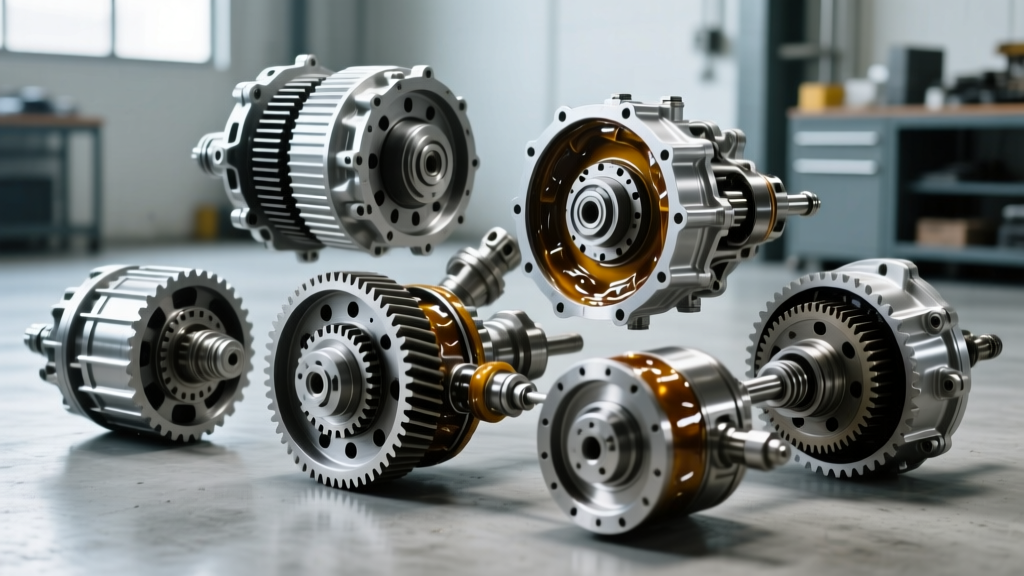
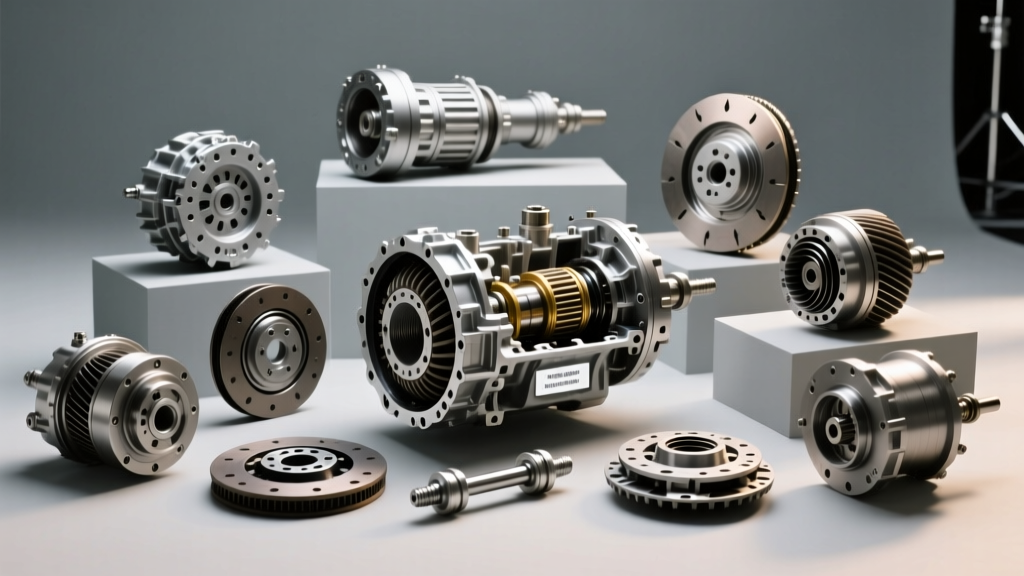
The modern FWD layout consolidates the engine, transmission, and differential into a single transaxle housing. This configuration minimizes weight and packaging space but introduces severe packaging constraints for the half-shafts (CV axles). Popular transaxles like the Aisin TF-80SC (used in various Volvo and GM applications) or the Honda MF6A rely on a complex network of internal helical gears, clutch packs, and a final drive ring-and-pinion to route torque laterally across the vehicle's centerline.
Because the front wheels are responsible for both steering and suspension articulation, the FWD half-shafts must accommodate drastic changes in length and angle. This is achieved through two distinct joint types:
- Outer Rzeppa Joint: Handles extreme steering angles (up to 47 degrees in some performance applications) but limited plunging (length change).
- Inner Tripod (GI) or Double-Offset Joint: Handles the rapid plunging required as the suspension compresses and rebounds, but operates at lower angular deflections.
When front-wheel drive system operation is compromised, it is almost always a failure of these joints to manage the friction generated by extreme articulation—a concept directly mirrored in bicycle drivetrain mechanics.
The Articulation Analogy: CV Joints and the SRAM GX Eagle Drivetrain
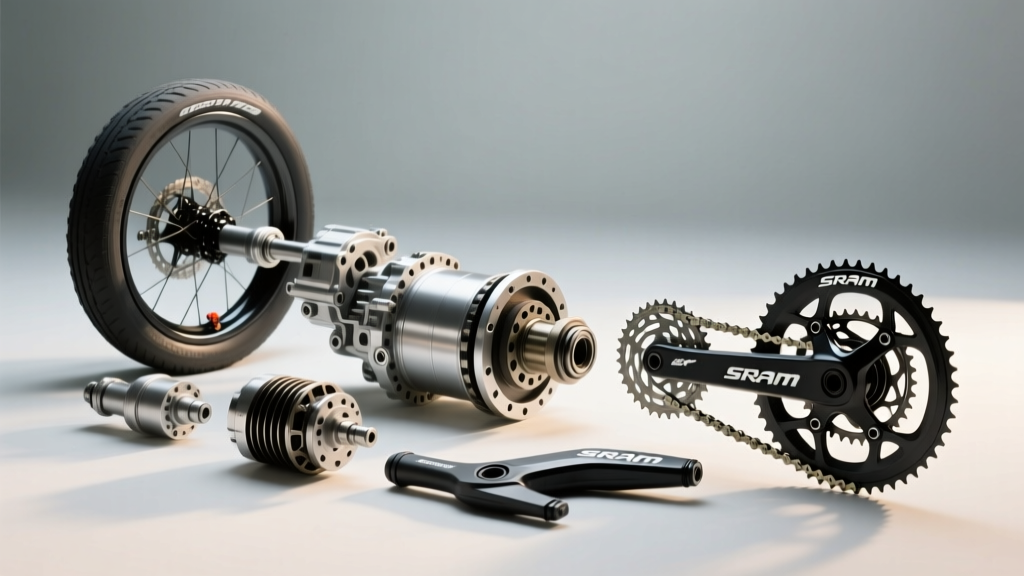
To understand FWD binding and NVH, consider the SRAM Technical Service documentation regarding chainline and cross-chaining. The SRAM GX Eagle drivetrain is engineered around a 52mm chainline and a massive 10-52t cassette. When a rider cross-chains (e.g., using the largest front chainring with the largest 52t rear cog), the chain operates at a severe lateral angle. This creates lateral friction, accelerates wear on the chain rollers, and induces a binding sensation that saps pedaling efficiency.
Now, translate this to a front-wheel drive car navigating a tight, uneven corner. As the steering wheel reaches full lock and the suspension enters full droop, the outer Rzeppa joint operates at its maximum angular limit. The internal ball bearings are forced against the edges of the cage windows and the raceway tracks. Just like the cross-chained SRAM GX Eagle drivetrain, this extreme angle generates immense lateral friction, heat, and mechanical binding. If the CV joint grease has degraded, or if the joint is under-lubricated, this friction manifests as a rhythmic clicking, binding shudder, or severe NVH transmitted directly into the vehicle's chassis.
Diagnostic Matrix: FWD Symptoms vs. Mechanical Binding
Below is a diagnostic matrix comparing common automotive FWD failure modes with their mechanical bicycle equivalents to help technicians visualize the root cause of drivetrain loss and binding.
| Automotive FWD Symptom | Root Cause (FWD Architecture) | SRAM GX Eagle Equivalent | Diagnostic Action |
|---|---|---|---|
| Clicking on tight turns | Outer Rzeppa joint pitting / cage window wear | Chain link binding / stiff roller under lateral load | Inspect CV boot; check for grease purge and metallic flakes. |
| High-speed vibration (60+ mph) | Inner Tripod joint wear / intermediate shaft bearing failure | Cassette ramp wear causing poor shifting under load | Check intermediate shaft support bracket; measure axle runout. |
| Acceleration shudder (Torque Steer) | Unequal half-shaft lengths / worn engine torque mount | Derailleur clutch tension loss causing chain slap | Inspect passenger-side intermediate shaft and torque strut. |
| Whining noise under load | Transaxle final drive bearing wear / low fluid | Bottom bracket bearing degradation | Check transaxle fluid for metallic shimmer; perform stall test. |
Advanced Troubleshooting: Torque Specs, Fluids, and NVH
Proper front-wheel drive system operation relies heavily on precise assembly tolerances and fluid dynamics. A common misdiagnosis in FWD vehicles is attributing a high-speed vibration to wheel balance when the true culprit is the drivetrain's harmonic resonance or improper axle seating.
1. Intermediate Shaft and Support Bracket Diagnostics
Many FWD vehicles (such as those using the Toyota U660F transaxle or Honda's K-series/CVT setups) utilize an intermediate shaft on the passenger side to equalize the length of the left and right CV axles, thereby reducing torque steer. This shaft is supported by a bracket and needle bearing. When this bearing fails, it introduces a secondary harmonic vibration that mimics an out-of-balance tire.
- Torque Spec: Toyota U660F intermediate shaft support bracket bolts must be torqued to exactly 35 Nm (26 lb-ft). Over-torquing can warp the bearing housing, inducing immediate binding.
- Diagnostic Test: With the vehicle on a lift, spin the wheels by hand while feeling the intermediate shaft bracket. Any gritty sensation or lateral play indicates needle bearing failure.
2. CV Axle Spindle Nut Torque and Preload
The outer CV joint relies on the axle nut to maintain internal preload. If the nut is under-torqued, the splined connection between the CV joint and the wheel hub will micro-slip under load, causing a clunking noise and accelerated spline wear. This is akin to a loose cassette lockring on a SRAM GX Eagle rear hub, which allows the cassette cogs to shift laterally under pedaling load, destroying the aluminum freehub body.
- Honda Civic (10th Gen) 35mm Spindle Nut: Must be torqued to 134 lb-ft (181 Nm) and staked. Never reuse a stretched spindle nut.
- VW/Audi DQ250 (6-Speed DSG) Axle Nut: Typically M16x1.5, torqued to 148 lb-ft (200 Nm) plus an additional 180-degree turn for torque-to-yield (TTY) fasteners.
3. Transaxle Fluid Shear and Clutch Pack Diagnostics
In automated manual and traditional automatic FWD transaxles, fluid shear directly impacts torque delivery smoothness. For example, the VW DQ250 DSG requires specific G 052 182 A2 fluid. A service fill requires roughly 5.5 liters, while a dry fill is 7.2 liters. If the fluid is degraded, the mechatronic unit's solenoid valves will struggle to modulate clutch pack pressure, resulting in a low-speed shudder that feels exactly like a failing inner CV joint.
Expert Tip: Drop the transaxle pan and inspect the magnets. Fine metallic paste is normal; however, glitter-like shimmer or brass-colored flakes indicate catastrophic wear on the synchronizer rings or clutch pack friction materials.
Harmonic Dampers and Resonance Cancellation
Automotive engineers use Tuned Mass Dampers (TMDs) on FWD half-shafts to cancel out specific harmonic frequencies generated by the transaxle and tire rotation. These are the heavy, rubber-isolated metal rings pressed onto the CV axle shafts. If a technician replaces a failing OEM CV axle with an inexpensive aftermarket unit that omits the harmonic damper, the vehicle will often develop a mysterious 65-75 mph drone or steering wheel shake.
For instance, the Honda dynamic damper (Part Number 44360-TBA-A01) is precisely calibrated to the mass and torsional stiffness of the OEM shaft. Removing it alters the resonant frequency of the drivetrain. In the bicycle world, this is comparable to the SRAM GX Eagle's chain dampers and derailleur clutch tension, which are specifically tuned to prevent chain slap and resonance over high-frequency chatter bumps. Without the clutch engaged, the chain resonates violently; without the axle damper, the FWD half-shaft resonates through the steering rack.
Summary of Best Practices for FWD Diagnosis
Whether you are analyzing the 52mm chainline of a SRAM GX Eagle drivetrain or diagnosing torque steer in a 300-horsepower FWD hot hatch, the rules of mechanical alignment, articulation limits, and harmonic resonance apply universally. To ensure flawless front-wheel drive system operation:
- Always verify intermediate shaft bearing play before condemning a transaxle for high-speed vibration.
- Adhere strictly to OEM torque-to-yield (TTY) specifications for axle nuts and support brackets.
- Never ignore the presence of harmonic dampers on replacement CV axles.
- Sample transaxle fluid for metallic shear to differentiate between internal clutch shudder and external CV joint binding.
By understanding the deep mechanical parallels across different scales of drivetrain engineering, technicians can elevate their diagnostic accuracy, reduce unnecessary parts swapping, and restore optimal torque transfer from the transaxle to the tarmac. For further reading on drivetrain geometry and NVH standards, refer to the SAE International Technical Papers archive on torsional vibration analysis.