The True Cost of Front Differential Maintenance in 2026
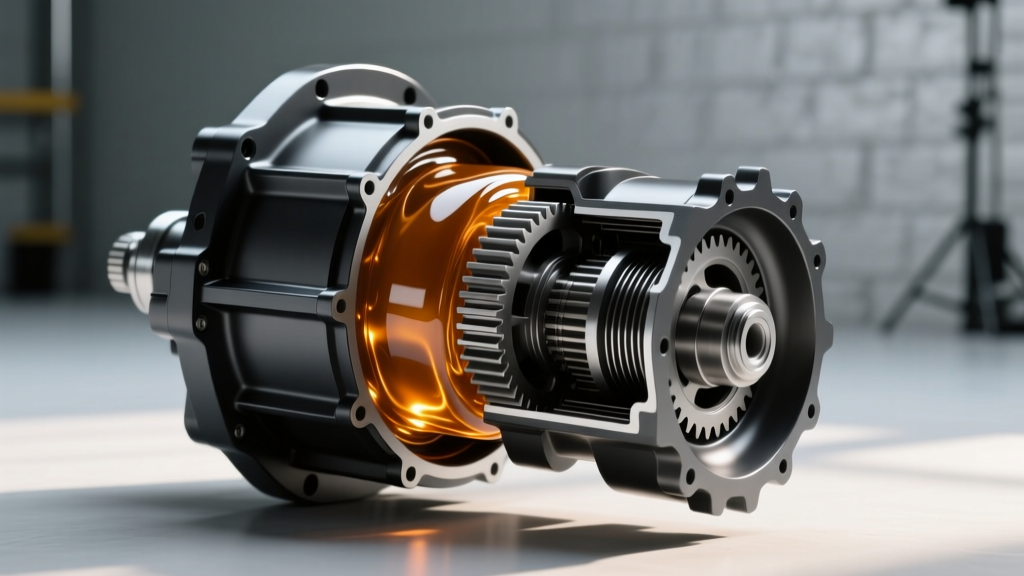
When maintaining a 4WD or AWD vehicle, the front differential often gets overlooked until a whining noise or catastrophic failure forces the issue. Unlike the rear axle, the front differential on modern Independent Front Suspension (IFS) trucks and SUVs shares its operating environment with steering components, CV axles, and front-axle disconnect actuators. Understanding how to fill a differential with oil properly—and knowing exactly what that service should cost—is critical for protecting your drivetrain investment.
In this comprehensive cost analysis and technical guide, we break down the real-world pricing of front differential fluid service for the 2026 landscape. We will cover everything from synthetic gear oil pricing and OEM replacement plug part numbers to the precise torque specifications required for popular front axles like the GM 8.25-inch IFS, Ford 9.75-inch IFS, and the legendary Dana 44 solid front axle.
Front Differential Service: Cost Breakdown & Price Analysis
Before grabbing a wrench, it is essential to understand the financial landscape of differential service. Labor rates have climbed steadily, and the 2026 average hourly rate at dealerships now frequently exceeds $175. Below is a detailed cost comparison for a standard front differential drain, inspection, and fill service on a typical late-model 4x4 pickup (e.g., Chevy Silverado 1500 or Ford F-150).
| Service Provider | Avg. Labor Rate (2026) | Parts & Fluid Cost | Total Estimated Cost | Pros & Cons |
|---|---|---|---|---|
| DIY (Home Garage) | $0.00 / hr | $25 - $45 | $25 - $45 | Maximum savings; requires basic tools and fluid transfer pump. |
| Independent 4x4 Shop | $130 - $160 / hr | $35 - $60 | $110 - $160 | Expertise in lifted/modified rigs; may spot CV axle seal leaks early. |
| OEM Dealership | $175 - $220 / hr | $40 - $80 | $180 - $280 | Uses OEM-branded fluids; highest cost, often treats it as a 'flush' upsell. |
As the table illustrates, learning how to fill a differential with oil at home yields an immediate ROI. The fluid capacity of most front IFS differentials is remarkably small—typically between 1.2 and 1.8 quarts—meaning your primary expense is the quality of the synthetic gear oil and a one-time purchase of a fluid transfer pump.
Essential Tools and OEM Part Numbers
To execute a front differential service without causing secondary damage, you need the right tools. Stripped fill plugs are the number one hidden cost in DIY differential service. Many modern front differentials use aluminum housings with steel or aluminum plug threads that gall easily if the wrong bit is used.
- Socket/Bit Set: 3/8-inch drive hex (usually 8mm or 10mm) or Torx (T40/T50) depending on the axle. Avoid 1/2-inch drive tools that encourage over-torquing.
- Fluid Transfer Pump: A manual hand-pump ($15-$25) that threads onto standard 1-quart gear oil bottles.
- Torque Wrench: A 1/4-inch or 3/8-inch drive torque wrench capable of measuring 15 to 40 lb-ft.
- Brake Cleaner & Shop Towels: For degreasing the plug area before removal.
- Replacement Fill/Drain Plugs: If your OEM plug is damaged, source replacements from RockAuto. For example, the GM OEM front diff fill plug (Part #12479390) costs roughly $12, while the Ford 9.75 IFS plug (Part #FL3Z-4032-A) retails around $18.
Step-by-Step: How to Fill a Differential With Oil (Front Axle)
The front differential presents unique challenges compared to the rear. The fill hole is often offset or positioned higher due to the front axle disconnect housing or steering rack clearance. Follow this exact sequence to ensure a proper fill and avoid dry-starts on the ring and pinion gears.
Step 1: Vehicle Preparation and Leveling
Because front differential fill holes are frequently offset to one side, the vehicle must be parked on a perfectly level surface. If the truck is tilted on a driveway incline, fluid will prematurely weep out of the fill hole before the actual capacity is reached, leaving the ring gear under-lubricated. Safely support the vehicle on jack stands, ensuring the suspension is loaded or the vehicle is level to simulate normal ride height.
Step 2: The 'Fill-First' Rule
Before touching the drain plug, always remove the fill plug first. If the drain plug comes out but the fill plug is seized or stripped, you will be left with an empty differential and no way to refill it. Spray the fill plug with penetrating oil, wipe away caked mud and debris with brake cleaner, and break it loose with a 3/8-inch ratchet.
Step 3: Draining and Inspection
Place a catch pan beneath the differential and remove the bottom drain plug. Allow the 75W-90 or 75W-140 gear oil to drain completely. Inspect the magnetic tip of the drain plug. A fine, metallic paste is normal wear from the hypoid gear set. However, if you find large metal shards or chunks of the bronze thrust washers, a tear-down and rebuild are imminent, and a simple fluid change will not save the axle.
Step 4: The Filling Process
Reinstall the drain plug and torque it to factory specifications. Thread your manual fluid transfer pump onto your bottle of synthetic gear oil. Feed the hose deep into the fill hole. Pump the fluid slowly to avoid air pockets.
Pro-Mechanic Tip: For offset fill holes (common on GM 8.25-inch IFS axles), the 'pinky finger' rule does not always work. The true fill level is achieved when fluid begins to weep back out of the fill hole while the vehicle is perfectly level. Pump in 1-quart increments, pausing to let air escape.
Gear Oil Specifications and API Standards
Choosing the correct fluid is paramount. The American Petroleum Institute (API) classifies gear oils by their extreme pressure (EP) additive packages. You must use an API GL-5 rated fluid for hypoid differential gears, as GL-4 lacks the sulfur-phosphorus EP additives required to prevent the sliding shear forces of hypoid gears from welding together.
Top 2026 Synthetic Gear Oil Pricing & Recommendations
- Mobil 1 Synthetic 75W-90: ~$11.50 per quart. Excellent baseline synthetic with good cold-weather flow for front axle disconnect systems.
- Amsoil Severe Gear 75W-90: ~$16.95 per quart. A premium choice featuring robust EP additives. Amsoil's gear lube lineup is highly recommended for trucks that see deep water fording or heavy plowing duty.
- Red Line 75W-90 Synthetic: ~$18.50 per quart. Uses polyol ester base stocks for exceptional film strength under high shock loads (ideal for off-road crawling).
Note on Limited Slip Additives: While front limited-slip differentials (LSD) are rare on standard trucks, performance models like the Ford F-150 Raptor (equipped with a Torsen front locker) or specific AWD SUVs may require a friction modifier. Always verify your owner's manual. Adding a friction modifier to an open or locking front diff can cause clutch-pack slippage in Torsen units and degrade performance.
Torque Specifications for Popular Front Axles
Over-torquing drain and fill plugs cracks aluminum differential housings—a catastrophic failure that requires a $1,500+ replacement assembly. Under-torquing leads to fluid loss and dry-axle seizure. Adhere strictly to these specifications:
- GM 8.25-inch & 9.25-inch IFS (Silverado/Sierra/Tahoe): Fill/Drain plugs torque to 24 lb-ft. Capacity: ~1.4 to 1.8 quarts.
- Ford 9.75-inch IFS (F-150/Expedition): Fill/Drain plugs torque to 33 lb-ft. Capacity: ~1.5 quarts.
- Dana 44 Solid Front Axle (Jeep Wrangler/Gladiator): Fill/Drain plugs torque to 25 - 35 lb-ft. Capacity: ~2.5 quarts.
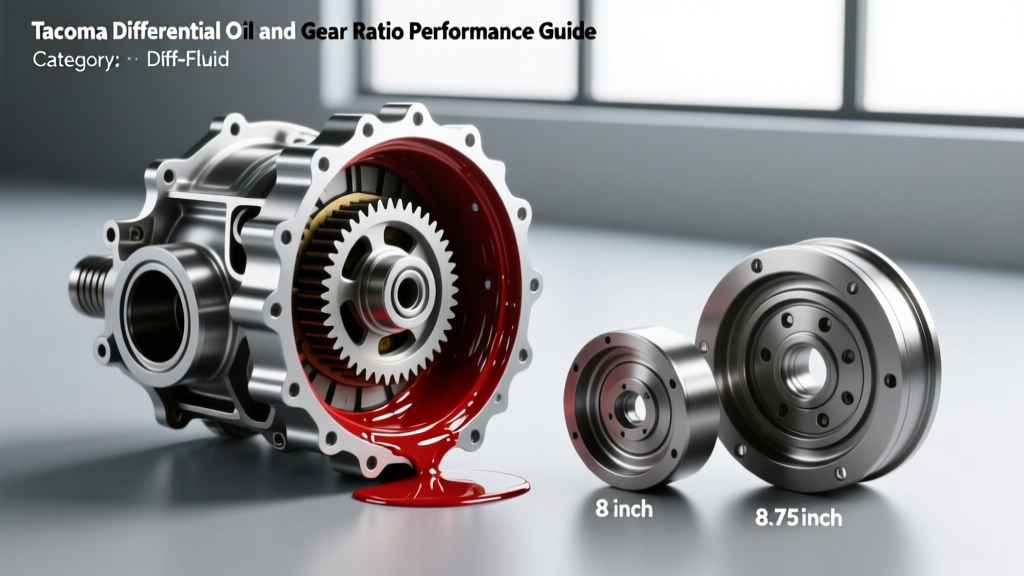
- Toyota 8.0-inch IFS (Tacoma/4Runner): Fill/Drain plugs torque to 29 lb-ft. Capacity: ~1.6 quarts.
Hidden Costs and Edge Cases to Watch For
When budgeting for a front differential service, be aware of the edge cases that can inflate your costs from a $30 DIY job to a multi-hundred-dollar repair.
1. Front Axle Seal Leaks
While draining the fluid, inspect the inner CV axle seals. If gear oil is coating the inside of your wheel hub or dripping onto the skid plate, the seal has failed. Replacing a front axle seal requires pulling the CV axle, removing the hub assembly, and using a specialized seal driver tool. Parts cost $15-$30, but shop labor will add $250-$400 per side.
2. Actuator Fluid Contamination
Many modern front differentials feature an electronic or vacuum-actuated front-axle disconnect (CAD). The actuator motor is mounted directly to the differential housing. If the O-ring on the actuator fails, water and mud can contaminate the gear oil, turning it into a milky, mayonnaise-like sludge. If you drain this sludge, you must flush the differential with cheap GL-5 oil, replace the actuator O-ring or assembly ($80-$150), and then perform the final fill with premium synthetic oil.
3. Water Ingress from Fording
Off-road enthusiasts who ford water deeper than the axle centerline will experience rapid thermal contraction when the hot differential housing hits cold water. This creates a vacuum that sucks water past the axle seals and breather tubes. If your breather tube is not extended high into the engine bay, budget for fluid changes every 5,000 miles instead of the factory-recommended 30,000 miles to prevent ring and pinion corrosion.
Final Thoughts on Front Differential Economics
Mastering how to fill a differential with oil is one of the most cost-effective maintenance skills a 4x4 owner can develop. By investing $25 in a fluid transfer pump and spending $35 on high-quality API GL-5 synthetic gear oil, you bypass the $200+ dealership service fees and gain intimate knowledge of your drivetrain's health. Regular inspection of the front differential fluid not only ensures smooth engagement of your 4WD system but also serves as an early warning system for failing CV joints, axle seals, and hypoid gear wear.