The Drivetrain Layout Divide: AWD vs. RWD Maintenance
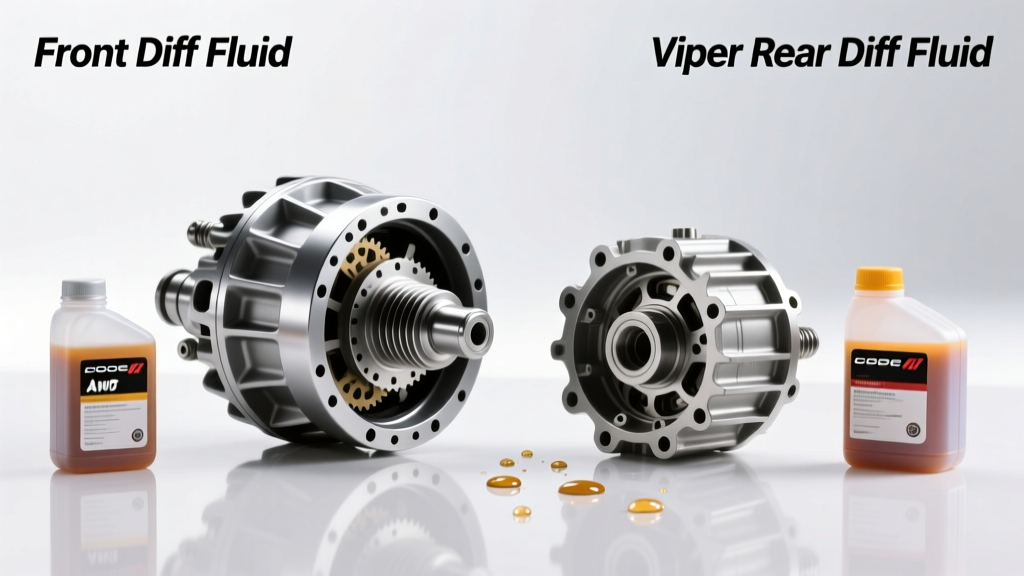
When budgeting for high-performance drivetrain maintenance in 2026, enthusiasts often compare the service intervals of all-wheel-drive (AWD) platforms against legendary rear-wheel-drive (RWD) icons. A frequent point of comparison—whether out of cross-shopping curiosity or pure mechanical interest—is the cost of a standard front differential fluid and service versus the specialized maintenance required for a Dodge Viper rear differential. Because the Viper is strictly RWD, it entirely eliminates the need for a front differential, redirecting all drivetrain maintenance budgets to its massive rear axle assembly. This comprehensive cost analysis breaks down the pricing, fluid specifications, and labor realities of servicing a typical AWD front differential alongside the Viper’s heavy-duty rear end.
The RWD Advantage: Eliminating the Front Differential
Owning a rear-wheel-drive sports car like the Dodge Viper comes with a distinct financial advantage regarding drivetrain fluid services: there is no front differential to service. AWD sports cars, such as the Nissan GT-R, Audi R8, or Subaru WRX STI, require periodic front differential fluid and service intervals to protect the front ring and pinion gears from premature wear. By eliminating the front axle's driven components, Viper owners save roughly $120 to $180 per service cycle. However, the savings are quickly reinvested into the Viper's rear axle, which handles upwards of 645 lb-ft of torque in later generation models and requires premium, high-shear synthetic gear oils.
Front Differential Fluid and Service: AWD Cost Breakdown
For AWD vehicles, the front differential is typically a compact, high-RPM gearset that operates under immense thermal stress, especially during hard cornering or launch control events. In 2026, dealership and specialist shop labor rates have climbed to an average of $165 to $225 per hour. Because the front differential on most AWD cars holds a relatively small volume of fluid, the service is quick, but the fluid itself is highly specialized.
Typical AWD Front Differential Specifications
- Fluid Capacity: 0.8 to 1.2 quarts (varies by manufacturer)
- Viscosity Grade: 75W-85 or 75W-90 API GL-5
- Average Fluid Cost: $25 to $45 (Synthetic)
- Shop Labor Time: 0.5 to 0.8 hours
- Total Professional Service Cost: $110 to $180
Many modern AWD front differentials lack a traditional drain plug, requiring technicians to use a pneumatic fluid extractor pump to suction the old gear oil out through the fill hole. This adds a slight premium to the labor cost at independent shops that may charge an extra 'fluid extraction' fee.
Dodge Viper Rear Differential Service: Pricing & Specs
The Dodge Viper rear differential is a masterpiece of heavy-duty engineering. Early generations (Gen 1 and Gen 2) utilized a robust Dana 44 hybrid setup, while later generations (Gen 3 through Gen 5) transitioned to specialized GKN or Dana-based limited-slip differentials designed to handle the massive torque output of the 8.0L, 8.4L, and later V10 engines. Servicing this rear end is more involved than a standard front differential service due to the fluid volume, the necessity of friction modifiers, and the careful torque sequencing required on the differential cover.
Viper Rear Differential Specifications (Gen 3-5)
- Fluid Capacity: Approximately 2.75 pints (1.37 quarts)
- Viscosity Grade: 75W-140 Full Synthetic API GL-5
- Additive Requirement: Mopar Limited Slip Friction Modifier (Part #4318060AD)
- Cover Bolt Torque Spec: 30-35 lb-ft (Star Pattern)
- Fill Plug Torque Spec: 25 lb-ft
The requirement for a dedicated friction modifier is non-negotiable. Without it, the limited-slip clutch packs will chatter violently during low-speed turns, leading to premature wear and catastrophic failure. A bottle of Mopar Friction Modifier costs around $15 to $18 in 2026, adding to the overall DIY or shop bill.
2026 Drivetrain Service Cost Comparison Table
| Service Metric | AWD Front Differential | Dodge Viper Rear Differential |
|---|---|---|
| Average Fluid Capacity | 0.8 - 1.2 Quarts | 1.37 Quarts (2.75 Pints) |
| Required Viscosity | 75W-85 / 75W-90 GL-5 | 75W-140 Synthetic GL-5 |
| Friction Modifier Needed? | Rarely (Open or Helical LSD) | Yes (Clutch-Type LSD) |
| DIY Fluid Cost (2026) | $25 - $40 | $55 - $75 (incl. Modifier) |
| Professional Shop Cost | $110 - $180 | $220 - $350 |
| Service Interval | 30,000 - 60,000 Miles | 15,000 - 30,000 Miles (Track Use) |
Step-by-Step: Front Differential Fluid Service (AWD Applications)
If you are maintaining an AWD vehicle alongside your Viper, or simply want to understand the front differential fluid and service process, here is the standard procedure for most transverse and longitudinal AWD layouts:
- Vehicle Preparation: Lift the vehicle on a four-post lift or jack stands. The car must be perfectly level to ensure an accurate fluid fill.
- Extract or Drain: If equipped with a drain plug, remove it using the correct square drive or hex bit. If no drain plug is present, insert an extraction tube down to the lowest point of the housing and pump out the old fluid.
- Fill: Using a fluid transfer pump, inject the new 75W-85 or 75W-90 synthetic gear oil into the fill hole until it begins to weep out of the opening.
- Torque: Reinstall the fill/drain plugs. Torque to the manufacturer's specification, typically between 22 and 29 lb-ft. Apply a small amount of PTFE thread sealant if specified by the factory service manual.
Step-by-Step: Dodge Viper Rear Differential Service
Servicing the Viper's rear axle requires patience and attention to detail, particularly regarding the limited-slip clutch packs.
- Warm the Housing: Drive the car for 10-15 minutes to warm the gear oil. Warm fluid drains faster and suspends metallic particulates better than cold fluid.
- Remove the Fill Plug First: Crucial Step. Always remove the fill plug before draining the fluid or removing the cover. If the drain plug or cover is removed first and the fill plug is seized, you will be stranded with an empty differential.
- Drain the Fluid: Remove the lower drain plug (if equipped on your specific Dana/GKN housing) or carefully loosen the bottom cover bolts to let the fluid drain into a catch pan.
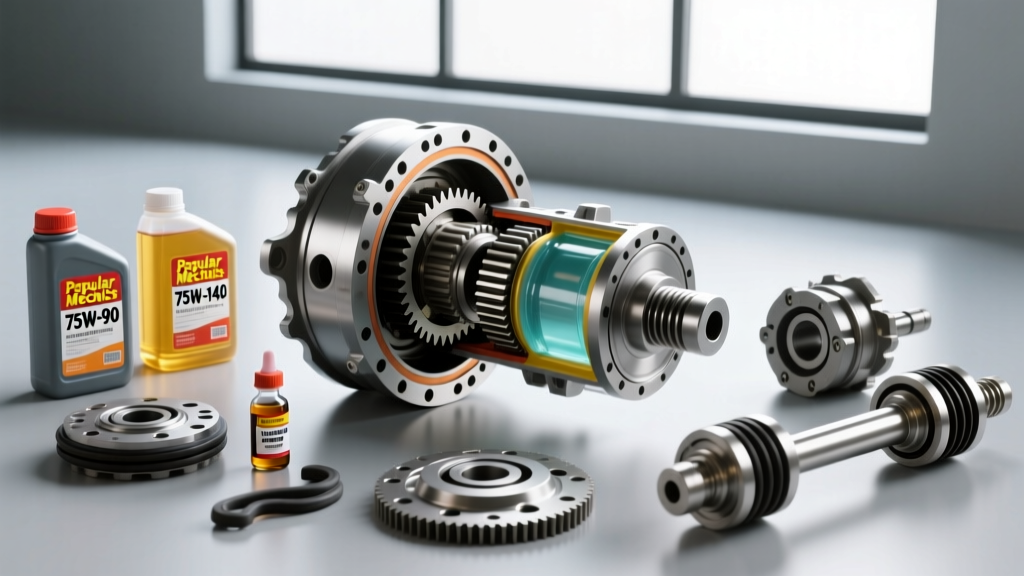
- Add Friction Modifier: Pour exactly 4 oz of Mopar Limited Slip Friction Modifier (or equivalent like Lubegard Limited Slip) directly into the empty differential housing before adding the bulk gear oil.
- Fill with 75W-140: Pump in your 75W-140 synthetic gear oil until it reaches the bottom of the fill hole threads.
- Seal and Torque: If the cover was removed, clean the mating surfaces, apply a thin bead of RTV silicone (if no gasket is used), and torque the cover bolts to 30-35 lb-ft in a crisscross star pattern to ensure even clamping force.
Fluid Selection: 75W-90 vs 75W-140 Synthetic
Why does the front differential of an AWD car typically use 75W-90, while the Dodge Viper rear differential demands 75W-140? The answer lies in shear stability and thermal load. The Viper's rear differential transfers the entire torque output of a V10 engine through a single set of ring and pinion gears. Under hard acceleration, the gear teeth experience extreme boundary lubrication conditions. A 75W-140 fluid maintains a thicker hydrodynamic film at high temperatures, preventing metal-on-metal contact. According to the AMSOIL Gear Lube Technical Guide, 75W-140 synthetics resist thermal breakdown far better than lighter weights when subjected to the sustained 250°F+ temperatures generated by track-driven Vipers. Conversely, AWD front differentials see lower torque loads and benefit from the reduced viscous drag of 75W-90, which improves front-axle mechanical efficiency and fuel economy.
Sourcing Parts and Authoritative Resources
When sourcing fluids and additives for your 2026 service interval, always rely on OEM part numbers or highly regarded synthetic manufacturers. The Mopar Parts Catalog remains the gold standard for verifying the exact friction modifier required for your Viper's specific GKN or Dana limited-slip unit. Additionally, communities like the Viper Club Tech Articles database offer invaluable, owner-tested insights on differential cover gasket alternatives and RTV curing times that dealership service manuals often overlook. By understanding the distinct mechanical needs of both front AWD differentials and the Viper's legendary rear axle, enthusiasts can properly allocate their maintenance budgets and ensure maximum drivetrain longevity.