The F1 Clutch Myth vs. Track Day Reality
When bench-racing or studying high-performance drivetrains, a common question arises: do F1 cars have a clutch pedal? The short answer is no. Modern Formula 1 cars do not use a foot-operated clutch pedal for gear changes. Instead, they rely on electro-hydraulic actuators controlled by paddles mounted directly behind the steering wheel. The only manual clutch control an F1 driver uses is a set of dual finger-paddles on the steering wheel, reserved exclusively for modulating the carbon multi-plate clutch during standing starts or pit exits.
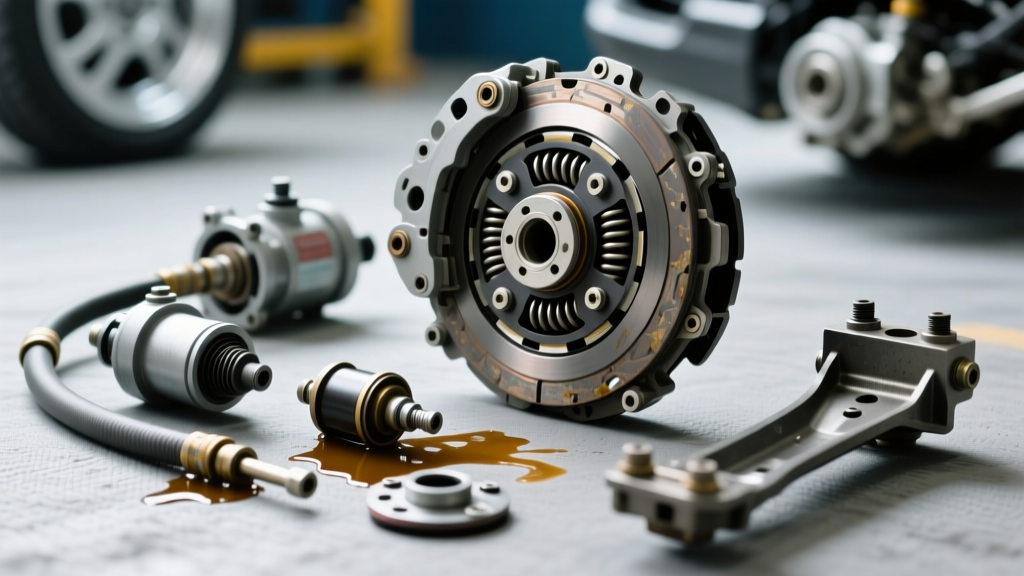
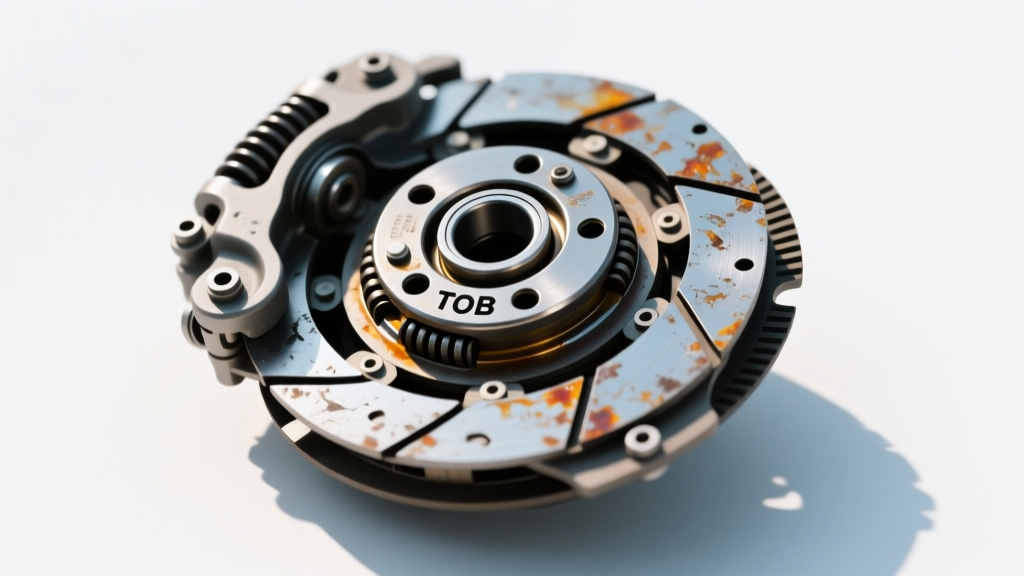
However, when we transition from the pinnacle of open-wheel racing to the high-performance track cars you can actually buy and wrench on—such as the Porsche 911 GT3 (991.2) or the C7 Corvette Z06—a traditional foot pedal is very much present. And with that pedal comes a mechanical component that takes a massive, often catastrophic beating on the track: the throw-out bearing (TOB), frequently integrated into a Concentric Slave Cylinder (CSC).
As of the 2026 track season, TOB and CSC failures remain one of the most common drivetrain DNFs (Did Not Finish) in amateur and pro-am endurance racing. This model-specific repair guide dives deep into the symptoms, failure modes, and exact repair procedures for track-focused manual transmission vehicles.
Anatomy of a Track Car Throw-Out Bearing Failure
In a street car, a TOB might last 100,000 miles. On a track car, it might last three weekends. Why? The answer lies in RPM, heat soak, and hydraulic cavitation.
- Centrifugal Overload: Track cars like the 991.2 GT3 routinely bounce off the 9,000 RPM rev limiter. At these speeds, the diaphragm spring fingers of the pressure plate vibrate violently, causing the TOB contact surface to wear prematurely.
- Hydraulic Cavitation: Rapid clutch actuation (speed-shifting) forces the hydraulic fluid through the master and slave cylinders at extreme velocities. If the fluid boils or aerates, the CSC piston hammers against the TOB, cracking the internal bearing races.
- Thermal Degradation: The bellhousing of a track car easily exceeds 250°F (121°C) during a 20-minute session. Standard TOB grease liquefies and weeps out of the bearing seals, leading to metal-on-metal scoring.
Symptom Checklist: Is Your TOB Failing?
Before pulling the transmission, run through this diagnostic tree to confirm TOB/CSC failure versus a simple clutch disc issue:
- The 'Whir' Test: With the car in neutral and the engine idling, listen to the bellhousing. A high-pitched metallic whirring that changes pitch or disappears when you lightly rest your foot on the clutch pedal (taking up the free-play) is the classic signature of a dry, failing TOB.
- Pedal Pulsation: If you feel a rhythmic, mechanical vibration through the clutch pedal during engagement, the TOB inner race is likely pitted, or the CSC piston is binding in its bore.
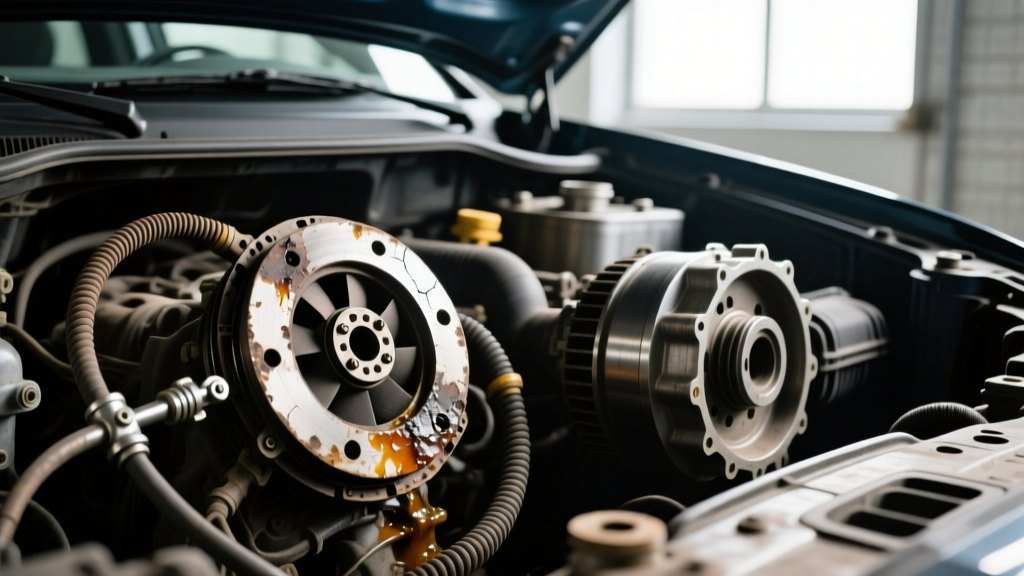
- Fluid Weeping: Inspect the bellhousing inspection cover (or weep hole). If you see a mixture of DOT fluid and black grease, the CSC internal seals have blown, contaminating the clutch friction disc.
Model-Specific Repair Guide: Porsche 991.2 GT3 & C7 Corvette Z06
Replacing a track car TOB requires precision. Below are the exact specifications, part numbers, and torque sequences for two of the most popular track platforms.
Porsche 991.2 GT3 Concentric Slave Cylinder (CSC/TOB) Replacement
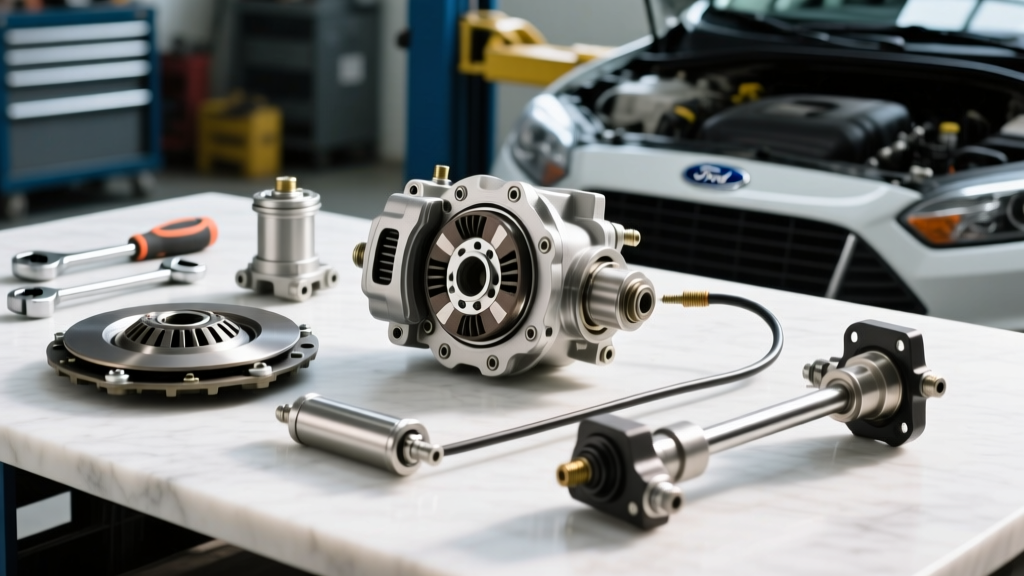
The 991.2 GT3 utilizes a specialized hydraulic CSC that acts as the throw-out bearing. When replacing this unit, you must also evaluate the clutch fork pivot ball and the dual-mass/single-mass flywheel setup.
| Specification | Value / Part Number |
|---|---|
| OEM CSC/TOB Part # | Sachs 3189 600 133 (or LUK 510 0076 10) |
| Bellhousing to Engine (M10 Bolts) | 45 Nm (33 lb-ft) |
| Flywheel to Crankshaft (M11 Bolts) | 60 Nm + 90° turn (Replace bolts every time) |
| Clutch Fluid Capacity | ~0.3 Liters (Use Castrol SRF DOT 4 for track) |
| Average Parts & Labor Cost | $1,400 - $2,100 (Independent Specialist) |
Pro-Tip: When installing the Sachs CSC on the Porsche 7-speed PDK-manual or 6-speed GT3 gearbox, do not pre-compress the CSC piston before installation. The self-adjusting mechanism will seat itself upon the first pedal depression. Pre-compressing it with zip-ties (a common internet myth) can damage the internal return spring.
C7 Corvette Z06 (Tremec TR-6070) TOB & Hydraulic Line Upgrade
The C7 Z06's Tremec TR-6070 transmission is incredibly robust, but its factory hydraulic TOB setup is notorious for heat soak due to its proximity to the exhaust and catalytic converters. For track use, upgrading to a braided line and a high-temp TOB is mandatory.
| Specification | Value / Part Number |
|---|---|
| Heavy-Duty TOB/CSC Part # | GM 24282238 / Sachs SH5033 |
| Bellhousing to Engine Block | 50 Nm (37 lb-ft) |
| Pressure Plate to Flywheel (M8 Bolts) | 25 Nm (18 lb-ft) in a star pattern |
| Recommended Track Fluid | Motul RBF 660 or Castrol SRF (High Dry Boiling Point) |
| Average Parts & Labor Cost | $900 - $1,500 |
Bleeding the TR-6070: The Tremec TR-6070 requires a specific reverse-bleeding procedure to push air bubbles up and out of the master cylinder. Using a motive power bleeder set to 15 PSI, pump fluid from the CSC bleeder valve upward. For full technical procedures, refer to the Tremec TR-6070 official documentation.
TOB Failure Modes: F1 Paddle Systems vs. Pedal-Actuated Track Cars
To understand why your track car's TOB fails while an F1 car's clutch survives, we must look at the actuation methodology. For deeper insights into F1 drivetrain engineering, resources like Formula 1's official technical breakdowns highlight the extreme differences in design.
| Feature | F1 Carbon Multi-Plate Clutch | Track Car (Porsche/Chevy) TOB |
|---|---|---|
| Actuation Method | Electro-Hydraulic Paddle (No Pedal) | Foot Pedal -> Master Cylinder -> CSC/TOB |
| Bearing Type | Custom Ceramic/Hybrid Race Bearing | Standard Angular Contact Steel Bearing |
| Heat Management | Water/Glycol cooling jackets in bellhousing | Ambient airflow (prone to heat soak) |
| Engagement Time | ~50 milliseconds (Computer controlled) | ~400-800 milliseconds (Human dependent) |
| Primary Failure Cause | Carbon friction material degradation | Grease boil-out, hydraulic cavitation, seal blowout |
Preventative Maintenance for High-RPM Track Use
If you are tracking a manual car, treating the TOB as a consumable wear item is the only way to avoid a DNF. Implement the following maintenance schedule:
- Fluid Flushes: Flush the DOT 4/5.1 clutch fluid every 3 track weekends. Moisture absorption lowers the fluid's boiling point, leading to vapor lock and CSC hammering.
- Thermal Barriers: Install a titanium or ceramic-coated heat shield between the exhaust header and the bellhousing. Keeping the CSC ambient temperature below 220°F (104°C) will double the life of the bearing grease.
- Clutch Slip Management: Avoid 'riding' the clutch during corner entry. The slight slip generates massive friction heat directly against the TOB face. Use rev-matching or flat-foot shifting (if supported by the ECU) to minimize partial-engagement heat.
While F1 engineers have eliminated the foot pedal and the traditional TOB to achieve millisecond shift times and eliminate human hydraulic error, track day enthusiasts must rely on robust mechanical preparation. By selecting the right high-temperature CSC components, adhering to strict torque specifications, and managing bellhousing thermals, you can keep your manual track car shifting flawlessly lap after lap.
For more technical deep-dives into Porsche and European clutch systems, Pelican Parts' technical forums remain an invaluable community resource for DIY track mechanics.