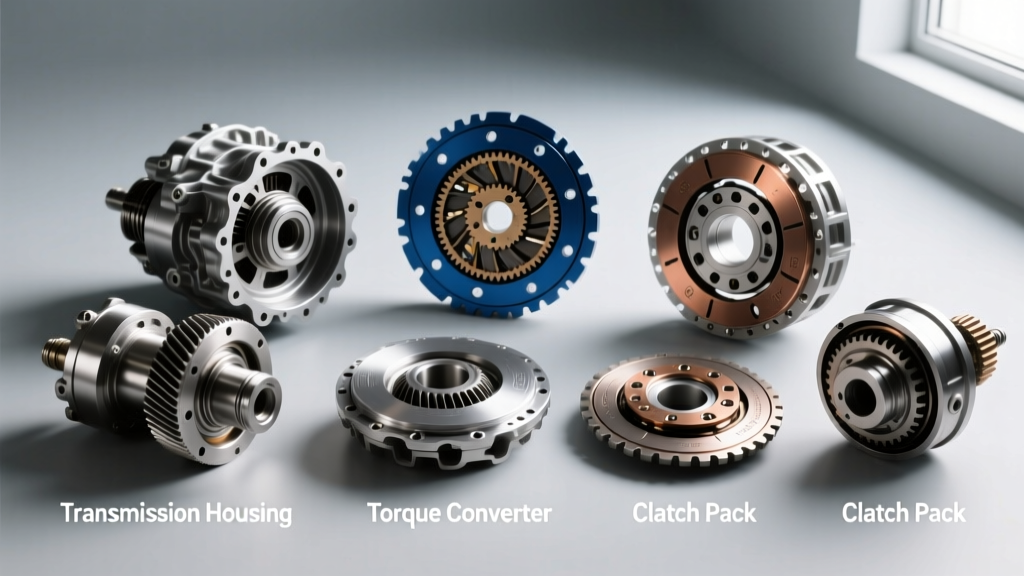
The Great RWD 6-Speed Debate: Ford vs. GM
If you are a DIY mechanic stepping into the world of modern rear-wheel-drive automatics, you have likely found yourself deep in forum rabbit holes researching the costs and complexities of rebuilding a Ford transmission like the 6R80, only to realize your project vehicle actually houses a GM 6L80E. It is a common point of confusion. Both are 6-speed longitudinal automatics introduced in the mid-2000s, yet their internal architectures, failure points, and rebuild costs are vastly different.
As we navigate the 2026 automotive landscape, the 2006–2014 fleet of GM Silverados, Tahoes, and Camaros equipped with the 6L80E are hitting the age where major drivetrain overhauls are inevitable. This beginner-friendly explainer will break down exactly what it takes to rebuild the GM 6L80E, how the costs compare to its Ford ZF-based counterpart, and the specific torque specs, clearances, and electronic hurdles you must know before turning your first wrench.
Understanding the Architecture: Why the 6L80E is Unique
Before tearing into the case, you must understand what makes the 6L80E tick. Unlike older hydraulically governed transmissions like the 4L60E, the 6L80E relies on a Transmission Electro-Hydraulic Control Module (TEHCM) mounted directly inside the transmission pan. This unit houses the solenoids, pressure switches, and the Transmission Control Module (TCM) brain.
Furthermore, the 6L80E utilizes a unique clutch-to-clutch shifting architecture. There are no traditional bands or servos. Instead, it uses three rotating clutches (1-2-3-4, 3-5-R, and 4-5-6) and two stationary clutches (Low/Reverse and 2-6). According to the Automatic Transmission Rebuilders Association (ATRA), this bandless design reduces rotating mass but demands absolute precision in clutch pack clearances during a rebuild.
2026 Cost Breakdown: DIY Rebuild vs. Professional Shop
One of the primary reasons enthusiasts cross-shop the idea of rebuilding a Ford transmission versus tackling a GM 6L80E is the bottom line. Below is a realistic 2026 cost estimate for a standard 6L80E overhaul using quality aftermarket components like an Alto master kit and a replacement torque converter.
| Component / Service | DIY Rebuild Cost (Est.) | Professional Shop Cost (Est.) |
|---|---|---|
| Master Rebuild Kit (Alto / Frictions & Steels) | $450 - $550 | Included in Labor/Parts |
| Replacement TEHCM (If original is fried) | $350 - $500 | $500 - $750 |
| Remanufactured Torque Converter | $250 - $350 | $400 - $600 |
| Fluid (11.2 Qts Dexron VI) & Filter | $110 - $140 | $180 - $220 |
| Machine Shop (Valve Body / Case Machining) | $200 - $300 | $350 - $500 |
| Removal, R&R, and Programming Labor | $0 (Your Time) | $1,500 - $2,500 |
| Total Estimated Cost | $1,360 - $1,840 | $3,200 - $4,800 |
Step-by-Step 6L80E Rebuild Overview for Beginners
Rebuilding a 6L80E is not a weekend job for a first-timer, but it is entirely achievable if you follow a methodical process. Here is what the tear-down and reassembly journey looks like.
1. Extraction and Tear-Down
Once the transmission is on the bench, drain the fluid. The 6L80E holds approximately 11.2 quarts of Dexron VI. As you remove the deep plastic oil pan, you will immediately see the TEHCM. Carefully disconnect the internal wiring harness. The locking tabs on these 15-year-old connectors are notoriously brittle. From there, you will remove the valve body, the oil pump, and begin pulling the input shaft and clutch drums.
2. Addressing the 3-5-R Wave Plate Failure
The most catastrophic and common failure in the 6L80E is the snapping of the OEM 3-5-R clutch wave plate. When this thin steel plate shatters, it sends shrapnel through the clutch packs and jams the valve body. During your inspection, if you find dark, burnt fluid and metallic debris, the 3-5-R drum is likely destroyed. Experts at Sonnax highly recommend upgrading to their reinforced wave plate and hub kits to prevent a repeat failure post-rebuild.
3. Clutch Pack Clearances
Because the 6L80E uses clutch-to-clutch shifting, air bleeding and fluid volume are critical. You must measure your clutch pack clearances with a dial indicator and feeler gauges. Use selective thickness backing plates to achieve these factory specifications:
- 1-2-3-4 Clutch Pack: 0.040' - 0.080' clearance
- 3-5-R Clutch Pack: 0.020' - 0.040' clearance
- 4-5-6 Clutch Pack: 0.030' - 0.050' clearance
4. The TEHCM Programming Hurdle
If your original TEHCM is mechanically sound, you can clean it, install new TransGo shift kits or solenoid regulator valves, and reuse it. However, if the internal TCM board has failed due to heat or fluid contamination, you must buy a replacement. A new TEHCM is blank. It requires flashing via a J2534 pass-thru device and GM's Service Programming System (SPS) using the vehicle's exact VIN. If you do not have access to this software, you will need to pay a mobile tech or dealership $150–$250 to flash the module after you install it.
Critical Torque Specifications
Stripping an aluminum case thread on a 6L80E is an expensive mistake. Always use a calibrated inch-pound and foot-pound torque wrench during reassembly. Memorize or print these critical specs:
- Bellhousing to Engine Block Bolts: 37 lb-ft (50 Nm)
- TEHCM to Case Bolts (M6x1.0): 89 lb-in (10 Nm)
- Valve Body to Case Bolts: 89 lb-in (10 Nm)
- Oil Pump to Case Bolts: 106 lb-in (12 Nm)
- Torque Converter to Flexplate: 37 lb-ft (50 Nm)
Pro-Tip for Beginners: Never use an impact wrench on the torque converter bolts. The flexplate can warp, leading to severe engine balance issues and premature torque converter hub wear. Always hand-tighten and torque in a star pattern.
How Does This Compare to Rebuilding a Ford Transmission?
Many DIYers ask how the 6L80E compares to rebuilding a Ford transmission of the same era, specifically the Ford 6R80 found in the F-150 and Mustang. While both are 6-speed RWD units, the Ford 6R80 is a licensed derivative of the ZF 6HP26.
Rebuilding the Ford 6R80 involves dealing with ZF-specific quirks, such as the infamous mechatronic adapter sleeve that cracks and leaks fluid onto the ground, and the 'E' clutch drum which is prone to severe wear. Furthermore, ZF transmissions require highly specific clutch clearance measurements and specialized ZF Lifeguard fluid, which is notably more expensive than GM's readily available Dexron VI. In terms of pure DIY accessibility and parts availability in 2026, the GM 6L80E is generally considered more forgiving for a first-time rebuilder, provided you can navigate the TEHCM programming requirement.
Final Verdict: Should You Rebuild or Replace?
If you possess a clean workspace, a full set of snap-ring pliers, a torque wrench, and the patience to measure clearances to the thousandth of an inch, rebuilding a 6L80E at home will save you upwards of $2,500 compared to a professional shop. However, if the internal case is scored by the torque converter hub, or if you lack the means to program a replacement TEHCM, purchasing a professionally remanufactured unit with a warranty may be the more pragmatic choice for your daily driver.