The 2026 Warranty Reality for the DPS6 Dual-Clutch Transmission
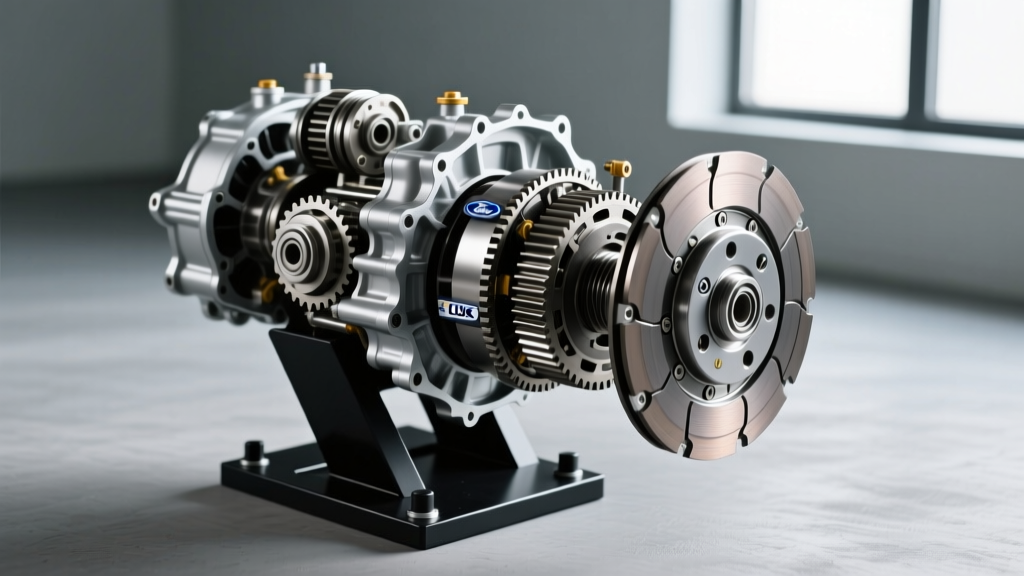
When owners search for a 2014 Ford Focus automatic clutch replacement, they are often operating under a fundamental misconception: the 2014 Focus does not have a traditional torque-converter automatic. Instead, it utilizes the Getrag 6DCT250, commonly known as the DPS6. This is an automated manual transmission featuring a dry dual-clutch pack. Because it relies on friction materials rather than hydraulic fluid coupling, the clutch is technically a wear item. This distinction is the single most critical factor when navigating warranty coverage in 2026.
For years, the DPS6 was plagued by shudder, premature clutch wear, and Transmission Control Module (TCM) failures. In response to intense consumer backlash and NHTSA defect investigations, Ford issued Customer Satisfaction Programs (CSP) 19N01 and 21N01. These programs extended the warranty on the TCM and clutch actuators to 10 years or 150,000 miles. However, for a 2014 model year vehicle, that 10-year factory extension expired in 2024. As of 2026, owners are entirely outside the factory safety net, meaning your clutch replacement warranty now depends entirely on third-party Vehicle Service Contracts (VSCs), independent shop labor guarantees, and strict adherence to installation protocols.
Decoding Coverage: What Warranties Actually Cover in 2026
Understanding the boundary between a "defective part" and a "wear item" is essential before authorizing a $1,400+ repair. Below is a breakdown of how different warranty structures apply to the DPS6 dry clutch kit in the current landscape.
| Warranty Type | Coverage Scope | 2026 Status for 2014 Focus | DPS6 Clutch Applicability |
|---|---|---|---|
| Factory Powertrain | Internal lubricated components | Expired (5yr/60k mi) | Excluded (Dry clutch is a wear item) |
| Ford CSP 19N01/21N01 | TCM, Actuators, Seals | Expired (10yr/150k mi) | Excluded (Friction material never covered) |
| Third-Party VSC | Contract dependent | Active (If purchased) | Often excluded; requires proof of TCM failure, not just clutch slip |
| Independent Shop Labor | Installation defects & premature wear | 12 to 24 Months | Covers clutch glazing if shop skipped TCM adaptation procedures |
Technical "Warranty Killers": Installation Errors That Void Coverage
If your new dual-clutch pack begins to shudder or slip within 2,000 miles, the shop will likely blame "driver abuse" or normal wear to deny the warranty claim. However, as automotive transmission experts, we know that DPS6 clutch failures are frequently the result of skipped installation steps. To protect your investment and ensure your shop labor warranty remains valid, verify that your technician performs the following mandatory procedures.
1. Actuator Wind-Back and Retraction
The DPS6 utilizes two electric clutch actuators that physically press the release forks. Before removing the transmission, the technician must use a Ford IDS scan tool or a specialized manual winding tool to retract the actuator motors. Forcing the transmission off without retracting these motors strips the internal plastic planetary gears of the actuator. If a shop replaces the clutch but reuses a damaged actuator because they forced it, the resulting erratic engagement will destroy the new clutch friction material in weeks. Warranty Impact: Any clutch supplier (including LUK and OEM Ford) will deny a warranty claim if actuator fork wear patterns indicate forced removal.
2. Flywheel Runout and Resurfacing
The dry dual-clutch pack presses directly against the dual-mass flywheel (DMF). Ford specification dictates that flywheel runout must not exceed 0.05mm. Because the DPS6 lacks a torque converter to absorb harmonic vibrations, even minor warping causes aggressive clutch chatter. A reputable shop will measure the runout with a dial indicator and replace the DMF if it exceeds spec. Resurfacing a dual-mass flywheel is generally not recommended due to the precision balance required.
3. Mandatory TCM Touch-Point Adaptation
This is the most commonly skipped step and the number one cause of warranty disputes. After installing the new clutch kit (such as the LUK 602001509), the physical thickness of the friction material has changed. The TCM must be forced to relearn the exact millimeter where the clutch begins to bite (the "touch point"). Using FORScan or Ford IDS, the technician must run the "Clutch Touch Point Learning" routine. If this software adaptation is skipped, the TCM will command the clutch based on the worn parameters of the old pack, resulting in severe slipping, overheating, and rapid glazing. Note: Always request a printed copy of the post-installation TCM adaptation log to keep for your records.
OEM Ford vs. LUK Aftermarket: How Parts Selection Affects Warranties
When sourcing the replacement clutch, you have two primary options. Your choice directly impacts both the upfront cost and the long-term warranty support.
- OEM Ford (Part # CV6Z-7540-B): Purchased through the dealership parts counter. Carries Ford's standard 12-month/12,000-mile parts warranty. Dealerships are more likely to approve labor warranty claims if their own OEM part fails.
- LUK RepSet Pro (Part # 602001509): LUK (a division of Schaeffler) is the original equipment manufacturer for the Getrag 6DCT250. The LUK kit is functionally identical to the Ford-branded box but typically costs $250 to $350 less. Schaeffler Aftermarket provides a robust warranty, but independent shops may limit their labor guarantee to 6 months if you supply your own aftermarket parts to avoid liability.
Expert Tip: Never reuse the original clutch release levers or pivot balls. The LUK kit includes new levers. Reusing old, worn levers alters the clutch actuation ratio, which the TCM adaptation cannot fully compensate for, leading to P090C (Clutch Actuator A Performance) codes.
Diagnosing Warranty-Worthy Failures vs. Normal Wear
If you are experiencing issues post-replacement and need to file a claim against the shop's labor warranty, you must differentiate between normal dry-clutch characteristics and actual mechanical defects. The DPS6 is notorious for a slight low-speed shudder in stop-and-go traffic; this is a byproduct of dry friction materials and is rarely covered under warranty. However, you have grounds for a warranty claim if you experience:
- Slipping under load: If the engine RPMs flare by more than 300 RPM without a corresponding increase in vehicle speed while in 3rd gear or higher, the clutch is slipping. This is a defect or an adaptation failure.
- Thermal Overload Codes: If your OBD-II scanner pulls codes like P287A (Clutch Slip Performance) or P090D (Clutch Actuator B Performance), the TCM is actively detecting mechanical failure.
- Burning Odors: A distinct burnt asbestos smell indicates the clutch is dragging due to improper actuator wind-back or incorrect fluid contamination.
A Note on Transmission Fluid Contamination
While the DPS6 clutch is "dry," the transmission gears require specific lubrication. The manual specifies Motorcraft Dual Clutch Transmission Fluid (WSS-M2C200-D2), with a dry fill capacity of roughly 1.9 Liters. If a technician mistakenly fills the DPS6 with standard Mercon LV ATF, the fluid will migrate past the input shaft seals and contaminate the dry clutch friction material. This chemical glazing destroys the clutch instantly. If your clutch fails prematurely, demand the shop provide the batch number and specification of the fluid used. Contamination is a definitive installation error that shifts full financial liability onto the repair facility.
Summary: Protecting Your Repair Investment
Navigating a 2014 Ford Focus automatic clutch replacement in 2026 requires vigilance. With the factory CSP extensions expired, your only safety net is a rigorous shop labor warranty. By insisting on proper actuator retraction, strict flywheel runout measurements, and documented FORScan TCM adaptations, you eliminate the loopholes shops use to deny claims. Keep all pre- and post-repair diagnostic logs, insist on LUK or OEM Ford parts, and treat your DPS6 not as a traditional automatic, but as the highly sensitive automated manual that it is.