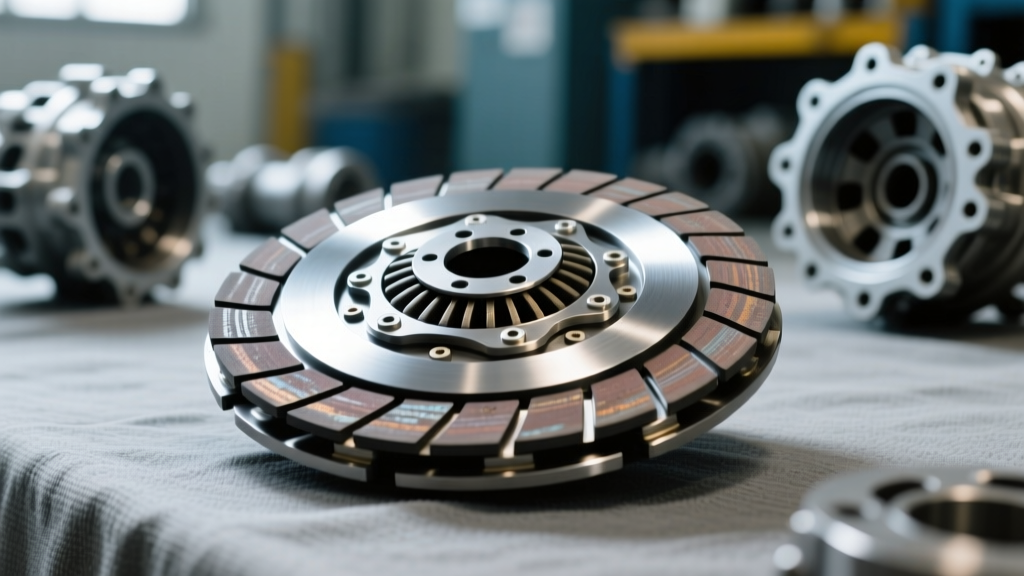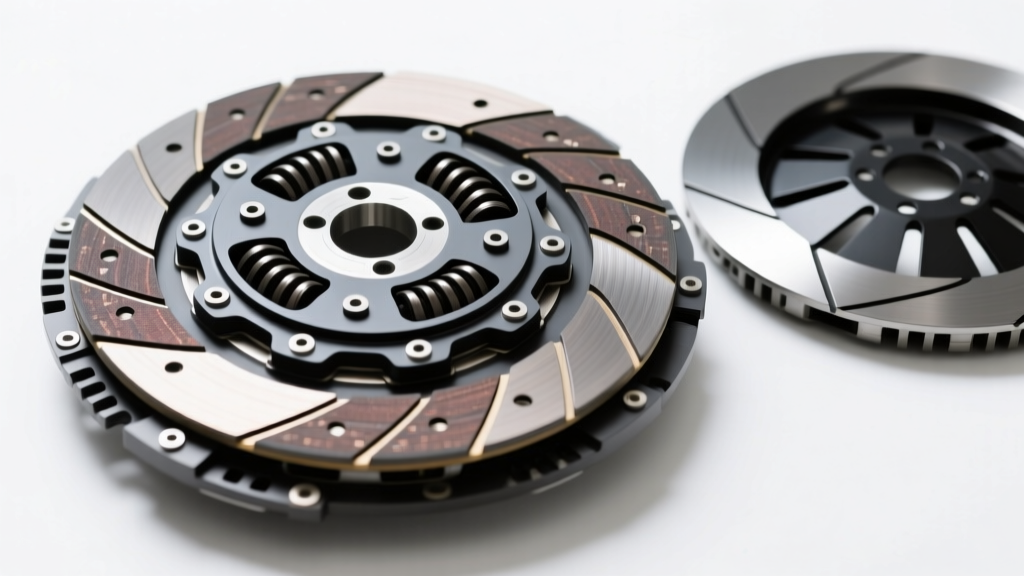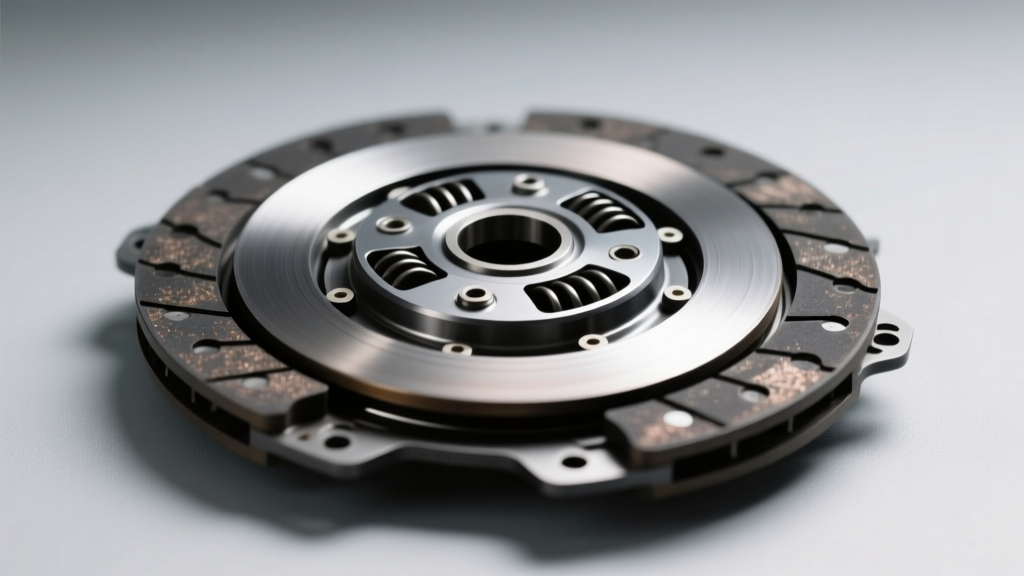
The Critical Role of Disc Diameter in Your Ford Focus
As we navigate the 2026 aftermarket landscape, the Ford Focus remains one of the most popular platforms for manual transmission enthusiasts and daily commuters alike. Whether you are maintaining a high-mileage 2.0L GDI or extracting maximum grip from a 2.3L EcoBoost RS, choosing the correct ford focus clutch kit hinges on a fundamental mechanical variable: disc diameter. Selecting the wrong diameter not only results in immediate fitment failures but can severely compromise drivetrain longevity, pedal feel, and rotational mass dynamics.
Unlike generic universal applications, Ford utilized a wide array of bellhousings, flywheel step heights, and clutch disc diameters across the Focus lineup. The IB5, MTX-75, and MMT6 transmissions all demand precise dimensional matching. This guide breaks down the exact sizing matrix, the physics of rotational inertia, and the specific part numbers you need to execute a flawless clutch replacement.
OEM Ford Focus Clutch Size Matrix by Engine & Transmission
Before ordering any components, you must verify your exact engine and transmission pairing. Ford frequently mid-cycle updated spline counts and pressure plate diameters, particularly during the transition from the Mk2 to the Mk3 generation. Below is the definitive 2026 reference table for factory clutch disc diameters.
| Engine / Platform | Transmission | OEM Disc Diameter | Spline Count | LuK RepSet Part # | Avg. 2026 Price |
|---|---|---|---|---|---|
| 1.6L Duratec / Ti-VCT | IB5 | 200mm | 23 | 620 3161 00 | $145 - $170 |
| 2.0L Duratec / GDI | MTX-75 | 228mm | 23 | 624 3161 00 | $190 - $240 |
| 2.0L EcoBoost (ST) | MMT6 | 240mm | 23 | 624 3312 00 | $350 - $420 |
| 2.3L EcoBoost (RS) | MMT6 | 240mm | 23 | 624 3358 00 | $500 - $650 |
Note: Always verify the input shaft spline count using a dial caliper and visual inspection before pressing the new disc onto the shaft. While 23-spline is the standard for most global Focus models, certain early European 1.6L variants utilized a smaller 20-spline input shaft paired with a 190mm disc.
The Physics of Diameter: Torque Capacity vs. Rotational Inertia
When enthusiasts search for an upgraded ford focus clutch kit, there is a common misconception that a larger diameter disc is universally superior. To understand why Ford engineers selected a 228mm disc for the standard 2.0L GDI but stepped up to a 240mm disc for the ST and RS models, we must look at the physics of friction and rotational mass.
Torque Transfer and Leverage
Clutch torque capacity is calculated using the formula: T = μ × F × R, where μ is the coefficient of friction, F is the clamp load (spring pressure), and R is the effective radius of the friction surface. By increasing the disc diameter from 228mm to 240mm, Ford effectively increased the leverage point (R). This allows the 2.0L EcoBoost to handle its 270 lb-ft of torque without requiring an excessively stiff pressure plate that would make daily driving in stop-and-go traffic unbearable.
Moment of Inertia (MOI) and Rev Response
The trade-off for a larger diameter is an increased Moment of Inertia. A 240mm disc places more mass further away from the center axis of rotation. While this provides excellent heat dissipation and bite stability under high-load track conditions, it inherently slows down engine spool-up and rev-matching response. If you are building a naturally aspirated, high-revving 2.0L Duratec track car, downsizing to a lightweight 200mm or 215mm aftermarket disc (paired with a custom lightweight flywheel) will drastically reduce MOI, allowing the engine to zip through the RPM band much faster, albeit at the cost of low-speed drivability and heat capacity.
Generational Differences and the DMF Dilemma
The Mk3 Focus (2012-2018) introduced the 2.0L GDI engine paired with the MTX-75 transmission and a Dual Mass Flywheel (DMF). The DMF was designed to absorb the harsh torsional vibrations inherent to direct-injection engines. The OEM clutch kit for this setup relies on a specific 228mm disc with a rigid hub (no torsional springs), because the dampening is handled by the DMF itself.
As these vehicles age in 2026, many owners are opting for DMF-to-SMF (Single Mass Flywheel) conversion kits to eliminate the recurring $400+ cost of replacing failing DMF springs. If you choose an SMF conversion, you must ensure your new ford focus clutch kit includes a sprung-hub disc. The torsional springs must now be integrated into the clutch disc to protect the MTX-75 gearbox input shaft from shock loads. Furthermore, the SMF must maintain the exact factory stack height; otherwise, the hydraulic throw-out bearing will over-extend, leading to premature slave cylinder failure.
Pro-Tip from the Bench: Never attempt to use a rigid-hub DMF clutch disc on a flat Single Mass Flywheel. The resulting NVH (Noise, Vibration, and Harshness) will rattle your dashboard panels and accelerate synchro wear in the MTX-75 transmission.
2026 Buyer's Guide: Top Brands for Focus Applications
Based on current market availability, friction material longevity, and pedal feel, here is how the top manufacturers stack up for Focus applications:
- LuK (Schaeffler): The undisputed king of OEM replacements. If your Focus requires a DMF, LuK's RepSet Pro is the only logical choice. Their organic friction material provides a progressive, factory-like engagement. Refer to the Schaeffler REPXPERT technical portal for detailed installation bulletins regarding hydraulic bleed procedures.
- Sachs (ZF): An excellent alternative for both OEM and Stage 1 performance builds. Sachs organic discs feature a slightly more aggressive bite point and handle heat cycling exceptionally well. The ZF Sachs Performance catalog offers upgraded pressure plates with 15% higher clamp loads for mildly modified 2.0L EcoBoost engines.
- Exedy: Ideal for the Mk2 and Mk3 2.0L Duratec enthusiasts. Their OEM Sports Clutch kits utilize a heavy-duty pressure plate paired with a high-friction organic disc, offering a 25% increase in torque capacity without sacrificing daily drivability.
- SPEC: Reserved for the 2.3L RS and heavily modified ST track cars. SPEC's Stage 3+ Kevlar and carbon-ceramic 240mm kits require a mandatory break-in period and are not recommended for street use due to their aggressive on/off engagement characteristics.
Critical Installation Specs & Torque Sequences
Selecting the correct diameter is only half the battle; precise installation ensures the disc operates concentrically within the bellhousing. Below are the critical torque specifications for the most common Focus manual transmissions (MTX-75 and MMT6):
- Flywheel to Crankshaft (M12 TTY Bolts): 85 lb-ft (115 Nm) + 90° turn. These are Torque-To-Yield bolts and must be replaced during every removal.
- Pressure Plate to Flywheel (M8 Bolts): 21 lb-ft (29 Nm). Tighten in a crisscross star pattern to prevent warping the diaphragm spring fingers.
- MTX-75 Bellhousing to Engine Block: 35 lb-ft (47 Nm) for the primary M10 bolts, and 18 lb-ft (25 Nm) for the smaller perimeter M8 bolts.
- Clutch Fork Pivot Ball Stud: 28 lb-ft (38 Nm). Apply a thin layer of high-temp molybdenum grease to the pivot contact points to prevent squeaking.
Measuring and Verifying Your Existing Setup
Because previous owners or budget repair shops may have swapped flywheels or bellhousings, you cannot blindly trust the VIN for clutch sizing. Before ordering your kit, drop the inspection cover or pull the transmission and measure the existing setup. Use a dial caliper to measure the outer diameter of the friction disc. Next, count the input shaft splines and measure the major diameter of the splines. A 23-spline input shaft on the MTX-75 typically measures roughly 23.8mm across the splines. Cross-reference this physical data with the Ford Motorcraft parts catalog to guarantee your new kit will slide perfectly onto the shaft and mate flush against the flywheel friction surface.