The Anatomy of the 2017 Ford F150 Torque Converter Recall
If you drive a 2015–2017 F-150 equipped with the 6R80 automatic transmission, you may have experienced a violent vibration between 45 and 60 mph under light throttle. This phenomenon is the hallmark of the widespread 2017 Ford F150 torque converter recall and related Technical Service Bulletins (TSBs), specifically addressing torque converter clutch (TCC) shudder. As of 2026, many of these trucks are aging out of Ford's extended Customer Satisfaction Programs (such as CSP N23), shifting the burden of diagnosis and repair onto independent shops and DIY owners.
Understanding the lockup torque converter operation within the ZF-derived 6R80 transmission is critical. The shudder is not merely a fluid degradation issue; it is a complex failure of the hydraulic apply circuit, the PWM solenoid, and the friction lining itself. This guide provides a deep-dive diagnostic framework for isolating TCC lockup failures, interpreting live data, and executing precise repairs.
6R80 Lockup Torque Converter Operation: Why It Fails
Unlike older transmissions that used a simple on/off lockup clutch, the 6R80 utilizes a slip-controlled torque converter. The Transmission Control Module (TCM) commands the TCC Pulse Width Modulation (PWM) solenoid to maintain a microscopic slip—typically between 20 and 40 RPM—even when the clutch is 'fully applied.' This regulated slip dampens engine torsional vibrations and prevents NVH (Noise, Vibration, and Harshness) from entering the cabin.
The Friction Material Degradation Cycle
The TCC piston in the 6R80 is lined with a specialized paper/carbon friction material. Over time, thermal cycling and aggressive towing cause this material to glaze or shear off in microscopic layers. When the friction coefficient drops, the TCM attempts to compensate by aggressively pulsing the TCC PWM solenoid. This rapid modulation creates a 30–50 Hz oscillation in the hydraulic pressure, resulting in the 'rumble strip' shudder felt through the chassis. Furthermore, the degraded friction material contaminates the transmission fluid, circulating debris that scores the TCC regulator valve bore in the valve body.
Troubleshooting TCC Shudder with FORScan
Before authorizing a $2,500 torque converter replacement, you must verify that the shudder is originating from the TCC lockup circuit and not from engine misfires, driveshaft harmonics, or worn rear differential bearings. Using an OBD-II adapter compatible with FORScan, you can monitor the MS-CAN and HS-CAN networks to observe the TCM's real-time lockup management.
| FORScan PID | Normal Lockup Operation | Fault State (Shudder Present) |
|---|---|---|
TCC_SLIP_CMD |
20 - 40 RPM (Regulated Slip) | Erratic, or drops to 0 RPM abruptly |
TCC_SLIP_ACT |
Matches CMD within ± 5 RPM | Oscillates wildly (± 30 to 60 RPM) |
TCC_DUTY |
45% - 65% (Modulating) | Spikes to 95%+ or drops below 30% |
TFT (Fluid Temp) |
180°F - 210°F (82°C - 99°C) | Over 230°F (Indicates severe TCC slip heat) |
Diagnostic Test Drive: Bring the truck to 50 mph in 6th gear with the TCC locked (verified via FORScan). Hold the throttle steady at roughly 12-15% TPS. If the TCC_SLIP_ACT PID swings violently while the shudder occurs, the torque converter friction lining or the valve body TCC regulator circuit is definitively compromised.
Valve Body Wear: The Hidden Culprit
If the torque converter shudder persists after a fluid exchange, the issue often lies in the ZF 6HP26 valve body. The TCC regulator valve operates in an aluminum bore that is highly susceptible to wear from contaminated fluid. Once the bore becomes ovalized, hydraulic pressure bypasses the valve, preventing the TCM from achieving precise slip control.
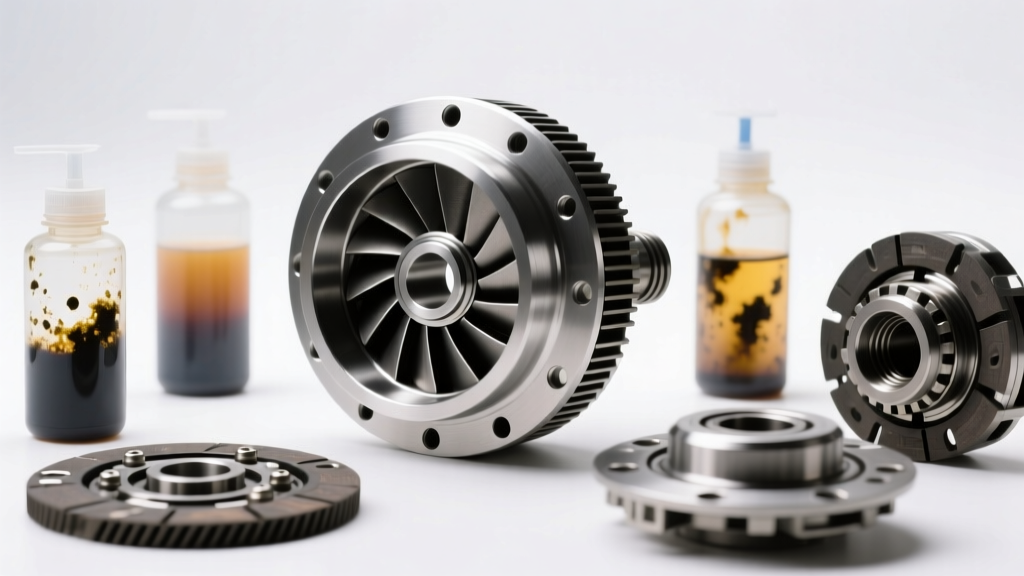
Expert Mechanic Insight: Before replacing the entire torque converter, drop the transmission pan and inspect the TCC apply fluid. If you find heavy, metallic-looking paste or excessive dark carbon clutch dust, the converter is failing. However, if the fluid is relatively clean but shudder persists, the TCC regulator valve bore is likely worn. In these cases, installing a Sonnax 95740-03K TCC Regulator Valve Kit (which includes an oversized, hard-anodized valve and reaming tool) can restore hydraulic integrity without replacing the torque converter.
Dealer Recall Remedies vs. Independent Repair
The original Ford recall and extended coverage programs typically mandated a high-volume fluid flush using the Ford Rotunda machine. If the flush failed to resolve the shudder, the dealer would replace the torque converter assembly. As we navigate 2026, many 2017 F-150s have exceeded the mileage or time limits of these CSPs, making independent repair the most common route.
Fluid Specifications and Flush Protocol
The 6R80 requires Motorcraft MERCON LV (Part # XT-10-QLVC). Do not use MERCON ULV, which is strictly for the later 10R80 transmissions; using ULV in a 6R80 will cause immediate clutch pack failure due to altered friction modifiers. The total dry capacity is 13.1 quarts, but a proper power flush requires 14 to 16 quarts to ensure complete fluid exchange through the torque converter and cooler lines.
Torque Converter Replacement Specs & Torque Values
If live data and fluid analysis confirm catastrophic TCC friction failure, the transmission must be removed. When installing a new OEM Ford torque converter (e.g., FL3Z-7902-C for the 5.0L Coyote or 3.5L EcoBoost applications), precision torquing is mandatory to prevent flexplate warping and pump gear misalignment.
- TC to Flexplate Bolts (M10): 35 Nm (26 lb-ft) + 90-degree turn. (Must use new OEM stretch bolts).
- Transmission to Engine Block (M12): 55 Nm (41 lb-ft).
- Crossmember to Frame Bolts: 90 Nm (66 lb-ft).
- Driveshaft to Rear Axle Flange: 110 Nm (81 lb-ft).
- TC Pre-Load: Ensure the torque converter is fully seated into the transmission oil pump before mating to the engine. Measure the gap between the flexplate and the TC mounting pads; it should be between 3mm and 6mm. A gap of 0mm indicates the converter is not seated and will destroy the oil pump upon tightening.
Sourcing and Citations
Accurate diagnosis of the 2017 Ford F150 torque converter recall symptoms requires adherence to OEM hydraulic standards and real-world data logging. For further reference on NHTSA complaints and safety bulletins regarding the 6R80 powertrain, consult the National Highway Traffic Safety Administration (NHTSA) database. Additionally, independent rebuilders should reference ZF aftermarket service documentation for 6HP26 hydraulic circuit mapping to accurately diagnose valve body cross-leaks.