The Paradigm Shift: Understanding the EV Drivetrain
When transitioning from internal combustion engines (ICE) to electric vehicles (EVs), buyers often assume that fewer moving parts equate to zero drivetrain maintenance. While it is true that EVs eliminate complex multi-speed transmissions, transfer cases, and exhaust systems, the modern EV drivetrain—specifically the integrated e-axle—endures instantaneous torque loads that would shatter a conventional cast-iron differential. For prospective buyers in 2026, understanding the nuances of Ford drivetrain warranty coverage for electric models like the Mustang Mach-E and F-150 Lightning is critical to avoiding catastrophic out-of-pocket repair bills.
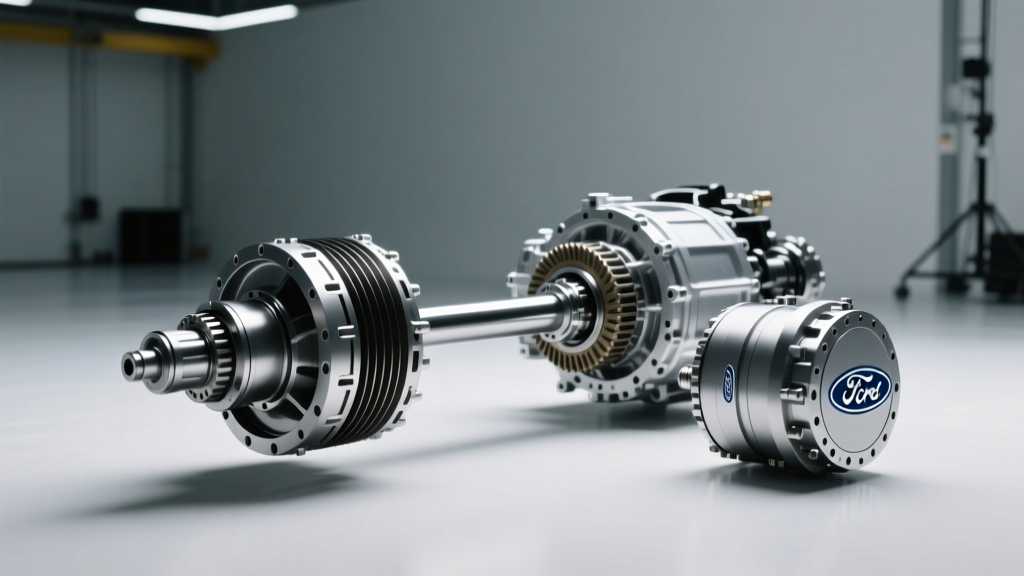
Unlike an ICE vehicle where the engine, transmission, and differential are distinct entities, Ford’s EV architecture utilizes an integrated e-axle. This single housing contains the electric drive motor, the power inverter, and a single-speed reduction gearbox. Because these components share thermal management loops and lubrication pathways, a failure in one often compromises the entire assembly. This structural reality heavily influences how warranties are written, enforced, and contested.
Decoding Ford Drivetrain Warranty Coverage for Electric Vehicles
To make an informed purchase, buyers must distinguish between Ford’s High-Voltage Battery warranty and the actual EV Drivetrain/Powertrain warranty. According to the official Ford Warranty Guide, the coverage is split into distinct tiers that catch many second-hand buyers off guard.
- Electric Vehicle Component Warranty (8 Years / 100,000 Miles): This is the cornerstone of Ford's EV protection. It covers the high-voltage battery, the electric drive motor(s), the power inverter, and the onboard charger. If the stator windings short out or the inverter fails to manage the DC-to-AC conversion, you are covered.
- Standard Powertrain Warranty (5 Years / 60,000 Miles): Here is where the friction occurs. Components that transfer power from the e-axle to the wheels—such as the half-shafts, CV joints, wheel bearings, and the mechanical ring-and-pinion gears inside the reduction gearbox—often fall under the standard 5-year/60,000-mile powertrain or drivetrain clause, rather than the 8-year EV component clause.
- Corrosion and Wear Items: CV joint boots, axle seals, and e-axle cooling hoses are considered wear-and-tear items. If a CV boot tears at 45,000 miles and allows debris to destroy the reduction gearbox bearings, Ford may deny the warranty claim due to 'lack of maintenance' or environmental damage.
2026 Comparison Chart: Ford vs. Industry EV Drivetrain Warranties
How does Ford stack up against the competition regarding long-term drivetrain protection? Below is a comparison of 2026 manufacturer warranties focusing on the electric drive unit and power transfer components.
| Manufacturer | EV Drive Unit / Motor | Half-Shafts & CV Joints | E-Axle Fluid Maintenance Requirement |
|---|---|---|---|
| Ford (Mach-E / Lightning) | 8 Yrs / 100,000 Mi | 5 Yrs / 60,000 Mi | 'Lifetime' (Dealer recommends 150k mi) |
| Hyundai (E-GMP Platform) | 10 Yrs / 100,000 Mi | 10 Yrs / 100,000 Mi | Inspect every 30k mi |
| GM (Ultium Platform) | 8 Yrs / 100,000 Mi | 5 Yrs / 60,000 Mi | 'Lifetime' |
| Tesla (Model Y / 3) | 8 Yrs / 100,000-120,000 Mi | 5 Yrs / 60,000 Mi | No scheduled interval |
Note: Hyundai currently leads the industry in comprehensive drivetrain coverage, wrapping half-shafts and reduction gears into their 10-year powertrain umbrella, whereas Ford limits mechanical power-transfer components to the 5-year window.
Deep Dive: What Actually Breaks in an EV Drivetrain?
To understand the value of your warranty, you must understand the failure points. The Car and Driver EV Maintenance Guide highlights that while EVs skip oil changes, their drivetrains face unique mechanical stresses.
1. Reduction Gearbox Bearing Wear and NVH
The Mustang Mach-E utilizes a single-speed reduction gearbox with a ratio of approximately 9.05:1. Because the electric motor spins up to 15,000+ RPM, the input shaft bearings operate at extreme velocities. If the specialized e-axle fluid degrades, these bearings develop micro-pitting, resulting in a high-frequency whine (NVH - Noise, Vibration, and Harshness). Replacing an e-axle assembly out of warranty costs between $6,500 and $9,200, including labor and programming.
2. Half-Shaft and CV Joint Torque Stress
The F-150 Lightning generates up to 775 lb-ft of instantaneous torque. This puts immense shear stress on the front and rear half-shafts. If an owner installs a lift kit and larger tires without recalibrating the suspension geometry, the altered CV joint operating angle will cause the joint cage to shatter under hard acceleration. Buyer Warning: Ford dealerships routinely check for aftermarket suspension modifications. If a CV joint fails and a lift kit is detected, your Ford drivetrain warranty coverage for that component will likely be voided.
3. Inverter Thermal Management Leaks
The inverter sits directly atop the e-axle. It uses a glycol-based cooling loop to manage heat. A failing O-ring or degraded quick-connect fitting can allow coolant to seep into the high-voltage junction box or the reduction gear housing. If coolant contaminates the Motorcraft MERCON EV fluid, it destroys the dielectric properties and lubricity, leading to catastrophic motor stator shorts.
Maintenance Loopholes That Void Your Coverage
As an automotive transmission and drivetrain specialist, I frequently see warranty claims denied due to owner negligence regarding 'lifetime' fluids. Ford labels the e-axle reduction gear fluid as 'lifetime.' However, in severe duty cycles (towing with the Lightning, frequent track use with the Mach-E GT), the fluid shears and loses its protective film strength.
Expert Recommendation: Drain and fill the e-axle fluid every 60,000 miles. The Mach-E rear e-axle requires roughly 1.15 liters of Motorcraft MERCON EV fluid (Part No. XT-12-QDC). The drain and fill plugs require a standard 8mm hex bit, and the fill plug should be torqued to 22 lb-ft. Documenting this maintenance with receipts is your best defense if a bearing failure triggers a warranty dispute.
The 2026 Buyer’s Checklist for Used and New Ford EVs
Whether you are negotiating a new F-150 Lightning or buying a certified pre-owned Mach-E, use this checklist to ensure your drivetrain is protected:
- Verify the In-Warranty Status of the E-Axle: If buying a 2021 Mach-E in 2026, the 5-year/60,000-mile powertrain warranty covering the half-shafts and reduction gears has likely expired, even though the 8-year motor/battery warranty is active.
- Inspect the CV Boots and Axle Seals: Use a flashlight to inspect the rubber CV boots behind the wheels. Look for greasy splatter on the lower control arms, which indicates a torn boot.
- Listen for the 'EV Whine': During the test drive, turn off the radio and climate control fans. Accelerate from 30 to 60 mph. A smooth hum is normal; a grinding, metallic whine indicates bearing starvation in the reduction gear.
- Check for Software TSBs: Ensure the dealer has applied the latest Technical Service Bulletins (TSBs) regarding e-axle cooling pump software updates, which prevent thermal throttling and prolong drivetrain life.
Conclusion
Ford drivetrain warranty coverage for electric vehicles is robust regarding the high-voltage electronics and drive motors, but it leaves mechanical power-transfer components vulnerable after the 60,000-mile mark. By understanding the anatomy of the e-axle, adhering to strict fluid maintenance intervals, and avoiding suspension modifications that alter CV geometry, buyers can protect their investment. As EV technology matures in 2026, treating your EV's reduction gearbox with the same respect as a traditional 10-speed automatic transmission is the key to achieving 200,000+ miles of reliable, torque-heavy driving.