The Financial and Mechanical Reality of the E4OD Break-In Phase
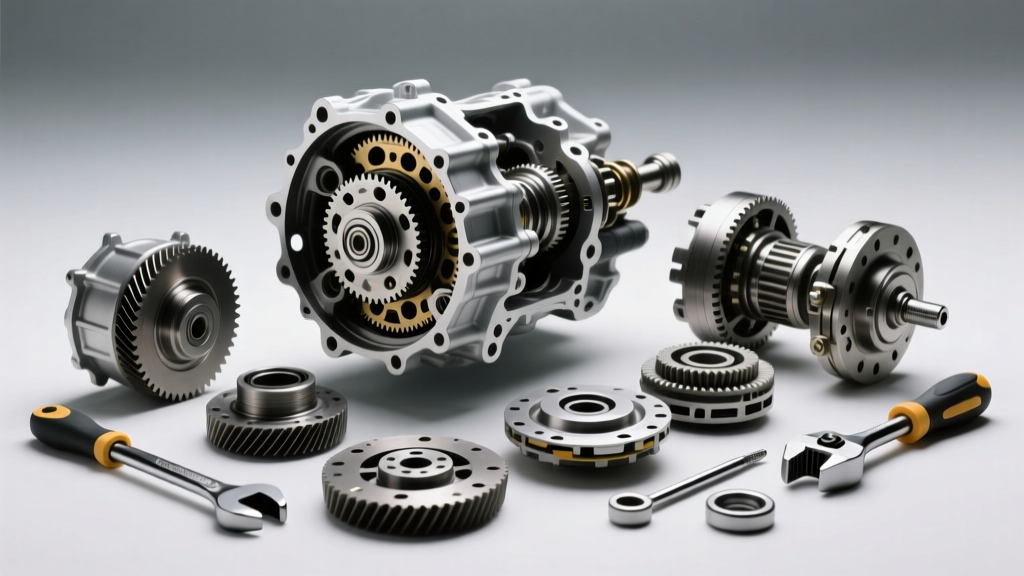
When you invest in a Ford E4OD transmission rebuild, you are paying to resurrect one of the most iconic heavy-duty automatic overdrive transmissions ever produced by the Blue Oval. Introduced in 1989 and serving as the backbone for F-Series trucks, Broncos, and full-size vans until its evolution into the 4R100 in 1998, the E4OD is a massive, complex piece of engineering. In 2026, a professional, bench-built E4OD rebuild from a reputable machine shop typically ranges between $2,800 and $4,500, depending on the extent of hard-part damage and regional labor rates.
However, the longevity of that $4,000 investment is entirely dictated by the first 500 miles of operation. The break-in procedure for a freshly rebuilt E4OD is not merely a suggestion; it is a critical metallurgical and hydraulic conditioning process. Skipping the thermal cycling protocol or ignoring the mandatory 500-mile fluid drop will result in clutch glazing, front pump cavitation, and catastrophic valve body contamination. This technical deep-dive explores the exact break-in procedure, the associated maintenance costs, and the precise specifications required to ensure your E4OD survives its infancy.
Fluid Selection, Capacities, and the Pre-Fill Mandate
The E4OD was originally designed for MERCON fluid, but Ford officially discontinued the MERCON specification years ago. Today, the absolute standard for any E4OD or 4R100 rebuild is MERCON V. Using older, non-synthetic MERCON or generic multi-vehicle fluids that lack the specific friction modifiers required for Ford's paper-and-Kevlar clutch materials will lead to immediate torque converter shudder and premature direct clutch failure.
Exact Fluid and Part Specifications
- Fluid Type: MERCON V (Motorcraft Part #XT-5-QMC or equivalent licensed fluid like Valvoline MaxLife Multi-Vehicle, though OEM Motorcraft is preferred for break-in).
- Total Dry Capacity: 17.0 to 18.5 quarts (depending on torque converter size and auxiliary cooler volume).
- Pan Drop Capacity: 6.0 to 8.0 quarts.
- Filter Kit: Motorcraft FT-128 (includes the filter, O-ring, and pan gasket).
Expert Warning: Never start a freshly rebuilt E4OD without pre-filling the torque converter. If the transmission was removed and the converter was drained or replaced, you must pour a minimum of 4 to 5 quarts of MERCON V directly into the converter hub before mating it to the flexplate. Failing to do so will cause the front pump to run dry for up to 15 seconds upon initial startup, scoring the pump gears and destroying the stator support shaft bushing before the truck even leaves the lift.
Decontaminating the Cooling System
The most common cause of early E4OD rebuild failure is debris trapped in the transmission cooler lines and the radiator's internal heat exchanger. The E4OD features a thermal bypass valve that routes fluid away from the cooler when the transmission is cold. If the cooler is packed with metallic debris from the previous failure, the moment the bypass valve closes at operating temperature, that debris is flushed directly into the newly rebuilt valve body and lube circuits.
Before adding the final quarts of fluid, a professional rebuilder will use a dedicated inline cooler flush machine or compressed air and a solvent flush to completely clear the OEM cooler lines. If the previous transmission suffered a catastrophic planetary or clutch pack failure, replacing the OEM radiator (which houses the transmission cooler) or installing an external aftermarket cooler (like a Hayden 678 or Derale 13740) is highly recommended. Factor in an additional $150 to $350 for an external cooler upgrade if the internal radiator cooler is compromised.
The Thermal Cycling and Road Test Protocol
Once the E4OD is installed, the torque converter nuts are torqued to spec (typically 35 lb-ft for the 7.3L Power Stroke and 460 V8 applications), and the pan bolts are tightened to 106 lb-in (12 Nm), the break-in procedure begins. This is a two-stage process designed to seat the clutches and burnish the bands.
Stage 1: On-Lift Hydraulic Priming
- Start the engine and let it idle. Do not rev the engine.
- With the parking brake engaged and the rear wheels off the ground, slowly move the shifter through every gear position (P, R, N, OD, D, 2, 1), pausing for 5 seconds in each gear. This allows the valve body to route pressure to each respective clutch apply circuit, bleeding air from the hydraulic lines.
- Check the dipstick. With the fluid cold and the engine idling in Park, the level should be in the cross-hatch area. Add fluid as necessary, but do not overfill.
- Run the truck on the lift at 25 MPH for 5 minutes to allow the thermal bypass valve to open, ensuring fluid is circulating through the cooler lines.
Stage 2: The 50-Mile Road Test Burnish
The E4OD utilizes an intermediate band and an overdrive band that require physical burnishing to mate perfectly with their respective drums. During the first 50 miles, you must perform moderate load accelerations. Avoid wide-open throttle (WOT) launches, which will glaze the new clutches, and avoid ultra-light throttle shifts, which can cause soft, slipping engagements that generate excessive heat.
Monitor the transmission temperature if your vehicle is equipped with an aftermarket gauge. The E4OD operates best between 170°F and 195°F. If temperatures exceed 220°F during the break-in phase, pull over and let the truck idle in Park to cool down. According to technical bulletins published by Sonnax, excessive heat during the initial clutch seating phase will permanently alter the friction coefficient of the paper-based clutch materials, leading to permanent slip.
The 500-Mile Break-In Service: Cost Breakdown
The most vital step in the Ford E4OD transmission rebuild break-in procedure is the 500-mile fluid and filter drop. During the first few hundred miles, the clutch facings shed microscopic fibers, and the steel bands shed metallic dust as they wear into the drums. If this abrasive slurry is left in the pan, it will bypass the filter and embed itself into the valve body's tight-tolerance spool valves, causing sticky shifts and solenoid failures.
Below is the expected cost breakdown for the 500-mile break-in service if performed by a professional shop versus a DIY approach in 2026.
| Item / Service | DIY Cost (2026 Estimates) | Professional Shop Cost | Notes & Specifications |
|---|---|---|---|
| MERCON V Fluid (8 Quarts) | $75 - $110 | $120 - $160 | Motorcraft XT-5-QMC is preferred. |
| Filter Kit (Motorcraft FT-128) | $25 - $45 | $40 - $65 | Includes cork/rubber gasket and O-ring. |
| Pan Gasket (if reusing) | $0 | $0 | Reuse FT-128 gasket if undamaged. |
| Labor (Drop, Clean, Refill) | $0 (1.5 Hours) | $150 - $250 | Shops charge 1.0 to 1.5 hours labor. |
| Fluid Disposal Fee | $0 - $10 | $0 (Included) | Auto parts stores accept old ATF for free. |
| Total Estimated Cost | $100 - $165 | $310 - $485 | Mandatory for rebuild warranty validation. |
Cleaning the Pan and Magnet
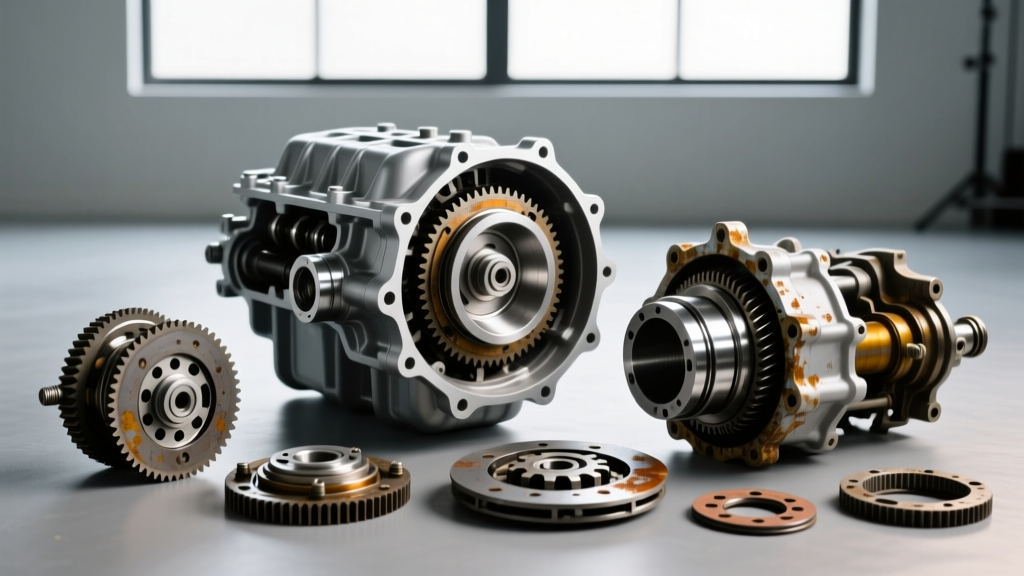
When you drop the pan at 500 miles, do not be alarmed by the presence of a fine, dark gray paste on the pan magnet. This is normal clutch and band material. However, if you find large metal flakes, chunks of bronze bushing material, or brass-colored shavings, the rebuild has suffered a mechanical failure (likely a failed front pump bushing or planetary gearset issue), and the unit must be removed immediately. For authoritative diagnostic troubleshooting regarding E4OD metallic wear patterns, resources like Transmission Digest provide excellent visual guides for rebuilder reference.
Thoroughly clean the pan with brake cleaner and a lint-free cloth. Reinstall the filter, ensuring the O-ring is fully seated in the valve body bore to prevent the pump from sucking air. Torque the pan bolts in a crisscross pattern to 106 lb-in. Over-tightening the E4OD pan bolts will warp the thin stamped steel pan, causing permanent leaks and potentially crushing the filter neck.
Protecting Your Rebuild Investment
A Ford E4OD transmission rebuild is a significant financial undertaking, but the engineering behind the E4OD is incredibly robust when assembled and broken in correctly. By adhering strictly to the MERCON V fluid specification, executing a thorough cooler flush, performing the thermal cycling road test, and investing the $100 to $485 required for the 500-mile fluid drop, you ensure that the fresh clutches, bands, and hard parts mate perfectly. For further OEM maintenance schedules and fluid verification, owners can always reference the official Ford Motor Company Support archives. Treat the break-in period with the same mechanical respect as the teardown and assembly, and your E4OD will deliver hundreds of thousands of miles of heavy-duty reliability.