From Compact Commuters to Class 8 Haulers: A Clutch Diagnostic Masterclass
While internet search trends frequently spike for the 2014 Ford Focus clutch actuator B location due to the notorious Getrag 6DCT250 PowerShift transmission issues, professional fleet mechanics and performance tuners know that true clutch diagnostics require a much broader lens. Today, we use the light-duty automated manual transmission (AMT) as a diagnostic baseline before scaling up to the real heavyweights: Class 7 and 8 commercial vehicles. Whether you are troubleshooting a compact commuter or upgrading an Eaton Endurant for severe-duty logging, understanding actuator stroke, pneumatic hydraulics, and friction material limits is critical for maximizing fleet uptime in 2026.
The Baseline: 2014 Ford Focus Clutch Actuator B Location & Diagnostics
Before tackling heavy-duty air-actuated systems, it is vital to understand the electromechanical failures that plague light-duty dual-clutch setups. The 2014 Ford Focus utilizes the Getrag 6DCT250 dry dual-clutch transmission. This system relies on two external actuators:
- Actuator A: Controls odd gears (1, 3, 5).
- Actuator B: Controls even gears (2, 4, 6) and Reverse.
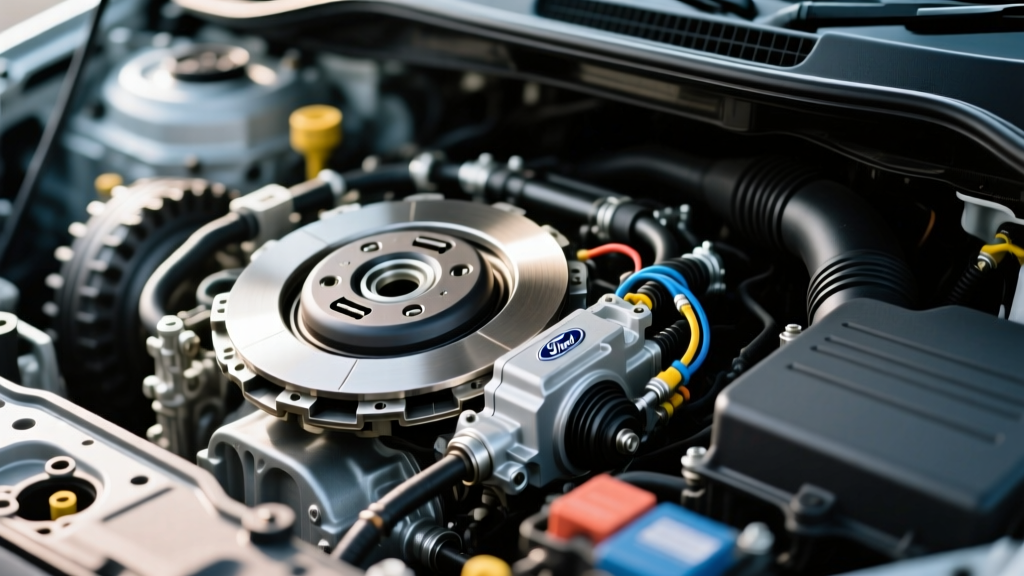
Location & Access: The 2014 Ford Focus clutch actuator B location is situated on the top-rear of the transmission bellhousing, directly beneath the air cleaner assembly. Access requires removing the battery tray and airbox. The actuator is secured by three T30 Torx bolts. When replacing this unit (typically Motorcraft part number CM-1003 or OEM Getrag equivalent), the mounting bolts must be torqued to exactly 10 Nm (89 lb-in). Over-torquing will warp the actuator housing, leading to immediate gear engagement faults.
Common Failure Codes: When Actuator B fails, the TCM typically throws P090C (Clutch Actuator B Circuit Low) or P090D (Clutch Actuator B Circuit High). Symptoms include a complete loss of even gears, leaving the vehicle limping in 1st, 3rd, and 5th only. While this is a frustrating $800-$1,200 repair for passenger vehicles, it serves as a perfect introduction to the concept of split-circuit clutch actuation—a concept that is magnified exponentially in commercial trucking.
Scaling Up: Clutch Problems in Heavy-Duty & Commercial Vehicles
Transitioning from a 1.0L EcoBoost to a 15-liter Cummins X15 or Detroit DD15 reveals a massive leap in clutch complexity. Heavy-duty commercial vehicles utilize either heavy manual transmissions (like the Eaton Fuller Road Ranger) or Automated Manual Transmissions (AMTs) like the Volvo I-Shift or Eaton Endurant. In these applications, clutch problems are rarely just about friction material wear; they involve intricate pneumatic, hydraulic, and mechanical linkage geometries.
The Clutch Brake Squeeze Dilemma
Unlike passenger cars, heavy-duty commercial trucks utilize a clutch brake—a friction disc designed to stop the input shaft from spinning to allow for smooth first-gear and reverse engagement. The most common diagnostic complaint in commercial fleets is 'gear grinding' or 'hard shifting' into 1st or Reverse.
Expert Diagnostic Tip: Measure the clutch brake squeeze. With the engine running and the parking brakes set, depress the clutch pedal to the floor. The clutch brake should engage during the last 3/4-inch to 1-inch of pedal travel. If the squeeze is less than 1/2-inch, the clutch brake is not fully compressing, and the input shaft will not stop spinning, causing severe gear clash.
To correct this, mechanics must adjust the clutch linkage or recalibrate the pneumatic actuator stroke on AMT-equipped trucks to restore the proper squeeze geometry.
Throwout Bearing & Release Yoke Wear
In heavy-duty manual applications, the release yoke pivots on hardened steel balls. Over 400,000+ miles, the yoke pads wear down, altering the clutch release point. If a fleet manager replaces a heavy-duty clutch but reuses a worn OEM cast-iron yoke, the new clutch will experience premature drag and accelerated throwout bearing failure. Performance Upgrade: Always upgrade to a forged steel release yoke and inspect the transmission front bearing retainer collar for grooving. A worn collar requires a $45 sleeve repair kit rather than replacing the entire $800 bellhousing.
Performance & Upgrade Guide for Severe-Duty Fleets
When commercial vehicles operate in severe-duty cycles—such as heavy-haul logging, oilfield servicing, or steep-grade mining—OEM organic clutches simply cannot handle the thermal loads. Upgrading the clutch system requires precise matching of friction materials, flywheel mass, and actuator pressure.
Upgrading to Cerametallic & Twin-Plate Systems
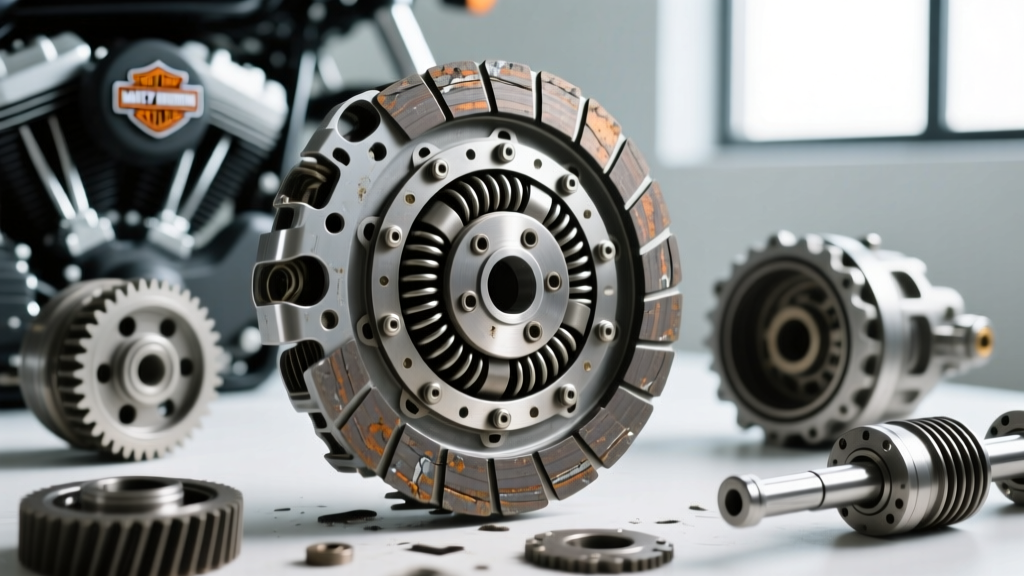
For trucks generating over 1,850 lb-ft of torque, upgrading to an Eaton Advantage 2 or Cerametallic twin-plate clutch is mandatory. Cerametallic friction facings offer superior thermal resistance, preventing the 'glazing' that causes heavy-duty clutch slip under max GCW (Gross Combination Weight) loads.
Installation & Torque Specs:
- Flywheel Resurfacing: Heavy-duty dual-mass or solid flywheels must be checked for runout. Maximum allowable runout is typically 0.005 inches. If resurfacing removes more than 0.030 inches of material, the flywheel must be replaced to maintain proper clutch brake squeeze geometry.
- Flywheel Bolts: When installing a 15.5-inch twin-plate setup, use new Grade 8 (5/8"-11) flywheel bolts. Torque these to 225-250 lb-ft using a star pattern to prevent flywheel warpage under high-torque diesel pulses.
- Pneumatic Actuator Calibration: On AMT upgrades, the pneumatic clutch actuator stroke must be recalibrated via the OEM dealer software to account for the increased clamp load and differing friction thickness of the new cerametallic discs.
Comparative Analysis: Light-Duty vs. Heavy-Duty Clutch Architecture
Understanding the mechanical delta between passenger and commercial systems highlights why heavy-duty upgrades require specialized tooling and diagnostic frameworks.
| Specification | Light-Duty AMT (Ford DPS6) | Heavy-Duty Commercial (Eaton Fuller) |
|---|---|---|
| Actuation Method | Electromechanical (DC Motors) | Pneumatic / Hydraulic / Manual Linkage |
| Friction Material | Dry Organic Pads | Organic, Kevlar, or Cerametallic |
| Clamp Load | ~2,200 lbs (per clutch pack) | 28,000 lbs to 40,000+ lbs |
| Clutch Brake | None (Synchronizers used) | Required for 1st/Rev engagement |
| Avg. Replacement Cost | $800 - $1,400 | $2,500 - $4,500+ (Parts & Labor) |
Advanced Diagnostics: Air System Leaks & AMT Actuator Failures
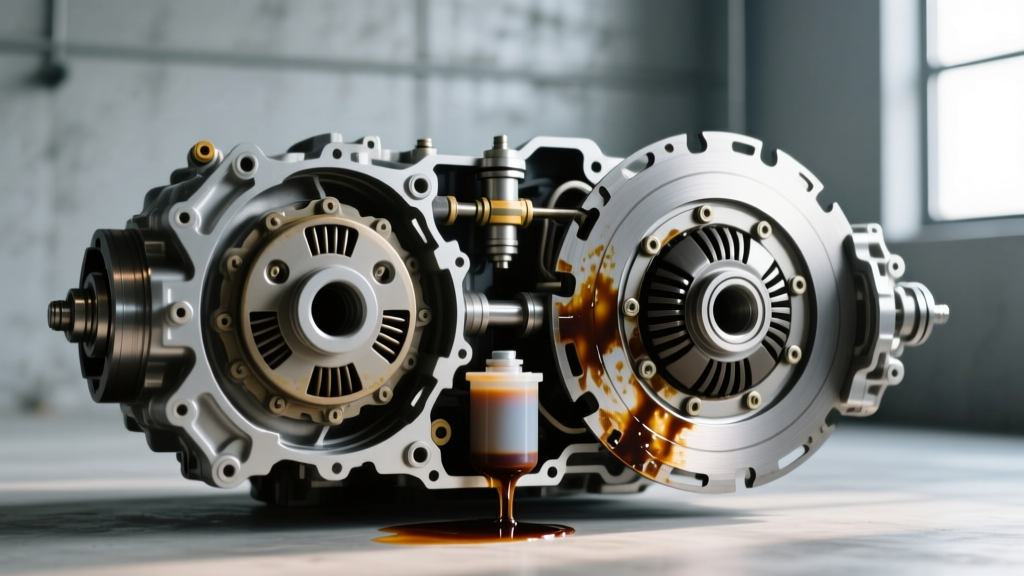
In modern Class 8 AMTs, the clutch is actuated by a pneumatic cylinder controlled by the Transmission Control Module (TCM). A common misdiagnosis is blaming the clutch friction disc for 'slipping' when the actual fault is a micro-leak in the pneumatic actuator seal or the air supply line. If the system cannot maintain 120 PSI at the actuator piston, the clutch will partially disengage under load, mimicking a worn friction disc.
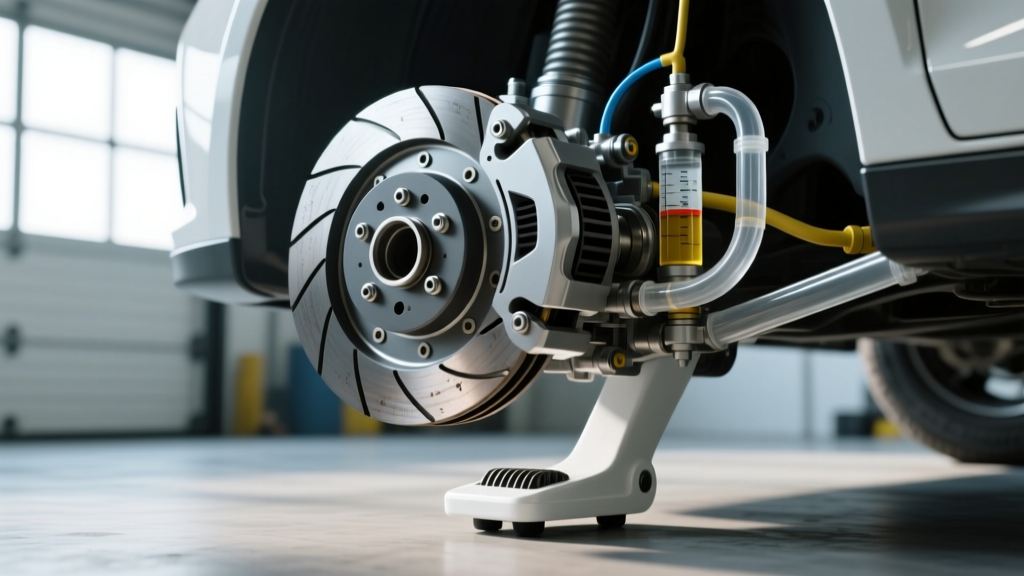
To diagnose this, connect a digital pressure gauge to the actuator test port. Command a clutch hold via the diagnostic laptop. If pressure drops more than 5 PSI over 60 seconds, the actuator cylinder requires a seal kit or full replacement. For fleets operating in sub-zero climates, upgrading to heated air-dryer lines prevents moisture from freezing inside the clutch actuator valve, a leading cause of winter-time AMT failures.
Final Thoughts on Fleet Upgrades
Whether you are pinpointing the 2014 Ford Focus clutch actuator B location to fix a commuter car or overhauling an Eaton Endurant for a heavy-haul fleet, the core principles of clutch diagnostics remain identical: verify actuation stroke, measure friction geometry, and respect torque specifications. By upgrading commercial fleets to severe-duty cerametallic clutches and strictly adhering to clutch brake squeeze parameters, fleet managers can eliminate premature drivetrain failures and keep freight moving efficiently through 2026 and beyond.
For deeper technical specifications on commercial drivetrain tolerances, refer to the Allison Transmission Service Portal and the official Eaton Vehicle Group Transmission Manuals.