The Thermal Runaway Effect: How Overheating Causes Slipping
When a frustrated driver asks, "Is your car's transmission slipping?" the root cause is frequently traced back to one critical enemy: excessive heat. Automatic Transmission Fluid (ATF) serves three vital roles in modern drivetrains: it acts as a hydraulic medium for clutch apply, a lubricant for planetary gearsets, and a coolant for the torque converter. When internal temperatures exceed 220°F (104°C), the fluid's molecular structure begins to break down. Oxidation occurs, forming varnish and sludge that clog valve body micro-passages and glaze clutch friction materials.
This creates a destructive feedback loop. Glazed clutches slip, which generates massive amounts of friction-induced heat, which further degrades the fluid, leading to catastrophic transmission failure. In 2026, with the prevalence of high-torque 8-speed and 10-speed automatics operating under tight thermal margins, diagnosing and resolving overheating is more critical than ever. This step-by-step guide will walk you through pinpointing the exact source of transmission overheating and the mechanical interventions required to stop the slipping.
Step 1: Pull Live PID Data to Confirm Overheating
Do not rely on the dashboard warning light or the 'limp mode' trigger to confirm an overheating issue; by the time the Powertrain Control Module (PCM) triggers a warning, internal damage has often already occurred. Connect a bi-directional OBD2 scan tool (such as an Autel MaxiSys or Snap-on Zeus) to read live Transmission Control Module (TCM) Parameter IDs (PIDs).
- Monitor TFT (Transmission Fluid Temperature): Compare the TFT PID against the Engine Coolant Temperature (ECT). At steady-state highway cruising, TFT should generally track within 10°F to 20°F of the ECT.
- Check for TCC Slip Codes: Look for pending or stored codes like P0741 (Torque Converter Clutch System Stuck Off) or P0299 (Turbo/Super Charger Underboost - often related to heat-soaked sensors in performance applications).
- Analyze TCC Slip RPMs: A healthy Torque Converter Clutch (TCC) should show 0 to 15 RPMs of slip at steady highway speeds. If you observe slip exceeding 50-100 RPMs while the TCC is commanded 'ON', the friction lining is glazed from severe overheating.
Step 2: Perform a Fluid Degradation and Level Analysis
Low fluid levels or degraded fluid are the primary culprits behind inadequate hydraulic pressure and poor heat transfer. The diagnostic approach depends heavily on the specific transmission model.
GM 6L80 / 6L90 (Dexron VI)
The GM 6L80 is notorious for running hot in heavy-duty truck applications. Check the fluid level with the transmission in Park, engine idling, and fluid temperature between 86°F and 122°F (30°C - 50°C). If the fluid smells like burnt toast and appears dark brown or black, the friction modifiers have completely depleted. Service Capacity: Approx. 6.0 quarts for a pan drop; 11.2 quarts for a dry fill.
ZF 8HP Series (LifeguardFluid 8)
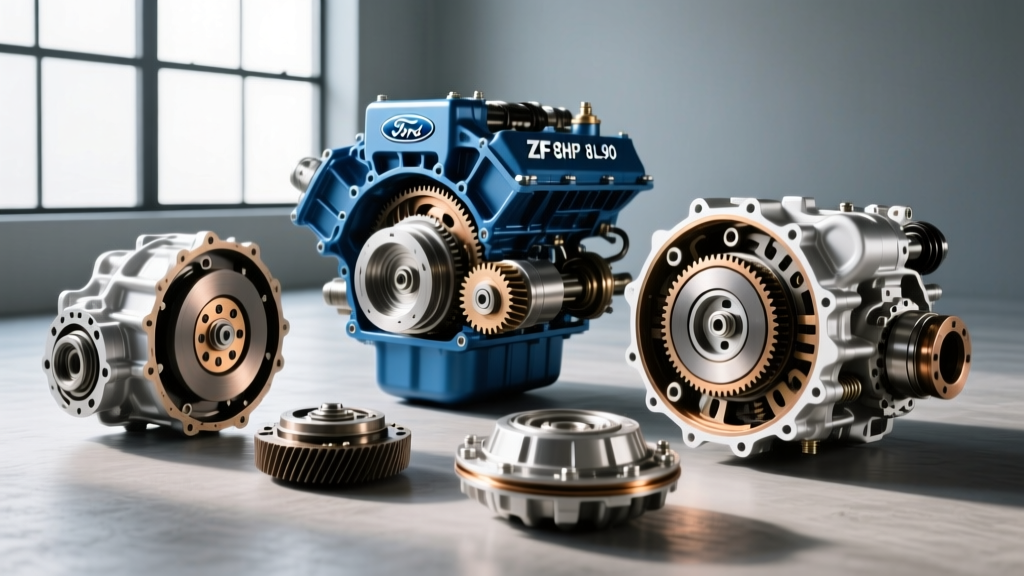
Found in Chrysler, BMW, and Audi vehicles, the ZF 8HP uses a specialized thermal management module. A common failure point is the mechatronic sealing sleeve leaking externally, leading to low fluid levels and subsequent overheating. The ZF 8HP requires a precise leveling procedure using a scan tool to monitor the pan temperature. Torque Spec: The ZF plastic fill plug must be torqued to exactly 35 Nm (26 lb-ft) to prevent stripping or future leaks.
Expert Insight: Never mix ATF specifications. Using a generic 'multi-vehicle' fluid in a ZF 8HP or Ford 10R80 will alter the friction coefficients, causing immediate TCC shudder, micro-slipping, and rapid thermal degradation.
Step 3: Reference Normal vs. Critical Temperature Thresholds
Understanding the thermal limits of your specific transmission is crucial for accurate diagnosis. Use the table below as a benchmark during your live data road test.
| Transmission Model | Normal Operating Temp | Critical / Damage Temp | Common Overheating Culprit |
|---|---|---|---|
| GM 6L80 / 6L90 | 160°F - 190°F | > 235°F | TCC Regulator Valve Bore Wear |
| ZF 8HP (Chrysler/BMW) | 170°F - 200°F | > 230°F | Thermostat Module Stuck Closed |
| Ford 6R80 / 10R80 | 165°F - 195°F | > 240°F | Internal Thermal Bypass Valve Failure |
| Aisin AW F8FXX (FWD) | 155°F - 185°F | > 225°F | Clogged Radiator-Integrated Cooler |
Step 4: Pressure-Test the Cooler Circuit and Flow
If the fluid is full and in good condition, the next step is to verify that the transmission cooler is adequately rejecting heat. A restricted cooler circuit will cause immediate temperature spikes under load.
- Locate the Cooler Return Line: Disconnect the transmission fluid return line at the radiator or external cooler.
- Perform a Flow Test: Route the line into a calibrated 1-quart container. Start the engine and let it idle. A healthy transmission pump should push at least 1 quart of fluid in 20 to 30 seconds. If flow is sluggish, you have a blockage.
- Check the Thermal Bypass Valve: Many modern transmissions (like the Ford 6R80 and Ram 68RFE) feature a thermal bypass valve that blocks cooler flow until the fluid reaches a specific temperature (usually around 160°F) to help the transmission warm up quickly. If this valve sticks in the closed position, the fluid will never reach the cooler. Installing a thermal bypass delete kit (such as those offered by Sonnax) is a common and highly effective repair for chronic overheating in cold climates or stop-and-go traffic.
Step 5: Diagnose Torque Converter Clutch (TCC) Slip
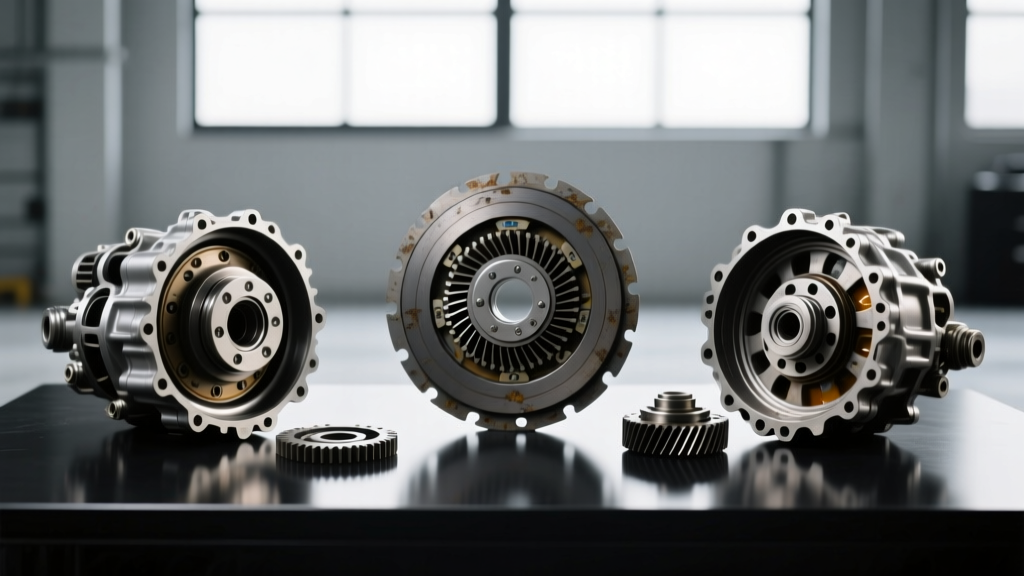
The Torque Converter is the single largest source of internal heat generation. When the TCC is commanded to lock up, it creates a mechanical 1:1 link between the engine and transmission. If the TCC lining is worn, or if hydraulic apply pressure is bleeding off, the clutch slips continuously. This slip generates hundreds of degrees of localized heat, which is then transferred directly into the ATF.
The GM 6L80 Edge Case: A well-documented issue with the GM 6L80 is the wear of the TCC regulator valve bore inside the front pump. As the aluminum bore wears, hydraulic pressure bypasses the valve, resulting in insufficient TCC apply pressure. The PCM detects the slip and logs a P0741 code. The fix is not a full transmission rebuild, but rather dropping the valve body and installing a Sonnax 157000-07K TCC regulator valve kit, which uses a hardened steel sleeve to restore proper hydraulic sealing and eliminate the slip-induced overheating.
Step 6: Implement Hardware Upgrades and Repairs
If your diagnostic steps reveal that the transmission is mechanically sound but simply overwhelmed by the thermal demands of your driving style (e.g., towing, off-roading, or track use), hardware upgrades are necessary.
- Auxiliary Transmission Coolers: Install a high-capacity stacked-plate auxiliary cooler (such as a Derale or Hayden unit) in series with the factory radiator cooler. Expect to spend between $150 and $300 on the hardware, and an additional $150 for professional line routing and fluid top-off. Ensure you use proper AN-fittings or OEM quick-connect retainers (torqued to 22 lb-ft on GM applications) to prevent high-pressure line blowouts.
- Deep Sump Pans: Aftermarket cast-aluminum deep pans increase total fluid capacity by 2 to 4 quarts. More fluid volume means it takes longer for the thermal load to raise the overall temperature of the system. Furthermore, the external fins on these pans provide passive ambient air cooling.
2026 Cost Breakdown: Repairs vs. Rebuilds
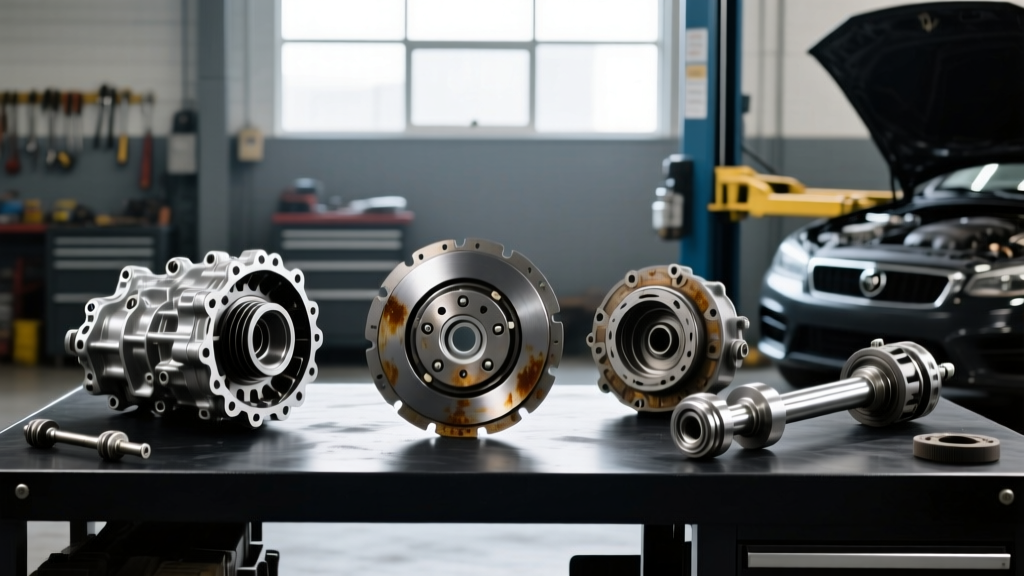
Catching overheating early saves thousands of dollars. If you ignore the slipping and the heat warps the steel clutch plates and melts the piston seals, a full rebuild is unavoidable.
| Service / Repair | Estimated 2026 Cost | Outcome |
|---|---|---|
| Auxiliary Cooler Installation | $300 - $550 | Preventative; drops temps by 20-40°F |
| Valve Body / TCC Valve Repair | $800 - $1,400 | Fixes hydraulic slip; saves torque converter |
| Torque Converter Replacement | $1,200 - $1,800 | Required if TCC lining is burnt/glazed |
| Full Transmission Rebuild | $3,200 - $5,500+ | Required if heat has warped steels and melted seals |
Final Thoughts on Drivetrain Thermals
When troubleshooting why your car's transmission slipping occurs under heavy loads or in hot weather, always follow the heat. By verifying live TFT data, testing cooler flow rates, and inspecting the TCC apply circuits, you can isolate the exact point of failure. For further technical documentation on valve body wear patterns and thermal bypass specifications, consult resources from the Automatic Transmission Rebuilders Association (ATRA) or review OEM service bulletins via ZF Aftermarket technical portals. Addressing thermal issues at the first sign of slip is the difference between a $400 preventative repair and a $4,000 drivetrain replacement.