While AutoGearNexus is your premier destination for transmission and drivetrain diagnostics, the term "clutch" extends far beyond manual gearboxes and torque converter lock-ups. In the engine bay, the fan clutch plays a critical role in thermal management. When a fan clutch fails to engage or disengage properly, it can lead to catastrophic engine overheating, poor air conditioning performance, or severe parasitic horsepower loss. This beginner-friendly explainer breaks down the mechanics of fan clutch engagement, diagnostic procedures, and exact repair specifications to get your cooling system back online.
The Anatomy of Fan Clutch Engagement
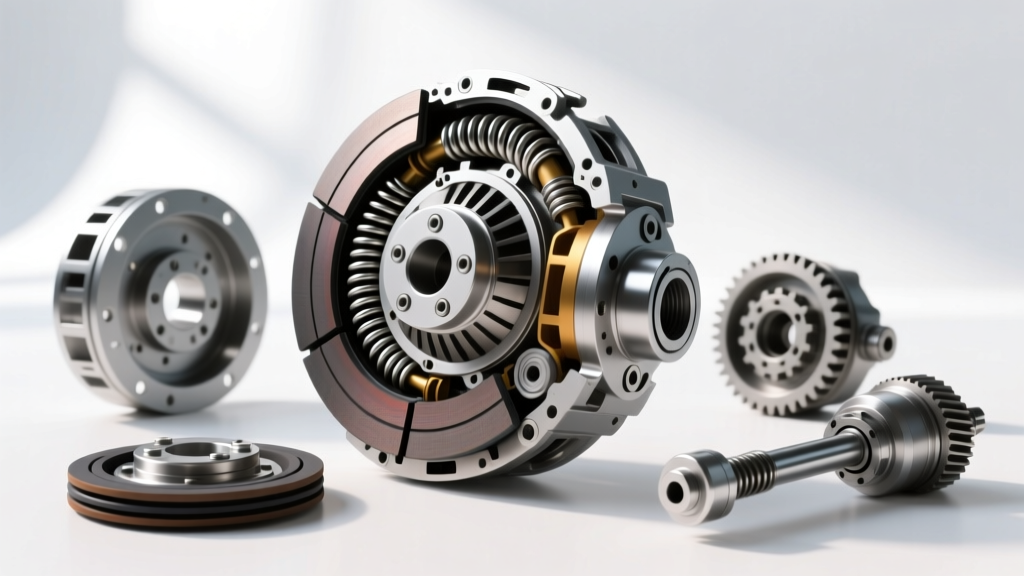
Unlike a manual transmission clutch that uses friction plates to mechanically couple the engine to the gearbox, a traditional engine fan clutch is a fluid coupling device. It mounts directly to the water pump shaft and drives the engine cooling fan.
Inside the machined aluminum housing, there is a reservoir filled with high-viscosity silicone fluid (typically rated between 10,000 and 20,000 centistokes). When the clutch is disengaged (cold engine), a valve keeps the fluid stored in the reservoir, away from the working chamber. The input shaft spins with the water pump, but the output housing (and the attached fan blade) slips, rotating only at a fraction of the shaft's speed due to internal air shear.
Engagement occurs when a temperature-sensitive mechanism opens the internal valve. The thick silicone fluid floods the working chamber between the input rotor and the output housing. The fluid's sheer friction effectively locks the input and output together, engaging the fan to pull maximum air through the radiator and AC condenser.
Thermal vs. Electronic Disengagement Mechanisms
To properly diagnose engagement issues, you must first identify which type of clutch your vehicle uses. According to the Hayden Automotive Tech Center, understanding the actuation method is the first step in accurate troubleshooting.
Thermal (Mechanical) Clutches
Found on older vehicles and many light-duty trucks (like the GM LS V8 series), thermal clutches rely on a bimetallic coil spring mounted on the front face of the unit. As ambient air temperature passing through the radiator reaches roughly 170°F to 190°F, the coil expands. This physical expansion rotates a valve arm inside the housing, releasing the silicone fluid into the working chamber to engage the fan. When the air cools, the contract springs shut, and centrifugal force pushes the fluid back into the reservoir, disengaging the fan.
Electronic (PWM) Clutches
Modern heavy-duty and high-performance vehicles, such as the GM L5P Duramax or Ford 6.7L Powerstroke, use Pulse Width Modulation (PWM) electronic clutches. The Powertrain Control Module (PCM) monitors coolant temperature, AC head pressure, and intake air temperature. It then sends a 5V PWM signal to an internal electromagnetic solenoid. This allows the PCM to command infinite variable engagement (e.g., 40% engaged for light cruising, 100% engaged for heavy towing) rather than a simple on/off binary operation.
Symptoms of Engagement and Disengagement Failure
Fan clutch failures generally fall into two categories: failing to engage (causing overheating) or failing to disengage (causing noise and power loss). Use the table below to identify your specific failure mode.
| Symptom | Stuck Disengaged (Fails to Lock) | Stuck Engaged (Fails to Unlock) |
|---|---|---|
| Engine Temperature | Overheats at idle or in stop-and-go traffic. | Runs normal or slightly cool; rarely overheats. |
| Audible Noise | Quiet; no fan roar even when engine is hot. | Loud, jet-engine-like roaring from cold start-up through highway speeds. |
| AC Performance | Poor cold air at idle due to low condenser airflow. | Normal AC performance. |
| Fuel Economy / Power | Normal. | Noticeable drop in MPG and sluggish acceleration (parasitic drag). |
Step-by-Step Diagnostics
Before ordering parts, perform these foundational tests to confirm the engagement issue.
1. The Cold Spin Test (Thermal Clutches)
With the engine completely cold and turned off, reach behind the fan and attempt to spin the blades by hand. A properly functioning thermal clutch should offer slight resistance but spin relatively freely (usually 1 to 1.5 revolutions). If the fan spins with zero resistance like a free-wheeling bicycle wheel, the internal silicone fluid has leaked out. If it is locked solid and won't budge, the internal valve is jammed open or the bearing has seized.
2. The Hot Newspaper Test
Start the engine cold. The fan should be quiet. Allow the engine to reach full operating temperature (approx. 210°F+), then turn the AC on MAX to force a thermal load. Carefully roll up a newspaper and gently push it toward the front of the fan. If the clutch is engaging properly, the suction should grab the newspaper and shred it. If the newspaper simply flutters away, the clutch is failing to engage.
3. Multimeter PWM Testing (Electronic Clutches)
For electronic clutches, you must verify the PCM signal. Using a digital multimeter set to Duty Cycle or a logic probe, back-probe the PWM signal wire at the clutch connector while the engine is running and hot. According to Gates Technical Resources, a healthy system should show a varying duty cycle (typically between 10% at cold idle and up to 90% under heavy thermal load). If you read 0% or a solid 12V constant, you have a wiring harness break or a PCM driver failure, not a bad clutch.
Safety Warning: Never spray cold water on a hot fan clutch to test thermal engagement. The rapid thermal shock can crack the cast aluminum housing or warp the internal bimetallic spring, instantly destroying the unit.
Fan Clutch Repair: Torque Specs and Installation
Replacing a fan clutch requires specific tools to hold the water pump pulley from turning while you break the mounting hardware loose. Below are the exact repair procedures for the two most common platforms.
GM LS / LT V8 Engines (Thermal Clutch)
On most GM LS engines (4.8L, 5.3L, 6.0L, 6.2L), the fan clutch is mounted to the water pump pulley via four small bolts, rather than a large center nut.
- Tool Required: 8mm socket and a serpentine belt holding tool (or a strap wrench around the pulley).
- Hardware: 4x M8x1.25 flange bolts.
- Torque Spec: Tighten to 18 lb-ft (25 Nm) in a crisscross pattern.
- Pro-Tip: Apply a medium-strength threadlocker (blue Loctite) to the bolt threads, as water pump harmonic vibration can back these out over time.
Ford 6.7L Powerstroke (Electronic Clutch)
The Ford 6.7L uses a massive electronic fan clutch that bolts directly to the engine front cover bracket.
- Tool Required: 10mm and 13mm sockets, plus a specialized fan clutch holding tool to prevent the viscous hub from spinning while removing the center retaining nut.
- Center Nut: Often a 36mm or 1-5/8" left-hand (reverse) thread. You must turn it clockwise to loosen.
- Mounting Bracket Bolts: Torque to 18 lb-ft (24 Nm).
- Electrical Connection: Always apply dielectric grease to the PWM connector pins to prevent moisture intrusion, which is the #1 cause of electronic clutch failure on Ford diesels.
2026 Part Numbers and Replacement Costs
When sourcing a replacement, always match the clutch type to your factory setup. Swapping an electronic clutch for a cheaper thermal bypass will result in immediate PCM check-engine codes and improper cooling. Below is a guide to premium replacement options and current market pricing.
| Brand & Part Number | Application | Type | Est. Price Range |
|---|---|---|---|
| Hayden Automotive 2722 | GM LS V8 (Silverado/Tahoe) | Thermal (Severe Duty) | $65 - $90 |
| Motorcraft YC3Z-8A616-AA | Ford 7.3L / 6.0L Powerstroke | Electronic / Solenoid | $140 - $185 |
| ACDelco 15-40415 | GM L5P Duramax (2017+) | Electronic PWM | $220 - $290 |
| Gates 33036 | Dodge 5.7L HEMI (Ram 1500) | Thermal (Standard Duty) | $55 - $75 |
Final Thoughts on Cooling System Clutches
While it may not transmit torque to the wheels, the fan clutch is a vital mechanical coupling that protects your engine's internal components from thermal destruction. By understanding the difference between thermal fluid shear and electronic PWM actuation, you can accurately diagnose engagement failures and perform a precise, factory-spec repair. For more in-depth drivetrain and mechanical coupling diagnostics, continue exploring the AutoGearNexus technical library.