The Architecture of Hydraulic Clutch Actuation
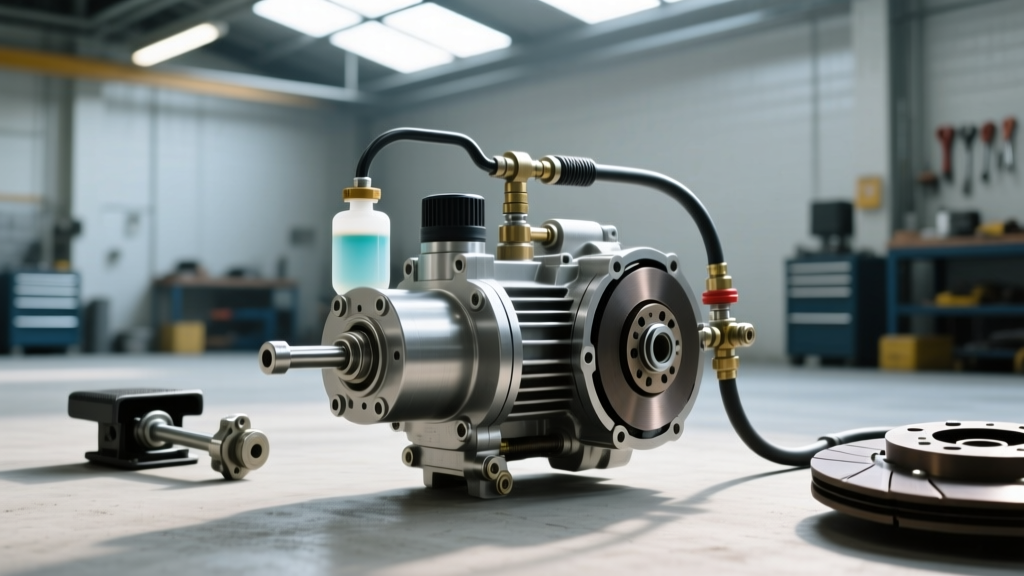
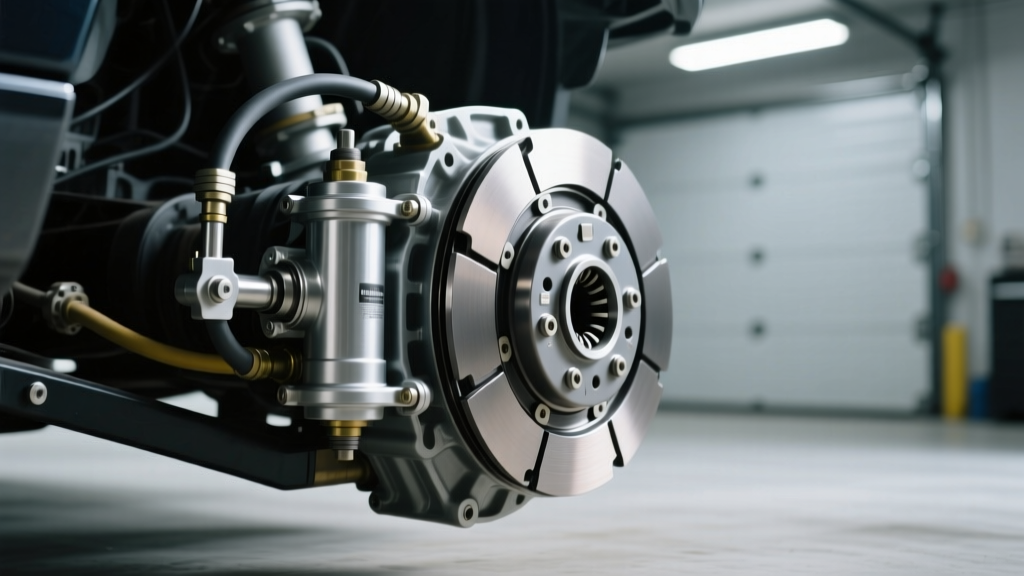
In modern manual transmission drivetrains, the hydraulic clutch system is a closed-loop hydraulic circuit designed to multiply pedal force and disengage the clutch assembly. While the master cylinder at the firewall initiates the hydraulic pressure, the location of the clutch slave cylinder fundamentally dictates the system's mechanical advantage, failure modes, and maintenance protocols. As of 2026, automotive engineers primarily utilize two distinct architectures: the External Slave Cylinder and the Concentric Slave Cylinder (CSC). Understanding the engineering differences between these two setups is critical for accurate diagnosis, proper bleeding procedures, and cost-effective maintenance.
External vs. Concentric: A Technical Comparison
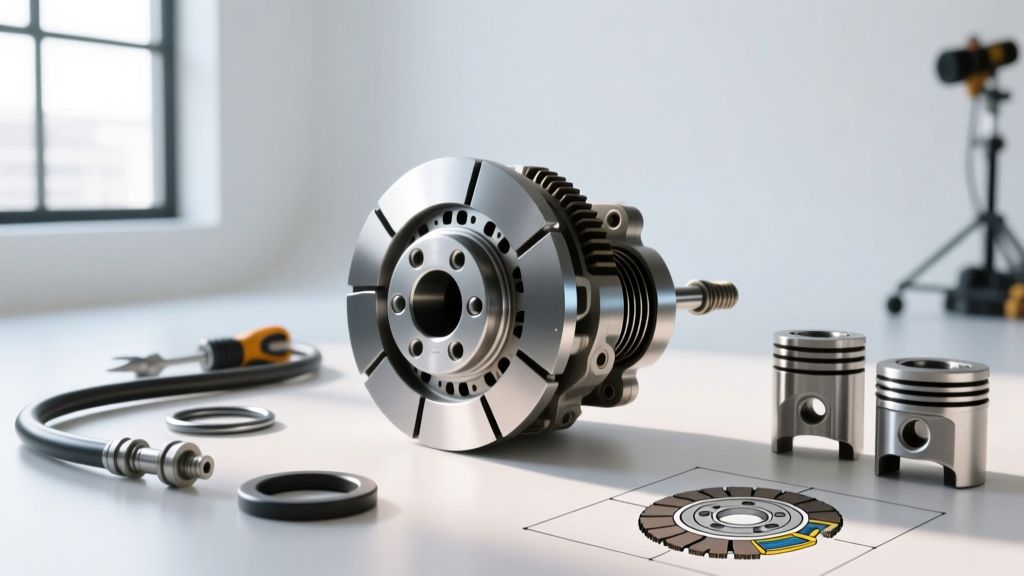
The placement of the slave cylinder alters how hydraulic pressure is converted into mechanical movement. External cylinders rely on a pushrod and release fork, while CSCs act directly on the diaphragm spring fingers.
| Engineering Feature | External Slave Cylinder | Concentric Slave Cylinder (CSC) |
|---|---|---|
| Mounting Location | Exterior bellhousing, actuating a release fork | Internal bellhousing, sliding over the transmission input shaft |
| Mechanical Linkage | Pushrod, release fork, pivot ball | Direct contact with clutch diaphragm spring (no fork) |
| Bleeder Valve Access | Highly accessible, usually on top of the cylinder | Requires reaching into bellhousing or utilizing remote bleeder lines |
| Replacement Labor | 0.5 - 1.5 Hours (No transmission removal) | 6.0 - 12.0 Hours (Requires transmission R&R) |
| Common Applications | Older domestic trucks, Jeep Wrangler (AX15), Porsche G50 | GM LS/Tremec T56, Ford MT-82, modern FWD transaxles |
Maintenance Protocols Dictated by Slave Cylinder Location
The physical location of the clutch slave cylinder determines not only how you replace it, but how you inspect and bleed the surrounding components. Technicians must adapt their workflow based on the specific architecture.
External Slave Cylinder Maintenance
Because the external slave cylinder is mounted outside the bellhousing, it is exposed to road debris, water, and extreme temperature fluctuations. Maintenance focuses on the mechanical linkage that the cylinder actuates.
- Pushrod and Boot Inspection: The rubber boot protecting the pushrod is a primary failure point. If torn, moisture enters the cylinder bore, causing internal pitting and seal failure. Inspect the boot during every oil change.
- Pivot Ball Wear: The release fork pivots on a hardened steel ball stud. Over 80,000 miles, this ball can wear a groove into the fork, altering the clutch pedal engagement point. Apply a high-temperature molybdenum disulfide grease (e.g., Lubriplate Moly) during slave cylinder replacement.
- Mounting Torque Specs: External slave cylinders are typically secured with M8 bolts. The standard torque specification for these bellhousing-mounted bolts is 18 to 25 Nm (13 to 18 lb-ft). Over-torquing can crack the cast aluminum cylinder body or strip the bellhousing threads.
Concentric Slave Cylinder (CSC) Maintenance
The CSC represents a paradigm shift in clutch design. By eliminating the release fork and pivot ball, engineers reduced moving mass and improved pedal feel. However, the internal location of the clutch slave cylinder in this design means the component is subjected to extreme radiant heat from the clutch disc and pressure plate.
Industry Standard Rule: Never reuse a Concentric Slave Cylinder. According to Schaeffler REPXPERT guidelines, the internal seals of a CSC degrade due to thermal cycling. If the transmission is removed for a clutch disc replacement, the CSC must be replaced simultaneously to prevent catastrophic hydraulic failure that would require a second, highly expensive transmission removal.
When installing a new CSC (such as a LuK RepSet PRO or Sachs OEM unit), the mounting bolts (typically M6x1.0) must be torqued to exactly 8 to 10 Nm (71 to 89 lb-in). Furthermore, the CSC must be compressed slowly and evenly during installation to avoid damaging the internal plastic retaining clips.
Fluid Dynamics and Advanced Bleeding Techniques
The hydraulic fluid used in these systems is highly hygroscopic. DOT 3 and DOT 4 fluids absorb moisture from the atmosphere, which lowers their boiling point and introduces compressible vapor bubbles into the lines. In high-performance applications, upgrading to a high-temp DOT 4 (like Motul RBF 600 with a dry boiling point of 328°C / 622°F) or a DOT 5.1 fluid is recommended.
The bleeding procedure is heavily influenced by the slave cylinder's location:
Bleeding External Systems
External systems are straightforward. Standard pressure bleeding (using a tool like the Motive Power Bleeder set to 15 PSI) or manual two-person pumping easily forces air out of the bleeder valve, which sits at the highest point of the external cylinder.
Bleeding Internal CSC Systems
Bleeding a CSC is notoriously difficult because the bleeder valve is often buried deep inside the bellhousing, and air bubbles naturally rise to the top of the hydraulic circuit—getting trapped in the master cylinder or the hard lines. To properly bleed a CSC system, technicians must employ Reverse Bleeding.
- Attach a reverse bleeder to the CSC bleeder valve (or the remote bleed line if equipped, common on Ford MT-82 applications).
- Slowly push fresh, degassed DOT 4 fluid upward through the system at a maximum pressure of 10 PSI.
- This forces trapped air bubbles back up the line and into the master cylinder reservoir, mimicking the natural physics of rising air.
- Cycle the clutch pedal 10-15 times to dislodge micro-bubbles trapped in the master cylinder compensation port.
Diagnostic Flowchart: Location-Specific Failure Modes
When a customer reports a spongy pedal or difficulty engaging gears, the diagnostic path splits based on the system architecture. Reference the Tremec Service Manuals for specific clearances on T56 Magnum and TR-6060 applications.
- Symptom: Fluid on the ground beneath the bellhousing.
- External: Likely a failed external slave cylinder pushrod seal or a leaking hard-line fitting. Easy visual confirmation.
- CSC: Internal CSC seal failure. Fluid is pooling inside the bellhousing and weeping out of the inspection cover. Requires transmission removal.
- Symptom: Clutch pedal sticking to the floor.
- External: Check for a broken release fork, worn pivot ball, or a disconnected pushrod.
- CSC: Check for a collapsed internal plastic supply line (common on early GM LS platforms) or a failed master cylinder return spring.
- Symptom: Inability to bleed the system (pedal remains spongy).
- External: Master cylinder is bypassing internally, or the flexible rubber hose is swelling under pressure.
- CSC: Air is trapped in the master cylinder reservoir due to an improper bleed angle, or the CSC was not bench-bled prior to installation.
2026 Real-World Cost and Labor Breakdown
The financial impact of the slave cylinder's location is staggering when factoring in modern 2026 shop labor rates, which average between $140 and $185 per hour in major metropolitan areas.
| Service Procedure | External Slave Cylinder | Concentric Slave Cylinder (CSC) |
|---|---|---|
| Part Cost (OEM/High-Quality Aftermarket) | $45 - $120 | $85 - $250 (Often included in clutch kits) |
| Labor Time | 0.8 - 1.5 Hours | 6.5 - 10.0 Hours (Trans R&R) |
| Total Estimated Cost (Parts + Labor) | $160 - $395 | $1,100 - $2,300+ |
Proactive Maintenance Strategies
To maximize the lifespan of any hydraulic clutch system, regardless of slave cylinder location, implement a strict fluid flush interval. Brake and clutch fluid should be flushed every 24 months or 30,000 miles. Using a fluid moisture tester pen, ensure the water content in the reservoir remains below 2%. For vehicles equipped with a Concentric Slave Cylinder, always pair the CSC replacement with a new clutch disc, pressure plate, flywheel resurfacing, and a new pilot bearing to ensure the transmission R&R labor cost yields a comprehensive, long-term repair.