The 2026 EV Conversion Landscape
The DIY electric vehicle market in 2026 has bifurcated into two massive, highly engineered camps: full automotive EV conversions and ultra-high-performance electric motorcycles. Whether you are dropping a liquid-cooled PMSM into a classic Porsche 914 or building a 20kW electric drag bike, understanding the mechanical distinctions between an automotive EV drivetrain and a heavy-duty drivetrain bike setup is critical. Builders transitioning between these platforms often underestimate the differences in torque multiplication, thermal management, and final drive geometry. This buyer's guide breaks down the exact components, pricing, and engineering specs you need to make an informed sourcing decision.
Core Architecture: EV Car Drivetrain vs. Drivetrain Bike Systems
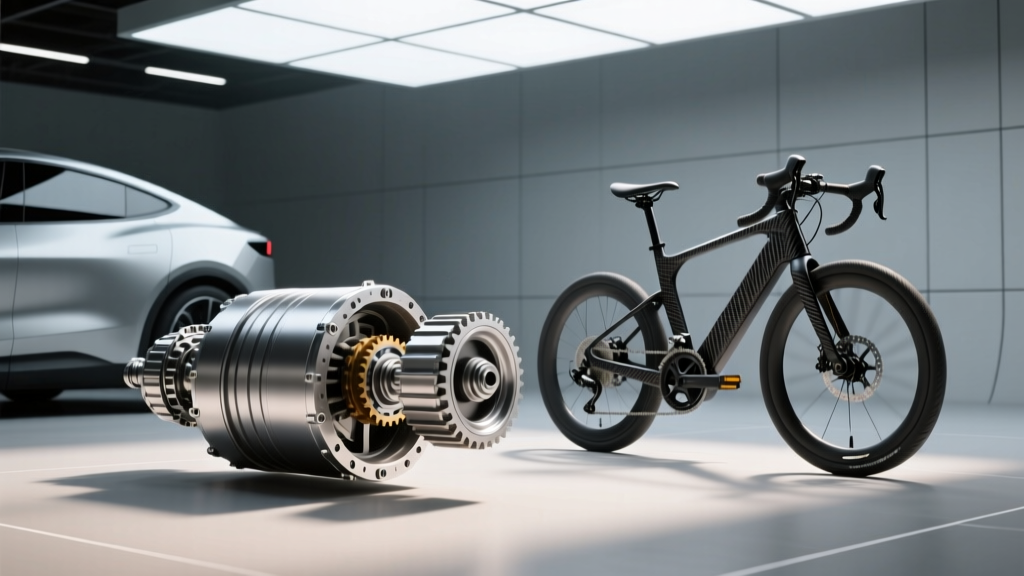
Automotive EV drivetrains rely heavily on high-voltage (300V-800V) AC induction or Permanent Magnet Synchronous Motors (PMSM) paired with single-speed or two-speed helical reduction gearboxes. The goal is smooth, linear torque delivery to a differential. Conversely, a high-output drivetrain bike architecture typically utilizes direct-drive hub motors or compact mid-drive units mated to chain or belt final drives, operating on lower voltage systems (72V-144V) but demanding extreme instantaneous current (up to 600A phase current) for rapid acceleration.
Component Comparison Matrix
| Feature | Automotive EV Drivetrain | High-Power Drivetrain Bike |
|---|---|---|
| Primary Motor Type | PMSM or AC Induction (Liquid Cooled) | BLDC Hub or Mid-Drive (Air/Oil Cooled) |
| System Voltage | 300V - 800V DC | 72V - 144V DC (Nominal) |
| Controller Type | Sine-wave Inverter (e.g., Sevcon, Inpower) | FOC / Square Wave (e.g., ASI, Kelly) |
| Reduction / Final Drive | Helical Gearbox (8:1 to 12:1) + Differential | Direct Hub, or Chain/Belt (Gates CDN) |
| Average Kit Cost (2026) | $4,500 - $9,500+ | $800 - $2,200 |
Sourcing and Pricing: Car Drivetrain Components
When sourcing an automotive EV drivetrain, you are buying into a high-voltage ecosystem that requires strict safety interlocks and specialized tooling. The industry standard for premium conversions remains the Cascadia Motion lineup and the NetGain Hyper9 series.
- NetGain Hyper9-HV Motor: Operating at up to 400V, this motor produces roughly 250 Nm of peak torque. Pricing sits around $3,200. It requires a matched inverter, typically the SME X1 or a Sevcon Gen4 Size 6 ($2,500 - $3,000).
- Reduction Gearboxes: Sourcing a standalone EV reduction box (like those salvaged from a Nissan Leaf or Chevy Bolt) is common. A rebuilt Nissan Leaf gearbox (ratio 7.9377:1) costs between $800 and $1,200. These require precise shimming during installation to eliminate gear whine.
- High-Voltage Cabling: Shielded 2/0 AWG or 4/0 AWG orange EV cable is mandatory, costing roughly $12 per foot, alongside Deutsch-style HV interlock loop (HVIL) connectors.
High-Output Drivetrain Bike Configurations
The drivetrain bike market is dominated by extreme torque-to-weight ratios. Builders pushing 15kW+ rely on heavy-duty hub motors or mid-drive configurations that integrate directly into the motorcycle swingarm.
The Hub Motor Dominance
The QS Motor QS205 50H V3 is the undisputed king of high-power electric motorcycle builds. Priced at roughly $450, this 17-inch direct-drive hub motor features a 50mm stator width and can handle phase currents exceeding 400A when paired with an ASI BAC8000 controller ($650). Because the motor is the rear wheel, there is no chain stretch or belt wear to manage, but unsprung weight increases dramatically, requiring upgraded suspension valving.
Mid-Drive and Belt Systems
For builders preferring a traditional motorcycle feel, mid-drive setups use motors like the Golden Motor Magic Pie or custom PMSM units mated to a countershaft. Final drive is handled by the Gates Carbon Drive CDN or CDX belts. Unlike chains, Gates belts require zero lubrication and operate silently, but they demand exacting chassis alignment. A misalignment of just 2mm will cause the belt to track off the pulley under the instant 150 Nm torque hit typical of these systems.
Thermal Management: Liquid Cooling vs. Air and Oil Baths
Thermal degradation is the primary killer of EV drivetrains. In an automotive application, the motor and controller share a liquid cooling loop running a 50/50 mix of Propylene Glycol and deionized water. The system is pressurized to 1.5 bar to prevent cavitation at the water pump inlet. If the motor stator exceeds 150°C, the controller will aggressively pull timing and limit current.
Conversely, a drivetrain bike setup rarely utilizes liquid cooling due to weight and packaging constraints. High-end hub motors rely on internal ferrofluid or oil-bath cooling to transfer heat from the stator to the aluminum hub shell. Builders often drill and tap the axle to fill the hub with 300ml of dielectric transformer oil, which drastically reduces thermal rollback during repeated drag strip launches.
Expert Insight: Never use standard automotive antifreeze in an EV cooling loop. The ethylene glycol and corrosion inhibitors in standard coolant are mildly conductive and will cause catastrophic short circuits if a water jacket seal fails inside the motor housing. Always use EV-specific dielectric fluids or deionized water mixes.
Critical Torque Specifications and Fluid Data
Whether you are bolting up a car motor adapter plate or torquing a motorcycle axle nut, precision is non-negotiable. The instant torque of electric motors will quickly back out improperly tensioned hardware. Below is a reference table for common 2026 EV drivetrain assembly specifications.
| Component | Hardware Spec | Torque Specification | Notes |
|---|---|---|---|
| EV Motor to Adapter Plate | M10 x 1.5 (Grade 10.9) | 45 Nm (33 lb-ft) | Apply medium Loctite 243 |
| Driveshaft Flex Joint (Car) | M12 x 1.75 (Grade 10.9) | 85 Nm (63 lb-ft) | Replace nyloc nuts every removal |
| Motorcycle Axle Nut (Hub Motor) | M20 x 1.5 (Grade 12.9) | 120 Nm (88 lb-ft) | Use anti-seize on threads, cotter pin required |
| Countershaft Sprocket (Bike) | M16 x 2.0 | 95 Nm (70 lb-ft) | Stake nut or use heavy-duty Loctite 271 |
Reduction Gearbox Fluids
Automotive EV reduction gearboxes do not use standard 75W-90 gear oil. The high-speed bearings and copper windings (in integrated motor-gearbox units) require low-viscosity, dielectric-compatible fluids. Redline EV-51 or Fuchs Titan ATF are the 2026 standards. Fill capacities typically range from 1.1L to 1.5L. Overfilling will cause aeration and increased fluid temperatures at highway speeds (3,000+ RPM on the motor shaft).
The Buyer's Decision Framework
Choosing between an automotive EV drivetrain and a drivetrain bike platform depends entirely on your project's weight, intended use, and budget.
- Choose the Automotive EV Route if: You are converting a vehicle weighing over 2,000 lbs, require highway-range efficiency, need cabin heating integration via a high-voltage PTC heater, and have the budget ($6,000+) and safety gear to handle 400V DC systems.
- Choose the Drivetrain Bike Route if: You are building a lightweight commuter, a dirt bike, or a drag motorcycle. The 72V-144V ecosystem is vastly safer for solo DIYers, requires no complex reduction gearboxes, and offers unmatched power-to-weight ratios for under $2,000 in total drivetrain components.
As battery energy density continues to climb in 2026, the line between these two worlds is blurring, with high-voltage motorcycle platforms beginning to emerge. However, for the home builder, understanding the distinct mechanical and electrical boundaries of each architecture remains the key to a reliable, high-performance conversion.