Understanding the Eaton Detroit Truetrac Fluid Ecosystem
The Eaton Detroit Truetrac limited slip differential is widely regarded as one of the most robust and maintenance-friendly traction-adding devices on the market. Unlike traditional clutch-type limited-slip differentials (LSDs) that rely on friction plates and require specialized limited-slip friction modifiers, the Truetrac operates on a helical gear planetary system. This mechanical torque-biasing design fundamentally changes how the differential interacts with its lubricant, making fluid condition analysis a highly accurate window into the internal health of the unit.
For preventive maintenance in 2026, reading the color, viscosity, and particulate content of your Truetrac’s gear oil is not just about knowing when to perform a drain and fill. It is a critical diagnostic tool. Because the Truetrac generates internal thrust loads across its helical pinion and side gears, the fluid takes on specific chemical and physical signatures as components age. This guide will teach you how to decode those signatures before a minor wear issue becomes a catastrophic axle failure.
The Baseline: What Healthy Truetrac Fluid Looks Like
Before you can diagnose a problem, you must understand the baseline. Eaton recommends a high-quality, API GL-5 certified synthetic gear oil, typically in a 75W-90 or 80W-90 viscosity. Crucially, the Truetrac does not require a limited-slip friction modifier additive. Adding a friction modifier will not necessarily damage the unit, but it is entirely unnecessary and can marginally reduce the coefficient of friction the helical gears rely on to bias torque effectively.
Fresh 75W-90 synthetic gear oil is naturally translucent, ranging from a light golden-amber to a deep honey color, depending on the manufacturer's dye and additive package. It possesses a distinct, sharp sulfuric odor characteristic of GL-5 extreme pressure (EP) additives. When you pull a sample from a healthy Truetrac with under 15,000 miles, the fluid should flow freely, coat your finger smoothly, and show zero opacity when held to the light.
Fluid Color Diagnostics: Reading the Tea Leaves
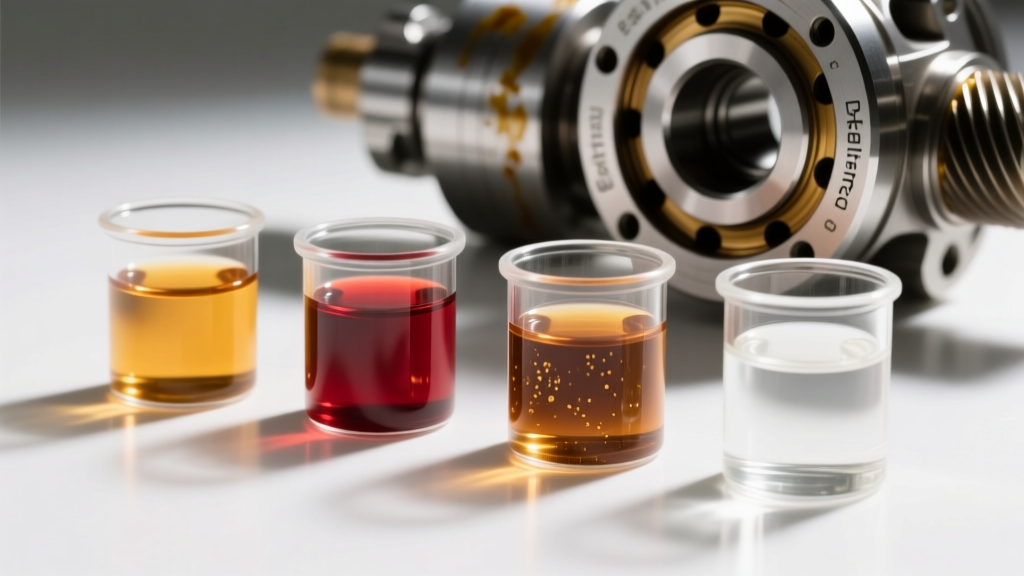
When performing a preventive maintenance drain, always catch the fluid in a clean, shallow, light-colored drain pan. This allows you to accurately assess the color and inspect the sediment at the bottom. Use the following diagnostic matrix to interpret your findings:
| Fluid Color & Condition | Diagnostic Meaning | Required Action |
|---|---|---|
| Translucent Amber / Honey | New or lightly used fluid. Helical gears and thrust washers are operating within normal parameters. | Standard service interval. Reinstall plug and top off. |
| Dark Brown / Opaque | Normal thermal oxidation. Common after 30,000+ miles. The EP additives are depleting but no mechanical failure is occurring. | Perform a complete drain and refill. Reset maintenance interval. |
| Jet Black + Burnt Odor | Severe overheating (fluid temperatures exceeded 250°F). Common in heavy towing or sustained off-road crawling. | Inspect for binding brakes or undersized gearing. Flush immediately. |
| Milky / Chocolate Milk | Water intrusion. Emulsification has occurred, destroying the fluid's load-bearing film strength. | Inspect axle seals and the axle tube breather valve. Flush twice. |
| Copper / Bronze Glitter | Thrust washer degradation. The bronze or composite washers behind the side gears are wearing. | Monitor closely. Plan for a differential teardown if glitter increases. |
| Steel Flakes / Silver Paste | Active metal-on-metal spalling. Ring and pinion wear, or helical gear pocket galling inside the Truetrac case. | Immediate teardown required. The Truetrac unit or ring and pinion must be replaced. |
The Smell and Viscosity Test
Color is only half the story. Rub a small amount of the drained fluid between your thumb and index finger. If the fluid feels gritty, like fine sandpaper, you have microscopic bearing or gear spalling occurring inside the housing. If the fluid smells acrid, akin to burnt toast or scorched metal, the differential has been subjected to extreme thermal shock. Burnt fluid loses its shear stability, meaning the 75W-90 rating may have effectively dropped to a 75W-80, leaving the Truetrac's helical gears vulnerable to boundary-lubrication wear under heavy load.
Truetrac-Specific Wear Patterns & Fluid Clues
Because the Eaton Detroit Truetrac (such as the popular part number 913A485 for GM 8.5-inch 30-spline axles or 917A541 for Dana 44s) relies on the precise meshing of helical pinion gears, internal clearances are paramount. The side gears are backed by thrust washers. In older generations, these were often bronze; in newer iterations, Eaton has utilized advanced synthetic composites.
If you see a distinct copper or bronze shimmer in your fluid, it indicates that the thrust washers are wearing down. As these washers thin, the side gears gain excessive axial end-play. This end-play prevents the helical gears from separating cleanly under load, reducing the torque-biasing ratio (TBR) and causing the Truetrac to behave more like an open differential. Catching this copper glitter early allows you to rebuild the Truetrac with a new washer kit before the side gears score the internal pockets of the differential case.
Conversely, if you find chunky, silver metallic debris caught on the magnetic drain plug (if equipped) or settled in the pan, the issue is likely the ring and pinion or the carrier bearings, rather than the Truetrac unit itself. The Truetrac's internal gears are forged and induction-hardened; they rarely shatter or spall unless subjected to catastrophic shock loads (e.g., dropping the clutch on sticky drag radials).
Step-by-Step Fluid Inspection & Drain Procedure
Proper extraction is vital for accurate diagnosis and to prevent housing damage. Follow these precise steps for your next Truetrac service:
- Warm the Differential: Drive the vehicle for 15-20 minutes to bring the gear oil up to operating temperature (approx. 120°F - 140°F). Warm fluid flows faster and carries suspended particulates out of the housing.
- Remove the Fill Plug FIRST: Always remove the upper fill plug before the lower drain plug. If the fill plug is seized or stripped, you do not want to be left with an empty differential and no way to refill it.
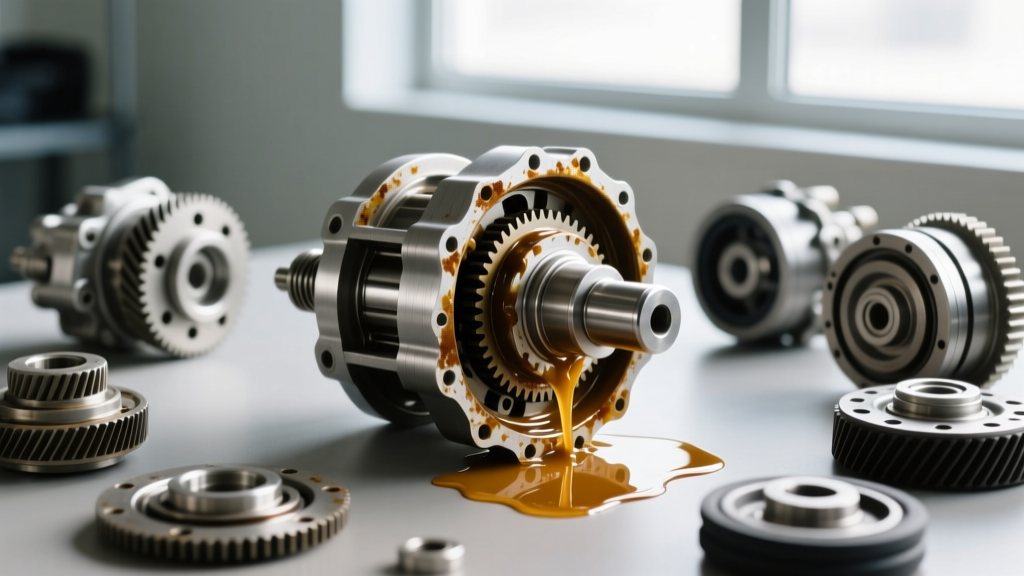
- Inspect the Breather: While the fluid drains, locate the axle tube breather valve. A clogged breather creates a vacuum as the axle cools, which can suck water past the axle seals into the Truetrac housing, causing the dreaded 'chocolate milk' emulsion.
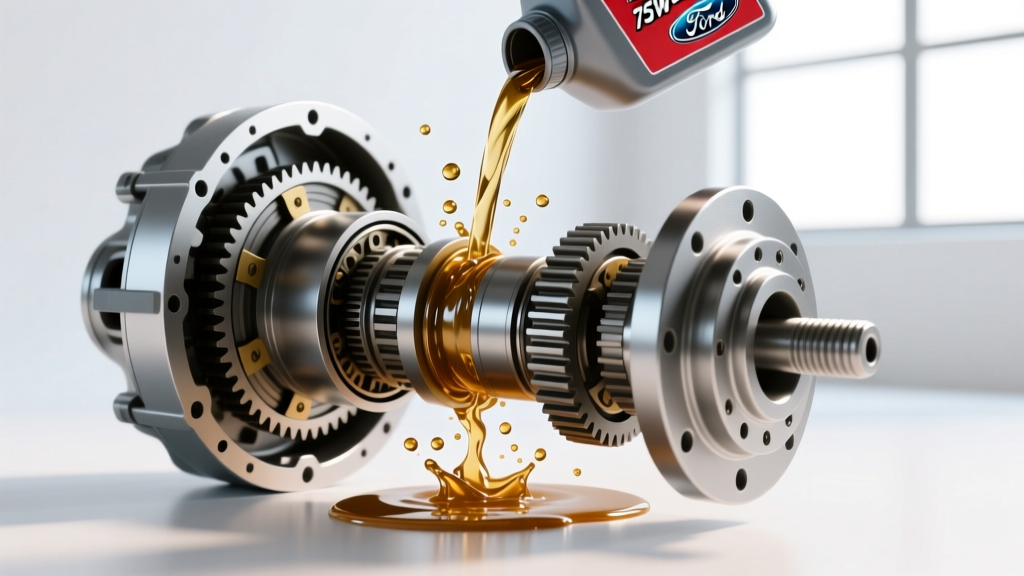
- Refill and Torque: Refill with API GL-5 75W-90 synthetic until the fluid reaches the bottom edge of the fill hole. Capacities vary: a GM 8.5-inch 10-bolt holds roughly 2.1 quarts, while a Dana 44 holds about 2.5 to 3.0 quarts.
- Apply Correct Torque: For standard 3/8-inch or 1/2-inch NPT (tapered pipe) fill and drain plugs, torque to 25-30 lb-ft. Over-torquing NPT plugs is a primary cause of cracked cast-iron or aluminum differential housings. For metric bolts on stamped steel or aluminum differential covers (e.g., 10mm or 12mm bolts), torque to 25-35 lb-ft in a crisscross pattern.
Recommended Gear Oils for the Truetrac in 2026
As of 2026, synthetic gear oil formulations have seen significant advancements in shear stability and extreme-pressure additive retention. When servicing an Eaton Detroit Truetrac, invest in premium synthetics to maximize the life of the helical gear mesh. Expect to pay between $16.00 and $24.00 per quart for top-tier fluids.
- Amsoil Severe Gear 75W-90: Excellent film strength and highly resistant to thermal breakdown. Ideal for trucks that tow heavy loads and subject the Truetrac to sustained high-torque biasing.
- Red Line 75W90 Gear Oil: Contains high levels of zinc and phosphorus (ZDDP) for exceptional boundary lubrication. A favorite in off-road and rock-crawling applications where shock loads are common.
- Mobil 1 Synthetic Gear Lube LS 75W-90: A highly accessible, cost-effective option that meets API GL-5 standards. (Note: Despite the 'LS' in the name indicating it *can* be used in clutch-type LSDs, its base formulation is perfectly safe and effective for the clutch-less Truetrac).
Preventive Maintenance Intervals
For daily-driven street vehicles and highway cruisers, a Truetrac fluid change interval of 50,000 miles is generally sufficient to maintain optimal health. However, if your vehicle is used for towing, frequent off-roading, or track duty, you must halve that interval to 25,000 to 30,000 miles. By consistently monitoring the fluid color, smell, and particulate content at every service, you ensure that your Eaton Detroit Truetrac continues to provide seamless, clutch-free traction for the lifespan of the vehicle.