The Heart of Heavy-Duty Shifting: Understanding the Eaton Clutch Adjuster
If you have ever driven a Class 8 commercial truck equipped with an Eaton Fuller manual transmission, you have likely relied on one of the most brilliant pieces of mechanical engineering in the drivetrain: the Eaton Solo or Easy Pedal clutch system. At the core of this system is the Eaton clutch adjuster, an internal mechanism designed to automatically compensate for friction disc wear over time. For beginners and owner-operators alike, understanding how this adjuster works is the key to diagnosing frustrating clutch engagement and disengagement issues.
When a truck begins to grind into gear, slip under heavy throttle, or exhibit a stiff clutch pedal, the immediate instinct is often to blame the friction discs. However, in modern heavy-duty applications, the root cause is frequently tied to the adjuster mechanism or the external linkage that interacts with it. In this beginner-friendly explainer, we will break down exactly how the Eaton clutch adjuster influences clutch engagement, how to spot the symptoms of failure, and the precise measurements required to diagnose the issue.
Mechanic's Rule of Thumb: Never use the clutch pedal as a footrest. Even a slight, continuous pressure of 5 to 10 pounds on the pedal can prematurely activate the Eaton internal adjuster, causing it to over-compensate and ruin your clutch brake clearance.
What Does the Eaton Clutch Adjuster Actually Do?
To understand the symptoms, you first need to understand the mechanics. In a standard Eaton Solo 14-inch or 15.5-inch two-plate clutch, the friction material slowly wears down with every shift. In older, non-adjusting clutches, this wear meant the driver had to periodically crawl under the truck to manually adjust the external clutch linkage to maintain pedal free-play.
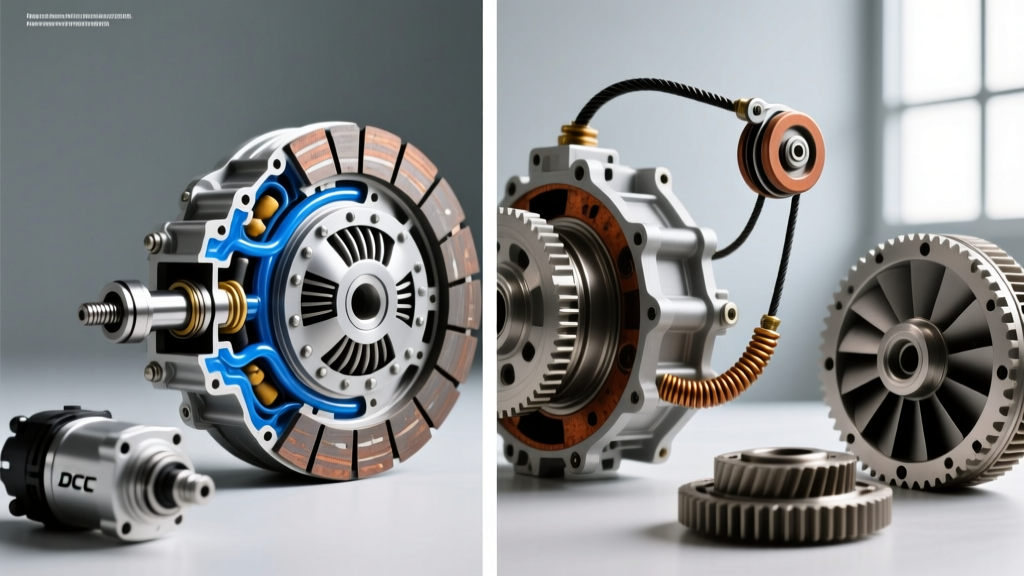
The Eaton clutch adjuster eliminates this manual labor. It utilizes an internal cam, roller, and strap mechanism located inside the clutch cover. Every time the driver fully depresses the clutch pedal, the release bearing pushes against the clutch brake and the internal adjuster fingers. If the friction discs have worn past a specific threshold, the adjuster mechanism 'clicks' or ratchets forward by a fraction of a millimeter. This moves the pressure plate closer to the flywheel, maintaining the exact same release bearing clearance and pedal feel from the first day of installation to the last.
Engagement vs. Disengagement: Spotting the Symptoms
Clutch issues generally fall into two categories: engagement problems (the clutch fails to fully connect the engine to the transmission) and disengagement problems (the clutch fails to fully disconnect). The Eaton clutch adjuster can cause both if it is maladjusted, worn out, or interacting with a faulty hydraulic master cylinder.
| Symptom Category | What the Driver Feels | How the Adjuster is Involved |
|---|---|---|
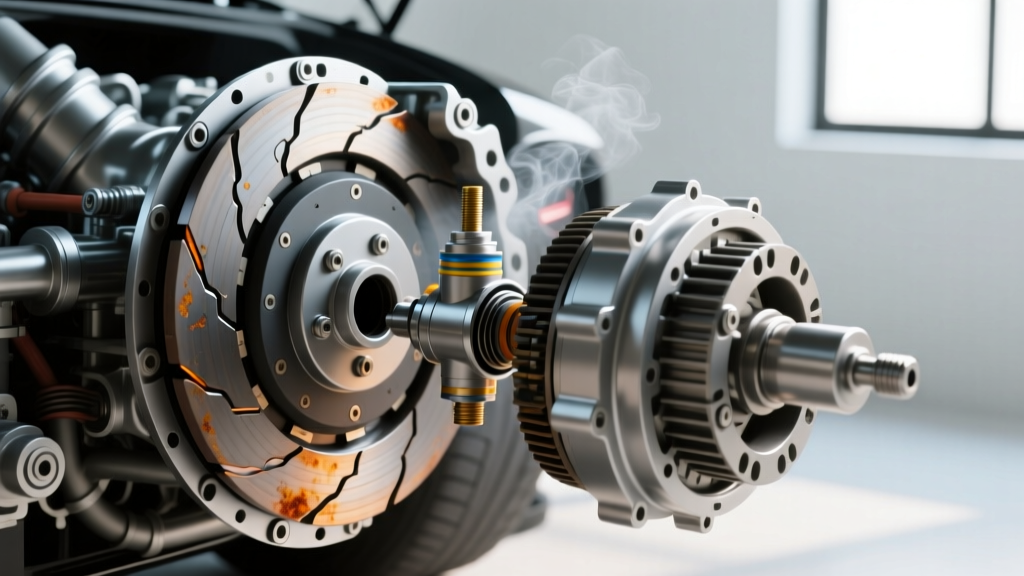
| Engagement (Slipping) | Engine RPMs flare up under heavy load or on inclines, but vehicle speed does not increase proportionally. Smell of burning friction material. | The internal adjuster may be stuck or the external linkage lacks free-play, keeping the release bearing slightly engaged against the fingers, preventing full clamping force. |
| Disengagement (Dragging) | Hard shifting, grinding gears when trying to engage first or reverse, and the truck creeping forward even with the pedal fully depressed. | The adjuster has reached its maximum wear limit (strap is maxed out), or the hydraulic pushrod is out of adjustment, preventing the release bearing from traveling far enough to separate the plates. |
| Clutch Brake Failure | Inability to smoothly engage first gear from a dead stop without grinding, as the transmission input shaft will not stop spinning. | Incorrect release bearing clearance prevents the final 1/2-inch of pedal travel from fully squeezing the clutch brake against the transmission bearing retainer. |
Step-by-Step Diagnostics: The 1/2-Inch Rule
Diagnosing an Eaton clutch adjuster issue requires moving past guesswork and using precise measurements. According to Eaton's official heavy-duty transmission portal, maintaining specific clearances is non-negotiable for proper engagement and disengagement. Here is how you check the system like a seasoned diesel technician.
1. Checking Pedal Free Travel
The most common cause of engagement issues (slipping) is a lack of pedal free travel. The hydraulic master cylinder pushrod must allow the pedal to move freely before it begins to push fluid to the slave cylinder.
- Specification: You should have between 1.5 inches and 2.0 inches of free play at the top of the clutch pedal.
- The Test: Press the pedal by hand. It should move easily for the first 1.5 inches before you feel the heavy resistance of the hydraulic cylinder engaging. If there is zero free play, the release bearing is constantly riding on the Eaton adjuster fingers, leading to rapid wear and clutch slip.
2. Measuring Release Bearing Clearance
If your truck is suffering from disengagement issues (grinding gears), the release bearing is likely not traveling far enough. This is measured through the clutch inspection cover on the bellhousing.
- Specification: The clearance between the release bearing face and the clutch brake (or adjuster fingers) must be exactly 0.500 inches (1/2 inch) when the pedal is fully released.
- The Tool: Use a specialized Eaton clutch gauge or a standard feeler gauge/ machinist rule. If the gap is wider than 0.600 inches, the clutch will not fully disengage, and the clutch brake will not activate.
3. The Clutch Brake Squeeze Test
The clutch brake is a friction disc located on the transmission input shaft that stops the gears from spinning so you can shift into first or reverse from a stop. It is only activated during the very bottom of the pedal stroke.
- Specification: The clutch brake should begin to squeeze when the clutch pedal is 0.5 to 1.0 inches from the firewall (fully depressed).
- Diagnosis: If the pedal hits the floor before the clutch brake engages, your external linkage is stretched, your hydraulic fluid is low, or the Eaton internal adjuster wear strap has reached its absolute limit and can no longer compensate for disc wear.
When the Adjuster Fails: Internal vs. External Culprits
It is vital to understand that the Eaton clutch adjuster itself rarely fails internally unless it has simply reached the end of its designed lifespan (typically 400,000 to 700,000 miles depending on the vocation). When beginners assume the 'adjuster is broken,' they are often misdiagnosing external linkage wear.
External Linkage and Yoke Wear
The clutch release fork (yoke) pivots on a ball stud inside the bellhousing. Over hundreds of thousands of miles, the yoke fingers that push the release bearing can wear down by 1/8th of an inch or more. This wear mimics a failed internal adjuster because it steals release bearing travel. If your measurements are off, inspect the yoke fingers and the cross-shaft pinch bolt (which should be torqued to 70-90 lb-ft depending on the specific Eaton Fuller model) before condemning the internal clutch assembly.
The Wear Indicator Strap
Eaton designed a brilliant visual diagnostic tool into the Solo clutch: the wear indicator strap. Visible through the bellhousing inspection plate, this strap shows exactly how much life the friction discs have left. If the strap is fully extended and the clutch is experiencing disengagement issues, no amount of external adjustment will fix it. The internal adjuster has maxed out, and the clutch pack must be replaced. For more detailed visual inspection guides, technicians frequently reference the Roadranger service network documentation.
Repair Costs and Replacement Thresholds
Understanding the financial impact of these issues helps owner-operators make smart maintenance decisions. Here is a realistic breakdown of repair costs in the current commercial trucking market:
- External Linkage Adjustment / Master Cylinder Pushrod Tune: $150 - $250 (Mostly labor; takes less than an hour if caught early).
- Clutch Release Fork and Pivot Ball Replacement: $400 - $800 (Requires dropping the transmission bellhousing, but the clutch itself can often be reused if within spec).
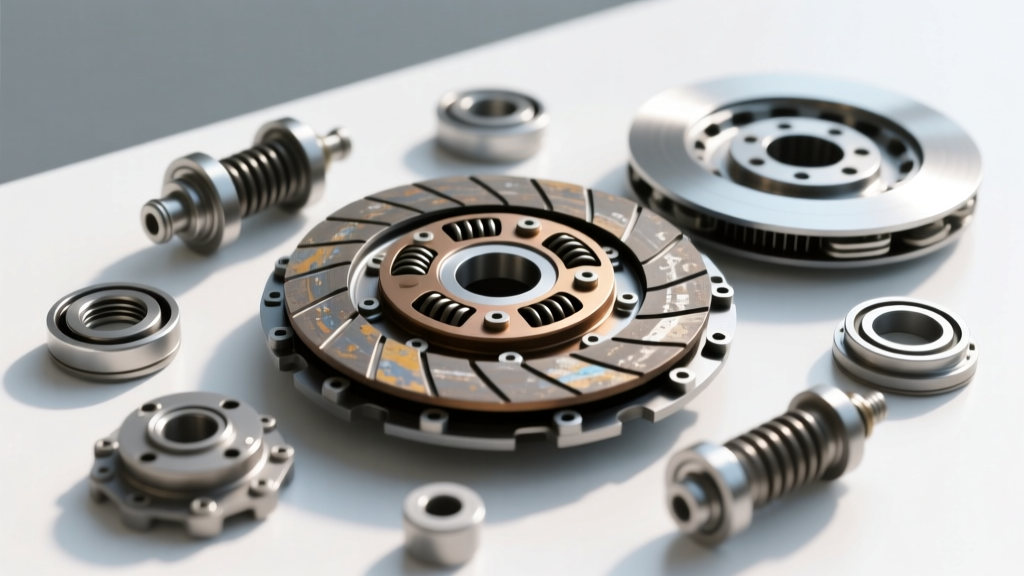
- Full Eaton Solo Clutch Pack Replacement: $3,500 - $5,500+ (Includes new friction discs, pressure plate, internal adjuster assembly, release bearing, and 8 to 12 hours of heavy shop labor to pull the transmission).
Summary: Respect the Measurements
The Eaton clutch adjuster is a marvel of mechanical automation, but it is not magic. It relies entirely on correct external setup to function properly. By mastering the 1/2-inch release bearing clearance rule and ensuring 1.5 inches of pedal free-play, you can accurately diagnose whether your engagement and disengagement issues are caused by a simple linkage adjustment or a maxed-out internal adjuster requiring a full clutch overhaul. Stay off the pedal when cruising, check your free-play monthly, and your Eaton drivetrain will deliver millions of miles of smooth, grind-free shifting.