Is 8 Speed Dual Clutch Transmission Automatic? Understanding the Architecture
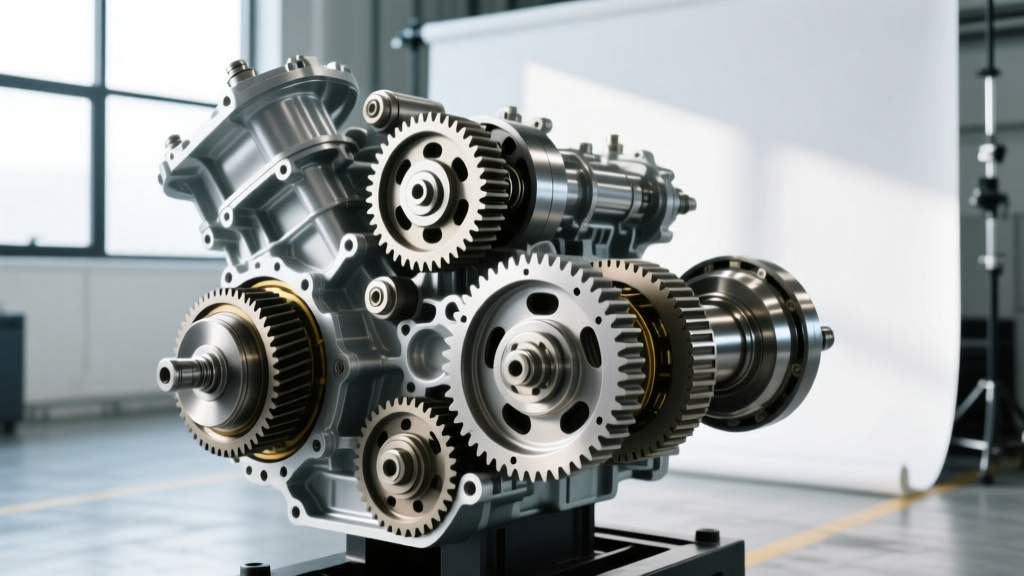
When enthusiasts and dealership technicians first encounter modern performance gearboxes, a common question arises: is 8 speed dual clutch transmission automatic? From a driver’s perspective, the functional answer is yes. You select 'Drive' and the vehicle shifts without a clutch pedal. However, from a mechanical and diagnostic standpoint, an 8-speed dual-clutch transmission (DCT) is fundamentally two manual transmissions housed in a single casing, controlled by an electro-hydraulic mechatronic brain. Unlike traditional automatics that rely on torque converters and planetary gearsets, DCTs utilize manual-style friction clutches, synchronizer rings, and shift forks.
As of 2026, the automotive landscape has seen a massive proliferation of 8-speed wet DCTs—such as the Hyundai/Kia N8LF1 and the legendary ZF 8DT used in the Porsche PDK. Because these units lack a fluid-cushioned torque converter, they are highly susceptible to transmitting mechanical NVH (Noise, Vibration, and Harshness) directly into the cabin. Diagnosing clutch noise in these units requires a hybrid approach: you must apply manual transmission mechanical logic to an automatic-shifting electronic housing. Below is an expert-level guide to isolating and resolving grinding, squealing, and chirping noises in 8-speed DCTs.
The Anatomy of DCT Clutch Noise: Wet vs. Dry Dynamics
Before grabbing a stethoscope, it is critical to identify whether the 8-speed DCT in question utilizes a wet or dry clutch pack architecture. While most early 2010s DCTs (like the Ford PowerShift or early VW DQ200) used dry clutches, modern 8-speed variants are almost exclusively wet, meaning the clutch packs are bathed in specialized transmission fluid.
Expert Insight: Wet clutch packs are inherently quieter because the fluid acts as an acoustic dampener and thermal buffer. If a wet 8-speed DCT is generating audible squealing or chirping from the clutch housing, the failure is usually catastrophic or related to the external release mechanisms, not the friction discs themselves. According to SAE International Technical Papers on DCT acoustics, fluid degradation is the leading precursor to high-frequency mechanical whine in wet clutch systems.
Diagnostic Matrix: Isolating the Sound
Use the following matrix to cross-reference the acoustic signature with the operational state of the vehicle. This framework is essential for accurately diagnosing 8-speed DCT anomalies.
| Noise Type | Operating Condition | Probable Culprit | Diagnostic Action |
|---|---|---|---|
| High-Pitched Chirping | Clutch actuator stroking (engine off, ignition on) | Dry release bearing or actuator cam wear | Bi-directional actuator stroke test via scan tool |
| Continuous Squealing | Light throttle, partial engagement (slipping) | Glazed wet clutch packs or DMF spring failure | Fluid analysis for friction material; DMF runout check |
| Crunching / Grinding | Specific gear engagement (usually 1st, 2nd, or Reverse) | Worn carbon synchronizer rings or bent shift fork | Check mechatronic shift fork position sensors (PIDs) |
| Low-Frequency Rattle | Idle in Neutral or Park | Dual Mass Flywheel (DMF) internal spring fatigue | Visual inspection of DMF play; replace if >1.5mm radial play |
Deep Dive: Chirping and Squealing (Release Bearings & Actuators)
A chirping noise that changes pitch as the transmission shifts is often misdiagnosed as a bad accessory belt or alternator pulley. In an 8-speed DCT, this is frequently the clutch release bearing or the mechatronic actuator cam. Even in wet DCTs, the release bearing operates in a high-friction, high-heat environment near the bellhousing seal. When the bearing's internal grease degrades, it emits a distinct chirp synchronized with the clutch engagement RPM.
Torque & Spec Data: If you are dropping the transmission to replace the release bearing, you must also inspect the Dual Mass Flywheel (DMF). For most VAG and Hyundai 8-speed applications, the DMF-to-crankshaft bolts are torque-to-yield. The standard specification is typically 90 Nm + 90 degrees. Never reuse these bolts. Furthermore, the bellhousing-to-engine block bolts should be torqued to 65 Nm to prevent housing distortion, which can bind the clutch actuator forks and cause premature squealing.
Deep Dive: Grinding and Crunching (Synchronizers & Shift Forks)
Unlike a traditional manual transmission where the driver's foot dictates the speed of the synchronizer engagement, a DCT relies on hydraulic pressure to slam the shift forks into place. If the mechatronic unit's hydraulic pressure drops, or if the specialized DCT fluid loses its friction-modifying properties, the carbon-lined synchronizer rings will fail to match gear speeds, resulting in a violent grind or 'crunch' during 1-2 or 2-3 upshifts.
Fluid Specifications Matter: You cannot use standard ATF in these units. For the Hyundai/Kia N8LF1 8-speed wet DCT, the factory requirement is Shell TF0870. For ZF 8DT (Porsche PDK) applications, the required fluid is Pentosin FFL-5. Using the wrong fluid will strip the carbon friction material off the synchronizers within 5,000 miles. According to Pentosin's official fluid specifications, FFL-5 is engineered specifically to maintain the exact friction coefficient required for wet clutch packs and carbon synchros under extreme thermal loads.
Expert Troubleshooting Workflow for DCT Noise
Before removing the transmission, follow this non-invasive diagnostic workflow to isolate the source of the noise:
- Step 1: Static Actuator Stroke Test. Connect a bi-directional scan tool (e.g., Autel MaxiSys or OEM software like GDS/ODIS). Hook up a battery maintainer to ensure system voltage stays above 13.5V. Command the K1 and K2 clutch actuators to stroke through their full range. Listen with an acoustic stethoscope on the bellhousing. A rhythmic clicking or chirping indicates a worn actuator cam follower or a failing release bearing.
- Step 2: Monitor Clutch Adaptation Values. Check the PID data for 'Clutch 1 Kiss Point' and 'Clutch 2 Kiss Point' (the exact actuator position where friction begins). If the kiss point values are nearing their maximum adjustment limit (often around 4.5mm to 5.0mm of actuator travel), the clutch packs are severely worn, and the mechatronic unit is over-stroking to compensate, causing mechanical binding and squealing.
- Step 3: Fluid Smell and Debris Test. Drain a small sample of the DCT fluid. Healthy DCT fluid should be translucent amber or light green (depending on the OEM). If the fluid smells like burnt toast and contains a heavy, glitter-like suspension of brass or carbon, your synchronizers or wet clutch friction discs are disintegrating. This confirms internal grinding noises are caused by mechanical destruction, not just hydraulic lag.
Mechatronic vs. Mechanical: When to Rebuild or Replace
A common pitfall in DCT diagnosis is replacing the mechanical clutch pack when the fault actually lies within the mechatronic valve body. If the transmission grinds into gear but the scan tool shows erratic hydraulic pressure solenoid duty cycles, the issue is hydraulic, not mechanical.
2026 Pricing & Replacement Guide:
- DCT Fluid & Filter Service: $350 - $600 (Requires 6 to 8 liters of specialized fluid like ZF Lifeguard or Pentosin FFL). This resolves 30% of minor synchro crunching issues.
- Dual Mass Flywheel (DMF) & Release Bearing: $900 - $1,600 (Parts and labor). Resolves idle rattle and actuator chirping.
- Complete Clutch Pack Replacement: $1,800 - $3,500. Requires specialized DCT alignment tools to set the clutch pack shim depth. If the shim depth is incorrect, the clutches will drag, causing severe squealing and overheating.
- Mechatronic Unit Replacement: $2,500 - $4,800. Required if shift fork position sensors fail or internal hydraulic accumulators crack, leading to grinding due to low line pressure.
Final Thoughts on 8-Speed DCT Diagnostics
So, is an 8-speed dual clutch transmission automatic? Yes, but it demands the respect and diagnostic rigor of a high-performance manual. By understanding the acoustic differences between a failing DMF, a starved synchronizer, and a worn release bearing, technicians can avoid the costly mistake of replacing entire transmission assemblies when a targeted fluid service, actuator calibration, or clutch pack replacement will restore the gearbox to factory-new silence and precision.