The JL Rubicon Tire and Gear Dilemma
Upgrading to 35-inch or 37-inch mud-terrain tires is a rite of passage for Jeep Wrangler JL Rubicon owners. However, bolting on larger rubber without addressing the axle gearing is a guaranteed recipe for transmission overheating, sluggish acceleration, and premature drivetrain failure. For owners navigating the deep sand washes of Jupiter Farms or the muddy trails near River Bend Park, low-end torque multiplication is non-negotiable. When searching for specialized auto differential service Jupiter FL off-road enthusiasts trust, understanding the intricate relationship between tire diameter, gear ratios, and axle survival is the first step toward a reliable build.
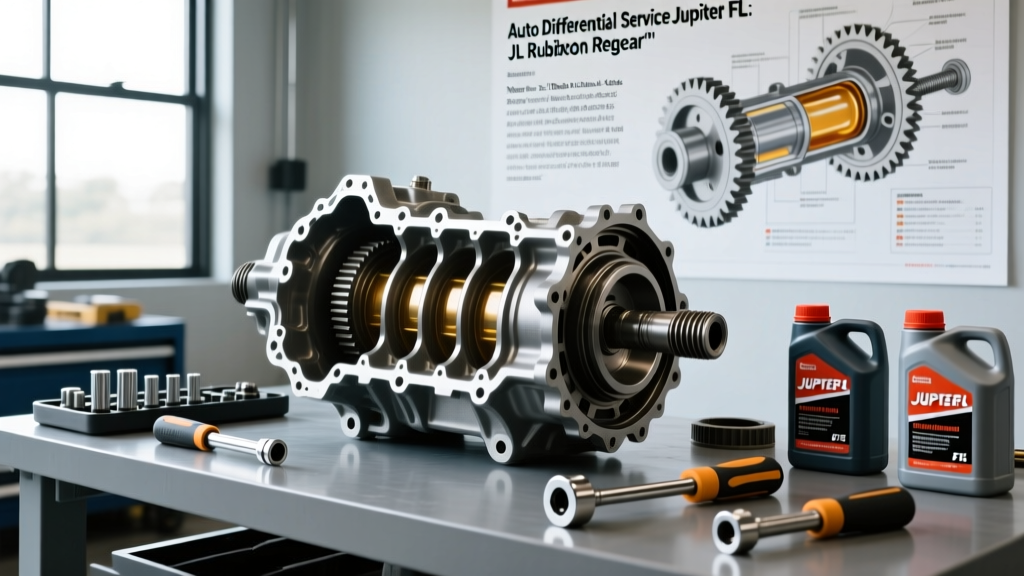
As of 2026, the aftermarket support for the JL platform has matured significantly, offering precision-matched gear sets and heavy-duty installation kits that correct the factory compromises. This model-specific repair guide dives deep into the Dana 44 M210 (front) and M220 (rear) axles found in the JL Rubicon, detailing the exact procedures, torque specifications, and fluid protocols required for a 4.88 gear ratio swap.
Why Gear Ratio Dictates Axle Survival
The Factory Flaw: 3.73 Gears and the ZF 8HP
The factory JL Rubicon comes equipped with 3.73 ring and pinion gears. While adequate for the stock 285/70R17 (33-inch) tires, scaling up to a true 35-inch tire effectively drops your numerical gear ratio to roughly 3.23. This forces the ZF 8HP 8-speed automatic transmission to constantly hunt for lower gears, generating excessive heat in the transmission fluid and placing immense shock-load stress on the axle shafts and ring gear teeth during off-road crawling.
By regearing to a 4.88 ratio, you restore the factory crawl ratio and optimize the ZF 8HPs shift mapping. The engine stays in its optimal torque band (between 1,800 and 2,400 RPM) at highway speeds, while the mechanical advantage at the wheels reduces the twisting force transmitted through the U-joints and axle shafts.
Model-Specific Parts Breakdown: Dana 44 M210 and M220
The JL Rubicon utilizes a reverse-cut, high-pinion Dana 44 (M210) in the front and a standard-cut, low-pinion Dana 44 (M220) in the rear. The rear M220 features an aluminum center section with pressed-in steel axle tubes, which requires meticulous attention to bearing cap torque to prevent housing distortion. Below is the required bill of materials for a complete, bulletproof regear using Revolution Gear & Axle components.
| Component | Part Number | Est. Cost (2026) | Application Notes |
|---|---|---|---|
| Rear 4.88 Gear Set | REV-488-JL-R | $389.00 | M220 Dana 44, Standard Cut |
| Front 4.88 Gear Set | REV-488-JL-F | $415.00 | M210 Dana 44, Reverse Cut |
| Master Bearing Kit (Rear) | REV-MK-JL-R | $185.00 | Includes Timken bearings, solid spacer |
| Master Bearing Kit (Front) | REV-MK-JL-F | $185.00 | Includes Timken bearings, shims |
| Rear Solid Spacer Conversion | REV-SS-JL-R | $45.00 | Eliminates factory crush sleeve |
Precision Assembly: Torque Specs and Pattern Reading
A successful differential rebuild hinges on microscopic tolerances. According to Ring-Pinion.com Installation Guides, improper backlash or pinion depth will result in catastrophic gear failure within the first 500 miles. The aluminum M220 rear housing is particularly sensitive to thermal expansion, meaning all measurements must be taken at room temperature (68°F to 72°F).
Ring and Pinion Installation Sequence
- Pinion Depth Setup: Use the pinion depth shims provided in the master kit. The target pinion depth is typically etched on the face of the ring gear (e.g., +0.004). Assemble the pinion bearing using a hydraulic press and measure the rotating torque.
- Pinion Bearing Preload: The factory JL uses a crush sleeve, which is notoriously difficult to set correctly without specialized tools. We mandate the use of the aftermarket solid spacer conversion. Torque the pinion nut to achieve 15 to 25 in-lbs of rotating torque (measured with a dial inch-pound torque wrench).
- Ring Gear Mounting: Clean all mating surfaces with brake cleaner. Apply a medium-strength threadlocker to the ring gear bolts. Torque the ring gear bolts in a crisscross pattern to 77 lb-ft.
- Carrier Bearing Preload & Backlash: Install the carrier assembly into the housing. Use carrier shims to achieve a backlash specification of 0.006 to 0.010 inches, measured via a dial indicator mounted to the housing. Carrier bearing preload should yield an additional 10 to 15 in-lbs of rotating torque over the pinion-only measurement.
- Bearing Cap Torque: Secure the M220 bearing caps. Torque the cap bolts to 65 lb-ft. Do not overtighten, as the aluminum housing threads are prone to stripping.
Decoding the Contact Pattern
Once assembled, apply yellow gear marking compound to the ring gear teeth. Rotate the pinion to load the gears and inspect the pattern. A perfect pattern will be centered on the tooth face, slightly biased toward the heel on the drive side, and centered on the coast side. If the pattern is too close to the toe, increase pinion depth (add shims). If it is too close to the root (bottom of the tooth), decrease pinion depth. For further visual references, Yukon Gear & Axle Technical Support provides excellent visual charts for diagnosing gear patterns across Dana 44 platforms.
Fluid Selection and the 500-Mile Break-In Protocol
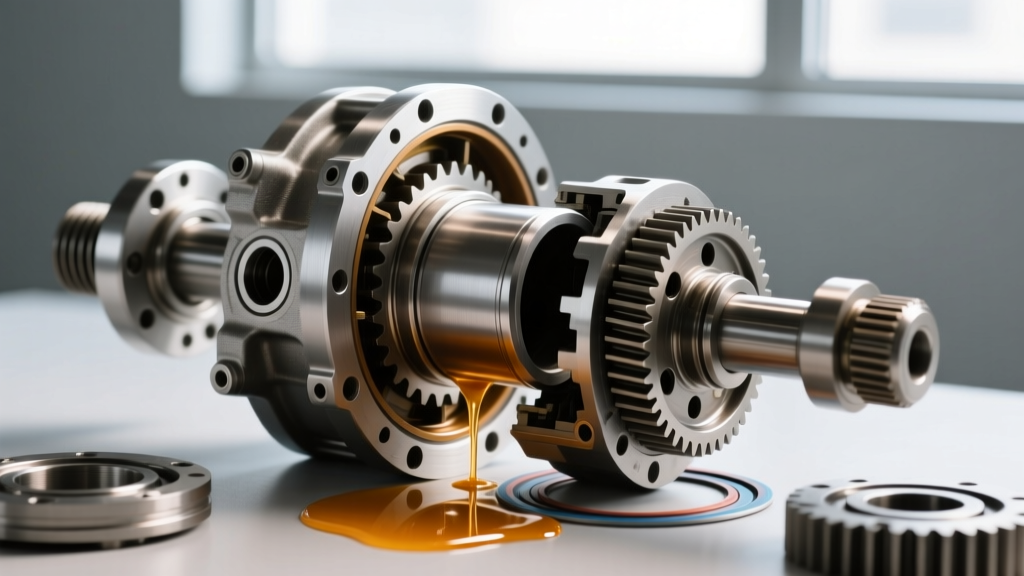
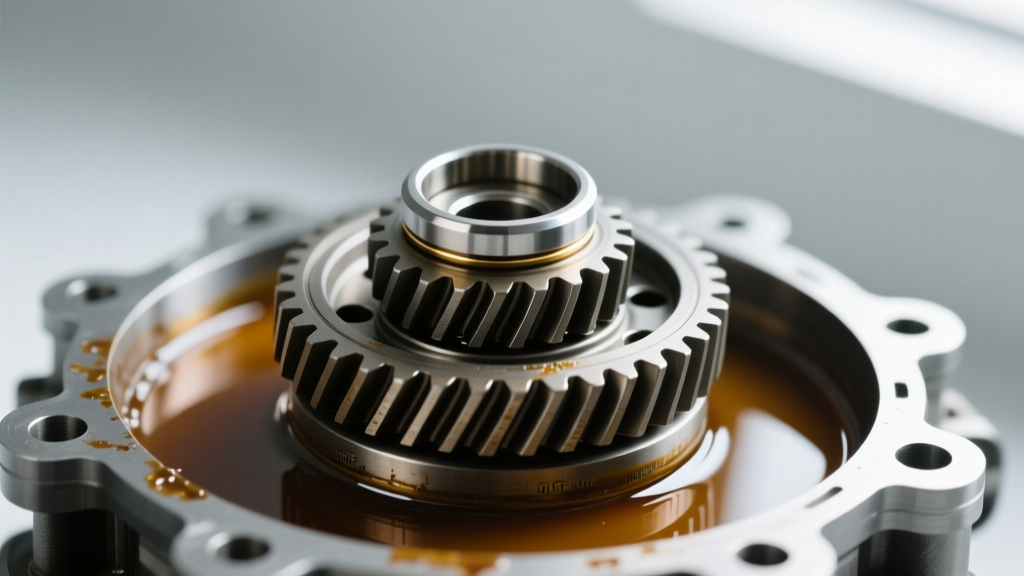
Because this category heavily intersects with differential fluid maintenance, selecting the correct gear oil is paramount for a freshly rebuilt axle. The break-in process generates immense friction and heat as the lapping process mates the ring and pinion teeth. Standard mineral oils will break down under these localized thermal spikes.
For the initial break-in, we recommend a high-quality, non-synthetic 80W-90 GL-5 gear oil. Synthetic fluids are too slippery during the initial lapping phase and can result in a glazed gear surface. After the break-in period, you must drain the break-in oil and refill with a full synthetic 75W-140 fluid to handle the extreme pressures of off-road crawling and the thermal loads of Florida highway driving.
Fluid Specifications and Capacities
- Front Axle (M210): 1.3 Liters (1.37 Quarts)
- Rear Axle (M220): 1.6 Liters (1.69 Quarts)
- Recommended Final Fill: Amsoil Severe Gear 75W-140 Synthetic or Mopar 75W-140 (Part #68218655AB).
- Friction Modifier: If your JL is equipped with the factory Tru-Lok electronic locking differentials, you generally do NOT need a limited-slip friction modifier. However, if you have upgraded to an Eaton Detroit Truetrac or Auburn limited-slip, add 4 oz of Mopar Limited Slip Additive (Part #4318060AB) to prevent chatter. For exact additive requirements, consult the Amsoil Severe Gear Specifications documentation.
The Break-In Procedure
- Drive the vehicle on the highway for 15 to 20 miles at speeds no greater than 50 MPH.
- Stop and allow the axles to cool completely to ambient temperature (minimum 45 minutes).
- Repeat this heat-and-cool cycle at least three times.
- Keep speeds under 65 MPH and avoid heavy towing or aggressive off-roading for the first 500 miles.
- At the 500-mile mark, drain the break-in fluid. You will notice a metallic paste on the drain plug magnet; this is normal lapping material. Flush the axle with a half-quart of cheap gear oil, then fill with your final 75W-140 synthetic choice.
Sourcing Expert Auto Differential Service Jupiter FL
A differential regear is not a novice weekend project. It requires hydraulic presses, dial indicators, inch-pound torque wrenches, and years of tactile experience reading gear patterns. A pattern that looks acceptable to an amateur will often whine or fail under load. If you are tackling 35-inch tires and need precision auto differential service Jupiter FL shops with dedicated drivetrain bays are your best resource. Ensure your chosen technician utilizes solid spacer conversions over factory crush sleeves and adheres strictly to the Timken bearing preload specifications outlined above. By treating your Dana 44 axles to a mathematically sound 4.88 regear and a rigorous fluid break-in protocol, your JL Rubicon will conquer the deepest Florida sand traps and rock crawls with factory-like reliability and vastly improved drivetrain longevity.