Decoding the Drivetrain Warranty: What Is Actually Covered?
When a catastrophic transmission failure or a seized transfer case leaves you stranded, the immediate question is: what is covered under drivetrain warranty agreements? To navigate claims successfully, you must first understand the distinction between a powertrain and a drivetrain warranty. While a powertrain warranty typically encompasses the engine, transmission, and drive axles, a strict drivetrain warranty focuses exclusively on the components that transmit power from the engine to the wheels.
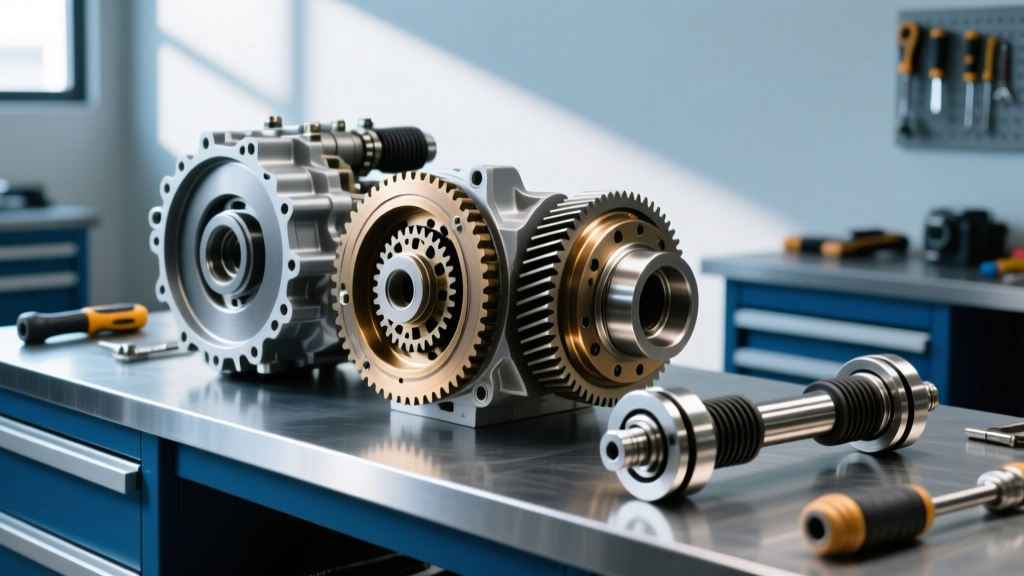
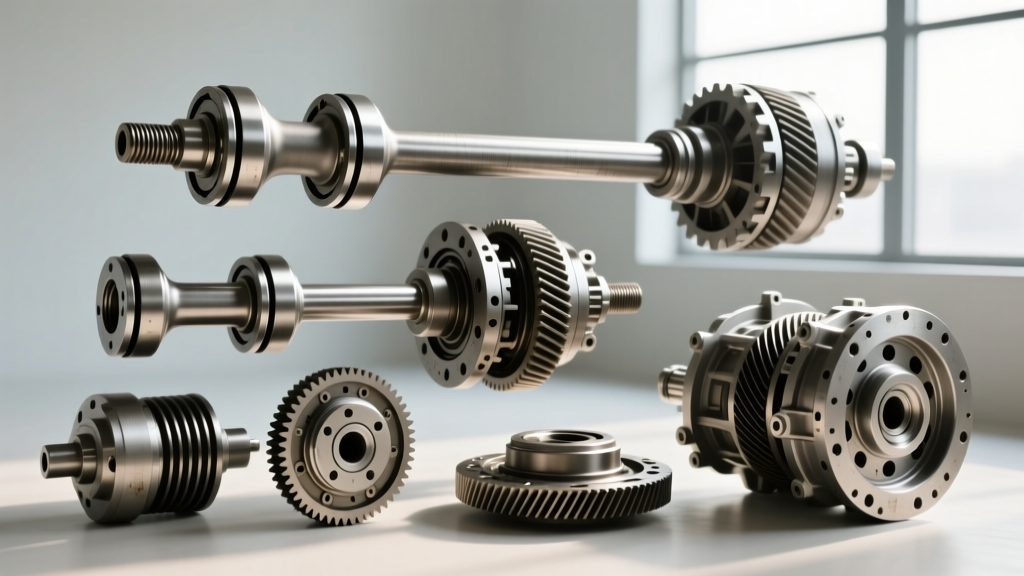
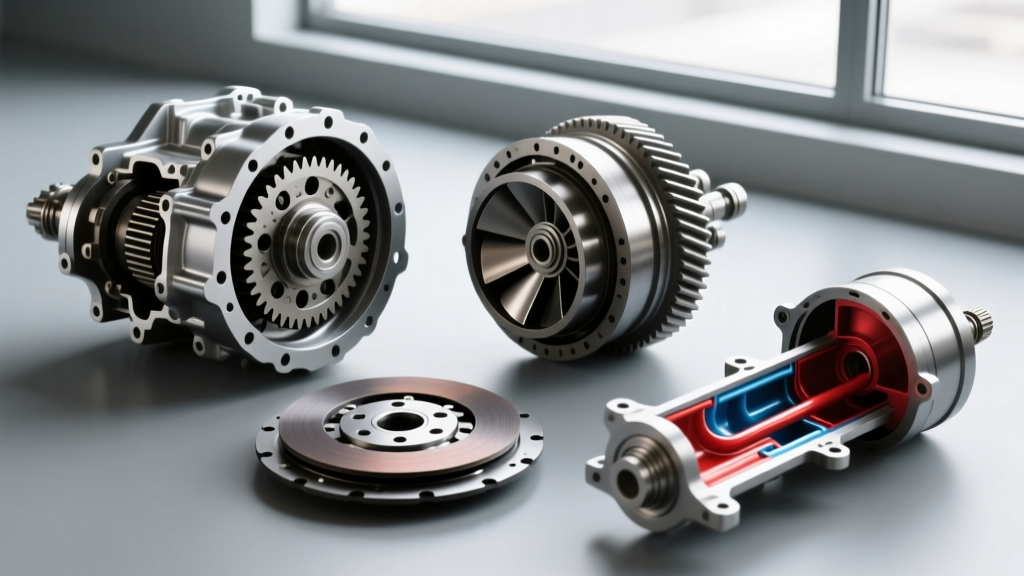
Covered components generally include the transmission (internal lubricated parts, torque converter, and valve body), the driveshaft and U-joints, CV axles and joints, the differential assembly, and the transfer case on 4WD/AWD vehicles. However, wear-and-tear items like clutch discs in manual transmissions, U-joint grease degradation, and external CV boot tears caused by road debris are universally excluded. As of 2026, extended warranty providers and F&I departments have tightened their claim investigation processes, frequently requesting strict OEM receipt matching before approving complex electronic or hydraulic replacements.
The Maintenance Loophole: How Service Records Dictate Claims
The most common reason for a denied drivetrain warranty claim is not a manufacturing defect, but rather improper or undocumented maintenance. Warranty administrators actively look for reasons to deny high-dollar claims, and fluid degradation is their primary target. If your ZF 8HP transmission's mechatronic unit fails due to clutch material contamination, but you cannot prove the fluid was serviced according to the 'severe duty' schedule, your claim will likely be denied.
Under the Magnuson-Moss Warranty Act, enforced by the Federal Trade Commission (FTC), a dealership or warranty company cannot legally void your warranty simply because you performed the maintenance yourself or used an independent shop. However, the burden of proof is on you. You must demonstrate that you used the exact OEM-specified fluid, replaced the filter (if applicable), and performed the service within the mandated mileage intervals.
Expert Insight: Warranty adjusters routinely pull the Transmission Electro-Hydraulic Control Module (TEHCM) or Mechatronic data logs. If the internal temperature sensors show prolonged overheating and the fluid breakdown index is high, they will classify the failure as 'owner neglect' rather than a defect.
Expert Fluid & Torque Specifications for Modern Drivetrains
Using a generic 'multi-vehicle' automatic transmission fluid (ATF) is the fastest way to void a drivetrain warranty. Modern 8-speed and 10-speed transmissions require highly specific friction modifiers and viscosity profiles. Furthermore, improper torque on aluminum or plastic transmission pans leads to warping, leaks, and subsequent pump cavitation.
Critical Drivetrain Service Data Table
| Component / Model | OEM Fluid Specification | Service Capacity | Pan/Plug Torque Spec |
|---|---|---|---|
| GM 6L80 / 6L90 Transmission | ACDelco Dexron VI (ATF) | 6.0L (Pan Drop) | 10 Nm (89 lb-in) |
| ZF 8HP70 / 8HP90 Transmission | ZF LifeguardFluid 8 | ~9.0L (Service Fill) | 10 Nm (Plastic Pan) |
| GM NV246 Transfer Case (AutoTrac) | GM AutoTrak II Fluid | 2.0L | 20 Nm (Fill/Drain) |
| GM 9.5' Rear Differential | ACDelco 75W-90 Synthetic | 1.9L | 33 Nm (24 lb-ft) |
| FCA/Ram 2500 Front Axle Nut | N/A (Hardware) | N/A | 285 Nm (210 lb-ft) |
Note: Always verify exact capacities and torque specifications against the factory service manual for your specific VIN and model year, as mid-year production changes can alter hardware requirements.
The 'Lifetime Fluid' Myth and ZF 8HP Realities
One of the most contentious issues in drivetrain maintenance is the concept of 'lifetime fluid.' Many OEMs market their vehicles as having lifetime transmission fluid, leading owners to skip service. However, the manufacturer ZF Aftermarket explicitly states that 'lifetime' is defined as the operational life of the component under ideal conditions, which they cap at roughly 100,000 miles. For vehicles subjected to 'severe driving conditions'—which includes towing, stop-and-go traffic, and extreme temperatures—ZF recommends a fluid and filter change every 60,000 miles (approx. 100,000 km).
If your vehicle is equipped with a ZF 8HP and you suffer a valve body failure at 85,000 miles, the warranty provider will scrutinize your service history. If you adhered to the 'lifetime' myth and never changed the fluid, expect a protracted battle or outright denial. The plastic integrated filter pan (Part # ZF 1068.298.037) must be replaced as an assembly, as the filter media cannot be separated from the pan.
Best Practices for Documenting Drivetrain Service
To ensure your answer to 'what is covered under drivetrain warranty' remains 'everything applicable,' you must build an ironclad documentation trail. Follow these expert best practices:
- Retain Itemized Receipts with VINs: A credit card statement showing a $150 charge at an auto parts store is insufficient. Your receipt must list the exact part numbers (e.g., ACDelco 10-9395 for Dexron VI), the quantity purchased, and ideally, your vehicle's VIN and odometer reading at the time of service.
- Photograph the Process: If performing DIY maintenance, take timestamped photos of the vehicle's odometer, the drain plug being removed, the old fluid in the catch pan, and the new fluid bottles with part numbers visible. This serves as secondary proof if a claim is escalated.
- Avoid Unapproved Additives: Never use aftermarket 'shift improvers' or 'stop-leak' additives. Modern transmissions rely on precise hydraulic pressures calibrated by the TCM (Transmission Control Module). Additives alter fluid friction coefficients, causing harsh shifts and premature clutch wear, which will immediately void coverage upon fluid analysis.
- Adhere to Severe Duty Schedules: If you live in a region with extreme heat, frequent mountains, or tow any weight, default to the manufacturer's 'severe duty' maintenance schedule. This typically halves the mileage interval for differential and transfer case fluid changes.
Out-of-Pocket Costs When Warranty Claims Are Denied
Understanding the financial stakes highlights why meticulous drivetrain maintenance is non-negotiable. If your warranty claim is denied due to lack of maintenance or improper fluid usage, you are responsible for the following average out-of-pocket costs (parts and labor):
- ZF 8HP Mechatronic Unit Replacement: $1,800 - $2,800 (Requires programming and adaptation resets).
- GM 6L80 TEHCM Replacement: $600 - $950 (Internal pressure switches fail due to contaminated fluid).
- NV246 Transfer Case Encoder Motor: $450 - $750 (Often fails when incorrect, non-AutoTrak II fluid is used, causing internal clutch pack binding).
- Rear Differential Ring & Pinion Set: $1,500 - $2,500 (Catastrophic failure resulting from ignored gear oil breakdown or water ingress).
Final Expert Takeaways
Ultimately, what is covered under drivetrain warranty agreements hinges entirely on your adherence to OEM engineering requirements. The days of treating differentials and transfer cases as 'sealed and forgotten' components are over. By utilizing exact OEM fluids, respecting precise torque specifications on fragile aluminum and plastic housings, and maintaining a meticulous, VIN-stamped service log, you transform your drivetrain warranty from a fragile promise into an ironclad guarantee. Protect your investment by treating maintenance not as an optional suggestion, but as a mandatory insurance policy for your vehicle's driveline.