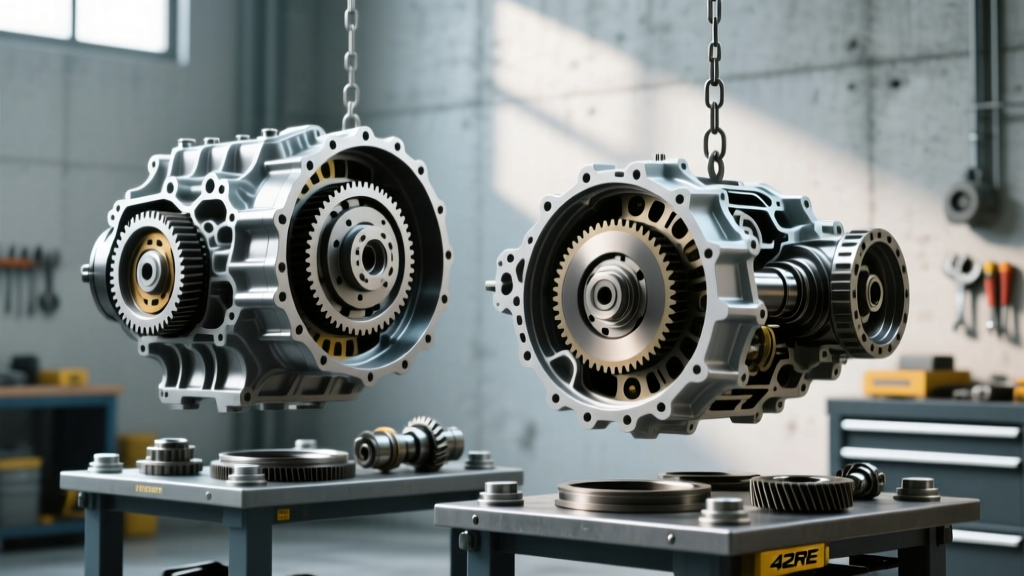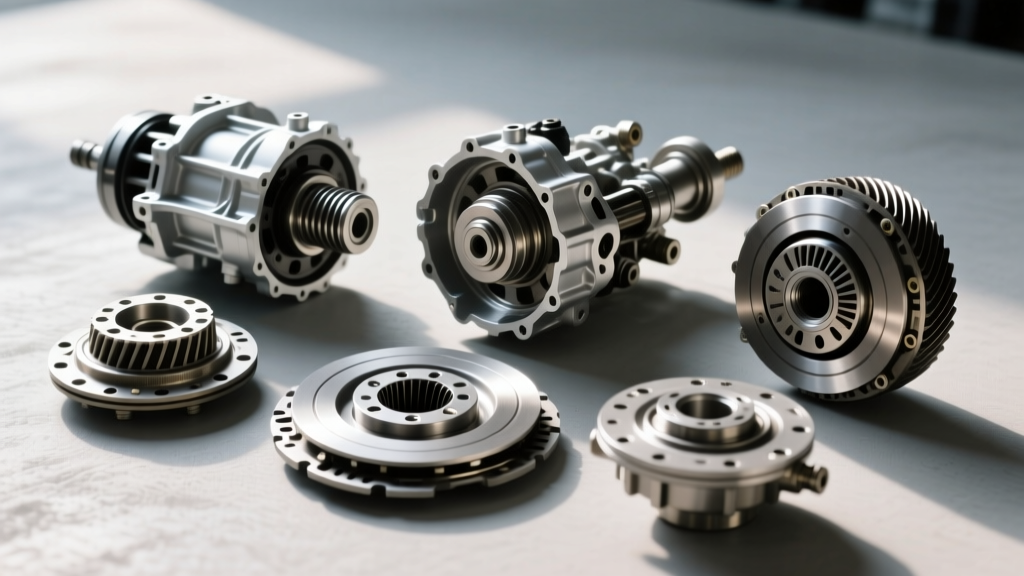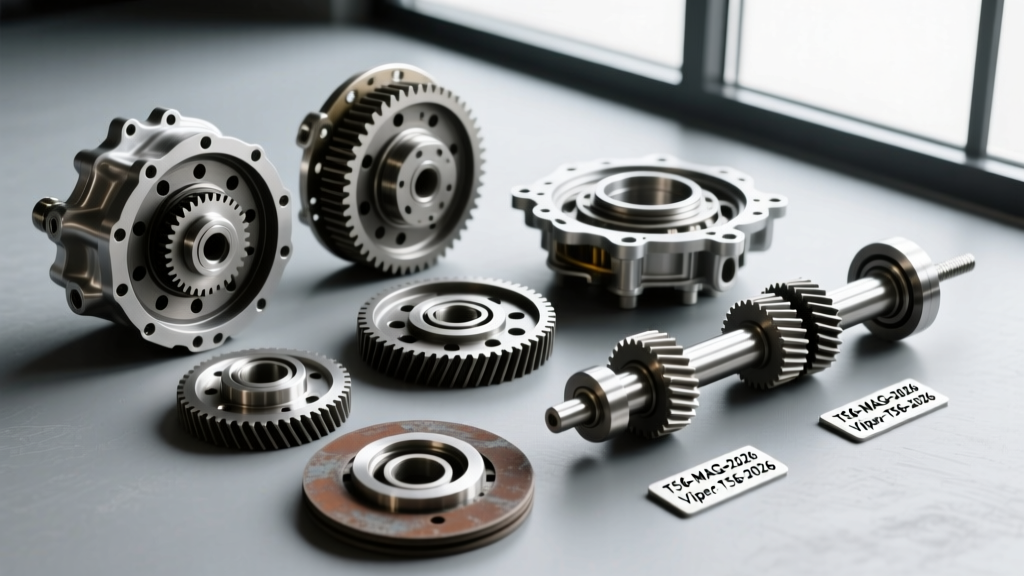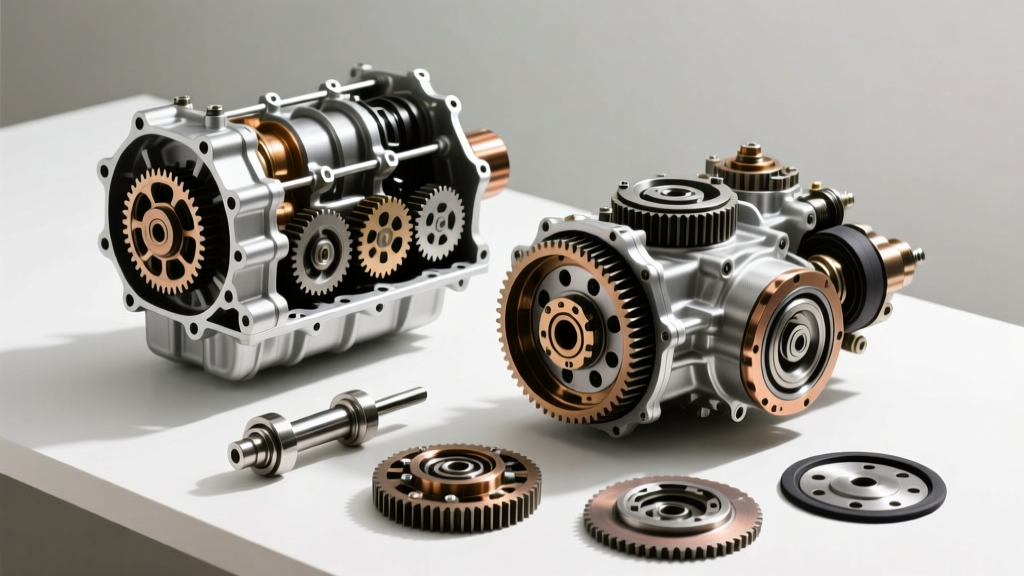
The 4L80E: The Heavy-Duty Benchmark for High-Horsepower Swaps
Introduced by General Motors in 1991, the 4L80E is essentially the legendary TH400 three-speed automatic with an overdrive gear and electronic controls bolted onto the back. Fast forward to 2026, and the 4L80E remains the undisputed king of heavy-duty transmission swaps for LS-swapped trucks, diesel conversions, and high-horsepower drag builds. However, building a 4L80E for performance requires far more than simply slapping in a master rebuild kit. The platform has specific, well-documented failure points that must be addressed during the teardown and assembly phases.
In this comprehensive performance rebuild guide, we will break down the exact upgrades required to push the 4L80E past the 1,000-horsepower barrier, outline real-world rebuild costs, and explore a niche but highly relevant comparison for custom fabricators: weighing a built 4L80E against a specialized Harley transmission rebuild when engineering high-torque custom V8 trikes and hot rods.
Custom Fabrication Dilemma: 4L80E vs. Harley Transmission Rebuilds
When fabricators design high-torque custom V8 trikes (akin to Boss Hoss motorcycles) or heavy-duty street rods, packaging and torque management are critical. Builders frequently weigh the cost and physical footprint of a built 4L80E against a specialized Harley transmission rebuild or aftermarket V-Twin transmission (such as a Baker 6-speed or Screamin' Eagle setup) engineered to handle massive torque loads.
Why compare a truck transmission to a motorcycle transmission? In custom V8 trike chassis, builders often adapt heavy-duty motorcycle gearboxes to the back of small-block V8s. However, a performance-oriented Harley transmission rebuild designed to survive 500+ lb-ft of V8 torque requires massive billet mainshafts, heavy-duty dog rings, and specialized clutch packs, often pushing the cost well past $4,500 to $6,000. Furthermore, these setups lack an overdrive gear, making highway cruising a high-RPM nightmare.
Conversely, a fully built 4L80E offers a 0.75:1 overdrive, automatic shifting, and proven 1,000+ HP capability. With the right bellhousing adapter plate, a built 4L80E often proves to be a more cost-effective, reliable, and drivetrain-friendly alternative to a heavily modified motorcycle gearbox for custom V8 applications.
Performance Rebuild Stages & Cost Breakdown (2026 Pricing)
The cost of a 4L80E rebuild scales dramatically based on your horsepower goals and the quality of the hard parts utilized. Below is a realistic breakdown of what you can expect to spend at a reputable performance transmission shop in 2026.
| Build Stage | HP / Torque Rating | Estimated Cost | Key Upgrades Included |
|---|---|---|---|
| Stage 1: Heavy Duty Towing | Up to 500 HP / 600 lb-ft | $2,200 - $2,800 | TransGo HD2 Shift Kit, 34-Element Sprag, Kevlar Frictions, Heavy-Duty Forward Hub |
| Stage 2: Street/Strip | Up to 800 HP / 850 lb-ft | $3,200 - $4,100 | Stage 1 + Billet Input Shaft, Billet Center Support, Upgraded Direct Clutch Drum |
| Stage 3: Unlimited / Race | 1,000+ HP / 1,200+ lb-ft | $4,800 - $6,500+ | Stage 2 + Billet Forward Hub, Deep Pan, High-Volume Pump, Custom Torque Converter |
Note: These prices assume you are providing a good core and do not include the cost of a custom torque converter, which can add $800 to $1,500 to the final tally.
Critical Weak Points & Mandatory Performance Upgrades
If you are tearing down a 4L80E for a performance application, replacing the soft parts (clutches and bands) is only 20% of the battle. The remaining 80% involves addressing the hard-part deficiencies that GM left on the table. According to the engineering data from Sonnax Industries, the following upgrades are non-negotiable for high-torque builds.
1. The Forward Clutch Hub & Sprag Assembly
In a stock 4L80E, the forward clutch hub is prone to stripping its splines under heavy load, particularly during the 1-2 shift when the sprag engages. Furthermore, the stock 16-element sprag is a known failure point. The Fix: You must upgrade to a 34-element sprag (Sonnax Part # 34322-01K) and pair it with a heavy-duty forward clutch hub, such as the Sonnax Smart-Tech hub (Part # 34000-01K). This combination distributes the load across nearly double the number of sprag elements and eliminates spline shearing.
2. Center Support Lube Circuit Starvation
The 4L80E suffers from a restrictive lube orifice in the center support, which starves the rear planetary and the direct clutches of cooling fluid during sustained high-RPM pulls. This leads to catastrophic 3-4 clutch pack burnup. The Fix: The TransGo 4L80E-HD2 Shift Kit includes specific instructions and drill bits to open up the center support lube circuit. This simple modification increases lube flow to the rear of the transmission by up to 30%, drastically lowering operating temperatures and extending clutch life.
3. Input Shaft and Center Support Failure
The factory input shaft is made of cast steel and will twist or snap when subjected to the shock loading of a high-stall torque converter and sticky drag radials. Additionally, the aluminum center support can flex under heavy line pressure, causing the direct clutch pack to apply at an angle. The Fix: Upgrade to a billet 4340 steel input shaft and a billet aluminum or reinforced steel center support. Companies like TCI Automotive and PPE offer billet shafts that eliminate twist and maintain precise clutch pack geometry.
Torque Converter Selection & Driveline Dynamics
A rebuilt 4L80E is only as good as the torque converter feeding it. For performance builds, you must abandon the factory 245mm converter in favor of a custom 258mm or 245mm billet-stator unit.
- Stall Speed: Match the stall to your engine's torque curve. For a typical LS-based street/strip build, a 3,200 to 3,800 RPM stall is ideal to bypass the converter's flash point and land directly in the V8's powerband.
- Internals: Ensure the converter features a furnace-brazed impeller and turbine, a billet steel cover, and a heavy-duty sprag. Without a reinforced sprag, the converter will grenade internally upon the first hard launch.
- Lockup Clutch: For street-driven builds, ensure the converter utilizes a carbon-fiber or Kevlar-lined lockup clutch to handle increased line pressure without slipping during highway cruising.
Assembly Torque Specs & Critical Clearances
Precision is paramount when assembling a 4L80E. Over-torquing the valve body can warp the aluminum casting, leading to cross-leaks and burnt clutches. Always use a calibrated inch-pound torque wrench for internal components.
- Oil Pump to Case Bolts: 13 ft-lbs (Ensure the pump gears are primed with assembly lube or petroleum jelly to prevent dry-start cavitation).
- Valve Body to Case Bolts: 97 in-lbs (Inch-pounds! Do not confuse with foot-pounds).
- Case Extension Housing Bolts: 22 ft-lbs.
- Torque Converter to Flexplate Bolts: 35 ft-lbs (Use Grade 8 hardware and red threadlocker).
- Bellhousing to Engine Block: 35 ft-lbs.
Clutch Pack Clearances
Proper clearance ensures crisp shifts without dragging or delayed engagement. Measure these with a dial indicator and feeler gauges:
- Forward Clutch Pack: 0.030" - 0.040" (Slightly tighter for performance to reduce shift lag).
- Direct Clutch Pack: 0.020" - 0.030" (Critical for the 3-4 shift; too loose will result in a flare).
- Intermediate Clutch Pack: 0.035" - 0.050".
- Total Endplay: 0.010" - 0.022" (Adjusted via selective thrust washers located under the front pump or rear sun gear. Excessive endplay will destroy the planetary gears under load).
Fluid Dynamics & Cooling Requirements
The 4L80E requires approximately 13.5 quarts of fluid when paired with a new torque converter and an empty cooler system. For performance applications, abandon standard Dexron VI in favor of a high-viscosity, shear-stable synthetic fluid like Amsoil Signature Series or Red Line D4. These fluids maintain their friction-modifier profiles and film strength even when transmission temperatures spike during track use.
Cooling is equally critical. The 4L80E generates immense heat, especially when the torque converter is unlocked in lower gears. You must run a dedicated transmission cooler rated for a minimum of 24,000 GVW. Stacked-plate designs are superior to tube-and-fin coolers for heat dissipation. Additionally, install an in-line Magnefine filter with a 10-micron paper element to catch the microscopic metallic debris generated by the sprag and clutch plates before it can lodge in the valve body's delicate solenoid screens.
Final Verdict: Is the 4L80E Right for Your Build?
Whether you are dropping an LS3 into a C10 pickup, building a 2,000-horsepower drag truck, or fabricating a custom V8 trike where a traditional Harley transmission rebuild falls short on highway drivability, the 4L80E remains an unparalleled platform. By addressing the center support lube circuit, upgrading the forward hub and sprag, and utilizing billet shafts, you transform a heavy-duty truck transmission into a virtually indestructible performance powerhouse capable of handling whatever modern V8 engineering can throw at it.