The 'Lifetime' Fluid Myth and Component Wear
As we navigate the automotive landscape in 2026, one of the most persistent and damaging misconceptions in drivetrain maintenance is the concept of 'lifetime' differential fluid. Many OEMs market their synthetic gear oils as lifetime fill, suggesting that the differential oil change frequency can be stretched to the vehicle's operational lifespan. However, differential and axle specialists know that this approach directly accelerates the wear of critical internal components, specifically the pinion bearings, carrier bearings, and axle shaft seals.
When you neglect a proper differential oil change frequency, the fluid's extreme pressure (EP) additives deplete, and the oil's shear stability breaks down. This degradation strips away the protective boundary layer required to keep tapered roller bearings and elastomeric seals intact. The result? Premature spalling, brinelling, and catastrophic seal lip failure, leading to costly teardowns that could have been avoided with a simple 30,000 to 50,000-mile fluid service interval.
Fluid Chemistry: How Degraded Oil Destroys Bearings
To understand why differential oil change frequency is the primary variable in bearing longevity, we must look at the chemistry of 75W-90 and 75W-140 gear oils. Hypoid gear sets generate immense sliding friction between the ring and pinion gears. To prevent metal-on-metal contact, gear oils rely on Zinc Dialkyldithiophosphate (ZDDP) and sulfur-phosphorus EP additives.
- Additive Shearing: Over tens of thousands of miles, the mechanical shearing action of the hypoid gears literally chops the polymer chains in the fluid, reducing its viscosity. Thinner fluid fails to maintain the hydrodynamic wedge required to separate bearing rollers from the bearing races.
- Acid Formation: As sulfur-phosphorus additives deplete and react with moisture condensation inside the axle housing, mild acids form. These acids etch the polished surfaces of the carrier and pinion bearings, creating microscopic pits (micropitting) that eventually evolve into audible whining and catastrophic spalling.
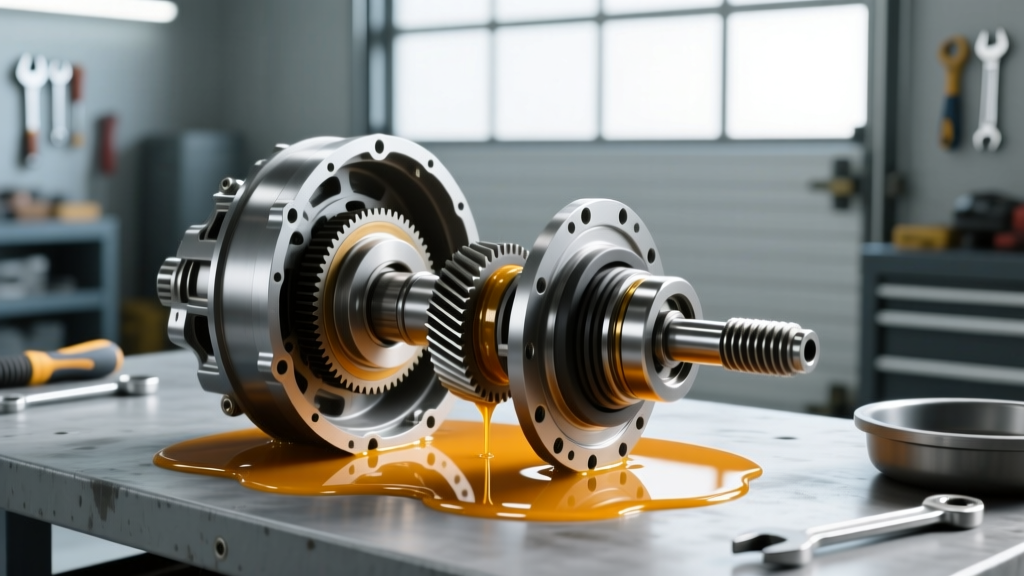
- Seal Lip Abrasion: Degraded fluid holds microscopic metallic particulates in suspension. As this abrasive slurry circulates, it scores the inner bore of the pinion and axle seals, compromising the elastomeric lip and resulting in gear oil weeping onto your driveway or brake rotors.
Diagnosing the Damage: Seals vs. Bearings
Before initiating a teardown, an expert technician must isolate whether the failure is rooted in seal degradation, bearing fatigue, or both. Acoustic diagnostics and visual inspections are your best tools.
Acoustic Bearing Diagnostics
Bearing noise changes based on load. A failing pinion bearing typically generates a continuous whine or howl that changes pitch during both acceleration (drive) and deceleration (coast). Conversely, a failing carrier bearing often produces a lower-pitched rumble or growl that is most pronounced at steady highway speeds (45-60 mph) and diminishes when turning, as the load shifts side-to-side across the carrier assembly.
Visual Seal Diagnostics
Inspect the pinion yoke and the inner axle hubs. If you see wet, dark gear oil slung radially from the pinion yoke, the pinion seal has failed due to yoke scoring or elastomeric hardening. If the inner axle seals are leaking, you will find gear oil contaminating the inboard brake pads. In severe cases, a leaking pinion seal drops the fluid level below the carrier bearings, starving them of lubrication and causing dual-failure scenarios.
Expert Replacement Protocol: GM 8.5-Inch 10-Bolt Axle
When a neglected differential oil change frequency forces a bearing and seal replacement, precision is paramount. Let's examine the industry-standard procedure for replacing the pinion bearing and seal on a ubiquitous GM 8.5-inch 10-bolt rear axle.
Step 1: Extraction and Measurement
Remove the driveshaft and mark the pinion yoke in relation to the pinion shaft to ensure exact reinstallation. Use an inch-pound torque wrench to measure the existing rotational preload torque. For a used bearing assembly, this should read between 15 and 25 in-lbs. Record this number. Remove the pinion nut using a high-torque impact or a yoke holding tool, then pull the yoke using a dedicated 3-jaw puller to avoid damaging the threads.
Step 2: Seal and Bearing Removal
Pry out the old pinion seal using a specialized seal puller, ensuring you do not gouge the aluminum or cast-iron housing bore. If replacing the inner pinion bearing, you must extract it using a bearing puller. Critical Expert Tip: If you are only replacing the seal and the outer pinion bearing (the one closest to the yoke), you do not need to alter the pinion depth shim located under the inner bearing race. However, if you are replacing the inner bearing or race, you must measure the original shim with a micrometer and replicate it exactly to maintain the ring-and-pinion contact pattern.
Step 3: Installation and Preload Calibration
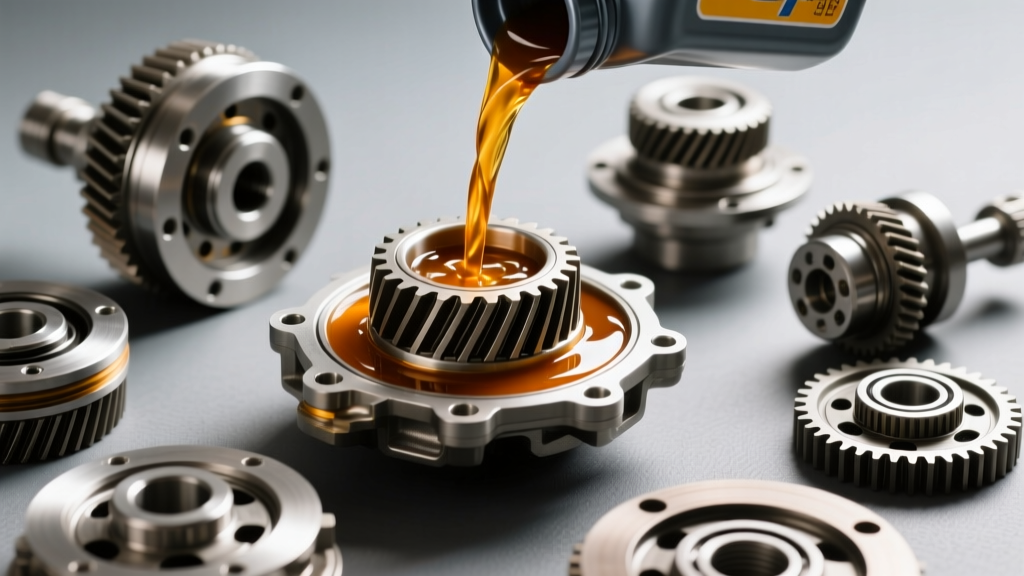
Install the new Timken bearings and races using a bearing driver kit. Never hammer bearings directly into place. Install the new seal, lubricating the inner elastomeric lip with fresh 75W-90 synthetic gear oil to prevent dry-start burning upon initial operation.
The most critical step is setting the pinion preload via the crush sleeve. Install the yoke and a new pinion nut. Tighten the nut in small increments, checking the rotational torque with your inch-pound wrench after every few turns. Your target for new bearings is typically 30 to 45 in-lbs of rotational torque. If you overshoot this spec, you must install a new crush sleeve; never back off the nut to reduce preload, as this weakens the structural integrity of the crushed sleeve.
Differential Rebuild Data: Part Numbers, Specs, and Costs
Below is a reference table for a standard GM 8.5-inch 10-bolt axle service, reflecting 2026 aftermarket pricing and OEM-equivalent part numbers from top-tier manufacturers like Timken and SKF.
| Component | Manufacturer / Part Number | Est. Cost (2026) | Critical Torque / Spec |
|---|---|---|---|
| Outer Pinion Bearing & Race | Timken SET45 (M802048/M802011) | $35.00 - $45.00 | Press-fit, requires driver tool |
| Inner Pinion Bearing & Race | Timken M88048 / M88010 | $40.00 - $55.00 | Depth shim must be preserved |
| Pinion Seal | SKF 21158 / National 8660S | $12.00 - $18.00 | Lube lip prior to installation |
| Crush Sleeve | GM OEM / Motive Gear CSS-10 | $8.00 - $12.00 | Crush to 30-45 in-lbs (new) |
| Pinion Nut (Prevailing Torque) | Dorman 81022 / OEM | $10.00 - $15.00 | 175 - 225 ft-lbs to crush sleeve |
| Carrier Bearing Kit (Pair) | Timken SET10 (LM104948/LM104910) | $50.00 - $70.00 | Cap bolts: 60 - 75 ft-lbs |
Recalibrating Your Differential Oil Change Frequency
To avoid the labor-intensive and costly process of bearing and seal replacement, fleet managers and enthusiast drivers must reject the 'lifetime' fluid narrative. According to drivetrain specialists at Ring & Pinion, establishing a rigorous differential oil change frequency is the most cost-effective insurance policy for your axle assembly.
Recommended Service Intervals by Application
- Standard Daily Driving (Highway/City): Drain and fill with high-quality 75W-90 synthetic every 50,000 miles. This ensures EP additives remain active and particulates are removed before they can score seal lips.
- Heavy Towing & Payload (Trucks/SUVs): If you regularly tow over 5,000 lbs, differential temperatures routinely exceed 220°F, rapidly oxidizing the fluid. Reduce your differential oil change frequency to every 25,000 to 30,000 miles, and consider upgrading to a 75W-140 synthetic with a differential cover featuring integrated cooling fins.
- Off-Road & Water Fording: Water intrusion is the ultimate enemy of hypoid gears and bearings. If the axle is submerged past the hub seals, water will bypass the breathers and seals, turning the gear oil into a milky, non-lubricating emulsion. Change the fluid immediately after any deep water crossing.
Final Thoughts on Drivetrain Longevity
The relationship between your differential oil change frequency and the physical lifespan of your bearings and seals is absolute. Gear oil is a wearable component, just like brake pads or air filters. By adhering to severe-service maintenance schedules, utilizing premium synthetic lubricants, and executing bearing replacements with exacting torque specifications, you ensure that your drivetrain operates silently and reliably for hundreds of thousands of miles. Do not let a deferred $40 fluid service result in a $1,500 axle rebuild.