Decoding the Drivetrain: What Your Axle Tag Actually Says
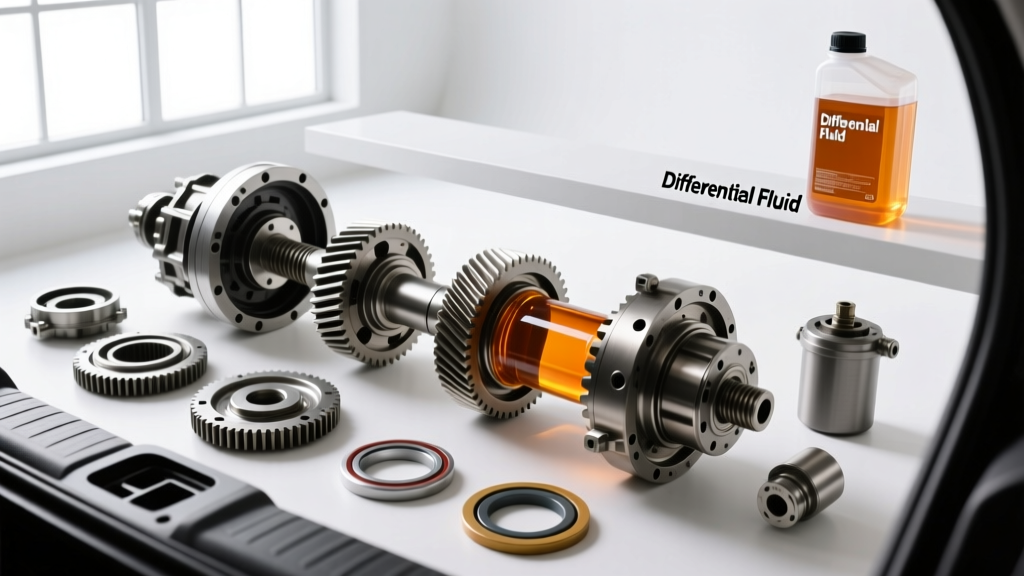
For many DIY mechanics and truck owners, the differential type auto meaning boils down to deciphering the cryptic axle codes stamped on the driver’s door jamb or the metal tag bolted to the differential cover. Understanding this meaning is the critical first step before draining a single drop of gear oil. The 'type' dictates not only whether your vehicle utilizes an open, limited-slip (LSD), or locking differential, but also the precise chemical friction requirements your ring and pinion gears need to survive under load.
In 2026, with modern trucks towing heavier loads and EVs placing massive instant torque on rear axles, selecting the correct differential fluid is no longer a guessing game. Using the wrong API specification or ignoring limited-slip friction modifiers can lead to catastrophic gear wear, clutch-pack chatter, or complete differential failure within a few thousand miles. This comprehensive buyer's guide breaks down gear oil specifications, compares top-tier synthetic fluids, and provides exact torque specs for your next axle service.
Pro-Tip Before You Wrench: Always remove and verify the fill plug before you drain the fluid or remove the differential cover. If the fill plug is seized or stripped, you will be left with an empty axle and a stranded vehicle until a machine shop can extract it.
The 2026 Gear Oil Specification Matrix
The American Petroleum Institute (API) and SAE International set the standards for gear lubricants. According to the SAE J306 standard, axle lubricant viscosity is measured differently than engine oil, focusing on high-shear stability and low-temperature flow. Below is the comparison matrix for the most common differential fluids on the market.
| Specification / Viscosity | Base Oil & Chemistry | EP Additive Level | Best Application | Avg. Price (2026) |
|---|---|---|---|---|
| API GL-5 75W-90 | Full Synthetic PAO | High (Sulfur-Phosphorus) | Standard daily drivers, light towing, open diffs | $18 - $25 / Qt |
| API GL-5 75W-140 | Full Synthetic PAO | High (Sulfur-Phosphorus) | Heavy towing (10,000+ lbs), off-road, 3/4-ton trucks | $24 - $32 / Qt |
| API GL-5 80W-90 | Conventional Mineral | High (Sulfur-Phosphorus) | Older solid-axle vehicles, budget fleet maintenance | $10 - $14 / Qt |
| API GL-4 75W-90 | Synthetic Blend | Low (Yellow-Metal Safe) | Manual Transaxles / Transmissions (NOT for Hypoid Diffs) | $16 - $20 / Qt |
Viscosity Breakdown: 75W-90 vs. 75W-140
The most common debate when researching the differential type auto meaning for heavy-duty trucks is whether to step up to a heavier viscosity. Factory specifications for half-ton trucks (like the Ford F-150 8.8-inch or GM 9.5-inch 10-bolt) typically call for 75W-90. This provides optimal fuel economy and rapid cold-weather lubrication flow to the pinion bearings.
However, if you frequently tow trailers exceeding 8,000 lbs, navigate slow-speed rock-crawling trails, or have installed aftermarket 4.10 or 4.56 ring and pinion gears, upgrading to 75W-140 is highly recommended. The thicker fluid maintains a hydrodynamic film under extreme heat (often exceeding 250°F in the differential sump during heavy towing), preventing metal-on-metal contact on the hypoid gear sliding surfaces.
OEM vs. Aftermarket: 2026 Buyer's Comparison
When purchasing gear oil, you are essentially paying for the base oil quality (Group IV PAO vs. Group III Hydrocracked) and the robustness of the Extreme Pressure (EP) additive package. Here is how the top contenders stack up for your next differential rebuild or routine service.
- Amsoil Severe Gear 75W-90 (Product Code: SVGPK)
- Price: ~$24.00 / Qt
- Verdict: The gold standard for high-heat applications. Amsoil uses a proprietary synthetic base stock that resists thermal breakdown exceptionally well. Excellent for modified trucks with larger tires that increase leverage and heat on the ring gear.
- Red Line 75W90 GL-5 Gear Oil (Product Code: 50305)
- Price: ~$26.50 / Qt
- Verdict: Contains advanced polyol ester base stocks. Red Line is famous for its high film strength, making it a favorite in motorsport and heavy off-road applications where shock-loading is constant.
- Mobil 1 Synthetic Gear Lube 75W-90 (Part # 104361)
- Price: ~$18.00 / Qt
- Verdict: The most accessible full-synthetic on the shelf. It meets API GL-5 and MT-1 specifications, offering excellent shear stability for standard OEM replacement intervals (typically 100k-150k miles).
- Motorcraft SAE 75W-140 Synthetic (Part # XL-14)
- Price: ~$28.00 / Qt
- Verdict: The exact factory fill for modern Ford Super Duty rear axles. If you are servicing a Ford 10.5-inch or 12-inch rear end under warranty, stick to this OEM fluid to ensure compliance.
The Friction Modifier Debate: Do You Need It?
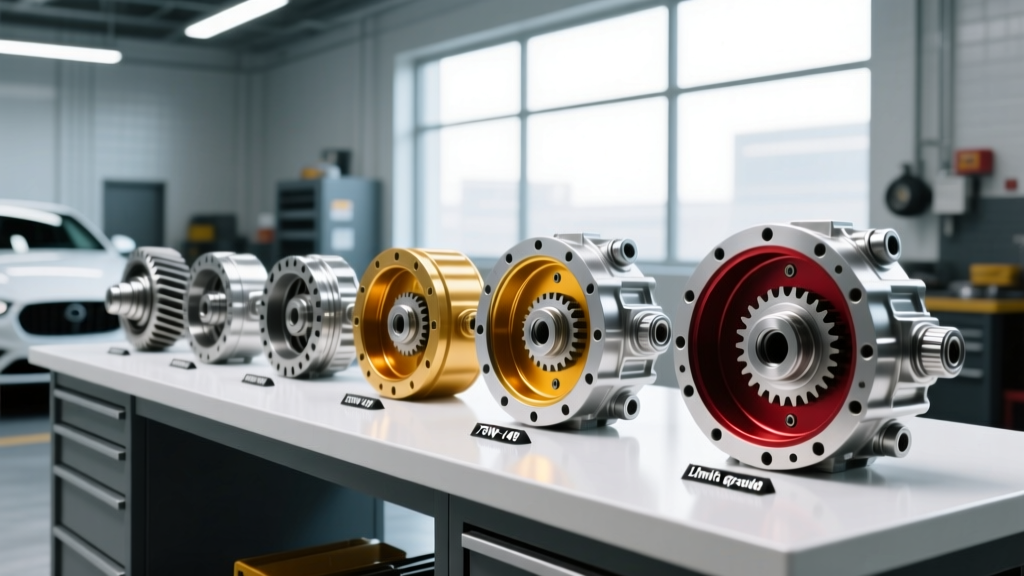
The most critical variable in the differential type auto meaning is whether your axle houses a clutch-type Limited Slip Differential (LSD). If you have an Eaton Truetrac or a Detroit Locker (torque-biasing or gear-type lockers), you do not need friction modifiers. In fact, adding them can reduce the mechanical efficiency of a Torsen-style unit.
However, if your vehicle uses a clutch-pack LSD (such as the Ford 8.8-inch Traction-Lok, Auburn LSD, or Dana Trac-Lok), a friction modifier is mandatory to prevent low-speed cornering chatter. The additive alters the static-to-dynamic friction coefficient, allowing the clutches to slip smoothly rather than grab and release violently.
Top Friction Modifier Additives
| Brand / OEM | Part Number | Volume | Notes |
|---|---|---|---|
| Ford Motorcraft XL-3 | XL-3 | 4 oz | Required for all Ford Traction-Lok axles. Highly concentrated. |
| ACDelco GM Original | 10-4037 (88900333) | 4 oz | The standard for GM G80 locking differentials and Gov-Loc units. |
| Red Line Limited Slip Friction Modifier | 70304 | 4 oz | Compatible with most aftermarket clutch-type LSDs (Auburn, OS Giken). |
Dosage Note: Most clutch-type differentials require exactly one 4 oz bottle per 2.5 quarts of gear oil. Over-treating with friction modifier will cause the LSD to slip excessively under hard acceleration, effectively turning it into an open differential.
Step-by-Step: Axle Torque Specifications & Service
Proper servicing requires more than just pouring in the right fluid; it requires precise torque application to prevent leaks and stripped threads. According to API lubrication guidelines and OEM service manuals, using a calibrated torque wrench on differential plugs is essential, as axle housings are often made of aluminum or thin-wall cast iron.
Common Axle Torque Specs
- GM 8.5-inch / 8.6-inch 10-Bolt: The fill plug is typically a 3/8-inch NPT hex head. Torque to 35 lb-ft. Do not use RTV on the NPT threads; use a dedicated PTFE pipe thread sealant (like Loctite 592) to prevent leaks and make future removal easier.
- Ford 8.8-inch & 9.75-inch: The fill plug is usually a 1/2-inch NPT. Torque to 45 lb-ft. If equipped with a drain plug, torque to 35 lb-ft.
- Jeep Dana 44 (Solid Axle): If your Dana 44 has a factory drain plug, torque to 25 lb-ft. The fill plug (1/2-inch NPT) torques to 45 lb-ft. If you are removing the differential cover, torque the 3/8-inch cover bolts to 30-35 lb-ft in a star pattern, using a high-tack gasket maker like Permatex Ultra Black if no physical gasket is used.
Final Verdict: Matching Fluid to Your Drivetrain
Ultimately, understanding the differential type auto meaning empowers you to make informed maintenance choices rather than blindly trusting a quick-lube shop. For 90% of daily-driven SUVs and half-ton trucks, a high-quality API GL-5 75W-90 full synthetic (like Mobil 1 or Amsoil) paired with the correct OEM friction modifier is the perfect recipe for longevity. For dedicated tow rigs and off-road builds, stepping up to a 75W-140 synthetic provides the necessary thermal buffer to protect your ring and pinion investment. Always verify your specific axle code, buy your fluids based on API certification rather than marketing hype, and torque your plugs to spec.