Mastering Drivetrain Preventive Maintenance Budgeting
When managing the long-term reliability of a vehicle’s drivetrain, the differential is often the most neglected component. Unlike engine oil, which is changed every 5,000 to 10,000 miles, gear oil is frequently ignored until a whining noise or catastrophic failure forces the issue. Learning how to build an accurate estimate using differentials and their specific service requirements is a cornerstone of proactive fleet and personal vehicle maintenance. Whether you are servicing a solid rear axle on a heavy-duty truck or an independent rear suspension (IRS) on a performance SUV, understanding the true costs of differential fluid service in 2026 requires a deep dive into fluid chemistry, labor matrices, and hidden hardware variables.
The Core Variables of a Differential Service Estimate
To formulate a precise estimate using differential service data, you must account for three primary cost drivers: fluid volume and specification, hardware (gaskets, seals, and RTV), and labor complexity. Unlike engine oil pans, many differentials lack a traditional drain plug, requiring the removal of the entire differential cover. This increases the labor time, introduces the need for new gaskets or silicone sealants, and necessitates thorough cleaning of the mating surfaces.
Fluid Volume and Viscosity Standards
The SAE J306 standard governs gear oil viscosity. Most modern passenger vehicles and light trucks require 75W-90 or 80W-90 gear oil. However, the API (American Petroleum Institute) service classification is where costs and chemistry diverge. According to the API Engine Oil Licensing and Certification System, API GL-5 is mandatory for hypoid gear sets found in differentials due to its high concentration of Extreme Pressure (EP) additives, typically zinc dialkyldithiophosphate (ZDDP) and sulfur-phosphorus compounds. These EP additives protect the sliding contact points of the ring and pinion gears under extreme torque loads.
The Hidden Cost: Limited-Slip Friction Modifiers
If your estimate using differential specifications does not account for the axle type, you will likely underbudget the project. Open differentials only require standard GL-5 gear oil. However, Limited-Slip Differentials (LSD)—such as Ford’s Traction-Lok, GM’s G80, or aftermarket Eaton Truetrac units—require a specialized friction modifier additive. Without this modifier, the clutch packs inside the LSD will chatter violently during low-speed cornering, leading to premature wear and customer complaints.
- Ford XL-3 Friction Modifier (Part #XLB-3): Typically costs $12–$16 per 4 oz bottle. Ford 8.8 axles usually require two bottles.
- GM Limited Slip Axle Lubricant (Part #88900333): Priced around $14–$18 per 4 oz bottle.
- Mopar Limited Slip Additive (Part #68218064AA): Essential for Jeep Wrangler Dana 44 axles, costing roughly $15.
Some premium synthetic fluids, like Royal Purple Max Gear or AMSOIL Severe Gear, claim to have friction modifiers already blended into the formula. While this can save $15–$30 on the estimate, experienced drivetrain technicians often recommend adding a half-bottle of OEM modifier anyway to guarantee chatter-free operation in high-mileage clutch packs.
2026 Differential Service Cost Matrix
Shop labor rates in 2026 average between $130 and $210 per hour, depending on the region and dealership vs. independent shop status. The standard book time for a differential fluid service (drain, clean, reseal, and fill) is typically 0.8 to 1.2 hours per axle. Below is a comprehensive breakdown of what to expect when building your estimate.
| Axle Type / Application | Fluid Capacity | Fluid Cost (Synthetic) | Hardware (Gasket/RTV) | Avg. Shop Labor | Total Pro Estimate |
|---|---|---|---|---|---|
| Ford 8.8" (Solid Rear Axle) | 3.5 Quarts | $65 - $85 | $12 (Fel-Pro RDS55029) | $130 - $160 | $220 - $280 |
| Dana 44 (Jeep Wrangler JK/JL) | 2.5 Quarts | $45 - $60 | $18 (Lube Locker) | $140 - $175 | $210 - $270 |
| GM 9.5" Semi-Floating (HD Trucks) | 3.2 Quarts | $60 - $75 | $8 (RTV Silicone) | $150 - $190 | $230 - $290 |
| BMW / ZF Independent Rear (IRS) | 1.5 - 2.0 Quarts | $35 - $50 | $45 (OEM Sealing Ring) | $180 - $240 | $280 - $360 |
DIY vs. Professional Service: The True Cost Comparison
For the DIY mechanic, the financial estimate using differential service intervals looks vastly different. By eliminating labor costs, a dual-axle service (front and rear) on a 4WD truck can be completed for $120 to $180 in materials. However, DIYers must factor in the cost of specialized tools and proper disposal.
Essential DIY Tools and Hardware
Because many differentials lack drain plugs, extracting the old gear oil requires a fluid transfer pump. A high-quality manual pump, such as the Lumax LX-1132 or a pneumatic extraction tool, costs between $25 and $60. Furthermore, relying on cheap cork gaskets is a recipe for leaks. Upgrading to reusable silicone-impregnated gaskets like Lube Locker ($25–$35 each) or using high-temperature RTV silicone like Permatex The Right Stuff ($12) ensures a permanent seal. If using RTV, the mating surface must be scraped completely clean with a brass brush and brake cleaner, adding 30 minutes of labor to the DIY timeline.
Critical Torque Specifications and Assembly Procedures
A common mistake that ruins a preventive maintenance budget is overtightening differential cover bolts, which strips the aluminum or thin-stamped steel threads of the differential housing. When finalizing your service, always adhere to OEM torque specifications using a calibrated 1/4-inch drive torque wrench:
- Ford 8.8" Cover Bolts: 25 lb-ft (34 Nm). Use a star-pattern tightening sequence.
- Dana 44 Cover Bolts: 30 lb-ft (40 Nm). Ensure the Lube Locker gasket is seated dry; do not use RTV with reusable gaskets.
- GM 10-Bolt / 8.5" Cover Bolts: 22 lb-ft (30 Nm). These M8 bolts are notorious for snapping if over-torqued.
Pro-Tip: After torquing the cover and filling the axle with the correct volume of 75W-90 GL-5 fluid, the vehicle must be driven for 15-20 miles to circulate the oil into the wheel bearings and axle tubes. Re-check the fluid level at the fill plug once the differential has cooled to ambient temperature, topping off if necessary.
Red Flags: When a Fluid Change Alters the Estimate
The most significant risk when generating an estimate using differential maintenance schedules is the discovery of internal damage once the cover is removed. Gear oil is a diagnostic fluid. When you drain it, you must inspect the contents for specific failure indicators:
- Fine Metallic Paste: A slight shimmer or dark grey paste on the drain plug magnet is normal wear from the ring and pinion break-in process and clutch pack friction.
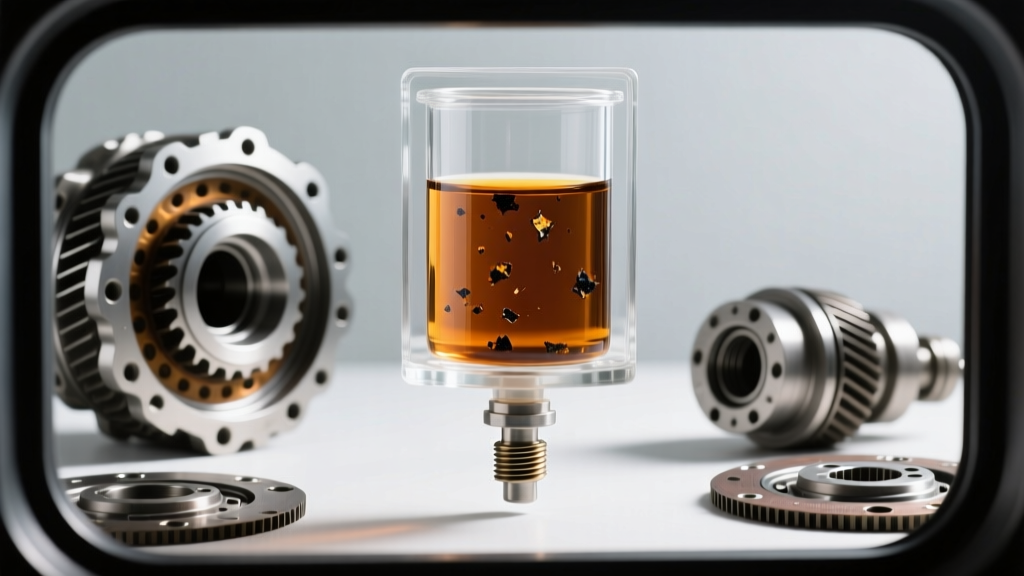
- Chunked Metal or Needle Bearings: If you find solid metal shards, broken gear teeth, or cylindrical roller bearings in the fluid, the differential is in catastrophic failure. The estimate immediately shifts from a $250 fluid service to a $2,500–$4,500 complete axle rebuild or replacement.
- Burnt Smell and Black Sludge: Indicates severe overheating, usually caused by towing beyond the vehicle's Gross Combined Weight Rating (GCWR) without an aftermarket differential cover featuring cooling fins. The clutch packs in an LSD are likely glazed and will require physical replacement, not just a fluid swap.
Summary: Budgeting for Longevity
Formulating an accurate estimate using differential service requirements demands an understanding of API GL-5 chemistry, limited-slip additive necessities, and precise labor matrices. In 2026, with synthetic gear oils pushing the boundaries of thermal stability and shop labor rates continuing to climb, preventive maintenance is more cost-effective than ever. By servicing your front and rear differentials every 30,000 to 50,000 miles—or immediately after water submersion during off-road use—you protect thousands of dollars in drivetrain hardware for a relatively minor upfront fluid investment. Always consult the specific SAE J306 viscosity guidelines and your vehicle’s OEM service manual to ensure your estimate aligns perfectly with your axle’s engineering requirements.